Prime Minister to launch PM GatiShakti on 13th October

Published By : Admin | October 12, 2021 | 18:30 IST
PM GatiShakti to break Departmental silos and institutionalize holistic planning for stakeholders across major infrastructure projects
All Departments to now have visibility of each others’ projects through a centralized portal
Multi-modal connectivity to provide integrated and seamless connectivity for movement of people, goods and services
PM GatiShakti to generate multiple employment opportunities, cut down of logistics cost, improve supply chains and make local goods globally competitive
PM to also inaugurate the New Exhibition Complex at Pragati Maidan

In a historic event for the infrastructure landscape of the country, Prime Minister Shri Narendra Modi will launch PM GatiShakti - National Master Plan for multi-modal connectivity, on 13th October, 2021 at 11 AM at Pragati Maidan, New Delhi.

Infrastructure creation in India had suffered for decades from multiple issues. There was lack of coordination between different Departments, for example, once a road was constructed, other agencies dug up the constructed road again for activities like laying of underground cables, gas pipelines etc. This not only caused great inconvenience but was also a wasteful expenditure. To address this, efforts were put in place to increase coordination so that all cables, pipelines etc. could be laid simultaneously. Steps have also been taken to address other issues like time-taking approval process, multiplicity of regulatory clearances etc. In the last seven years, the Government has ensured unprecedented focus on infrastructure through a holistic outlook.

PM GatiShakti will address the past issues through institutionalizing holistic planning for stakeholders for major infrastructure projects. Instead of planning & designing separately in silos, the projects will be designed and executed with a common vision. It will incorporate the infrastructure schemes of various Ministries and State Governments like Bharatmala, Sagarmala, inland waterways, dry/land ports, UDAN etc. Economic Zones like textile clusters, pharmaceutical clusters, defence corridors, electronic parks, industrial corridors, fishing clusters, agri zones will be covered to improve connectivity & make Indian businesses more competitive. It will also leverage technology extensively including spatial planning tools with ISRO imagery developed by BiSAG-N (Bhaskaracharya National Institute for Space Applications and Geoinformatics).

PM GatiShakti is based on six pillars:

1. Comprehensiveness: It will include all the existing and planned initiatives of various Ministries and Departments with one centralized portal. Each and every Department will now have visibility of each other’s activities providing critical data while planning & execution of projects in a comprehensive manner.

2. Prioritization: Through this, different Departments will be able to prioritize their projects through cross–sectoral interactions.

3. Optimization: The National Master Plan will assist different ministries in planning for projects after identification of critical gaps. For the transportation of the goods from one place to another, the plan will help in selecting the most optimum route in terms of time and cost.

4. Synchronization: Individual Ministries and Departments often work in silos. There is lack of coordination in planning and implementation of the project resulting in delays. PM GatiShakti will help in synchronizing the activities of each department, as well as of different layers of governance, in a holistic manner by ensuring coordination of work between them.

5. Analytical: The plan will provide the entire data at one place with GIS based spatial planning and analytical tools having 200+ layers, enabling better visibility to the executing agency.

6. Dynamic: All Ministries and Departments will now be able to visualize, review and monitor the progress of cross-sectoral projects, through the GIS platform, as the satellite imagery will give on-ground progress periodically and progress of the projects will be updated on a regular basis on the portal. It will help in identifying the vital interventions for enhancing and updating the master plan.

PM GatiShakti is the result of Prime Minister’s constant endeavour to build Next Generation Infrastructure which improves Ease of Living as well as Ease of Doing Business. The multi-modal connectivity will provide integrated and seamless connectivity for movement of people, goods and services from one mode of transport to another. It will facilitate the last mile connectivity of infrastructure and also reduce travel time for people.

PM GatiShakti will provide the public and business community information regarding the upcoming connectivity projects, other business hubs, industrial areas and surrounding environment. This will enable the investors to plan their businesses at suitable locations leading to enhanced synergies. It will create multiple employment opportunities and give a boost to the economy. It will improve the global competitiveness of local products by cutting down the logistics costs and improving the supply chains, and also ensure proper linkages for local industry & consumers.

Prime Minister will also inaugurate the New Exhibition Complex (Exhibition Halls 2 to 5) at Pragati Maidan during the event. India Trade Promotion Organisation’s flagship event, India International Trade Fair (IITF) 2021 will also be held from November 14-27, 2021 in these new exhibition halls.

Union Ministers for Commerce, Road Transport and Highways, Railways, Civil Aviation, Shipping, Power, Petroleum and Natural Gas will also be present on the occasion.

Explore More
ਸ੍ਰੀ ਰਾਮ ਜਨਮ-ਭੂਮੀ ਮੰਦਿਰ ਧਵਜਾਰੋਹਣ ਉਤਸਵ ਦੌਰਾਨ ਪ੍ਰਧਾਨ ਮੰਤਰੀ ਦੇ ਭਾਸ਼ਣ ਦਾ ਪੰਜਾਬੀ ਅਨੁਵਾਦ

Popular Speeches

ਸ੍ਰੀ ਰਾਮ ਜਨਮ-ਭੂਮੀ ਮੰਦਿਰ ਧਵਜਾਰੋਹਣ ਉਤਸਵ ਦੌਰਾਨ ਪ੍ਰਧਾਨ ਮੰਤਰੀ ਦੇ ਭਾਸ਼ਣ ਦਾ ਪੰਜਾਬੀ ਅਨੁਵਾਦ
Tier-2 cities drive growth in India's tech hiring as GCC expansion spreads beyond metros

Media Coverage

Tier-2 cities drive growth in India's tech hiring as GCC expansion spreads beyond metros
NM on the go

Nm on the go

Always be the first to hear from the PM. Get the App Now!
...
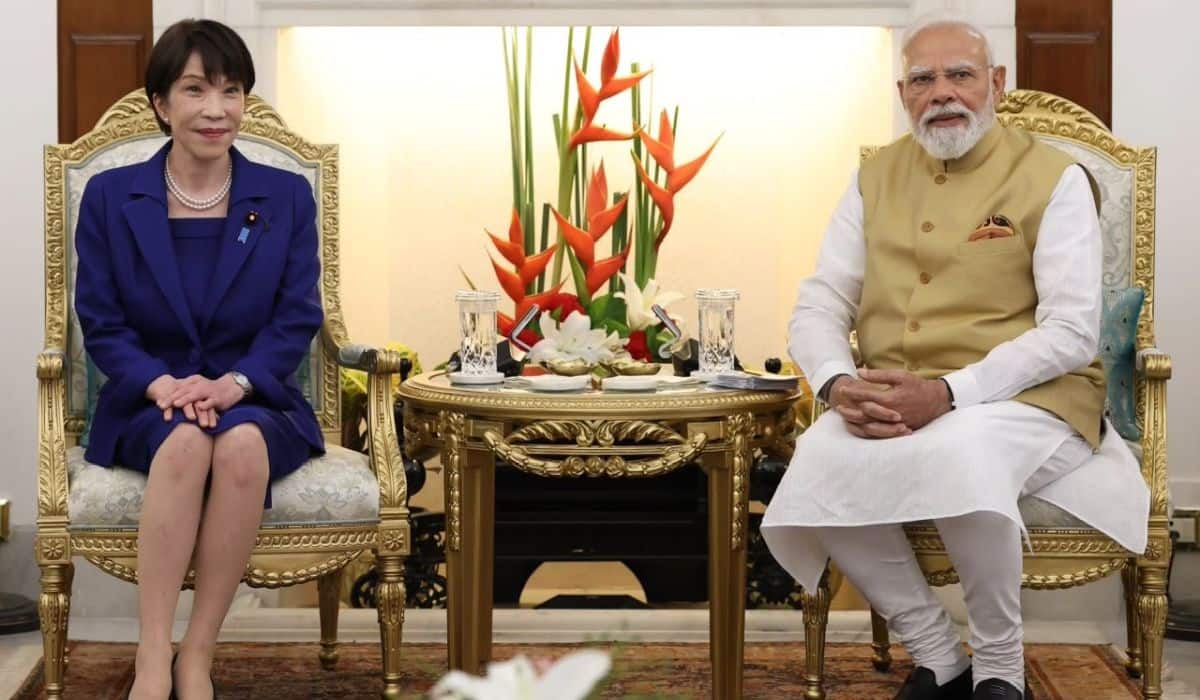
List of Outcomes: Prime Minister of Japan’s visit to India for the 16th India-Japan Annual Summit
July 02, 2026
Sl. No.OutcomeDescription
1. India-Japan Joint Declaration on Economic Security Promotes project-based collaboration for enhancing joint resilience in key sectors including semiconductors, critical minerals, information and communication technology including AI, clean energy and pharmaceuticals. India-Japan Fact Sheet 2.0 captures growing India-Japan G2G and B2B engagement in this crucial area.
2. India-Japan Joint Statement on Cooperation in the Field of Artificial Intelligence Elevates the India-Japan relationship to a strategic research and development partnership in the AI domain. Building on the India-Japan AI Initiative, the Joint Statement provides a roadmap for greater cooperation across the entire AI technology stack in pursuit of the shared vision of safe, secure, trusted, inclusive, and human-centric AI.
3 Joint Statement on Energy Resilience (between MoPNG and METI, Japan) Strengthens cooperation in strategic stockpiling and reserve mechanisms for crude oil and petroleum products. Promotes collaboration in joint investments across the maritime energy transport value chain.
4. Celebrating the 75th Anniversary of India-Japan Diplomatic Relations Outlines a series of commemorative events to celebrate 2027, the 75th anniversary of establishment of diplomatic relations, as the India-Japan Year of Shared Horizons
5. Memorandum of Cooperation for India-Japan Cooperative Biogas for Growth (CBG) Initiative Promotes cooperation towards the goal of establishing 1,000 biogas and organic fertilizer plants all across India, leveraging the extensive network of dairy cooperatives.
6. Memorandum of Cooperation in the Field of Batteries Promotes cooperation in battery-related projects and expands business opportunities with an aim of building a trusted, resilient and sustainable battery supply chain.
7. Memorandum of Cooperation in the Field of Pharmaceuticals and Medical Devices Sector Strengthens pharma supply chains, including in Active Pharmaceutical Ingredients (APIs) and Key Starting Materials (KSMs), through promotion of bilateral investment and business linkages, technical collaboration and industry-academia collaboration.
8. Memorandum of Cooperation in the Field of Geology and Mineral Exploration Strengthens cooperation in upstream critical minerals exploration through exchange of technical expertise.
9. Memorandum of Cooperation between IndiaAI Mission and Ministry of Economy, Trade and Industry (METI), Japan Promotes institutional cooperation between IndiaAI Mission and Japan’s GENIAC initiative – through B2B matchmaking, webinars on AI policies and challenges and support for joint projects through access to computing resources
10. Memorandum of Cooperation on Next Generation Mobility Partnership (NGMP) Establishes a framework for operationalizing the Next Generation Mobility Partnership (NGMP) which was announced at the 15th Annual Summit in August 2025. The NGMP would accelerate private sector-led cooperation and investment in mobility sectors including rail, automotive and road infrastructure, aviation, shipbuilding and ports, logistics, and urban development, positioning India as a hub for “Make in India for the World” exports to third countries.
11. Memorandum of Understanding between India’s Centre for Cellular and Molecular Platforms (C-CAMP) and RIKEN, Japan Establishes a framework for academic, translational research and start-up oriented innovation in deep-tech and life sciences, covering healthcare, agriculture and environment.
12. Memorandum of Understanding between National Center for Biological Sciences-Tata Institute of Fundamental Research and RIKEN, Japan Creates a framework for cooperation in basic biological and neuroscience research between the two leading research institutions
13. Memorandum of Understanding between IIT Bombay, BharatGen Technology Foundation and National Institute of Informatics, Japan Furthers collaboration on large language models (LLMs), with a focus on developing LLMs for enhanced scientific reasoning, through joint research exchanges
14. Memorandum of Understanding between SarvamAI and Preferred Network on LLM Development Creates a framework for cooperation across the full AI technology stack, including foundation models.
15. Memorandum of Understanding Between National Internet Exchange of India (NIXI) and Japan Network Information Center (JPNIC) Promotes cooperation in National Internet Registry operations, IPv6 adoption, internet security improvements, capacity building, student/professional exchanges and exchange of views on internet governance at regional and global forums.
16. Exchange of Letters Between International Financial Services Centres Authority (IFSCA) and Financial Services Agency, Japan (JFSA) Establishes a framework for cooperation in development, regulation and supervision of financial services as well as information exchange on financial-market trends and best practices, particularly in FinTech and RegTech.