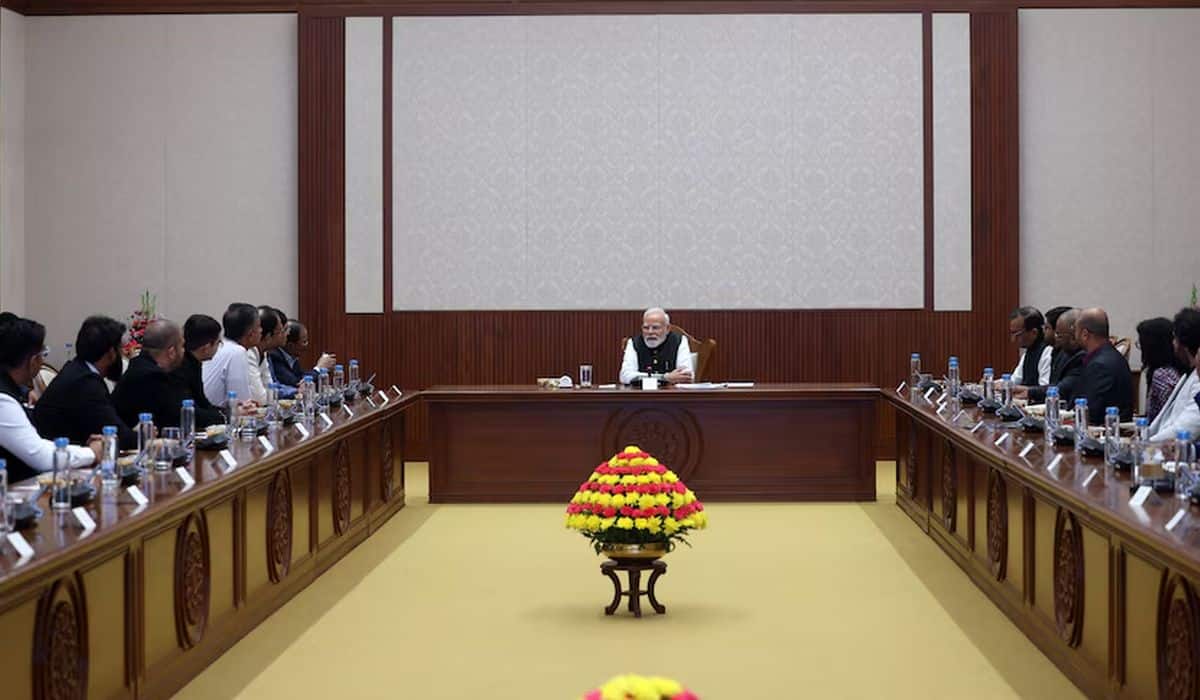
PM’s Message to the Nation on Good Governance

Published By : Admin | December 25, 2014 | 09:55 IST

· सुशासन - Good Governance is the key to a nation’s progress. Our government is committed to providing a transparent and accountable administration which works for the betterment and welfare of the common citizen.

684 -Good-Governance-Day

· “Citizen-First” is our mantra, our motto and our guiding principle. It has been my dream to bring government closer to our citizens, so that they become active participants in the governance process. During the last seven months, our government has been consistently working towards this goal. mygov.in and interact with PM seek to make this engagement meaningful. The unprecedented response which these initiatives have evoked, places a large responsibility upon us, and I assure you, my countrymen that we will not let you down.

· An important step for Good Governance is simplification of procedures and processes in the Government so as to make the entire system transparent and faster. The push towards self-certification in place of affidavits and attestations is another indicator of the relationship of trust between the citizens and the Government. Doing away with cumbersome and out-dated legislations which no longer have relevance is another focus area. Already Appropriation Acts have been identified for repeal and more Acts are being reviewed.

· Our government considers redress of public grievances as a very important component of a responsive administration. I have instructed all the Ministries to ensure that redress of public grievances receives the highest priority.

· Government process re-engineering is yet another measure that we are pushing for. Ministries and Departments of the Government of India have been instructed to look into their work spheres, their internal processes and work on what and how to simplify and rationalise them. We are also working on a simpler internal work process manual, which would be delivered through an e-learning module.

· I strongly believe that technology can and must bridge the divide between the government and the citizens. Technology is an empowering tool for the citizen and an accountability medium for the government. My government fully recognises the huge potential of this tool –Digital India aims to transform the country into a digitally empowered society and knowledge economy. Proposed to be implemented in phases, Digital India is transformational in nature and would ensure that Government services are available to citizens electronically. It would also bring in greater accountability through mandated delivery of government’s services electronically.

· The effort to usher in an era of सुशासन has just begun, and begun on a very promising note. An open and accountable administration is what we had promised to deliver and we will do so.

· Today is the birthday of our beloved leader, our former PM Shri Atal Bihari Vajpayee. On this occasion, we reiterate our commitment towards providing transparent, effective and accountable governance to the people of this country. Let us embark on this mission for good governance together.

Jai Hind.

Explore More
ਸ੍ਰੀ ਰਾਮ ਜਨਮ-ਭੂਮੀ ਮੰਦਿਰ ਧਵਜਾਰੋਹਣ ਉਤਸਵ ਦੌਰਾਨ ਪ੍ਰਧਾਨ ਮੰਤਰੀ ਦੇ ਭਾਸ਼ਣ ਦਾ ਪੰਜਾਬੀ ਅਨੁਵਾਦ

Popular Speeches

ਸ੍ਰੀ ਰਾਮ ਜਨਮ-ਭੂਮੀ ਮੰਦਿਰ ਧਵਜਾਰੋਹਣ ਉਤਸਵ ਦੌਰਾਨ ਪ੍ਰਧਾਨ ਮੰਤਰੀ ਦੇ ਭਾਸ਼ਣ ਦਾ ਪੰਜਾਬੀ ਅਨੁਵਾਦ
3,000 towels in one week: The made In India souvenir Wimbledon champions can’t leave behind

Media Coverage

3,000 towels in one week: The made In India souvenir Wimbledon champions can’t leave behind
NM on the go

Nm on the go

Always be the first to hear from the PM. Get the App Now!
...
Australia-India Partnership on Cyber, Critical Technologies and Supply Chains (PACTS)
July 09, 2026

Australia and India have built an enduring partnership in cyber and critical technologies underpinned by our Comprehensive Strategic Partnership, the 2020 Framework Arrangement on Cyber and Cyber Enabled Critical Technology Cooperation (2020 Framework), and two decades of collaborative research, operational coordination and policy engagement.

Recognising that supply chains, critical technology and cyber security drive economic growth, are central to national security and can be used to shape values and global norms, Australia and India will build on our pre-existing foundations and elevate our bilateral ambition under an ‘Australia-India Partnership on Cyber, Critical Technologies and Supply Chains (PACTS)’, succeeding and replacing the 2020 Framework.

The PACTS aims to support our shared interest in national and regional security, empower our partners with greater digital choices, make critical supply chains more resilient, and strengthen global cyber resilience. Safety, security, resilience, inclusivity for all, and shared democratic values will be built into every stage of our efforts under the partnership, demonstrating our countries’ commitment in being responsible technology leaders. Streamlining these efforts under an overall unifying strategic vision will allow us to pursue targeted activities under five pillars of cooperation.

Pillars for Cooperation

Under each interrelated pillar, India and Australia will identify opportunities and specific projects to support collaboration between the private sector, universities, research institutions and government agencies. This will underpin and extend government-to-government cooperation, increase two-way investment into new technologies, and support the translation of intellectual property into products that deliver economic growth.

Pillar 1: Supply Chain Resilience and Diversification

Australia and India will work towards secure, resilient and trustworthy supply chains to support our growing technical industries, including by promoting security and safety by design and protective regulatory frameworks and deepening rules-based bilateral technology trade and supply chains.

• Develop a bilateral mechanism for collaboration on trusted vendor frameworks.

• Promote India–Australia cooperation, including through the Quad Partnership for Cable Connectivity and Resilience, to support secure, trusted, reliable and resilient undersea cable connectivity across the Indo-Pacific. We will strengthen cooperation to share best practices, enhance information sharing and coordination, and address risks to undersea cable infrastructure, including threats and sabotage.

• Develop collaboration between Australian and Indian Research institutes focused on protecting semi-conductor supply chains; and facilitating co-development and research to bolster their efforts.

• Collaborate on the development of secure critical minerals supply chains, including through coordinated investment, regulatory alignment, and recycling and recovery.

• Promote commercial collaboration and trade diversification between Australian and Indian businesses and strengthen engagement between relevant peak bodies, including aligning existing initiatives to this pillar.

Pillar 2: Critical Technology

Australia and India will work together to strengthen the security, resilience and integrity of priority critical technologies and innovate on new technologies in critical areas such as artificial intelligence (AI), space technologies, telecommunications, biotechnology and advanced materials. We will seek to protect essential digital and physical infrastructure, accelerate innovation and research, and shape interoperable, consensus-driven international standards, to support long-term economic security and regional stability in the Indo-Pacific.

• Leverage global efforts to advance international standards and benchmarks for trustworthy, safe and secure AI by developing consensus driven, multistakeholder frameworks grounded in democratic values. This includes supporting initiatives between Indian and Australian academic institutions and private sectors, which capture the benefits for our citizens, equip AI researchers, practitioners, policy makers, and professionals with knowledge and skills to drive harmonised principles and best practice in developing and deploying AI technologies safely; share approaches on securing access to compute, large language models, AI, and AI related infrastructure.

• Refocus and accelerate Australia-India research, innovation, and investment partnerships to target priorities including advanced materials, telecommunications, and biotechnology, including by readjusting established programmes within existing settings to fund research projects that deliver tangible benefits bilaterally and for the broader Indo-Pacific.

• Explore collaboration on fostering joint commercial and government-led space sector initiatives drawing on the rapid growth of both space sectors and maturing space partnership.

Pillar 3: Cybersecurity

Australia and India will work together to bolster the safety and security of the cyber and digital domain. This includes countering cybercrime, deterring malicious cyber activity, exchanging knowledge and experiences related to cyber and technology security norms, and protecting critical national infrastructure.

• Work to establish a consolidated and rationalised bilateral mechanism in cyber and ICT fields to streamline capacity building initiatives, regional and multilateral cooperation opportunities, while ensuring policy coherence, and avoiding duplication across multiple working channels.

• Strengthen cooperation in UN mandated cyber related processes and enhance dialogue on data governance architecture and international cooperation in addressing cybersecurity in the field of telecommunications.

• Increase opportunities for access and enhanced trade and investment between Australian and Indian businesses on cybersecurity and technology ventures.

• Facilitate practical joint workshops to bring together the Australian and Indian government agencies and other stakeholders in the field of cyber security.

• Create a cyber tech skill incubator hub for growth and exchange of critical skills.

Pillar 4: Digital Resilience

Australia and India will seek to deliver trusted and scalable technology solutions to support digitalising economies across the Indo-Pacific. We will work together to create solutions that address development challenges by identifying specific projects that strengthen regional capabilities.

• Support new partnership exchanges with countries in the Indo-Pacific on India’s Digital Public Infrastructure (DPI) principles.

• Scale and diffuse affordable DPI solutions to the Indo-Pacific, including in areas such as clean and renewable energy, resilient critical infrastructure, connectivity, digital transformation, health, social protection, skills development, education, and research.

• Promote Indian and Australian expertise on digital resilience by scaling robust DPI use cases across the Indo-Pacific region and facilitate Indo-Pacific pilot projects focusing on foundational digital solutions through various capacity building initiatives, including joint projects to build locally adaptable digital ecosystems.

Pillar 5: Defence Research Collaboration

Australia and India will work together to leverage defence research partnerships to advance a shared understanding of multi-domain defence challenges and capabilities. We will build on past joint research, design future projects in accordance with our shared interests and increase exchanges between our defence science organisations under the Implementing Arrangement concerning cooperation in Defence Science and Technology to the Memorandum of Understanding on Defence Cooperation.

• Strengthen our dialogue on defence science and technology priorities through the Defence Ministers’ Dialogue, Defence Policy Talks, and Joint Working Group on Defence Industry, Research, and Materiel.

• Build institutional connections between Australia's Defence Science and Technology Group and India’s Defence Research and Development Organisation and regularise working level exchanges to accelerate research cooperation.

• Facilitate deeper ties between respective defence innovation and start-up ecosystems, including business-to-business engagement.

• Focus collaboration on innovative maritime science and technology capabilities (including maritime surveillance, advanced materials) for defence applications.

Architecture and Governance

Bilateral Oversight

The Partnership will be chaired at a senior level by the Australian Deputy Secretary International and Security Group, Department of the Prime Minister and Cabinet and the Indian Deputy National Security Advisor. The Chairs will set the priority areas and identify opportunities for mutually beneficial cooperation, across cyber and critical technologies.

Senior Officials Meeting (annual): Responsible Senior Officials will coordinate under each pillar and will report to Chairs and review priorities, stocktake progress to date, assess new and emerging risks to the cyber and critical technology landscape, and work towards mutual identification of specific projects under each pillar of cooperation


 PillarIndian LeadAustralian Lead

1

Supply chain resilience

National Security Council Secretariat (NSCS)

Coordinated by the Office of the Ambassador for Cyber Affairs and Critical Technology

2

Critical technology

National Security Council Secretariat (NSCS)

The Office of the Ambassador for Cyber Affairs and Critical Technology

3

Cybersecurity

Cyber Diplomacy Division, Ministry of External Affairs

The Office of the Ambassador for Cyber Affairs and Critical Technology

4

Digital resilience

Oceania Division, Ministry of External Affairs

The Office of the Ambassador for Cyber Affairs and Critical Technology

5

Defence research and collaboration

Ministry of Defence

Department of Defence