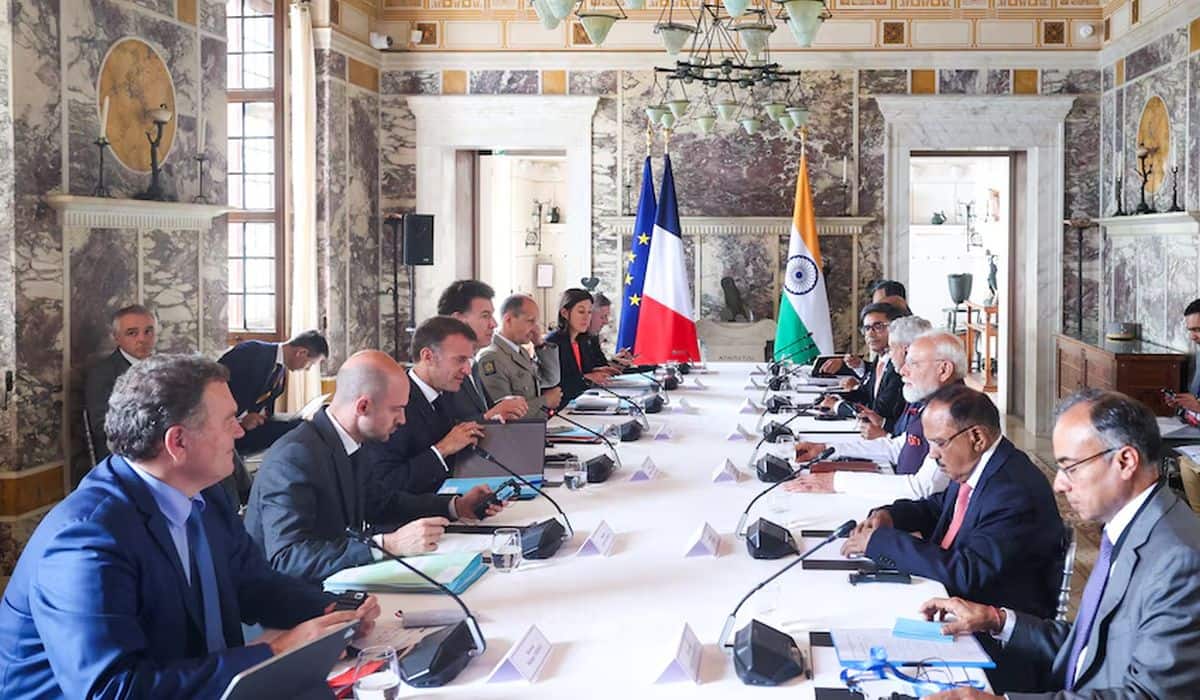
Prime Minister, Shri Narendra Modi, today chaired a review meeting on the goal of "Housing for All" by 2022.

The meeting was to finalise the contours of the Housing for All Mission, which is one of the priority commitments of the Government. The programme was mentioned in the President’s Address to Parliament in June 2014 where he said “By the time the nation completes 75 years of its Independence, every family will have a pucca house with water connection, toilet facilities, 24x7 electricity supply and access.” The same commitment was made in the Budget for 2014-15 where the Finance Minister had announced a Housing for All programme. The Finance Minister had said “Our government is committed to endeavour to have housing for all by 2022. For this purpose, I intend to extend additional tax incentive on home loans to encourage people, especially the young, to own houses. I propose setting up a Mission on Low Cost Affordable Housing which will be anchored in the National Housing Bank. Schemes will be evolved to incentivize the development of low cost affordable housing.”

In pursuance of this commitment, the Prime Minister has been holding a series of meetings to give shape to this vision and commitment. In the last meeting on this held on 22 December 2014, the Prime Minister had concurred with the basic elements of the programme and had asked for some fine-tuning and phasing of the proposals. The Ministry of Housing & Urban Poverty Alleviation recrafted its programme in alignment with the decisions in the meeting and presented the final design of the programme to the Prime Minister.
The Prime Minister was briefed on the approach that is planned to be followed to meet this vast housing requirement. He was also given an overview of the delivery mechanisms envisaged at the central and state levels.
The programme proposes to build 2 crore houses across the nation by 2022. This would cover both slum housing and affordable housing for weaker sections. It will cover urban poor living in slums, urban homeless and new migrants to urban areas in search of shelter. It would cover metros, small towns and all urban areas.
The programme would begin with a baseline survey to assess the demand for such housing and identify resource requirements. The houses that need to be built are over 6 lakhs in Delhi, 16 lakhs in Mumbai, 4 lakhs in Chennai and 4 lakhs in Kolkata. These figures may go up after the demand assessment is completed.
The Programme involves an urban reform component to generate the resources and capacities for urban housing, a set of guidelines, an element of government support and a significant contribution from beneficiaries, in addition to bank financing. A large portion of the programme is to be financed in a PPP mode by leveraging land and other resources in urban areas. A large number of process improvements and policy changes are also inherent in the programme.
The Prime Minister directed all concerned departments to immediately finalise the programme and finalise the financing models for alternate sets of housing requirements. He emphasized the need to ensure that there is no compromise in quality during the roll-out of this ambitious programme. He further directed that safety concerns of specific areas, such as coastal zones, eco-sensitive zones and disaster-prone areas be factored into the planning process in cities. He said existing success stories and innovative technologies must be carefully studied so that the best practices can be adopted during the implementation of the scheme.
The Prime Minister said that the first priority under the new scheme should be on towns and cities along the banks of the River Ganga and its tributaries.
The meeting was attended by Shri Venkaiah Naidu, Minister for Urban Development, Shri Babul Supriyo, Minister of State for Urban Development, and senior officials.