Gandhi Peace Prize for the Year 2019 announced

Published By : Admin | March 22, 2021 | 21:36 IST

The Gandhi Peace Prize for the year 2019 is being conferred on (Late) His Majesty Sultan Qaboos bin Said Al Said of Oman. Gandhi Peace Prize is an annual award instituted by Government of India since 1995, the 125th Birth Anniversary commemoration year of Mahatma Gandhi. The award is open to all persons regardless of nationality, race, language, caste, creed or sex.

The Jury for Gandhi Peace Prize is chaired by Hon’ble Prime Minister, Sh Narendra Modi ,and comprises  of two ex-officio members, namely the Chief Justice of India and  Leader of the single largest Opposition Party in Lok Sabha. Two eminent members are also part of the Jury, namely Shri Om Birla, Speaker of the Lok Sabha, and Shri Bindeshwar Pathak, Founder of Sulabh International Social Service Organisation.

The Jury met on 19th March, 2021 ,and after due deliberations, unanimously decided to select (Late) H.M. Sultan Qaboos Bin Said Al Said as the recipient of the Gandhi Peace Prize for the year 2019, in recognition of his outstanding contributions for social, economic and political transformation through non-violent and other Gandhian methods.

The past awardees include luminaries like Dr. Julius Nyerere, Former President of Tanzania; Dr. Gerhard Fischer, Federal Republic of Germany; Ramakrishna Mission; Baba Amte (Shri Murlidhar Devidas Amte); Late Dr. Nelson Mandela, former President of South Africa; Grameen Bank of Bangladesh; Archbishop Desmond Tutu of South Africa; Shri Chandi Prasad Bhatt & Indian Space Research Organisation. Recent awardees include Vivekananda Kendra, India (2015); Akshaya Patra Foundation, India and Sulabh International (Jointly, for 2016); Ekal Abhiyan Trust, India(2017) and Shri Yohei Sasakawa, Japan(2018).

The award carries an amount of Rs. 1 crore, a citation, a plaque and an exquisite traditional handicraft/ handloom item.

His Majesty Sultan Qaboos was a visionary leader whose twin policy of moderation and mediation in addressing international issues won him praise and respect across the globe. He played an important role in supporting peace efforts in various regional disputes and conflicts. H.M. Sultan Qaboos was the architect of the special ties between India and Oman. He had studied in India and always maintained a special relationship with India.  Under his leadership, India and Oman became strategic partners and our mutually beneficial, comprehensive partnership strengthened and scaled newer heights.

Prime Minister Shri Narendra Modi had recalled the contribution of H.M. Sultan Qaboos to India-Oman ties when he passed away ,by saying that he was “a true friend of India and provided strong leadership for developing a strategic partnership between India and Oman”. Prime Minister had also remembered him as “visionary leader and statesman” and a “beacon of peace for our region and the world.”

Gandhi Peace Prize recognizes the unparalleled vision and leadership of the Late H.M. Sultan Qaboos Bin Said in strengthening relations between India and Oman, and his efforts to promote peace and non-violence in the Gulf region.

Explore More
ਸ੍ਰੀ ਰਾਮ ਜਨਮ-ਭੂਮੀ ਮੰਦਿਰ ਧਵਜਾਰੋਹਣ ਉਤਸਵ ਦੌਰਾਨ ਪ੍ਰਧਾਨ ਮੰਤਰੀ ਦੇ ਭਾਸ਼ਣ ਦਾ ਪੰਜਾਬੀ ਅਨੁਵਾਦ

Popular Speeches

ਸ੍ਰੀ ਰਾਮ ਜਨਮ-ਭੂਮੀ ਮੰਦਿਰ ਧਵਜਾਰੋਹਣ ਉਤਸਵ ਦੌਰਾਨ ਪ੍ਰਧਾਨ ਮੰਤਰੀ ਦੇ ਭਾਸ਼ਣ ਦਾ ਪੰਜਾਬੀ ਅਨੁਵਾਦ
UPI — an eventful journey

Media Coverage

UPI — an eventful journey
NM on the go

Nm on the go

Always be the first to hear from the PM. Get the App Now!
...
PM chairs 53rd PRAGATI Meeting
August 25, 2026
PM reviews six key infrastructure projects across the Railway, Road and Power sectors
Projects reviewed span across 9 States with cumulative investment of more than ₹30,000 crore
PM says Infrastructure projects should be viewed as an integrated whole, rather than as individual sections or packages
PM calls for continuous reforms across all stages of project implementation and a proactive work culture across Ministries and States
PM says Speed must go hand-in-hand with quality
While reviewing AgriStack, PM emphasises the need to leverage the latest digital technologies including AI to derive greater value from agricultural data
On cyber fraud and ‘digital arrest’, PM stresses training, public awareness, cyber-safety education and coordinated action

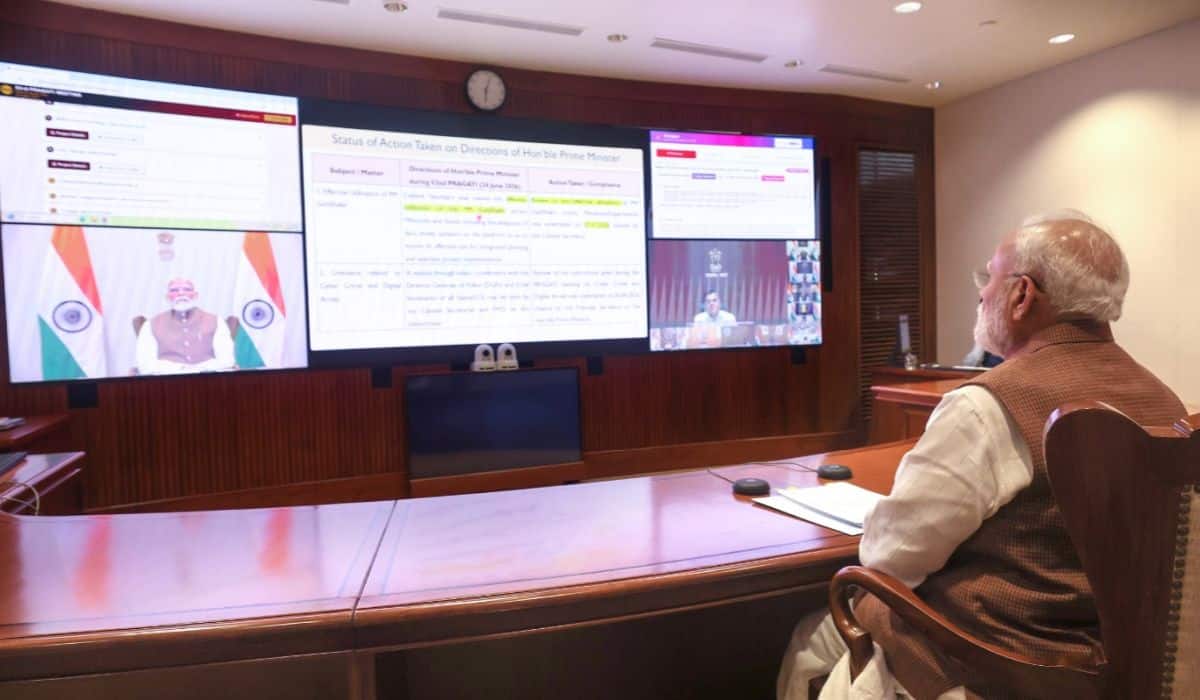
Prime Minister Shri Narendra Modi chaired the 53rd meeting of PRAGATI, the ICT-enabled, multi-modal platform for Pro-Active Governance and Timely Implementation, at Seva Teerth earlier today.

During the meeting, Prime Minister reviewed six key infrastructure projects across the Railway, Road and Power sectors, spanning nine States with a cumulative cost of more than ₹30,000 crore. The projects, significant for strengthening connectivity, supporting industrial and economic activity and improving public services, were reviewed with particular emphasis on adherence to timelines, inter-agency coordination, resolution of pending issues and expeditious completion.

Prime Minister emphasised that delays in infrastructure projects have consequences beyond cost escalation, as they also postpone the benefits intended for citizens, businesses and the economy. He said that infrastructure projects should be viewed and monitored as an integrated whole, rather than as isolated sections, stretches or packages. He noted that progress in individual packages should ultimately translate into timely completion and operationalisation of the entire project. Ministries and States were therefore asked to adopt an end-to-end approach, and address critical gaps that could delay the overall commissioning and delivery of benefits. He called for fostering a proactive work culture across Ministries and State Governments, with greater ownership at every level of project implementation.

Prime Minister stressed the need to explore common utility corridors for infrastructure services, wherever feasible, particularly while planning major transport and infrastructure projects. He called upon Ministries and States to examine such integrated approaches at the planning stage itself, keeping in view their technical and economic feasibility.

Prime Minister said that speed of execution must be accompanied by uncompromising quality. He called upon Ministries, States and implementing agencies to adopt modern technologies and strengthen quality assurance and supervision at every stage.

While reviewing AgriStack under the Digital Agriculture Mission, Prime Minister emphasised the need to leverage the latest digital technologies, including Artificial Intelligence, to derive greater value from agricultural data. He stressed that the data ecosystem should be effectively utilised across the agricultural value chain, from input planning to processing, enabling more informed interventions, better targeting and data-driven decision-making. He appreciated the efforts of the States and the Central Government in building the AgriStack ecosystem and called for further strengthening its use for delivering better outcomes for farmers.

During the review of cyber fraud cases, including incidents of digital arrest, Prime Minister said that prevention must be strengthened through a sustained focus on training, awareness and education. He stressed the need for continuous and targeted public-awareness campaigns, particularly for senior citizens, youth and other vulnerable sections, to familiarise them with common fraud techniques, warning signs and safe digital practices. He also called for regular capacity-building of personnel involved so that emerging modes of cyber fraud are identified and acted upon swiftly.