Hon’ble Prime Minister Sir Aneerood Jugnauth, distinguished guests,
To our naval personnel from India, our guardian of the seas, who are here today – my special greetings to you.
It is a great honour to commission the Barracuda today in the service of the National Coast Guard of Mauritius.
Thank you for giving me this privilege. Thank you for choosing India as your partner.
This ship has made a long journey – from Kolkata across the great arc of Indian Ocean to this beautiful shore.
Generations ago, people from India charted that course to a new destination and a new life.
Today, Barracuda brings with her the goodwill and greetings of the people of India.
She represents our unique trust and confidence.
She reflects our partnership that has stood the test of time.
She is a symbol of our shared commitment to peace and security in Indian Ocean- our common maritime home.
Barracuda is a beautiful ship. She is also very capable; and built to specifications of Mauritius.
Now, she sails proudly with the flag of Mauritius. She will protect your islands and your waters. She will be there to help in times of distress and emergencies.
But, she will do more than that. She will also help make our Indian Ocean safer and more secure.
In doing so, Mauritius will fulfill an important international responsibility because, the Indian Ocean is critical to the future of the world. This Ocean bears two-thirds of the world`s oil shipments, one-third of its bulk cargo; and half of its container traffic. Over three-fourths of its traffic goes to other regions of the world.
The vast Indian Ocean Region hosts over 40 states and nearly 40% of the world`s population. It touches Australia, Southeast Asia, South Asia, West Asia and the eastern seaboard of Africa. It sparkles with the gems of island states.
Think of the civilisational links, yet great diversity in this vast region! Consider the vast opportunities that it holds!
Today, the world speaks of 21st century driven by the dynamism and the energy of Asia and the Pacific. But, its course will be determined by the tides of the Indian Ocean. This is why Indian Ocean is at the centre of global attention more than ever before.
We also see growing global stakes and presence in the Ocean. Even in this changing world, the oceans hold the key to its fortunes. And, we will all prosper when the seas are safe, secure and free for all.
To ensure this will be our greatest collective responsibility. But, we will also have to rise to other challenges that are not uncommon in our region.
We have seen the tragedy of tsumanis and cyclones.
Terror has visited us from sea. Piracy has taken toll of lives and trade on a scale that seemed beyond belief in modern era.
Illegal fishing and oil spills hurt our economies. We all feel the rising impact of climate change on our coasts and islands.
We have also seen that instability and turmoil in coastal and island states can have profound impact on security on the seas.
India is at the crossroads of Indian Ocean.
Since Lothal in Gujarat became one of the earliest seaports in the world, India has had a long maritime tradition.
Our cultural footprints stretch across Asia and Africa. We see this in our strong Diaspora across oceans.
The seas forged links of commerce, culture, and religion with our extended neighbourhood across several millenniums.
Our more recent history has focused our attention on our continental neighborhood.
But, India has been shaped in more ways by the seas around us.
Today, 90% of our trade by volume and 90% of our oil imports take place through sea. We have coastline of 7500 km, 1200 islands and 2.4 million square kilometers of Exclusive Economic Zone.
India is becoming more integrated globally. We will be more dependent than before on the ocean and the surrounding regions.
We must also assume our responsibility to shape its future.
So, Indian Ocean Region is at the top of our policy priorities.
Our vision for Indian Ocean Region is rooted in advancing cooperation in our region; and, to use our capabilities for the benefit of all in our common maritime home.
It means many things.
One, we will do everything to safeguard our mainland and islands and defend our interests.
Equally we will work to ensure a safe, secure and stable Indian Ocean Region that delivers us all to the shores of prosperity.
And, our capabilities will be there for those struck by the ocean`s fury. Or, caught in distress on the seas.
Second, we will deepen our economic and security cooperation with our friends in the region especially our maritime neighbours and island states.
We will also continue to build their maritime security capacities and their economic strength.
Three, collective action and cooperation will best advance peace and security in our maritime region. It will also prepare us better to respond to emergencies.
That is why, in 2008, India promoted the Indian Ocean Naval Symposium. Today, it brings together 35 navies of the region. Our goal is to deepen our mutual understanding on maritime challenges; and, strengthen our collective ability to address them.
We also support efforts to strengthen our regional mechanisms for maritime cooperation – from dealing with piracy terrorism and other crimes; to marine safety and natural disasters.
India has also started maritime security cooperation with Maldives and Sri Lanka and we hope that Mauritius, Seychelles and other nations in the region will also join this initiative.
Four, we also seek a more integrated and cooperative future in the region that enhances the prospects for sustainable development for all.
We must promote greater collaboration in trade, tourism and investment; infrastructure development; marine science and technology; sustainable fisheries; protection of marine environment; and, overall development of Ocean or Blue Economy.
To me the blue chakra or wheel in India`s national flag represents the potential of Blue Revolution or the Ocean Economy. That is how central the Ocean Economy is to us.
For those who live by the ocean, climate change is not an issue of debate but a serious threat to existence. We must assume leadership in our region and call for a more concerted and fair global action to address the challenge of climate change.
Our Indian Ocean Rim Association can be an important instrument for pursuing our vision for a sustainable and prosperous future in the region.
We often define regional groupings around landmass. The time has come for a strong grouping around the Indian Ocean. We will pursue this with new vigour in the years ahead.
There can be no better place to host the Secretariat for IORA than Mauritius. I am pleased that the Secretary General is from India.
Five, those who live in this region have the primary responsibility for peace, stability and prosperity in the Indian Ocean.
But, we recognize that there are other nations around the world, with strong interests and stakes in the region.
India is deeply engaged with them. We do this through dialogue, visits, exercises, capacity building and economic partnership.
Our goal is to seek a climate of trust and transparency; respect for international maritime rules and norms by all countries; sensitivity to each other`s interests; peaceful resolution of maritime issues; and increase in maritime cooperation.
We seek a future for Indian Ocean that lives up to the name of SAGAR – Security and Growth for All in the Region.
We should be inspired by Monsoon, which nurtures and connects us all in region.
We will strive to unite our region in partnership, as we were once in geography.
An Ocean that connects our world should become the pathway of peace and prosperity for all.
It is no coincidence that I speak of our hopes for the Indian Ocean Region in Mauritius.
Our partnership with Mauritius is among our strongest maritime relationships in this world.
Our partnership will grow. We will together build our capabilities. We will also train and patrol the seas together.
But, the foundation of this partnership is larger. It is our shared values and a common vision.
It is our willingness to look beyond our own domain to assume our responsibility for the region.
Mauritius is a key leader for a secure and sustainable future for the Indian Ocean. We in India are proud to be your partner.
In the website www.bharatrajya.com you can easily find out which ruler ruled over what part of India at that time: PM Modi
The 'Nasha-mukt Yuva for Viksit Bharat' campaign is currently gaining momentum rapidly across the country: PM Modi
The goal of 'Nasha-mukt Yuva for Viksit Bharat' campaign is drug-free youth and a drug-free India: PM Modi
Let us all play our part in this noble mission to keep India's youth away from drugs and free from addiction: PM Modi
Women account for approximately 46 percent of the beneficiaries of the ‘PM SVANidhi Yojana’: PM Modi
Cleanliness became a form of service and faith during this holy pilgrimage to Baba Barfani: PM Modi
Maithili ji and the sisters from Debrigarh have demonstrated that it is possible to protect nature while also achieving prosperity in life: PM Modi
In Chikkamagaluru, Karnataka, some farmer brothers and sisters have planted avocados amidst their coffee plantations: PM Modi
Mahanayak Uttam Kumar was a versatile actor who became deeply embedded in people's hearts through his acting: PM Modi
Mahanayak Uttam Kumar was known not only for his natural ease but also for his philanthropy: PM Modi
Whatever item we purchase for our homes, do ensure to see that it is made in India: PM Modi
The path to India becoming self-reliant will be paved only by taking pride in products made in India: PM Modi
My dear countrymen,
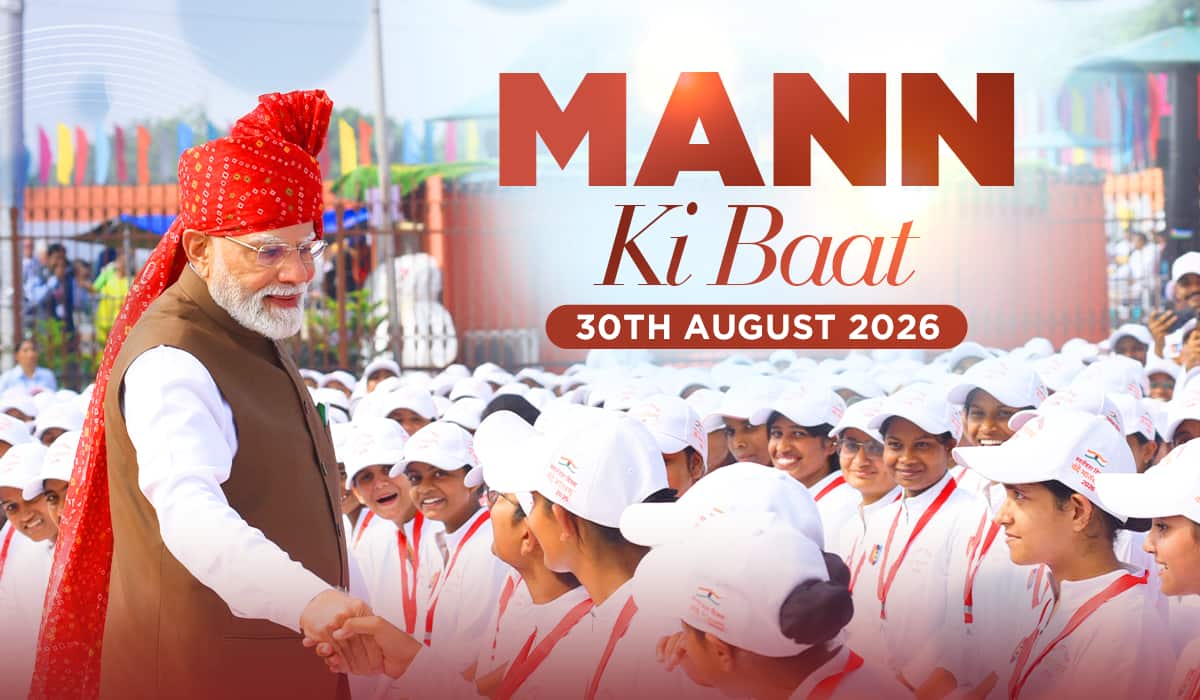
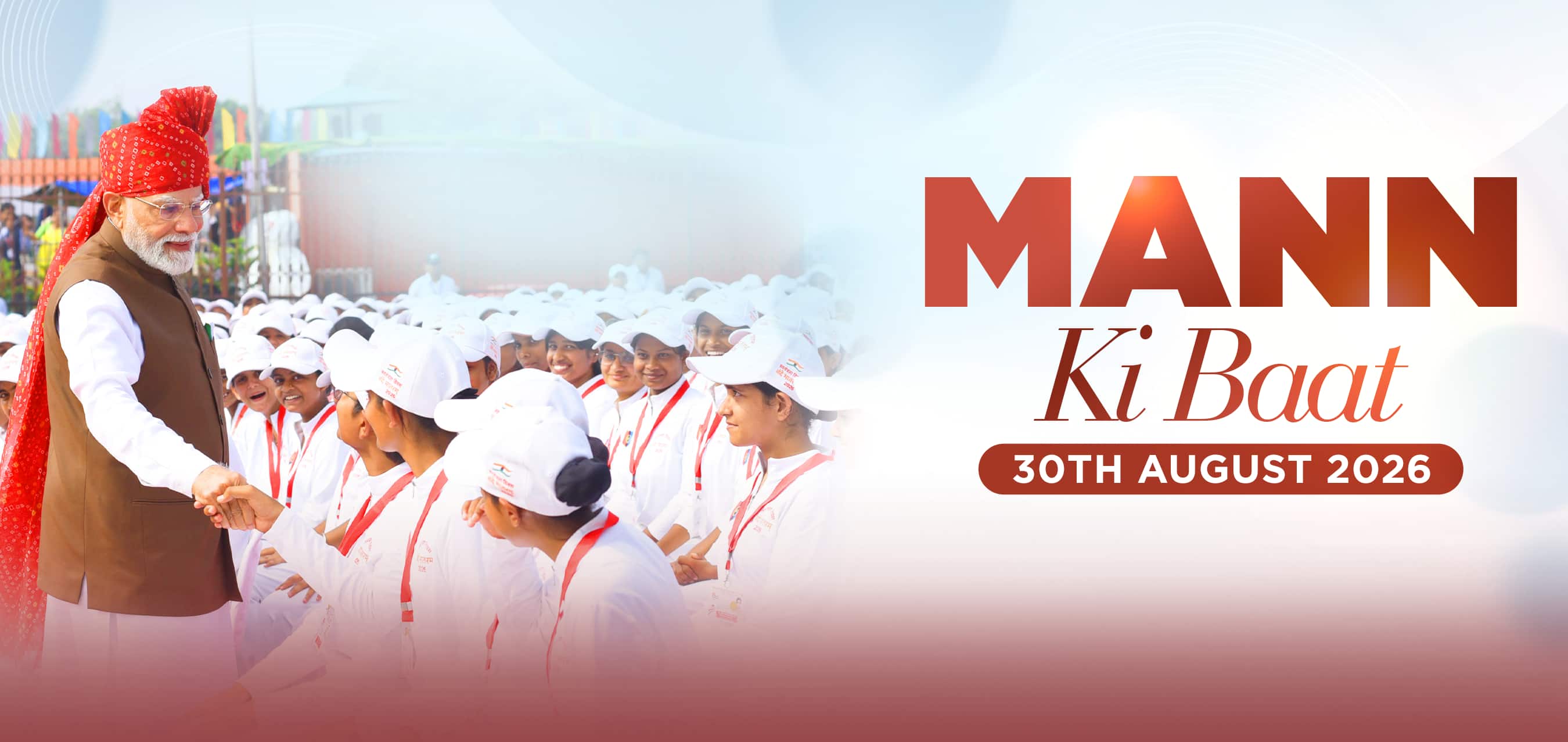
Namaskar! I welcome you all once again to this new episode of ‘Mann Ki Baat’. All of you know that this is a platform where we bring to the fore new initiatives and discuss the innovative ideas of our fellow countrymen. Many of these ideas are the result of people investing their boundless energy into them.
Friends,
some time ago, someone wrote on social media, “On the auspicious occasion of Ashadhi Ekadashi, I am delighted to announce the launch of my initiative to make history interesting.” They further explained that the idea is quite simple: visit the website and select any year. There you can easily find out which ruler ruled over what part of India at that time. I found this quite interesting too and thought of learning more about it. I discovered that this work has been done by Shriman Krishna Seshadri, a resident of Mumbai. Interestingly, Krishna ji has kept the website’s name very simple: www.bharatrajya.com. The effort he has put in should reach all of you; that is why I thought, why not speak directly to Shri Krishna ji!
Friends, Krishna ji is joining us on the phone.
Prime Minister: Namaste, Krishna ji.
Krishna Seshadri: Namaste, Sir, Namaste.
Prime Minister: My friend, I’ve learned that you neither belong to the tech world nor are you a history teacher; yet, you utilized technology to create a website dedicated to history. I am very curious—how did this all come about?
Krishna Seshadri: Thank you, Sir; it is a great privilege to speak with you. To tell you a little about myself: I was an engineer, then I pursued an MBA and entered the field of marketing. However, throughout all this, I maintained a deep interest in history - something I’ve had since childhood. So, I always wanted to do something on history - how to make it interesting and I felt there was immense scope for improvement and change in how we teach history… we could present history to reach people as a story.
Prime Minister: Krishna-ji, what aspect of Indian history did you feel needed to be known by the maximum number of people?
Krishna Seshadri: Sir, the way Indian history is taught in our schools and colleges often focuses on the perspective of a single empire or kingdom, with those specific empires receiving disproportionate attention. Consequently, we remain unaware of many other great empires—such as the Cholas, the Pallavas, the Karkota dynasty of Kashmir, or the Ahoms, who preserved their culture and value system in Assam for at least 600 years. So, I decided to create a site that introduces people to these great empires.
Prime Minister: Krishna-ji, you work so hard; let me ask you a hypothetical question. If you had the opportunity to converse with any three figures from Indian history, who would you choose, and why?
Krishna Seshadri: Yes, Sir. First, I would speak to Rajaraja Chola or Rajendra Chola - who was one of the most powerful and significant kings of the Chola Empire Sir. So, I would want to understand the vision behind the establishment of massive Shiva temples like the Brihadisvara Temple or Gangaikonda Cholapuram. Where did that vision and planning come from? How did the thought occur to them to create something that would inspire people for the next one or two thousand years? So, that is what I would like to know from them. And, the second personality - who, in my opinion, is a highly underrated personality in Indian history - Sir, his name is Hemu. We usually read only two or three lines about him in Indian history.
Krishna Seshadri: We often don’t know the fact that Hemu was a common man - an ordinary individual and a merchant - who went on to build an empire; he was not just an empire-builder but also a military thinker and a military genius who fought 23 battles in his career and won 22 of them. I am very interested in understanding his thought process and the journey that took him from being an ordinary man to such a great king, Sir. The third figure is a very interesting personality - a woman named Tribhuvan Mahadevi. Her story belongs to the Bhaumakara dynasty of Odisha. Around 850 AD, the neighbouring Pala Empire invaded her kingdom, and her husband - the king - was martyred in the battle. Consequently, the empire shrank, and chieftains and leaders began abandoning it; however, Tribhuvan Mahadevi took charge of the administration. She became one of the first independent rulers in Indian history. She not only stabilized the government but also made it powerful enough to rule over Kalinga and the surrounding region for the next hundred years. So, these are the three interesting historical personalities I would like to meet, Sir.
Prime Minister: Krishna-ji, it seems like you are re-living history now; you’ve been completely immersed in it. See, I have also viewed your site with great interest, and what I found most fascinating was the tab allowing people to submit corrections and suggestions. Being open to such constructive feedback is a significant thing in itself.Have you started receiving suggestions from people? And how do you act upon them?
Krishna Seshadri: Yes, Sir, we receive many suggestions from people. Suggestions generally fall into two categories. One type involves suggesting corrections - such as pointing out which king ruled a specific region or nation at a particular time, or clarifying when a specific battle took place. We receive other suggestions - such as adding specific features to the website - and we consider them all. For instance, if someone suggests that a particular king ruled a specific region during a certain era, we take that suggestion and cross-reference it with our sources. Someone suggested to us that while we had showcased India as a whole, it would be even better to display information similarly at the regional level; so, we implemented that feature. And then another suggestion led us to create a 'trump card' style feature - compiling data and statistics for various empires - to make the content more engaging for children. Someone also suggested consolidating these resources so they could be easily downloaded and shared, a feature we are currently implementing. It’s important for us to know that we are bound to make mistakes - we aren't the best. That is precisely why we consciously included a 'correction' tab; we want this to be a collaborative platform where contributions help us build a site that makes history an enjoyable subject for years to come.
Prime Minister: Krishna-ji, you have truly accomplished something remarkable. Okay, apart from history, you must be having a lot of other hobbies… or do you engage in other activities as well!
Krishna Seshadri: Well, actually, Sir, I’m a bit of a boring person.
Prime Minister: (Laughs)
Krishna Seshadri: I’m deeply interested in technology and history, and now that the two have come together, I spend my entire day immersed in that.
Prime Minister: Well, Krishna ji, I extend my very best wishes to you. You have made a good start, and your approach is such that people will connect with it - I am fully confident of that. My best wishes are with you.
Friends,
This initiative by Krishna ji will help not only history students but all of us to learn about our past in an engaging way. If you also have information about such initiatives, please do share it.
My dear countrymen, the 'Nasha-mukt Yuva for Viksit Bharat' campaign is currently gaining momentum rapidly across the country. Its goal is absolutely clear: drug-free youth; a drug-free India.
I am happy that this campaign has not remained merely a formality; many people - especially our youth - are becoming a part of it in large numbers. After all, this is our collective resolve for the health, happiness, and bright future of India's youth.
Friends,
Drug addiction does not just engulf a single individual; the entire family and society have to bear the consequences. I would like to commend those who raise awareness against drugs and step forward to help individuals struggling with addiction. Can you come up with a powerful slogan for a drug-free India? Can our young musicians create songs that convey the message of a drug-free life? Can students and theatre groups write touching short plays that highlight the dangers of drugs while also showing the path to recovery? Our country has no shortage of excellent content creators. I urge them to create content in various languages that helps society in this endeavor. You can use your creativity as a medium for social change. Do share your efforts on social media using the relevant hashtag. Often, creative efforts prove more impactful than formal campaigns. Let us all play our part in this noble mission to keep India's youth away from drugs and free from addiction. Do share your efforts on social media with the hashtag #NashaMuktYuva
My dear countrymen,
The month of August brings with it myriad hues of patriotism all around. During this time, the spirit of love for the nation intensifies in everyone's heart. Occasions such as 'National Handloom Day' and the anniversary of the 'Quit India Movement' to 'Partition Horrors Remembrance Day' make this month special. 'Independence Day' and 'National Space Day' fill every countryman with pride. The 'Har Ghar Tiranga' campaign further strengthens this sentiment. This year has become even more special as it marks the 150th anniversary of 'Vande Mataram'. This time, over 8 crore 'Tiranga selfies' were uploaded.
And this celebration of the Tricolour was not limited to India alone; this year, through the 'Suryapath Tiranga' initiative, our flag embarked on a unique journey across the globe. The Tricolour was hoisted in Suva, Fiji, at the first light of dawn. Subsequently, it was unfurled at Indian Missions and Posts across Asia, Africa, Europe, and eventually San Francisco in America. You can imagine how magnificent those scenes must have been; as the sun traversed across the world, the Indian Tricolour was hoisted in its wake. Such efforts bind society together and deepen our connection with the nation. I extend my heartiest congratulations to everyone involved in these initiatives.
My dear countrymen,
From morning till evening, lakhs of women across the streets of our cities and towns are engaged in their work. Some sell vegetables or fruits, others run tea stalls, while some sell flowers, earthen lamps, and worship materials. Often, a mere lack of capital prevents their businesses from growing further. But now, lakhs of such mothers and sisters are gaining new strength through the ‘PM SVANidhi Yojana’. This aspect of ‘women empowerment’ is not discussed as much as it should be. Women account for approximately 46 percent of the beneficiaries of the ‘PM SVANidhi Yojana’. This means that around 35 lakh women across the country are expanding their businesses by connecting with this scheme.
Friends,
Babita Sharma ji from Ghaziabad is an excellent example of this. Babita ji used to run a small stall selling items for worship - such as flowers, earthen lamps, incense sticks, and coconuts - thereby contributing to her family's livelihood. She worked very hard, but capital was needed to grow the business. She received financial assistance through ‘PM SVANidhi’. She increased her stock and expanded her business. Her customer base and income grew, and gradually, her small roadside stall transformed into a proper shop.
Friends,
The story of T.S. Ningamma ji from Bengaluru is also very inspiring. Ningamma ji and her husband started a small venture selling idli, dosa, and sambar. The business took off, but capital was required to take it to the next level.
Ningamma ji also received support from ‘PM SVANidhi’. She upgraded her cart, began purchasing supplies in bulk, and added new items to her menu. As customers and earnings increased, the family's financial situation improved. Today, she is able to provide a better education for her three children.
When a woman's business grows, the future of her entire family advances along with it. Children receive a better education, household needs are met, and the woman's self-confidence is strengthened. This is, indeed, a living example of ‘women's empowerment.’ I extend my best wishes for a bright future to all the sisters involved in street vending.
My dear countrymen,
Cleanliness has a remarkable quality. When the resolve to keep a place clean becomes the people's own commitment, the transformation is not limited merely to tidiness; it completely changes the identity of that place. Such efforts towards cleanliness in various parts of the country constantly inspire us. There is a village named Patwai in Rampur, Uttar Pradesh. Two friends there, Akash and Rohan, noticed that their local area had become littered with filth. That was all it took; Akash and Rohan picked up garbage bags and set out to clean the area. Gradually, other young people joined them, and a team was formed - named ‘Clean-up Patwai.’ These youths have cleaned four Ganga ghats so far and removed over a tonne of plastic waste. They have also cleaned numerous ponds and public spaces.
Friends,
Similar inspiring scenes of cleanliness and public participation were witnessed during the recent Shri Amarnath Ji Yatra. Thousands of sanitation workers toiled day and night to serve pilgrims along the arduous routes. During this year's pilgrimage, more than 400 metric tonnes of waste were collected and processed. There was one aspect of this effort that I particularly appreciated: pilgrims themselves became active participants in this cleanliness drive. Over 16,000 pilgrims took a pledge for cleanliness; more than 10,000 were awarded the ‘Responsible Yatri’ certificate. A unique experiment also took place here: dung from the horses and mules used during the pilgrimage was converted into biogas, and this clean energy was used to light the ‘Swachh Jyot’. In essence, cleanliness became a form of service and faith during this holy pilgrimage to Baba Barfani.
Friends,
Whether it is our villages or cities, our rivers or pilgrimage sites—their identity is shaped by our conduct. And when cleanliness becomes a part of that conduct, the beauty of the place is further enhanced.
My dear countrymen,
Sometimes a small hobby opens the door to great possibilities in life. The journey of Vesalu Puro from the Phek district of Nagaland is a case in point. Vesalu ji grew up in a farming family; she had watched her parents farm since childhood and had a deep love for flowers. In 2021, she began cultivating flowers on a small scale, driven by this very passion.
Gradually, she began to see a possibility in it. She observed that there was a constant demand for flowers, whether for weddings or other festivals. Vesalu decided to take her hobby further. Along the way, she received training in scientific flower cultivation from the local Krishi Vigyan Kendra. Then she planted thousands of gladiolus bulbs on just a quarter-acre of land. In her very first attempt, over 5,000 flowers bloomed. Friends, this success marked a new beginning for Vesalu. She took her flower cultivation efforts further. Flowers that once remained confined to local markets are now traveling from Nagaland to cities like Delhi and Mumbai. Vesalu Puro ji’s journey demonstrates that when a passion is combined with hard work and proper guidance, it can pave the way for new possibilities.
My dear countrymen,
There are many people around us who initiate a small effort, and by and by, that effort transforms the lives of countless others. There is a village named ‘Dhodrokusum’ in the Debrigarh region of Odisha. Until a few years ago, Maithili Bhue ji from this village would visit the forest almost daily—sometimes to gather firewood, at other times to collect Mahua flowers and Kendu leaves, or to harvest bamboo shoots and other forest produce. The forest met many of the needs of her family and numerous others in the area; however, Maithili ji then became associated with Debrigarh Eco-Tourism. This marked a shift in her relationship with the forest, taking it towards a new direction.
Forest conservation now became a means of livelihood for her. Friends, this transformation in Maithili ji’s life inspired other women as well. Today, more than 60 women are actively involved in forest conservation. Some have taken up the responsibility of protecting wildlife, others are engaged in developing grasslands, and some are contributing to eco-tourism activities.
Friends,
Maithili-ji and these sisters from Debrigarh have demonstrated that it is possible to protect nature while also achieving prosperity in life. The efforts of all these sisters serve as a great inspiration for all of us.
Friends,
Today the flight of our daughters' dreams is soaring from the earth to outer space. And you will be proud to know that India is bringing together thousands of daughters who are nurturing such dreams, from across the globe. This initiative is named ‘Mission ShaktiSAT.’ Through it, 12,000 girl students from 108 countries are getting the opportunity to learn satellite technology and to advance in the field of innovation. On August 23rd - National Space Day - a wonderful glimpse of this mission was seen in Greater Noida, Uttar Pradesh. The second phase of Mission ShaktiSAT was launched at the Gautam Buddha University. On this occasion, around 100 female students from India and various other countries came together. Students selected from India's remote regions are also participating.
The goal of this entire initiative is truly special: preparations are underway to send a satellite - developed entirely through the participation of female students - into lunar orbit. Friends, I am confident that many of these students will carve out a distinct identity for themselves in the fields of science, technology, and innovation in the future.
My dear countrymen,
The avocado fruit is creating quite a buzz these days. Hardly anyone knew about this fruit in the past; both its value and demand were low, but today it is frequently seen on dining tables. It has become a preferred choice in the health and premium markets. This is also very helpful for our farmer brothers and sisters. There’s an example of Varadaraj ji from Kadappa in Andhra Pradesh. He had been cultivating tomatoes and bananas on his farm for years. One day, he saw an avocado crop at a friend's farm. Subsequently, he gathered information about it on YouTube. So far, he has produced nearly 4 tonnes of avocados. Today, he supplies them directly to local shops. The new crop, scientific advice, and direct marketing have completely transformed the earnings from his small farm. Chandrashekharan ji, a farmer from Kodaikanal in Tamil Nadu, started growing avocados on half a hectare of land. That is fetching him good prices, and his income has increased. In Chikkamagaluru, Karnataka, some farmer brothers and sisters have even planted avocados amidst their coffee plantations.
This allows them to earn additional income alongside coffee and black pepper. Friends, we often hear about the avocado toast in city restaurants, but through this very avocado, our innovative farmers have discovered a new recipe for earning. In other words, the avocado from our own country has enhanced the taste of your toast while simultaneously boosting the farmers' income.
My dear countrymen,
In just a few days, on September 3rd, we will celebrate the birth centenary of the legendary Uttam Kumar. Friends, Uttam Kumar was a versatile actor who became deeply embedded in people's hearts through his acting. Film lovers believe that Satyajit Ray wrote the entire script for the film *Nayak* (The Hero) with Mahanayak Uttam Kumar in mind. Shriman Satyajit Ray had remarked that he possessed remarkable emotional depth alongside great dignity. He worked very hard to bring his characters to life. Uttam Kumar-ji was known not only for his natural ease but also for his philanthropy. His life offers another great lesson: never give up. Although his early films did not fare well, he remained focused on his work. It was this dedication that enabled him to reach such great heights. Friends, I recall passing by Uttam Kumar-ji’s house while doing a roadshow in Kolkata. Someone there even gifted me a photograph of him. I once again pay tribute to the legendary Uttam Kumar-ji; he will forever reign in our hearts.
Our festivals and celebrations not only uphold our traditions but also provide us with opportunities to connect with one another. In the coming days, we are set to celebrate several more significant festivals. The holy festival of Janmashtami falls on September 4th. We will also celebrate Vishwakarma Puja in September. On this occasion, we should honor the artisans, craftspeople, and Vishwakarma friends in our communities. Deepawali is also approaching in a few months, and preparations for it are already gradually underway. During this festive season, I once again urge you to be ‘Vocal for Local.’ Being ‘Vocal for Local’ does not merely mean buying earthen lamps; the vision behind it is much broader.
Whatever item we purchase for our homes, do ensure to see that it is made in India. The path to India becoming self-reliant will be paved only by taking pride in products made in India. It is also our responsibility to convey this message to as many people as possible. Our friends from the creative world, influencers, and celebrities also have a significant role to play in that. I urge you to personally embrace the 'Vocal for Local' spirit and inspire others to do the same.
Friends,
There must be many people around you who are bringing about significant change in society through their small yet impactful efforts. Do write about them for 'Mann Ki Baat'. The experiences you share could become a source of new inspiration for someone, somewhere in the country. I look forward to your suggestions and experiences. Thank you very much. Namaskar.
PM SVANidhi Yojana is helping lakhs of women street vendors expand their businesses, increase their incomes and build a better future for their families.#MannKiBaatpic.twitter.com/MOtKlVkXOK
From young volunteers in Uttar Pradesh's Rampur cleaning their neighbourhoods to pilgrims joining the cleanliness drive during the Shri Amarnath Ji Yatra, Swachhata is becoming a people's resolve.#MannKiBaatpic.twitter.com/xPLghWi7D6
In Odisha's Debrigarh region, Maithili Bhue Ji's journey from depending on forest produce to becoming part of eco-tourism has inspired several women to contribute towards forest conservation.#MannKiBaatpic.twitter.com/g41BNVwfGJ
Mission ShaktiSAT is bringing together girl students from 108 countries and giving them the opportunity to learn about satellite technology as well as explore new frontiers in science, technology, and innovation.#MannKiBaatpic.twitter.com/0jydyhtTrV
Mahanayak Uttam Kumar continues to inspire generations. His remarkable performances, dedication and ability to bring every character to life made him an unforgettable icon of Indian cinema.#MannKiBaatpic.twitter.com/JayfStHgon






 It is a great honour to commission the Barracuda today in the service of the National Coast Guard of Mauritius.