I welcome all the esteemed guests present at the NDTV World Summit. You will be discussing various topics in this summit, and global leaders from different sectors will also share their views.
Friends,
If we look at the past 4-5 years, one common theme has been present in most discussions: concern—concern about the future. During Corona, the worry was about how to handle the global pandemic. As COVID spread, concerns grew about the global economy. The pandemic increased worries about inflation, unemployment, and climate change. Then, the wars that broke out intensified discussions and anxieties. There was concern about the global supply chain disruptions and the loss of innocent lives. These tensions, conflicts, and stresses became topics of global summits and seminars. And today, when the focus of discussions is largely on concerns, what kind of thinking is happening in Bharat? It's a striking contrast. Here, we are talking about 'The Indian Century.' Amid global turmoil, Bharat has become a beacon of hope. While the world is consumed by worry, Bharat is spreading hope. And it’s not that global situations don’t affect us—they do. Bharat faces challenges as well, but there is a sense of positivity here, which we can all feel. That’s why there is talk of 'The Indian Century.'

Friends,
The speed and scale at which Bharat is progressing in every sector today is unprecedented. Bharat’s pace and scale are unparalleled. Our government has completed around 125 days of its third term. I will share with you the experiences of these 125 days. In 125 days, 3 crore new pucca houses have been approved for the poor. In 125 days, we have launched infrastructure projects worth 9 lakh crore rupees. In 125 days, we have launched 15 new Vande Bharat trains, and work has begun on 8 new airports. In these same 125 days, we have provided a package worth 2 lakh crore rupees for the youth, directly transferred 21,000 crore rupees into the bank accounts of farmers, and arranged free healthcare up to 5 lakh rupees for senior citizens above 70 years of age. Look at the scope of work being done in Bharat—within 125 days, 5 lakh homes have been equipped with rooftop solar plants. More than 90 crore trees have been planted under the ‘Ek Ped Maa Ke Naam’ (One Tree in the Name of the Mother) campaign. Not only that, we have approved 12 new industrial nodes in 125 days. During these 125 days, our Sensex and Nifty have grown by 6 to 7 percent. Our foreign exchange reserves have crossed $700 billion, up from $650 billion. This list of Bharat's achievements is long, and I’m only talking about the last 125 days. You should also note the global discussions that have taken place in Bharat during these 125 days. What global events have taken place in Bharat in 125 days? There were international assemblies on telecom and the digital future, a global fintech festival took place, discussions on the global semiconductor ecosystem happened in Bharat, and international conferences on renewable energy and the future of civil aviation took place in Bharat.
Friends,
This is not just a list of events; it is also a list of the hopes associated with Bharat. It highlights both Bharat’s direction and the world’s hopes. These are the topics that will shape the future of the world, and the world is turning to Bharat today for discussions on these issues.
Friends,
With so much happening in Bharat today, the speed at which we have progressed during our third term has led many rating agencies to raise Bharat’s growth forecast. Experts like Mark Mobius, who are here and deeply invested in Bharat’s growth, are enthusiastic about the investment opportunities in Bharat, and that carries great significance. When he advises global funds to invest at least 50 percent of their capital in Bharat’s stock market, it sends a strong message.
Friends,
Bharat today is both a developing country and an emerging power. We understand the challenges of poverty and know how to carve a path of progress. Our government is rapidly formulating policies, making decisions, and introducing new reforms. In public life, I meet many different people. Some say, "Modi ji, you’ve won three consecutive terms, accomplished so much, so why do you still work so tirelessly? What’s the need? You’ve made Bharat the fifth-largest economy, crossed so many milestones, taken so many pending decisions, implemented so many reforms. Why work so hard?" I meet many people who say this. But with the dreams we have seen, and the resolve with which we are moving forward, there is no room for rest.

In the last 10 years, 25 crore people have been lifted out of poverty. Is that enough? No. In the last 10 years, nearly 12 crore toilets have been built, and 16 crore people have received gas connections. Is that not enough? In the last 10 years, over 350 new medical colleges have been built, and more than 15 AIIMS institutions have been established. Is that not enough? In the last 10 years, over 150,000 start-ups have been established in Bharat, and 8 crore youth have taken Mudra loans to start their ventures. Is that hunger for progress satisfied? Is that not enough? My answer is: No, it’s not enough. Today, Bharat is one of the youngest countries in the world. This young nation’s potential can take us to new heights, and for that, we have much more to do and must do it swiftly.
Friends,
You must have noticed the change in Bharat’s thinking and approach. Traditionally, and understandably, governments compare their work to that of previous governments. I don’t find anything wrong in it. They measure their progress by asking, "What was there before, and what do we have now?" This provides some satisfaction, as they feel they have done better than previous governments. Many governments compare themselves to the past 10-15 years, and use this as a metric of their success. We, too, used to follow this path. It was very natural. But now, this path doesn’t satisfy us. Now, we don’t rest on the laurels of comparing yesterday with today. Our benchmark for success is no longer what we have achieved. Our focus is now on where we want to go, how far we need to go, how much is left, and by when we will reach there. This new approach drives my work with the entire government machinery.
Now, Bharat is making headway with a forward-looking approach. The ‘Viksit Bharat’ (Developed India) resolution by 2047 reflects this mindset. Now we need to assess how far we have come towards achieving this resolve of a ‘Viksit Bharat’, how much more we need to do, and at what speed and scale we must work. This isn’t just a government decision with set targets—today, 140 crore people of Bharat are part of this resolve for a ‘Viksit Bharat’, and they are driving it themselves. This is not just a campaign of public participation but also a movement of Bharat's self-confidence. You will be surprised to know, when the government started working on the vision document for a ‘Viksit Bharat’, millions of people sent in their suggestions. Debates and discussions took place in schools, colleges, and universities. Government and social organisations conducted debates. Based on the suggestions received from the public, Bharat set its goals for the next 25 years. Discussions on ‘Viksit Bharat’ have now become part of our consciousness. I believe this is the greatest example of building ‘Rashtra Shakti’ (national strength) through ‘Jan Shakti’ (people’s power).
Friends,
Today, Bharat has another advantage, one that is crucial in making this century Bharat's century. You all know that this is the era of AI. The present and future of the world are tied to AI. But Bharat has the advantage of double AI power. Now, you might be wondering, “The world has only one AI, so where did Modi get this double AI?” In the world's view, AI means Artificial Intelligence, but we also have another AI—Aspirational Bharat – besides Artificial Intelligence. When the power of Aspirational Bharat combines with Artificial Intelligence, the speed of development naturally accelerates.

Friends,
For us, AI is not just a technology; it is a new gateway to opportunities for Bharat's youth. This year, Bharat launched the Bharat AI Mission. Whether it’s healthcare, education, or start-ups, Bharat is increasing the use of AI in every sector. We are also working on providing better AI solutions to the world. At the Quad level, Bharat has taken several initiatives. Bharat is equally serious about the other AI—Aspirational Bharat. Whether it’s the middle class, the common people, their ease of living, their quality of life, small entrepreneurs, MSMEs, the youth, or women of Bharat—we are formulating policies and making decisions with everyone's aspirations in mind.
Friends,
One example of Aspirational Bharat is the excellent work being done in connectivity. We have focused heavily on fast physical connectivity and inclusive connectivity. This is essential for a society with development aspirations. For Bharat, this is even more crucial. Such a large country, with such diverse geography, needs to be rapidly connected to truly realize its potential. That’s why we also focused on air travel. I remember when I first said that I wanted to make air travel accessible to those who wear slippers, the reaction was, “How is this possible in Bharat?” But we moved forward and launched the UDAN scheme. Today, UDAN has completed eight years. Under UDAN, we worked on two pillars. First, we built a new network of airports in Tier-2 and Tier-3 cities. Second, we made air travel affordable and accessible for everyone. So far, around 300,000 flights have taken off under UDAN, with 1.5 crore common citizens travelling. Today, over 600 routes operate under UDAN, most of which connect smaller cities. In 2014, Bharat had around 70 airports; today, the number of airports has crossed 150. The UDAN scheme has shown how societal aspiration fuels development.
Friends,
Let me give you a few examples related to the youth of the country. We are working to make Bharat's youth a force that can drive global growth. That is why we have placed a strong emphasis on education, skill development, research, and employment. The results of the work we have done in these areas over the past 10 years are beginning to show. Just a few days ago, the Times Higher Education rankings were released, and Bharat is the country that has made the most improvement in research quality. In the past 8–9 years, Indian universities' participation has grown from 30 to over 100. Bharat's presence in the QS World University Rankings has increased by over 300% in the last 10 years. Today, the number of patents and trademarks is at an all-time high. Bharat is becoming a major hub for R&D for the world. Around 2,500 companies have their research centres in Bharat. Bharat's start-up ecosystem has also seen unprecedented growth.

Friends,
These widespread changes in Bharat are becoming a foundation of trust for the world. Today, Bharat is leading the way in shaping the global future in many areas. The world sees Bharat as a reliable partner in times of crisis. Remember the days of COVID—our capacity to produce essential medicines and vaccines could have earned us billions of dollars, which would have benefited Bharat, but humanity would have lost. That's not our ethos. We provided medicines and life-saving vaccines to hundreds of countries in their time of need. I am satisfied that Bharat could contribute to the world during difficult times.
Friends,
Bharat does not build relationships that are taken for granted. Our relationships are based on trust and reliability, and the world understands this. Bharat is a country whose progress brings joy to the world. When Bharat succeeds, the world feels good about it. Take the recent Chandrayaan mission, for example. The entire world celebrated it like a festival. When Bharat progresses, it does not evoke feelings of jealousy or envy. Instead, the world feels happy because Bharat's progress benefits the entire world. We all know how Bharat was a positive force driving global growth in the past. How Bharat's ideas, innovations, and products left a lasting impact on the world for centuries. But then times changed, and Bharat endured a long period of colonization, causing us to fall behind. During the Industrial Revolution, Bharat was also colonized, which prevented us from benefiting from industrial revolutions. That time slipped from Bharat's hands, but today, this is Bharat's time. This is the era of Industry 4.0. Bharat is no longer enslaved; we have been free for 75 years. Therefore, we are now fully prepared.
Friends,
The skills and infrastructure needed for Industry 4.0 are being developed rapidly by Bharat. Over the past decade, I have had the opportunity to connect with many global platforms. I have been part of G-20 and G-7 summits around the world. Just 10 days ago, I was in Laos for the ASEAN Summit. You'll be glad to know that Bharat’s Digital Public Infrastructure (DPI) is frequently discussed at almost every summit. Today, the world is closely observing Bharat's DPI. Our dear friend and admirer of Bharat, Mr. Paul Romer, is here with us. I have had the opportunity to discuss many ideas with him in detail before, including in the U.S., and in our conversations, Paul has praised Bharat's digital infrastructure and innovations like Aadhaar and DigiLocker. During major summits, people often express surprise at how Bharat has developed such an incredible DPI.

Friends,
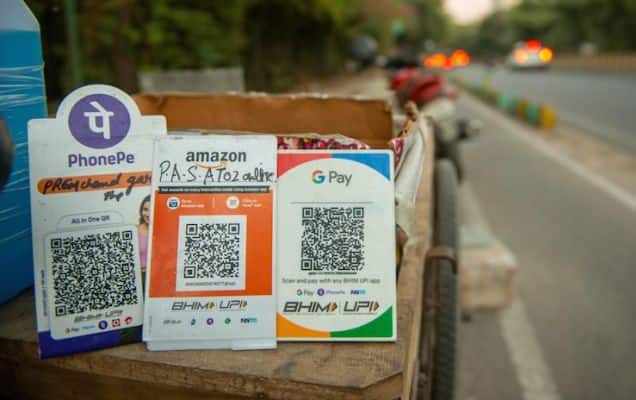
In the internet era, Bharat did not have the first-mover advantage. In countries with this advantage, private platforms and innovations led the digital space, bringing a revolution to the world. However, the benefits were limited. On the contrary, Bharat has introduced a new model to the world. Bharat democratized technology, showing a new path through Digital Public Infrastructure. In Bharat today, the government builds a platform, and millions of new innovations occur on it. Our JAM connectivity—Jan Dhan, Aadhaar, and Mobile—has become a fantastic system for faster and leakage-free delivery of services. Take our UPI, for example. Fintech has seen tremendous growth in Bharat due to UPI. Every day, more than 500 million digital transactions are happening, driven not by corporations but by our small shopkeepers and street vendors. Our PM Gati Shakti platform is another example. We created PM Gati Shakti to overcome the silos that arose during infrastructure projects. Today, it is helping transform our logistics ecosystem. Similarly, our ONDC platform is proving to be an innovation that democratizes and brings transparency to online retail. Bharat has shown that digital innovation and democratic values can coexist. Bharat has demonstrated that technology is a tool for inclusion, transparency, and empowerment, not for control and division.
Friends,
This era of the 21st century is one of the most critical periods in human history. In such times, the major needs are stability, sustainability, and solutions—these are essential for humanity's better future. And today, Bharat is making efforts in these areas, with the unwavering support of the people of Bharat. For the first time in six decades, the people of the country have given their mandate to a government for the third consecutive term. This sends a message of stability. Recently, elections were held in Haryana, and in these elections too, the people of Bharat have strengthened this sense of stability.
Friends,
The crisis of climate change has become a crisis for all humanity. In this area too, Bharat is trying to lead. Our contribution to global climate change is minimal, yet we have made the green transition the fuel for our growth. Today, sustainability is at the core of our development planning. Take a look at our PM Surya Ghar Muft Bijli Yojana, the scheme for installing solar pumps in fields, our EV revolution, or the Ethanol Blending Program—whether it's large wind energy farms, the LED light movement, solar-powered airports, or the focus on biogas plants. You look at any of our programs or schemes, you will find a strong commitment to a green future and green jobs in every program and scheme.

Friends,
Along with stability and sustainability, Bharat is now focusing on solutions. Over the past decade, Bharat has worked on many solutions essential for tackling global challenges. Whether it’s the International Solar Alliance, the Coalition for Disaster Resilient Infrastructure, the India-Middle East Economic Corridor, the Global Biofuel Alliance, yoga, Ayurveda, Mission LiFE, or Mission Millets—every initiative taken by Bharat is providing solutions to the world's challenges.
Friends,
I am happy that Bharat's growing capabilities are ensuring the world's betterment. The more Bharat progresses, the more the world will benefit. Our aim is for Bharat’s century to be not just Bharat’s victory but a victory for all humanity. A century that advances through everyone's talents, a century enriched by everyone's innovations, a century free from poverty, a century where everyone has opportunities to progress, and a century in which Bharat’s efforts bring stability and peace to the world. With this spirit, I again express my gratitude to NDTV for inviting me here and giving me this opportunity. I extend my best wishes for the success of this summit.
Thank you very much.