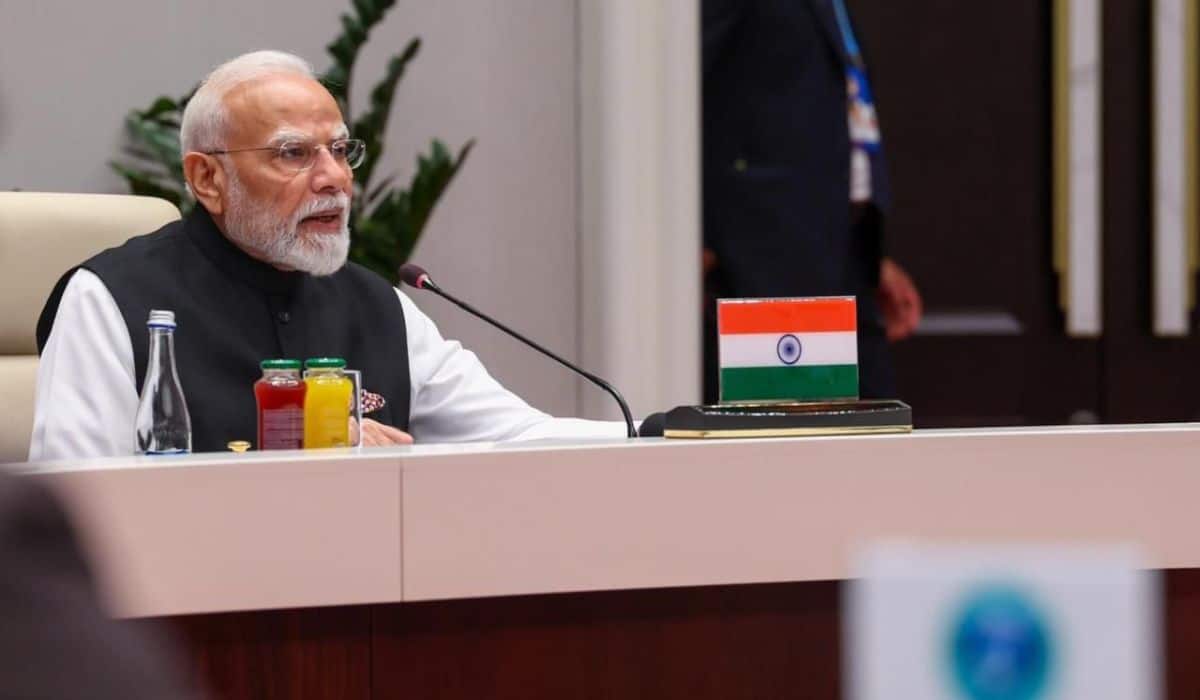
1. H.E. Shri Narendra Modi, Prime Minister of the Republic of India and H.E. Sheikh Hasina, Prime Minister of the People’s Republic of Bangladesh held a Summit in virtual format on 17 December 2020. Both sides held comprehensive discussions on all aspects of bilateral relations, and exchanged views on regional and international issues.
India-Bangladesh partnership
2. Both Prime Ministers expressed satisfaction over the current state of bilateral relations based on shared bonds of history, culture, language, and other unique commonalities that characterize the partnership. They emphasized that relations between Bangladesh and India are based on fraternal ties and reflective of an all-encompassing partnership based on sovereignty, equality, trust and understanding that transcends a strategic partnership. They paid solemn tribute to the martyrs of the Liberation War of Bangladesh, the Muktijoddhas and the Indian soldiers, for their great sacrifices in 1971. They vowed to uphold and protect the cherished values of democracy and equality in line with the aspirations of the people of the two friendly countries.
3. The two leaders expressed satisfaction on the progress of various decisions taken during the official visit of Prime Minister Sheikh Hasina to Delhi in October 2019. Both sides also recalled the successful holding of the Sixth Meeting of the Joint Consultative Commission held in September 2020.
Cooperation in Health Sector- addressing the global public health challenge
4. Both sides exchanged views on the situation of the ongoing COVID-19 pandemic in their respective countries and expressed satisfaction at the manner in which sustained engagement between the two countries has been maintained during this ongoing crisis. Reiterating the highest priority India attaches to Bangladesh under India’s Neighbourhood First Policy, Prime Minister Narendra Modi assured that vaccines would be made available to Bangladesh as and when produced in India. Both leaders also noted the ongoing bilateral collaboration between the private sector in this area.
5. India also offered collaboration in therapeutics and partnership in vaccine production. Bangladesh appreciated India’s conducting capacity building courses for medical professionals in Bangla language.
Cultural Cooperation - Joint Celebration of Historical Links
6. Prime Minister Sheikh Hasina deeply appreciated the warm gesture of India in organizing various events on the occasion of ongoing ‘Mujib Borsho’. The two Prime Ministers jointly unveiled a commemorative postal stamp issued by the Government of India on the occasion of birth centenary of Bangabandhu Sheikh Mujibur Rahman. Prime Minister Narendra Modi thanked the Government of Bangladesh for issuing a stamp in honour of Mahatma Gandhi on the occasion of Gandhiji’s 150th birth anniversary celebrations earlier in September 2020.
7. An introductory video on the digital exhibition to commemorate the two great leaders of the 20th century, Mahatma Gandhi and Bangabandhu, was also screened on this occasion. Both leaders expressed hope that the exhibition, to be mounted in various cities of Bangladesh and India and in selected cities worldwide, as well as at the United Nations, will inspire values of justice, equality and non-violence, particularly amongst the youth.
8. Both sides noted that the filming of the biopic on Bangabandhu Sheikh Mujibur Rahman, under the direction of Indian film director Shyam Benegal will commence in January 2021.
9. Noting that the year 2021 will be historic in India Bangladesh bilateral relations as they would be commemorating the fiftieth anniversary of the Liberation War and the establishment of diplomatic relations between India and Bangladesh, it was agreed to jointly organize several activities to commemorate these two epochal events in India, Bangladesh and third countries.
10. Bangladesh Prime Minister requested the Indian side to consider Bangladesh’s proposal to name the historic road from Mujib Nagar to Nodia on Bangladesh-India border as "Shadhinota Shorok” commemorating the historic significance of the road during Bangladesh’s Liberation War.
11. Both sides reiterated to continue regular exchanges of groups to promote culture, education, science and technology, youth and sports and mass media.
Border Management and Security Cooperation
12. Both sides agreed to hold an early meeting of the Joint Boundary Conference to prepare a new set of strip maps along the stretch of Icchamati, Kalindi, Raimongol and the Hariabhanga Rivers from Main Pillar 1 to Land Boundary terminus, with a view to finalizing the delineation of the boundaries as fixed. It was agreed to carry out necessary work to convert the International Boundary along Kuhsiyara river into a fixed boundary.
13. Bangladesh side reiterated the request for 1.3 km Innocent Passage through river route along River Padma near Rajshahi District. The Indian side assured to consider the request.
14. Both leaders agreed to facilitate completion of border fencing at all pending sectors at the international border between both the countries at the earliest beginning from the Tripura (India)- Bangladesh sector. Both leaders also agreed that loss of civilian lives at the border is a matter of concern and directed the border forces concerned to enhance coordinate measures to work towards bringing such border incidents to zero.The leaders stressed on full implementation of the ongoing Coordinated Border Management Plan. Both sides noted with satisfaction the recent stepped-up efforts of the two border guarding forces against smuggling of arms, narcotics and fake currency and to prevent trafficking, particularly of women and children.
15. Noting that Bangladesh and India were prone to frequent natural disasters, the two leaders directed officials on both sides to expeditiously conclude the MoU in the area of disaster management cooperation.
16. Recognizing that terrorism remains a threat to global peace and security, both sides reiterated their strong commitment to eliminating terrorism in all its forms and manifestations.
17. Both sides emphasized simplifying people to people movement between the two countries. Bangladesh side requested for early implementation of India’s commitment to remove remaining restrictions on entry/ exit from land ports in India for Bangladeshis travelling on valid documents in a phased manner, beginning with checkpoints at Akhaura (Tripura) and Ghojadanga (West Bengal).
Trade Partnership for Growth
18. Prime Minister Sheikh Hasina appreciated the Duty Free and Quota Free access given to Bangladeshi exports to India under SAFTA since 2011. Both Prime Ministers emphasized on addressing issues of non-tariff barriers and trade facilitation including port restrictions, procedural bottlenecks and quarantine restrictions so that both countries can take full advantage of SAFTA flexibility. The Bangladesh side requested that as India’s export of essential commodities to Bangladesh are an important factor influencing their domestic market, any amendments in export-import policy of the Government of India may be conveyed in advance. The Indian side took note of this request.
19. Both the leaders commended trade and railway officials for the cooperation shown in maintaining uninterrupted supply chains during COVID-19, including facilitating bilateral trade through existing rail routes, using side-door container and parcel trains.
20. Recognizing the immense potential of bilateral economic and commercial ties, both Prime Ministers directed the officials to expeditiously conclude the ongoing joint study on the prospects of entering into a bilateral Comprehensive Economic Partnership Agreement (CEPA).
21. Welcoming the first meeting of the India-Bangladesh Textile Industry Forum, earlier this year, the leaders emphasized the importance of increased linkages and collaboration in the textile sector and directed the officials to conclude the ongoing negotiations on the MOU between Ministry of Textiles, Government of India and Ministry of Textiles and Jute, Government of Bangladesh at the earliest. They welcomed the consultations on anti-dumping/anti-circumvention duties imposed on export of jute products from Bangladesh to India held recently and expressed hope that the issues related to ADD will be resolved expeditiously.
Connectivity for Prosperity
22. The two Prime Ministers noted with satisfaction the continued progress made towards the restoration of pre-1965 railway linkages between both nations. They jointly inaugurated the newly restored railway link between Haldibari (India) and Chilahati (Bangladesh) and noted that this rail link will further strengthen trade and people to people ties between the two sides. It was decided to operationalize the train as and when the COVID situation improves.
23. The two leaders took stock of the ongoing bilateral connectivity measures and welcomed the recent initiatives including the signing of the second addendum to the Protocol on Inland Water Transit and Trade (PIWTT), trial run of trans-shipment of Indian goods from Kolkata to Agartala via Chattogram and operationalization of Sonamura-Daudkandi Protocol route under the PIWTT. Both the leaders agreed to expeditiously operationalise trans-shipment of Indian goods through Chattogram and Mongla Ports.
24. To facilitate better connectivity and simplify movement of passengers and goods between both the countries, both leaders agreed to an early operationalization of the BBIN Motor Vehicles Agreement through expeditious signing of the Enabling MoU for Bangladesh, India and Nepal to commence the movement of goods and passengers, with provision for Bhutan to join at a later date.
25. Bangladesh Prime Minister expressed keen interest in the ongoing India Myanmar Thailand trilateral highway project and sought support of India for enabling Bangladesh to connect with this project with a view to enhance connectivity between the regions of South and South East Asia. In the same spirit, the Indian side requested Bangladesh to allow connectivity from West Bengal (Hilli) to Meghalaya (Mahendraganj) via Bangladesh.
26. India reiterated its request to the Government of Bangladesh of having at least one Land Port with minimal negative list between the each neighbouring states of India and Bangladesh, beginning with Agartala-Akhaura. Bangladesh side proposed that Bangladeshi trucks avail of the Feni Bridge, once completed, for transportation of goods from Chattogram port to the North East of India.
27. Acknowledging the vibrant development partnership between the two countries, both sides stressed on active operationalization of the recently-constituted High Level Monitoring Committee headed by Secretary, Economic Relations Division from Bangladesh and the High Commissioner of India in Dhaka to regularly review the progress of the LOC Projects for their early completion.
28. Both sides noted with satisfaction the commencement of a temporary Air Travel Bubble between the two sides to facilitate the urgent requirements of travellers on both sides during the COVID-19 pandemic. Bangladesh side also requested the Indian side to resume regular travel through land ports at the earliest
Cooperation in Water Resources, Power and Energy:
29. Prime Minister Sheikh Hasina highlighted the need for early signing of interim agreement for sharing of the Teesta waters, as agreed upon by both the governments in 2011. Prime Minister Narendra Modi reiterated India’s sincere commitment and continued efforts of the Government of India in that regard.
30. The two leaders underscored the need for early conclusion of Framework of Interim Agreement on sharing of waters of six joint rivers, namely, Manu, Muhuri, Khowai, Gumti, Dharla and Dudhkumar.
31. Bangladesh side requested the Indian side to inform its concerned border authorities to allow excavation work of the remaining portion of the Rahimpur Khal for utilization of Kushiyara River waters for irrigation purposes. The Indian side was also requested to provide early concurrence on the proposed MoU to be signed between the two countries for monitoring the withdrawal of water from the Kushiyara River by both the sides, pending signing of the Treaty/Agreement regarding sharing of water of the Kushiyara River. The two leaders recalled the positive contribution of the Joint Rivers Commission and looked forward to the next round of Secretarial level JRC meeting at the earliest.
32. Both sides expressed satisfaction at the robust cooperation in the power and energy sector, including between the private sector. It was agreed to expedite implementation of projects including India-Bangladesh Friendship Pipeline, Maitree Super Thermal Power Project as well as other projects. Both sides welcomed the signing of the Framework of Understanding on Cooperation in the Hydrocarbon Sector which would further augment energy linkages by streamlining investments, technology transfer, joint studies, training and promoting hydrocarbon connectivity. It was also agreed to enhance cooperation in energy efficiency and clean energy, including in biofuels.In line with commitment of both countries to move towards green, clean, renewable sources of energy, it was agreed to strengthen subregional cooperation including with Nepal and Bhutan. Both sides also agreed to strengthen cooperation in the area of power and energy connectivity.
Forcibly Displaced Persons from the Rakhine State of Myanmar
33. Prime Minister Narendra Modi appreciated the generosity of Bangladesh in sheltering and providing humanitarian assistance to the 1.1 million forcibly displaced persons from the Rakhine State of Myanmar. Both Prime Ministers reiterated the importance of their safe, speedy and sustainable return. Prime Minister Sheikh Hasina congratulated India on its election as a member of the United Nations Security Council. She expressed Bangladesh’s expectation to see India assist in the repatriation of the forcibly displaced Rohingyas back to Myanmar.
Partners in the Region and the World
34. Prime Minister Narendra Modi thanked Prime Minister Sheikh Hasina for supporting India in its election to the United Nations Security Council. Both countries agreed to continue working together towards achieving early reforms of the UN Security Council, combating climate change, attainment of the Sustainable Development Goals (SDGs) and protection of the rights of migrants. Both Prime Ministers reaffirmed the need for developed countries to fulfill their commitments under the Global Partnership for ensuring the means of implementation of the SDGs as enshrined in the Agenda 2030.
35. Both leaders highlighted that given the regional and global economic scenarios following the outbreak of COVID 19, regional organisations, such as SAARC and BIMSTEC have an important role to play. Bangladesh Prime Minister thanked the Indian Prime Minister for convening the SAARC leaders Video Conference in March 2020 in the outbreak of COVID-19. She also thanked the Indian Prime Minister for proposing creation of the SAARC Emergency Response Fund to counter effects of the global pandemic in the South Asian region. Bangladesh Prime Minister also reiterated the proposal for establishment of a SAARC Medical and Public Health Research Institute and sought support in this regard. Bangladesh will assume chairmanship of the IORA in 2021 and requested the support of India for working towards greater maritime safety and security. Prime Minister Modi appreciated the Presidency of Bangladesh at the Climate Vulnerable Forum in the current tenure.
36. Prime Minister Sheikh Hasina appreciated the work of the New Development Bank and thanked India for inviting Bangladesh to join the Institution. She welcomed the work of the Bank in multiple sectors including infrastructure development and expressed Bangladesh’s willingness to be a part of the initiative.
Signing of Bilateral Documents and Inauguration of Projects
37. On this occasion, the following bilateral documents were signed and exchanged by the officials of the Governments of India and Bangladesh:
▪ Framework of Understanding (FOU) on Cooperation in Hydrocarbon Sector;
▪ Protocol on Trans-boundary Elephant Conservation;
▪ MOU regarding Indian Grant Assistance for Implementation of High Impact Community Development Projects (HICDPs) through Local Bodies and other Public Sector Institutions;
▪ MOU on Supply of Equipment and Improvement of Garbage / Solid Waste Disposal Ground at Lamchori Area for Barishal City Corporation;
▪ Terms of Reference of India-Bangladesh CEOs Forum;
▪ MoU between Father of the Nation Bangabandhu Sheikh Mujibur Rahman Memorial Museum, Dhaka, Bangladesh and the National Museum, New Delhi, India; and
▪ MoU on Cooperation in the field of Agriculture.
The following bilateral development partnership projects were also inaugurated:
• Beautification and city development project in Rajshahi City;
• Construction of Khalishpur Collegiate Girl’s School in Khulna;
38. Both the Prime Ministers thanked each other for making this arrangement amidst the new normal.
39. Prime Minister Sheikh Hasina thanked Prime Minister Narendra Modi for accepting her invitation to visit Bangladesh in person in March 2021 to join the celebrations on the occasion of 50th anniversary of Bangladesh’s Independence and 50 years of Bangladesh-India diplomatic relations.