"Today, every institution and every individual should move with a resolution that every effort and act will be for Viksit Bharat. The aim of your goals, your resolutions should be only one – Developed India".-PM Narendra Modi, At the launch of Viksit Bharat @2047: Voice of Youth.'
Viksit Bharat, or Developed India, is the vision of Prime Minister Narendra Modi and represents a complete blueprint for the country's prosperity, not just a catchphrase. This vision will be a guiding principle for India during its Amrit Kaal. With a combination of social changes, technical innovations, and economic reforms, Prime Minister Modi hopes to raise India's position at the global level. This vision has many components, from economic growth to all-inclusive development and imbibing technological innovation.
A key objective of Viksit Bharat is to enable every citizen to participate in the economy. The economy that PM Modi envisions is strong, inclusive, and full of job and entrepreneurial opportunities. This entails implementing policies to encourage investment, advance economic growth, and foster innovation across various industries. The government's dedication to creating an environment favourable for business expansion and employment generation is demonstrated by the focus on programmes such as Made in India, Digital India, and Startup India. With the support of digitisation, homegrown manufacturing, and a thriving startup community, Prime Minister Modi hopes to raise millions out of poverty and realise the nation's full economic potential.
Another crucial component of Viksit Bharat's vision is to develop world-class infrastructure to promote sustainable growth and improve everyone's standard of living. To close infrastructure gaps around the country, the government is launching large-scale projects that range from constructing world-class roads, trains, and ports to increasing digital connection and updating urban infrastructure. Projects like the Pradhan Mantri Awas Yojana, Bharatmala, Sagarmala, and Smart Cities Mission highlight the government's commitment to building livable, sustainable cities, enhancing connectivity, and offering affordable housing to everybody. Vande Bharat trains, the UDAN initiative, has made the travel experience hassle-free for common citizens. Similarly, the expansion of metro trains has also ensured a smooth travel experience within cities. PM Modi wants to increase productivity, unleash economic potential, and raise the general standard of living through infrastructure investment.
Viksit Bharat prioritises inclusive development and social welfare to ensure everyone benefits from economic progress. The administration has launched several landmark initiatives to support disadvantaged populations, empower marginalised communities, and expand social security, healthcare, and education. Programmes such as Ayushman Bharat, Swachh Bharat Abhiyan, Beti Bachao Beti Padhao, and Pradhan Mantri Jan Dhan Yojana indicate the government's dedication to enhancing healthcare, financial inclusion, gender parity, and sanitation. PM Modi wants to build a more inclusive and equal society where all people can prosper, and he accomplishes this by placing greater importance on social welfare. Initiatives such as Jan Aushandu Kendras were able to save 30,000 crore rupees for individuals from poor and middle-class families by providing medicines at an 80% discount rate.
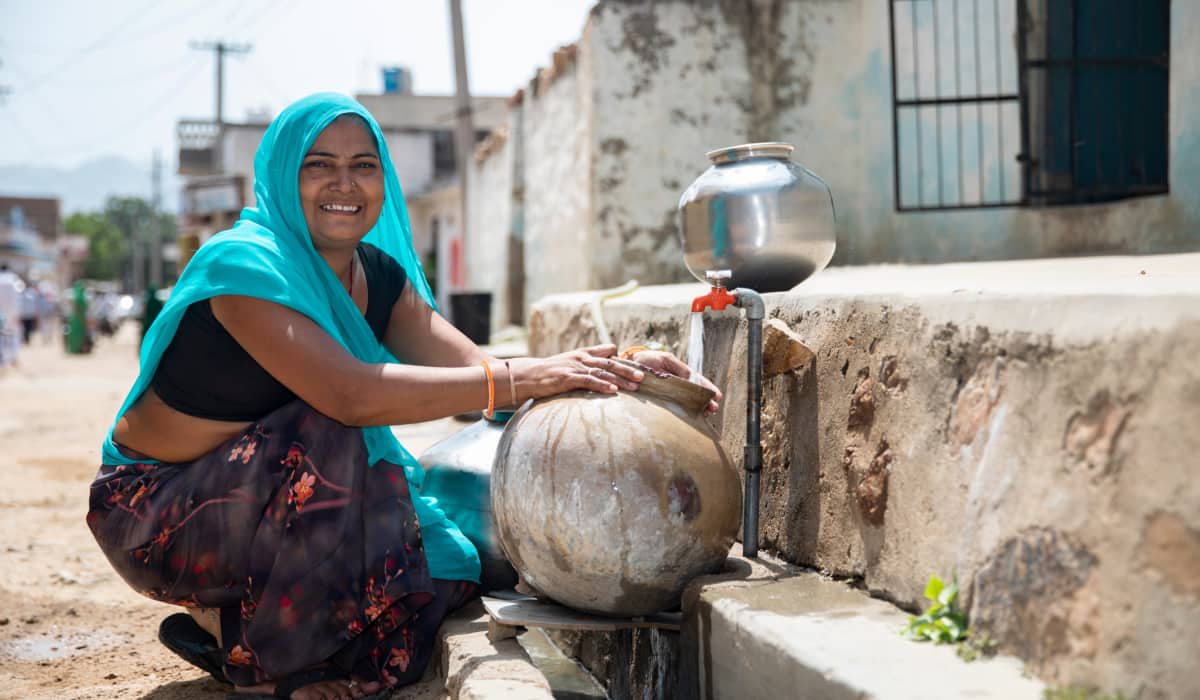
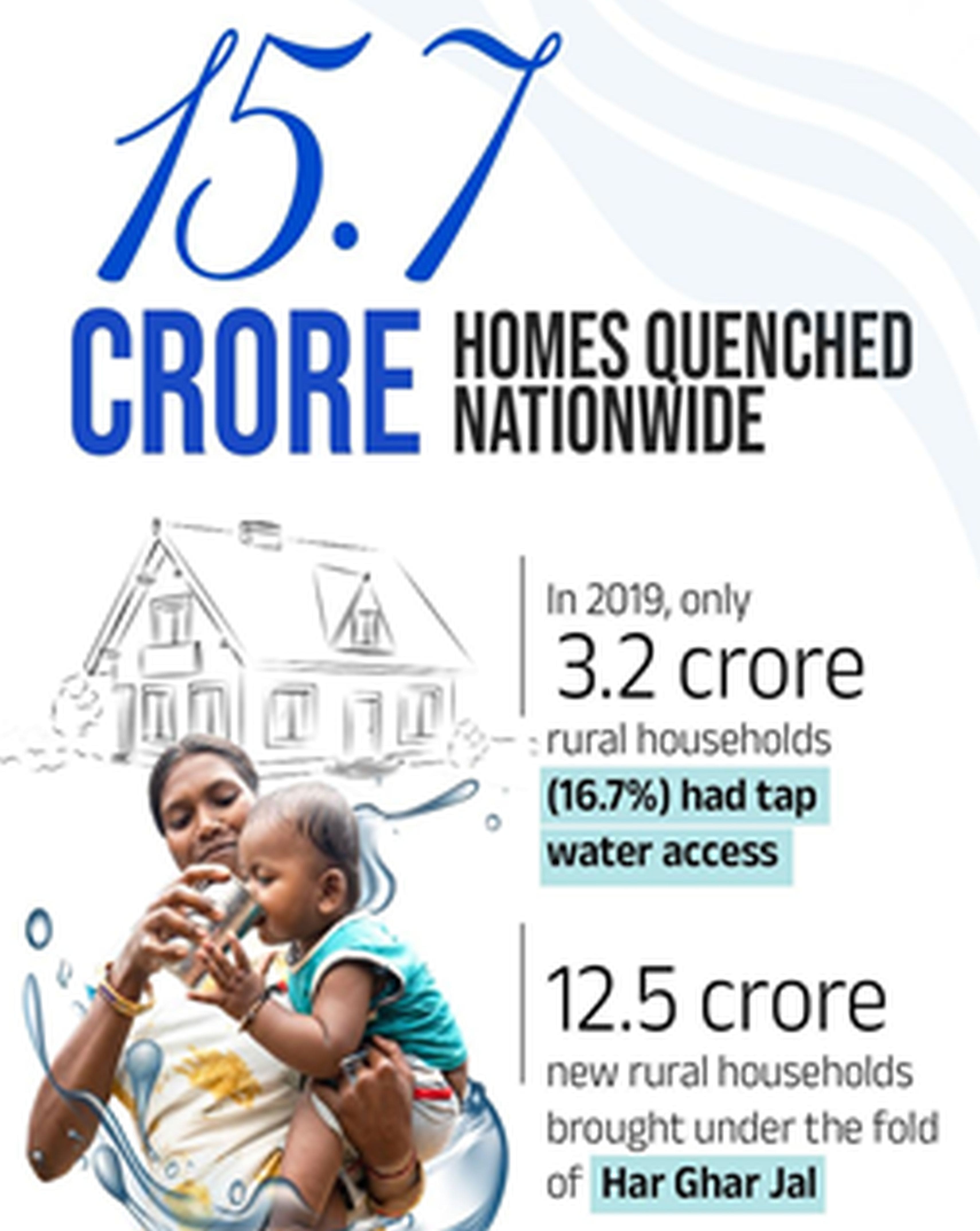
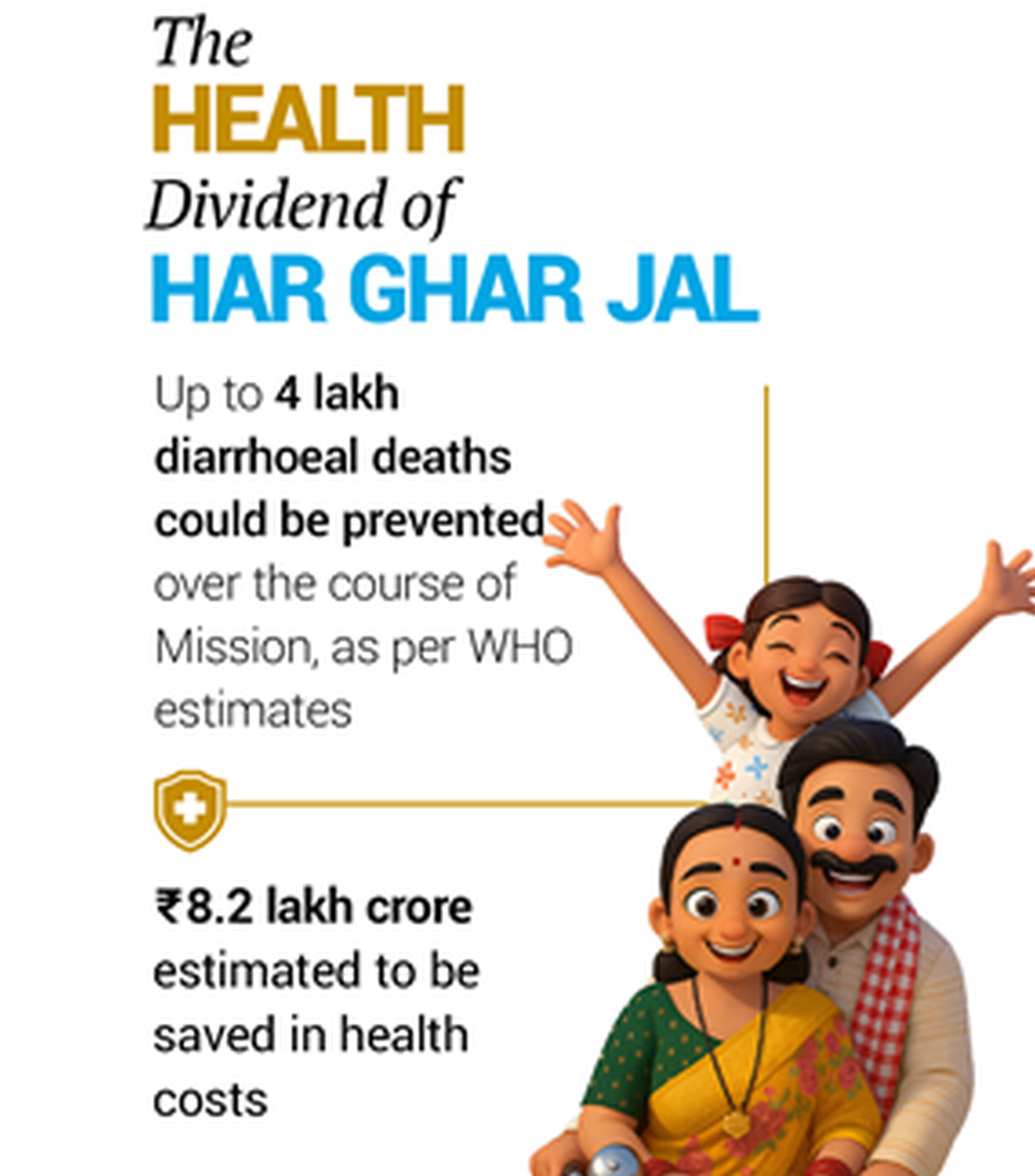
Concerning environmental sustainability, Viksit Bharat aims to make India greener and cleaner. The government has started programmes to encourage renewable energy use, water conservation, and cleanliness, including the Swachh Bharat Abhiyan, Jal Jeevan Mission, and National Solar Mission. On a global level, PM Modi has endorsed sustainable development principles and the International Solar Alliance. The government aims to reduce environmental problems and create a sustainable future for future generations; thus, it supports conservation initiatives, climate-resilient infrastructure, and renewable energy. India is dedicated to upholding internationally acknowledged environmental standards and aims to achieve approximately fifty per cent of its installed electric power capacity from non-fossil fuel sources by 2030.
One of the key pillars of PM Modi's Viksit Bharat rests on harnessing technology to enhance efficiency and transparency in governance. Through platforms like Aadhaar and Direct Benefit Transfer (DBT), the government has streamlined the distribution of subsidies and welfare benefits, reduced leakages, and ensured that assistance reaches the intended beneficiaries directly. TDBT helped the government eliminate ten crore fraudulent entries and successfully curbed financial leakages. DBT has saved nearly 3 lakh crore rupees from falling into the wrong hands in the country. Additionally, schemes like Ayushman Bharat have utilised technology to create a digital health infrastructure, enabling citizens easy and hassle-free access to healthcare services. Overall, the government's emphasis on leveraging technology for welfare purposes underscores its commitment to inclusive development and empowerment of all citizens.
Inspired by PM Modi's vision of Viksit Bharat, India is making remarkable progress in every sector. Whether being the first nation to land on the moon's south pole or poised to become the world's third-largest economy, India is undeniably ascending on the path of development. The increasing cultural revival through programs such as the PRASHAD scheme and the Swadesh Darshan scheme ensures that Indian culture has garnered widespread popularity on the global stage.
PM Modi's vision of Viksit Bharat is based on an ambitious and groundbreaking plan to achieve India's full potential and propel the country to unprecedented development and prosperity. To establish a more resilient and inclusive society where Janbhagidari is the basis of the nation's success story. In addition, the government focuses on infrastructural development, social welfare, economic empowerment, and environmental sustainability.