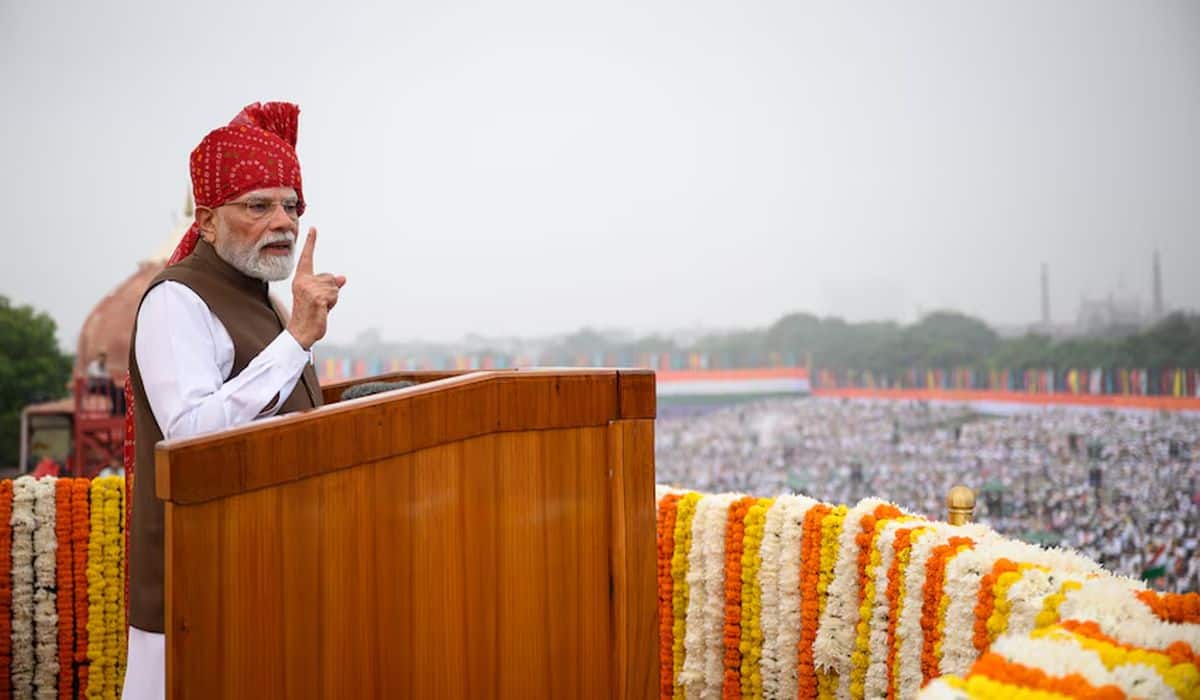
PM addresses the statement to media during the Joint Press Briefing with President of Uzbekistan at Tashkent
India's relationship with Uzbekistan has ancient roots and has left a strong imprint on both Nations: PM
Few countries can match Uzbekistan in nurturing Hindi & Indian culture: PM Modi
PM Modi, President Karimov discuss various initiatives to further enhance connectivity between India and Uzbekistan
India & Uzbekistan agree to strengthen cooperation in defence and cyber security

His Excellency President Islam Karimov, President of Uzbekistan, Members of the Media,

I am delighted to be in the historic and beautiful city of Tashkent. It carries the warmth of familiarity that comes from sights and stories we grow up with.

I thank President Karimov and the people of Uzbekistan for their very warm welcome and hospitality.

It is a pleasure to meet President Karimov. He has led with great vision and wisdom to steer Uzbekistan’s progress and advance peace and prosperity in the region.

Today, I have embarked on a five-nation tour of Central Asia. It reflects our resolve to start a new era in our relations with Central Asian Republics.

Our relationship with the region has ancient roots and has left a strong imprint on both. It now occupies a significant place in India’s future.

I have begun my journey in Uzbekistan. This underlines this nation’s importance for India, not just in the context of this region, but also more broadly in Asia.

In recent years, India and Uzbekistan have built a strategic partnership on the foundation of mutual respect and shared interests.

This includes expanding economic cooperation, combating terrorism, advancing stability in the region and promoting regional integration.

President Karimov and I had very cordial and productive discussions. His perspectives will be of immense benefit to me in the days ahead.

I share President Karimov’s desire to raise the level of our economic engagement. I conveyed to him that there is a strong interest in Indian business to invest in Uzbekistan. There is immense potential in a broad range of areas in Uzbekistan. I have urged him to make the process and the policies for Indian investments here smoother. President responded positively to my suggestion.

President was also supportive of strengthening our ongoing cooperation in the areas of agriculture, Information Technology and energy.

We also discussed steps needed to implement the contract for supply of uranium from Uzbekistan signed earlier.

President Karimov and I discussed various initiatives to further enhance connectivity between India and Uzbekistan.

I briefed him about the International North South Transport Corridor and proposed that Uzbekistan consider becoming a member. I sought his support for India joining the Ashgabat Agreement.

I am pleased with the agreements in the areas of Culture and Tourism, because they will bring our people closer.

Few countries can match Uzbekistan in nurturing Hindi and Indian culture. Tomorrow, I look forward to meeting a vibrant group of Indologists and Hindi linguists.

India will expand cooperation in capacity building through increase in the number of training offers in India. Consistent with our commitment, the Uzbekistan-India Information Technology Centre has been upgraded this year.

I welcome President Karimov’s assurance to ensure speedy completion of the Entrepreneurship Development Centre being set up in Tashkent.

We also discussed regional and international issues, including the situation in Afghanistan. We also have shared concerns on the rising threat of extremism and terrorism in our extended neighbourhood.

We agreed to intensify security cooperation and exchanges. The bilateral Joint Working Group on Counter Terrorism will meet later this year. We also agreed to strenghen cooperation in defence and cyber security.

We look forward to working together within the framework of the Shanghai Cooperation Organization.

Tomorrow, I will be paying a visit to the Monument of Independence and Humanism and the Memorial of Late Indian Prime Minister Lal Bahadur Shastri. We are thankful to the people of Tashkent and Uzbekistan, for preserving the legacy of our former Prime Minister.

This has been a very rewarding visit. It has sown the seeds of a rich harvest in the years ahead.

I look forward to the opportunity of receiving President Karimov in India.

Thank you again for your hospitality and a wonderful meeting. Thank You.

Explore More
अयोध्येत श्री राम जन्मभूमी मंदिर ध्वजारोहण उत्सवात पंतप्रधानांनी केलेले भाषण

लोकप्रिय भाषण

अयोध्येत श्री राम जन्मभूमी मंदिर ध्वजारोहण उत्सवात पंतप्रधानांनी केलेले भाषण
India eyes 2036 Olympics, PM Modi announces nationwide talent hunt for children aged 5-15

Media Coverage

India eyes 2036 Olympics, PM Modi announces nationwide talent hunt for children aged 5-15
NM on the go

Nm on the go

Always be the first to hear from the PM. Get the App Now!
...
12 Years of Transformation: PM Modi Highlights India’s Progress in Independence Day Address
August 15, 2026

In his Independence Day address, Prime Minister Shri Narendra Modi highlighted India’s transformation over the last 12 years, outlining the progress made across manufacturing, digital infrastructure, basic amenities, energy security, youth empowerment, innovation, social security and other key sectors.

Key highlights from the Prime Minister’s address include:

1. Manufacturing: Scale and Self-Reliance

Over the last 12 years:

  • Defence production has increased nearly 4 times.
  • Khadi and Village Industries production has increased nearly 5 times.
  • Electronics manufacturing has increased nearly 7 times.
  • Modern railway coach production has increased 21 times.
  • Mobile phone production has increased 35 times.

2. Digital India and Innovation

The Prime Minister highlighted the rapid expansion of India’s digital and innovation ecosystem:

  • Internet consumers have increased nearly 4 times.
  • Patent grants have increased 4 times.
  • Digital transactions have increased around 100 times.
  • India has built a significantly larger digital and innovation ecosystem.

3. Faster Delivery of Basic Amenities

The Prime Minister highlighted the faster pace at which basic facilities are reaching ordinary citizens:

  • Tap-water connections have been provided at an average annual pace nearly 15 times faster.
  • LPG connections have been provided at an annual pace nearly 6 times faster.
  • Toilets for the poor have been constructed at an annual pace nearly 4 times faster.
  • Pucca houses for the poor have been provided at an annual pace nearly 3 times faster.
  • Hundreds of obsolete laws have been abolished.
  • Modern public transport, including metro systems, has reached several more cities.

4. Building the Semiconductor Ecosystem

The Prime Minister highlighted India’s progress in building domestic semiconductor capabilities:

  • India earlier had no major semiconductor manufacturing plant.
  • A complete semiconductor ecosystem is now being built in India.
  • Three semiconductor plants have been initiated.
  • India has also started exporting chips.

5. Securing Critical Minerals

Highlighting the importance of critical minerals for emerging technologies, the Prime Minister referred to the steps being taken to strengthen India’s capabilities in this sector:

  • National Critical Mineral Mission has been launched.
  • Critical Mineral Corridor has been announced in the Budget.
  • Agreements have been signed with several countries for critical mineral supplies.

6. Strengthening Energy Security

The Prime Minister underlined that energy security is an essential condition for building a developed India, particularly as technologies such as chips, AI and data centres require huge quantities of electricity.

Underlining the role of nuclear energy, the Prime Minister highlighted:

  • The SHANTI Act as a major reform in the nuclear energy sector.
  • India crossing an important milestone in Fast Breeder Nuclear Technology.
  • The potential of the technology to play a major role in making India self-reliant in nuclear fuel.

7. Expanding Oil and Gas Exploration

The Prime Minister highlighted the change in India’s approach towards offshore exploration:

  • Nearly 99% of India’s offshore area was earlier classified as a No-Go Area.
  • The approach has now changed from No-Go Area to Go Ahead Area.
  • Previously restricted areas have been opened for exploration.
  • This has created possibilities for discovering new oil and gas reserves.

8. Energy Diversification

The Prime Minister highlighted the rapid expansion in different sources of energy.

City Gas Distribution

  • 2014: Available in fewer than 70 cities.
  • Today: Available in around 700 cities.

Piped Cooking Gas


  • 2014: Around 20–22 lakh households.
  • Today: Nearly 1.75 crore households.

Solar Energy


  • 2014: Around 2 GW.
  • Today: Around 160 GW.

PM Surya Ghar Muft Bijli Yojana


  • The scheme has crossed 50 lakh households.
  • Lakhs of families are benefiting through lower or zero electricity bills.
  • Families can also sell surplus electricity and earn.
  • Assistance of up to around ₹80,000 per household is available.

9. Railways: Electrification and Future Fuels

The Prime Minister highlighted the transformation of Indian Railways:

  • In 2014, after nearly 90 years, only around 30% of the railway network had been electrified.
  • Today, Indian Railways has moved towards near-complete electrification.
  • India has started work on its first Made-in-India hydrogen train.
  • It is being developed as the world’s longest and most powerful hydrogen train.

10. India’s Resilience During Global Crises

The Prime Minister said that the capabilities built over the last 10–12 years were tested during:

  • COVID-19 pandemic.
  • Russia-Ukraine war.
  • Conflicts in West Asia.

11. Affordable Fertiliser for Farmers

Highlighting the Government’s efforts to protect farmers from high global fertiliser prices, the Prime Minister stated:

  • Urea: Around ₹3,000 per bag internationally; Indian farmers get it for less than ₹300.
  • DAP: More than ₹5,000 internationally; Indian farmers get it for ₹1,350.

12. Trade and Export Opportunities

The Prime Minister highlighted the new opportunities being created for Indian producers and exporters:

  • Since 2014, India has entered into FTAs with around 40 countries.
  • New opportunities have opened for agriculture, fisheries, MSMEs, textiles and other export sectors.

13. Youth at the Centre of Viksit Bharat

The Prime Minister said that India’s youth have a major role in building Viksit Bharat and highlighted the new pathways opened up for them:

  • Startup India: New avenues for innovation and entrepreneurship.
  • ₹1 lakh crore Research Fund: New opportunities for young researchers.
  • Digital India: Empowerment through affordable data.
  • Skill India: National skills ecosystem.
  • Space Sector: Opened for private participation.
  • National Drone Policy: New opportunities for young entrepreneurs and innovators.
  • Khelo India: Strengthened sports ecosystem.

14. Education and Innovation

The Prime Minister highlighted the expansion of educational and innovation opportunities:

  • National Education Policy 2020: Introduced after a gap of 35 years.
  • Universities: Fewer than 350 during 2004–2014; around 650 new universities added in the following decade.
  • Medical Colleges: Fewer than 400 before 2014; around 850 today.
  • More than 10,000 Atal Tinkering Labs have been established in schools.
  • Focus has been placed on developing a technology and innovation mindset from an early age.

15. Startups, Space and AI

The Prime Minister highlighted India’s growing startup and innovation ecosystem:

  • An Indian space startup has launched a Made-in-India rocket.
  • India now has around 2.5 lakh registered startups.
  • AI is creating new opportunities for young Indians.
  • India hosted the AI Impact Summit this year.

16. New Sectors and New Opportunities

Bioeconomy

  • 2014: Around ₹60,000 crore.
  • Today: Nearly ₹20 lakh crore.
  • The expansion is creating new jobs and entrepreneurial opportunities.

Electric Vehicles


  • Towards the end of the previous decade: Around 1.5 lakh EVs sold annually.
  • Last year: Around 25 lakh EVs sold.

Aviation


  • New airports and routes are creating employment.
  • MRO is opening new opportunities.
  • India is moving towards Made-in-India aircraft manufacturing.
  • The Made-in-India C-295 defence transport aircraft has successfully completed its flight.

17. Rural Empowerment through SVAMITVA

The Prime Minister highlighted the impact of the SVAMITVA initiative:

  • Around 3.25 crore families have received property cards.
  • Around ₹140 lakh crore of economic potential has been unlocked in rural areas.
  • Property records are enabling villagers to access bank loans against their property.
  • New avenues for rural employment, self-employment and entrepreneurship have opened up.

18. Growth in Defence Exports

The Prime Minister highlighted the expansion of India’s defence exports:

  • Defence exports have increased more than 50 times.
  • Indian defence equipment is now exported to around 100 countries.

19. Women-Led Development: Lakhpati Didi

Highlighting the growing role of women in India’s development:

  • The target of 3 crore Lakhpati Didis has been achieved.
  • Women from general, Dalit, backward and tribal families have become Lakhpati Didis.

20. Expanding Social Security

The Prime Minister highlighted the expansion of social security coverage:

  • Before 2014, around 25 crore people were covered by social security.
  • Today, around 100 crore Indians are covered by one or another social security scheme.

21. Ayushman Bharat

The Prime Minister highlighted the financial relief provided to families through Ayushman Bharat:

  • Beneficiary families have avoided an estimated ₹2 lakh crore in medical expenditure.