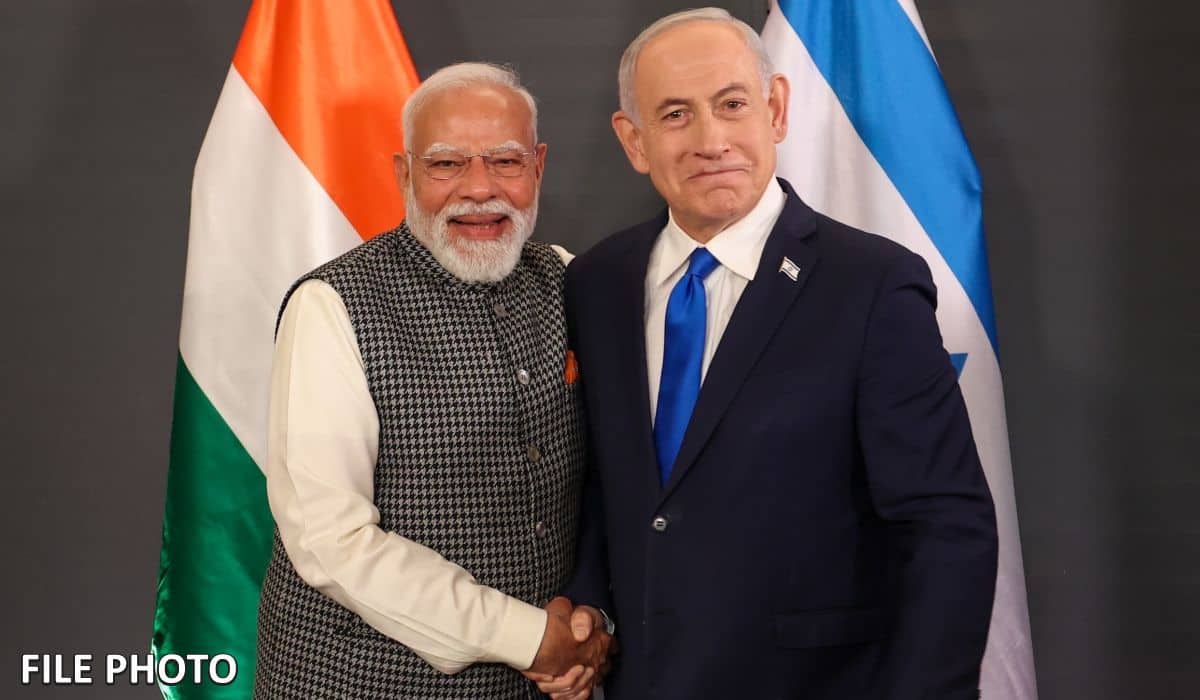
Glad to know that Govt of Nepal has decided to translate Atal Ji’s poems in Nepali language: PM Modi
PM Narendra Modi and PM KP Oli jointly inaugurate Nepal-Bharat Maitri Pashupati Dharmashala in Kathmandu
There exist strong cultural and civilizational ties existing between India and Nepal: PM Modi in Kathmandu
The Dharmshala would be more than just a rest house for the pilgrims. It will further enhance ties between India and Nepal: PM Modi
India is among the fastest growing economies in the world today: PM Modi in Kathmandu
India believes in the mantra of ‘Sabka Saath, Sabka Vikas’, says Prime Minister Modi

Honourable Prime Minister Oli Ji, Minister of culture and tourism, Ravinder Prasad AdhikariJi, Member of Pashupati Area Development Trust, Dr. Pradeep DhakalJi and other dignitaries present here, devotees of Bhole Baba who have come here from far away places and my dear brothers and sisters of Nepal,

Today, a son from Kashi, the land of Baba Vishwanath bows down to you who are present here in the courtyard of PashupatiNathJi. As Prime Minister Oli Ji said just a while ago that it is very easy to understand Nepali language and the people of Gujarat.


India-Nepal friendship is deep. We know that when a tragedy overtakes you if one who is your own reaches out it provides you a great relief. When Atalji passed away, within moments Oli Ji called me and offered his condolences. I know that was not a mere formality. It was a natural expression of one's sense of belonging. And the respect and the feelings with which the your Foreign minister himself came to attend the funeral of AtalJi!

Today Nepal has decided to translate the poems of AtalJi in Nepalese.
The way we preserve and nurture the memories and message of a great soul and the wisdom that he has shared; how we pass that wisdom on to the next generations; how much we can translate that into our lives, I believe that becomes the biggest tribute to that great soul. And I express my heartfelt gratitude to respected Oli Ji, to the government of Nepal and to the people of Nepal for paying the best tribute to him, for the pledge that Nepal has taken to pass on the thoughts of AtalJi, the wisdom that he had, and the perspective that he had provided for looking at the contemporary situation which he had expressed in his poems.

The cultural relations of our two countries are very old. However, it is certain that the relations with a country do not become stronger or long lasting unless people to people ties are strengthened.


If only Kathmandu and Delhi come together; if the governments in Kathmandu and Delhi come together, that alone is not enough; the relation will not be strengthened until the peoples of Nepali and Indian mingle with each other. And today the excellent work of strengthening the people to people contact has been done with the inauguration of this Dharmshala which is a symbol of Nepal-India friendship.

शैव कुरूवर की थेवरम में भगवान पशुपतिनाथ का अहम स्‍थान है, उत्‍तम स्‍थान है। और बाबा पशुपतिनाथ ने सुदूर दक्षिण भारत के अपने अनंत भक्‍तों को पीढ़ी-दर-पीढ़़ी सैकड़ों साल से गणेश और कार्तिक की तरह अपने आप इस मंदिर में स्‍थान दिया है। और इसलिए आज मेरे परम मित्र प्रधानमंत्री ओली जी के साथ मिलकर नेपाल-भारत मैत्री पशुपति धर्मशाला को विश्‍वभर के यात्रियों के लिए, टूरिस्‍टों के लिए, शिव भक्‍तों के लिए समर्पित करते हुए मेरी प्रसन्‍ता की कोई सीमा नहीं है। दुनियाभर से यहां आने वाले श्रद्धालुओं की सुविधा के लिए सवा सौ करोड़ भारतवासियों की तरफ से पशुपतिनाथ जी के चरणों में यह एक छोटी सी भेंट देने का सौभाग्‍य मुझे मिला है।

My dear brothers and sisters, whenever I come to Kathmandu, I deeply feel the love and affection of the people of Nepal. And this is not only for me but the same affinity can be seen in Nepal towards India. About four years ago, I got an opportunity to worship at the feet of PashupatinathJi on the last Monday of the month of Shravan. Few months ago, when I came here, I had the privilege of visiting all the three major pilgrimages i.e. Pashupatinath, Muktinath and JanakiDham. Today I am overwhelmed with devotion as I got the opportunity to visit and offer my prayers right at the feet of Baba Pashupatinath once again. These feelings are not my alone, millions and millions of devotees of Lord Shiva all over India and though out the world, who have adopted the spiritual life and religious rituals, those who are always engrossed in God’s devotion, they have the desire to visit PashupatinathJi once in their life time. This bond of devotion to Lord Shiva and devotees of Lord Shiva between India and Nepal is so strong that it has neither been affected by the distance nor by time or difficult terrain.
Kathmandu and Kanyakumari are thousands of kilometers apart but the stories of PashupatinathJi have been reverberating in Tamil Nadu for more than one thousand five hundred years.

और बाबा पशुपतिनाथ ने सुदूर दक्षिण भारत के अपने अनंत भक्‍तों को पीढ़ी-दर-पीढ़़ी सैकड़ों साल से गणेश और कार्तिक की तरह अपने आप इस मंदिर में स्‍थान दिया है। और इसलिए आज मेरे परम मित्र प्रधानमंत्री ओली जी के साथ मिलकर नेपाल-भारत मैत्री पशुपति धर्मशाला को विश्‍वभर के यात्रियों के लिए, टूरिस्‍टों के लिए, शिव भक्‍तों के लिए समर्पित करते हुए मेरी प्रसन्‍ता की कोई सीमा नहीं है। दुनियाभर से यहां आने वाले श्रद्धालुओं की सुविधा के लिए सवा सौ करोड़ भारतवासियों की तरफ से पशुपतिनाथ जी के चरणों में यह एक छोटी सी भेंट देने का सौभाग्‍य मुझे मिला है।

ShaivKuruvar’sthaivaram has an important place for Lord PashupatinathJi; it has an excellent reference. And Baba Pashupatinath has provided a space to his numerous devotees who hail from far-flung southern India, for centuries and generation after generation like Ganesh and Kartik. Today I am overwhelmed while dedicating this Nepal-India Friendship PashupatiDharamshala along with my best friend Prime Minister Oli Ji to the travelers, to the tourists and devotees of Lord Shiva from all over the world. I am fortunate to have this opportunity to make this small offering in the feet of Lord Pashupatinath on behalf of 1.25 billion Indians for the benefit of devotees who come here from all over the world.

Friends, Pashupatinath, Muktinath and JanakiDham, they all unite Nepal’s diversity in unity and at the same time every moment they provide a new strength to Nepal’s relations with India. Baba Vishwanath and Pashupatinath connect Kashi and Kathmandu and I am from the land of Somnath. Somnath to Vishwanath, Vishwanath to Pashupatinath, similarly the relation of Mother Sita and Lord Shri Ram connects Janakpur with Ayodhya and Lord Jagannath and Muktinath connect Puri with Mastang. Lord Pashupatinath presiding here in this beautiful Bagmati valley, where on the one side there is Dhaulagiri and Annapurna; and Sagarmatha and KanchanJanga on the other side. It gives a beautiful and wonderful experience to the devotees of Lord Shiva and tourists from all over the world. In a way, this holy land of Kathmandu is a place of confluence of both Hinduism and Buddhism. In what way, these two faiths are inclusive of each other, and there is amity between the followers of both the faiths which can be experienced by anybody who passes through the lanes and pathways of Kathmandu. This temple of Lord PashupatinathJi too is surrounded by the centers of several faiths, like it is intertwined with the fleck of Buddhist monks. As Pradeep Ji said just a while ago that one does not even know when the chanting Om Mani Padme Hum unites with the chanting of Om NamahShivay by the devotees of Lord Shiva. This tradition is also an important link between the relationship of Nepal and India. If Lumbini in Nepal gave Gautam to the world, then Bodh Gaya in India turned him into Lord Buddha for the world. The path shown by Gautam Buddha is an inspiration to solve many problems of the modern world like the problems of extremism and terrorism.

Friends, India and Nepal have historical partnership of faith, soul and affinity. This is our unbreakable bond, this is our invaluable treasure and heritage. Our glorious history of thousands of years, our shared allegiance to VasudhaivaKutumbakam is the value that distinguishes both the countries from several other civilizations of the world.
As Oli Ji was talking about – SarveBhavantuSukhinah; SarveSantuNiramaya. Praying the welfare of everyone, not just the loved ones, but for everyone in the world.This is the basic philosophy of both the countries. And the self-confidence derived from this rich tradition will secure our place in the world. The future of both countries will be determined by this belief. Whatever we are able to achieve today, it will be meaningful only when everyone will develop, especially the ones who are deprived, who have been persecuted exploited. Today, India is scaling new heights of economic development. It is moving on the path of Reform, Perform and Transform. Today it is shining in the sky of development like the Pole star. The philosophy of ‘Together with everyone, Development for everyone (SabkaSath-SabkaVikas)' with which we are moving ahead, also has similar place for our Nepalese brothers and sisters. When we talk about 'Together with everyone, Development for everyone,' then it is for everyone. It has been a part of our tradition to help neighbors and contribute in their prosperity, in accordance with that and with the blessings of Baba Pashupatinath, the relationship between both the countries is also moving forward.

Friends, every Indian is happy to see that today Nepal is politically stable. As a result, Nepal’s pace of development has gone up. Today, I would like to assure the Prime Minister and the people of Nepal who are present here that India’s good wishes and cooperation will always be there for the welfare of Nepal and its people. I just pray that may Lord Pashupatinath always bless this land and patronize India-Nepal friendship.This uninterrupted movement of faith, civilization and culture has been enriching the lives of millions of people of India and Nepal. I do not believe that India-Nepal Friendship Dharamshala is just a building where some tourists will come and stay, it is not just a place to stay. The feelings of India-Nepal friendship will continue to move their hearts. When they will go back to their homes, they will go back with this feeling of eternal friendship between India and Nepal.These are symbols in themselves, the arrangements may be good, but they strengthen life and this Dharamshala is the symbol which gives us strength. This arrangement is not just a facility for a traveler to stay overnight. It strengthens tourism in Nepal. These arrangements provide an additional place for the tourists coming to Nepal. A person with a modest income can also benefit from such arrangement. This building is not just a building, it is not just a place of retiring or sleeping. This unit provides a new energy to the economic activity related to the tourism of Nepal. It gives a new strength, a new power to it. And tourism is such a sector which has the potential of generating maximum employment with the minimum investment. And when such arrangements are available to the general public, tourists also want to visit, they also want to stay here and when a tourist stays, then he definitely gives something.

I believe that this Nepal-India Friendship PashupatinathDharamshala, it is not just a building or a place to stay or retire, but it is a pillar of friendship, it will become an energy center which will provide momentum to the economic system. With this belief, once again I express my heartfelt gratitude towards the Prime Minister of Nepal.

Because BIMSTEC was such an important event which has sent a positive message to the entire world from Kathmandu. When the BIMSTEC summit representing twenty-two percent of world population is being organised in Nepal at the feet of Lord Pashupatinath then the resolutions made here cannot remain unfulfilled. And therefore, I believe that the solemn pledges made under the able leadership of Prime Minister Oli Ji in Kathmandu, in the lap of Himalayas will play a big and decisive role in establishing peace and security in this region. Hon’ble Oli Ji has accomplished this thing for which he deserves compliments and praise therefore I congratulate him.

Once again I would like to express that you took time out for this occasion. And it is our good fortune that together we both are able to offer this gift. People in India will be happy with this arrangement so will be the people of Nepal. And this facility will also provide a new opportunity for economic growth. With these feeling, I once again bow down at the feet of Lord Pashupatinathji and conclude my speech.Many-many thanks.

Explore More
अयोध्येत श्री राम जन्मभूमी मंदिर ध्वजारोहण उत्सवात पंतप्रधानांनी केलेले भाषण

लोकप्रिय भाषण

अयोध्येत श्री राम जन्मभूमी मंदिर ध्वजारोहण उत्सवात पंतप्रधानांनी केलेले भाषण
Govt directs faster processing of city gas projects, hikes commercial LPG allocation to ease supply stress

Media Coverage

Govt directs faster processing of city gas projects, hikes commercial LPG allocation to ease supply stress
NM on the go

Nm on the go

Always be the first to hear from the PM. Get the App Now!
...
Dialogue and diplomacy are the only solutions: PM Modi in Lok Sabha on West Asia conflict
March 23, 2026
The situation in West Asia is concerning at this time: PM
In the past two-three weeks, Mr. Jaishankar and Mr. Hardeep Puri have provided the necessary information to the House on this matter: PM
This crisis has been going on now for more than three weeks, It is having a very adverse impact on the global economy and on people's lives, the entire world is urging all parties for the earliest resolution of this crisis: PM
This region is important to us for yet another reason ,as nearly one crore Indians live and work in the Gulf countries: PM
Among the commercial ships that sail in these seas, the number of Indian crew members is also very high: PM
Due to these several reasons, India's concerns are naturally high, it is essential that a unanimous and united voice from India's Parliament on this crisis reaches the world: PM
India has extensive trade relations with countries at war and affected by war, The region where the war is taking place is also an important route for our trade with other countries of the world: PM
A large quantity of essential items such as crude oil, gas, and fertilizers come to India through the Strait of Hormuz, Since the war began, the movement of ships through the Strait of Hormuz has become highly challenging: PM
Despite this, our government has been trying to ensure that the supply of petrol, diesel and gas is not affected much and common families of the country face minimum inconvenience, This has been our focus: PM
India has always stood for peace in the interest of humanity, Dialogue and diplomacy are the only solutions to this problem: PM
Our efforts are aimed at reducing tensions and ending this conflict: PM
Putting anyone's life at risk in this war is not in the interest of humanity, India's efforts are to encourage all parties to reach a peaceful resolution as soon as possible: PM

Honourable Speaker,

I have come before this esteemed House to speak on the ongoing conflict in West Asia and the challenges it has posed for India. The situation in West Asia is deeply concerning. In the past two to three weeks, Shri Jaishankar ji and Shri Hardeep Puri ji have provided the House with necessary updates on this matter. Now that the crisis has lasted for more than three weeks, its adverse impact on the global economy and on people’s lives is evident. The entire world is urging all parties for a swift resolution to this crisis.

Honourable Speaker,

This war has created unexpected challenges for India as well as economic, national security related, and humanitarian. India has extensive trade relations with the countries at war and those affected by it. The region where the war is taking place is also a crucial route for our trade with other parts of the world. Most importantly, a significant portion of our crude oil and gas requirements is met by this region. For another reason too, this region is vital for us-nearly ten million Indians live and work in the Gulf countries. A large number of Indian crew members also serve on commercial ships sailing in these waters. For all these reasons, India’s concerns are naturally greater. Therefore, it is essential that from the Parliament of India, a united and unanimous voice goes out to the world regarding this crisis.

Honourable Speaker,

Since the war began, every Indian in the affected countries has been provided necessary assistance. I myself have spoken twice over the phone with the Presidents of most West Asian countries. All of them have assured full safety for Indians. Unfortunately, during this period, some people have lost their lives and some have been injured. In such difficult circumstances, their families are being given all possible support, and the injured are receiving the best possible medical treatment.

Honourable Speaker,

All our missions in the affected countries are continuously engaged in helping Indians. Whether they are workers or tourists, everyone is being given every possible assistance. Our missions are issuing regular advisories. Here in India and in other affected countries, 24/7 control rooms and emergency helplines have been set up. Through these, timely information is being provided to all those affected.

Honourable Speaker,

In times of crisis, the safety of Indians at home and abroad has been our highest priority. Since the war began, more than 375,000 Indians have safely returned to India. From Iran alone, nearly 1,000 Indians have returned safely, including more than 700 young students pursuing medical education. In Gulf countries, thousands of students study in Indian schools. The CBSE has cancelled the scheduled Class 10 and Class 12 examinations in all such schools. To ensure uninterrupted education for these children, CBSE is taking appropriate measures. This shows that the government is sensitive, vigilant, and ready to provide every possible assistance.

Honourable Speaker,

India imports large quantities of crude oil, gas, and fertilizers through the Strait of Hormuz. Since the war began, shipping through the Strait of Hormuz has become highly challenging. Despite this, our government has worked to ensure that the supply of petrol, diesel, and gas is not severely disrupted. Our focus has been to minimize difficulties for ordinary families. We all know that India imports 60% of its LPG requirements. Due to uncertainty in supply, the government has prioritized domestic use of LPG and is also increasing domestic production. Continuous efforts have been made to ensure smooth supply of petrol and diesel across the country.

Honourable Speaker,

In today’s circumstances, the steps taken over the past decade for energy security have become even more relevant. Over the last 11 years, India has diversified its energy imports. Earlier, crude oil, LNG, and LPG were imported from 27 countries. Today, India imports energy from 41 countries.

Honourable Speaker,

In the past decade, India has also prioritized crude oil storage for times of crisis. Today, India has a strategic petroleum reserve of more than 5.3 million metric tonnes, and work is underway to expand it to over 6.5 million metric tonnes. The reserves maintained by our oil companies are separate. In the past 11 years, our refining capacity has also increased significantly.

Honourable Speaker,

The government is in constant contact with suppliers from different countries. Efforts are being made to ensure supply of oil and gas from wherever possible. The Government of India is keeping a close watch on shipping routes in the Gulf and surrounding areas. Our aim is to ensure that ships carrying oil, gas, fertilizers, and other essential goods reach India safely. We are in continuous dialogue with all our global partners to keep our maritime corridors secure. As a result of these efforts, several of our ships stuck in the Strait of Hormuz have recently reached India safely.

Honourable Speaker,

At this time of crisis, another preparation of the country is proving very useful. In the past 10–11 years, unprecedented work has been done on ethanol production and blending. A decade ago, India had only about 1.5% ethanol blending capacity. Today, we are close to achieving 20% ethanol blending in petrol. This has reduced oil imports by about 45 million barrels annually. Similarly, railway electrification has brought huge benefits. Without such electrification, about 1.8 billion litres of additional diesel would have been required every year. We have also expanded the metro network. In 2014, India’s metro network was less than 250 kilometers; today it has grown to nearly 1,100 kilometers. We have strongly promoted electric mobility. The central government has provided states with 15,000 electric buses. At the scale at which work is being done on alternative fuels today, India’s future will be even more secure.

Honourable Speaker,

We know that energy is the backbone of the economy, and West Asia is a major source of meeting global energy needs. Naturally, the world economy is being affected by the current crisis, and continuous efforts are being made to ensure that India faces the least possible adverse impact. The government is working with a clear strategy for short-term, medium-term, and long-term effects. The fundamentals of India’s economy are strong, which has also helped the country greatly. We are holding discussions with stakeholders across every sector, and wherever necessary, support is being provided. The Government of India has also set up an inter-ministerial group, which meets daily to assess difficulties in imports and exports and works continuously on necessary solutions. I am confident that through the combined efforts of the government and industry, we will be able to face these circumstances more effectively.

Honourable Speaker,

A major question is what impact the war will have on agriculture. Our farmers have filled our food grain reserves, so India has sufficient food stocks. Our effort is also to ensure proper sowing for the Kharif season. In recent years, the government has made adequate arrangements for fertilizers to deal with emergencies. In the past too, our government ensured that global crises did not burden farmers. During the COVID period and wars at that time, global supply chains were disrupted. The price of a bag of urea in world markets had reached ₹3000, but Indian farmers were provided the same bag at less than ₹300.

Honourable Speaker,

To protect farmers from such crises, many steps have been taken in recent years. In the past decade, six urea plants have been started in the country, adding more than 7.6 million metric tonnes of annual production capacity. During this period, domestic production of fertilizers like DAP and NPKS has also increased by nearly 5 million metric tonnes. Not only this, fertilizer imports have also been diversified, just like oil and gas. For DAP and NPKS imports too, we have expanded our options.

Honourable Speaker,

The government has also given farmers the option of Made-in-India nano urea. Farmers are being encouraged towards natural farming. Under the PM-KUSUM scheme, more than 2.2 million solar pumps have been provided to farmers, reducing their dependence on diesel. Through this House, I assure the farmers of the country that the government will continue to provide every possible assistance.

Honourable Speaker,

Another major challenge of the war is that summer is beginning in India. With rising temperatures, electricity demand will increase in the coming months. At present, all power plants in the country have adequate coal stocks. India has set a record of producing 1 billion tonnes of coal for the second consecutive year. From power generation to power supply, all our systems are being continuously monitored, and renewable energy has also supported our preparedness. In the past decade, India has taken major steps towards renewable energy. Today, half of our total installed power generation capacity comes from renewable sources. Our total renewable capacity has crossed the historic mark of 250 gigawatts. In the past 11 years, solar power capacity has risen from about 3 gigawatts to 140 gigawatts. Nearly 4 million rooftop solar installations have been set up in recent years, with the PM Surya Ghar Free Electricity Scheme providing significant help. Under the GobarDhan scheme, 200 compressed biogas plants are already operational in the country. All these efforts are proving very useful today. The government has also promoted nuclear energy production through the Amrit Kaal Energy Transition initiatives. Just a few days ago, the Small Hydro Power Development Scheme was approved, which will add 1500 megawatts of new hydro capacity in the next few years.

Honourable Speaker,

As far as diplomacy is concerned, India’s role has been clear. From the beginning, we have expressed deep concern over this conflict. I myself have spoken with all relevant leaders in West Asia. I have urged them to reduce tensions and end the conflict. India has opposed attacks on civilians, energy, and transport-related infrastructure. Attacks on commercial ships and obstruction in international waterways like the Strait of Hormuz are unacceptable. Through diplomacy, India is continuously working to ensure safe passage for Indian ships even in this war environment.

Honourable Speaker,

India has always raised its voice for humanity and in favor of peace. I repeat again-dialogue and diplomacy are the only solutions to this problem. All our efforts are aimed at reducing tensions and ending this conflict. Any threat to human life in this war is against the interest of humanity. Therefore, India’s effort is to encourage all parties towards a peaceful resolution at the earliest.

Honourable Speaker,

In times of such crises, some elements also try to misuse the situation. Therefore, all law enforcement agencies have been kept on alert. Coastal security, border security, cyber security, and protection of strategic installations are all being strengthened.

Honourable Speaker,

This war has created difficult global conditions that may persist for a long time. Hence, we must remain prepared and united. We faced similar challenges during the COVID crisis with unity. Now again, we must prepare in the same way. With patience, restraint, and calmness, we must face every challenge-that is our identity, that is our strength. At the same time, we must remain vigilant and cautious. Those who try to exploit the situation will attempt to spread falsehoods, but we must not let them succeed. Through this House, I also urge all state governments that during such times, black-marketeers and hoarders become active. Strict monitoring is necessary, and wherever such complaints arise, immediate action must be taken. When every government and every citizen of the country works together, we can challenge any challenge. With this appeal, I conclude my statement.

Thank you very much.