Ahmedabad

Date : 25th December, 2011

Today is Atalji’s birthday. For last many consecutive years, we organize this ‘Kankaria Carnival’ from 25th December to 31st December. Through this one programme, we are able to express our love for this city and can see the changes that are taking place in the city life. Whenever there were discussions on the cities of our country, they spinning around Delhi, Kolkata, Madras, Bangalore, Mumbai… Ahmedabad was not in the list of first ten. Today Ahmedabad has secured number one position in the whole country. I congratulate the citizens of this city, I congratulate the officers of the Corporation for enhancing the glory, fame and prestige of the same day after day.

 This ‘Kankaria Carnival’… Poor children of this city, children living in slums, studying in Municipal Primary Schools… they have the same capability as we have. The God has given them the same strength as what we have. But, they never got a chance to show their talent. Whether it’s ‘Patangotsav’ or ‘Kankaria Carnival’, we have always given opportunities to these children of poor families. When they show their creativity, express their ability in front of the enlightened citizens of this city, the exposure that they get, the confidence level which is built up from it at that time, adds up in the strength of this city and for that endless efforts are made by this city.

 Today this city has received many new rewards, they have been initiated. Whether it’s about swimming pool for children or very old Balwantrai Hall or a Butterfly Park that kids would like very much… Today another new thing is added to Ahmedabad city. The murals on the rock depicting the map of this city, its social-cultural journey of progress, pages of its development, memories of the prominent people of this city… in the same way, Gujarat, its development journey, great people who contributed in the economical, social, educational, cultural and in all other fields, important incidences of the State… all of these are being sculptured on the inner side of the boundary wall of Kankaria lake. Friends, No one would have ever imagined that the wall of Kankaria lake could be used in such a wonderful way. Today only a small portion has been formed, but once the murals get completed around entire Kankaria, at that time its length would be about 30,000 feet. At present, the longest sand stone mural, which is considered to be the largest in the world, is of 9000 feet. This will be of 30,000 feet. This will be the biggest world record credited to Ahmedabad. Those who want to know the history, who want to understand the ups and downs of Gujarat, want to go through the memorable incidences of Gujarat, for them these sculpted open encyclopedia, will become a means of knowledge. It is my request to the citizens of this city, to those who are historians, connected with literature, associated with arts and culture, those who are analysts, critics… they spare some time in next two three months and view our novel idea from the analytical view point and point out flaws in the mural or suggest whether it needs anything to be added… and I request such experts to come and spare their valuable couple of hours for the future of this city, for the future of children. I am giving an open invitation to all. View it minutely, give us suggestions, so that we can include it in the remaining work in the area of 30,000 feet. To make it more presentable, I am interested in public participation. So as to descend your knowledge and experience on the rocks, this city, this state is asking for your help. We are doing one of the best kinds of work. In future, a boat ride along with audio commentary would provide a crash course on heritage of the city and the state by studying the huge murals on the wall. The pedestrians can also study the tablets kept over there and those who wish to watch along with audio commentary, may prevail the benefit of it also. Those who visit Kankaria now, can experience such a nice use of it.

Friends, after the renovation of Kankaria, nearly 90 or more delegations from the world, from foreign countries, visited here and have studied the renovated Kankaria. Intellectual citizens, well-to-do citizens of this city, who seldom gave a passing glance towards Kankaria. Now they are seen visiting Kankaria in Rolls-Royce Cars along with their guests. A reputation of Kankaria has been established. Even the richest and the wealthiest people feel inferior if they have not seen Kankaria, now they feel proud to visit Kankaria.

The citizens of this city have preserved this Kankaria. Otherwise, mismanagement, littering, dirtiness, damaging… this is very common in our country, but hats-off to the citizens of Ahmedabad, to all the citizens of the State and to all the national and international tourists, who have visited Kankaria. I want to congratulate as crores of people visited here but not even a minor problem is ever created, not even a single leaf of any tree is plucked, this is a great deed, Friends..! We have preserved it and it is such a deed that we can introduce our this strength to the world. Cleanliness is maintained, waste has not been thrown anywhere and if any visitor shows even a small waste, he himself gets up and throws it in the dustbin. Kankaria has given a new culture to this city. I am confident that Kankaria will become an inspiration to establish such high standards in the whole city.

Friends, our ‘Kids City’… Many people are coming here to study it. To develop the inner strength among the kids, to awake their dreams, rather to sow the dreams, there may not be any other better source than this. Whenever a tiny tot goes to ‘Kids City’ and in the evening when he comes out, he is overwhelmed and a new dream is planted into his mind, a wish to become someone arises in his mind. Since he himself becomes a part of the experiment, he carries confidence that yes, today I can do this, when I grow up, I can become this also. A place of seeding such dreams… I want all the kids to get an opportunity to plant a dream here at ‘Kids City’. It is my invitation to all kids and their parents of Gujarat. This is for you, for our kids. To make tomorrow of Gujarat prosperous, to playfully imbibe this cultural heritage, as if Kankaria has become a new capital, a new source of inspiration, and we all must take the advantage of the same.

Ladies & Gentlemen, about 1.50 crore people visit here and this does not include those 25-30 lakhs people visit during ‘Kankaria Carnival’, because we don’t have any ticket system during that time. But those people who purchased regular tickets and enterd Kankaria from the gate, that figure comes out to be 1.50 crores. You just think, how great need it was for the poor and middle class people of this State, we have fulfilled this need. Because if a common man wants to go for outing with his family, where shall he go? Where would he find an open space? And today he has found it. In the past, ‘Bal Vatika’ and Zoo were just in the neglected condition. Because of the renovation of this Kankaria, they also have become a new centre of attraction for the people. New suggestions and schemes are coming forward for their development and extension as well.

 Ladies & Gentlemen, let us take the full fledged advantage of this. Let us preserve this city, the way this Kankaria is preserved. As Kankaria has come up with a new identity of city‘s fame, glory and prestige, I am inaugurating today’s Carnival. On Atalji’s birthday, the State is ever ready to accept the message of his ‘Good Governance’ and is determined and trying to move forward in that direction and trying for the same.

Best wishes to all of you..!!

Explore More
अयोध्येत श्री राम जन्मभूमी मंदिर ध्वजारोहण उत्सवात पंतप्रधानांनी केलेले भाषण

लोकप्रिय भाषण

अयोध्येत श्री राम जन्मभूमी मंदिर ध्वजारोहण उत्सवात पंतप्रधानांनी केलेले भाषण
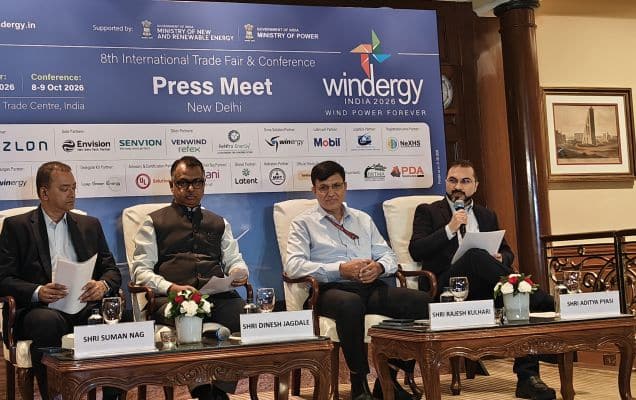
Indias wind turbine exports jumped 50% in FY26, further growth expected: IWTMA CEO

Media Coverage

Indias wind turbine exports jumped 50% in FY26, further growth expected: IWTMA CEO
NM on the go

Nm on the go

Always be the first to hear from the PM. Get the App Now!
...
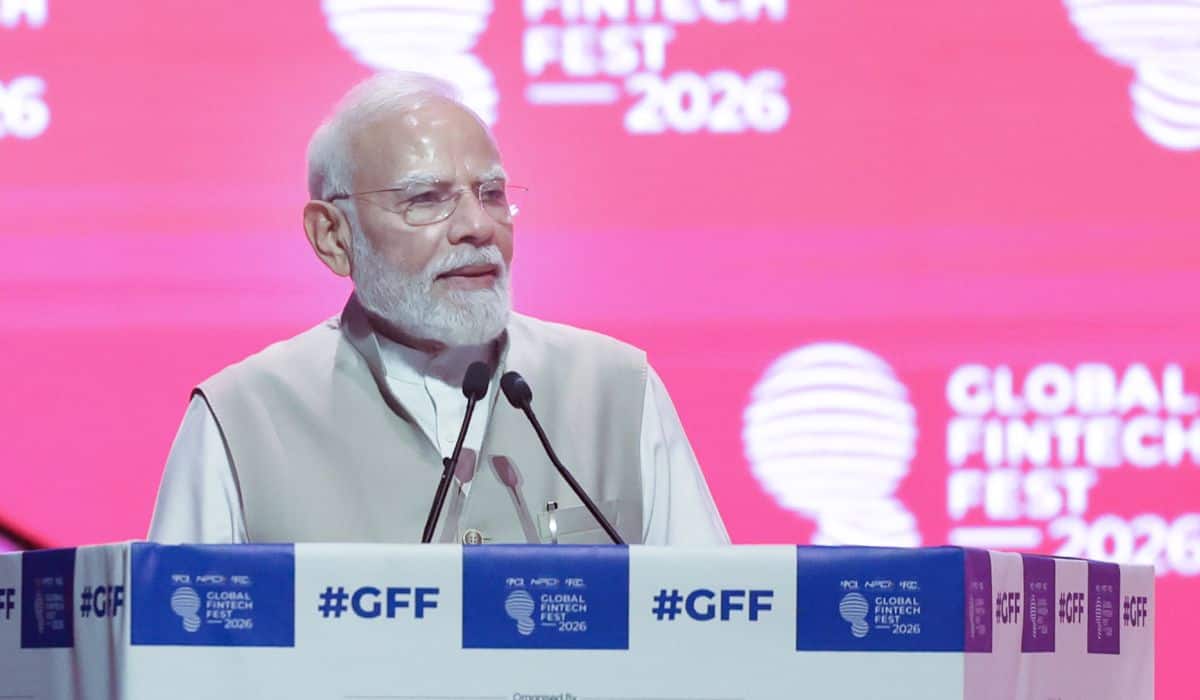
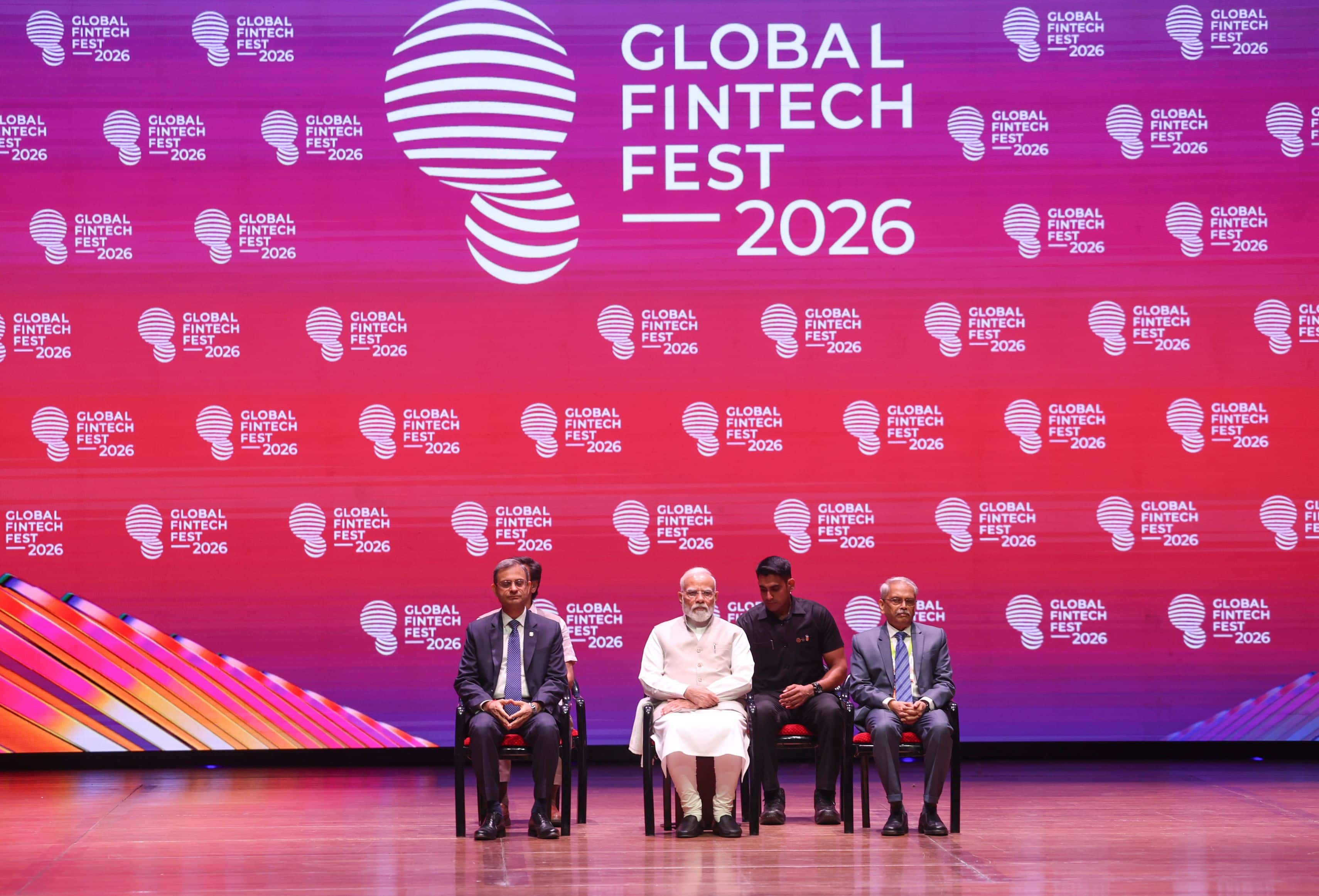
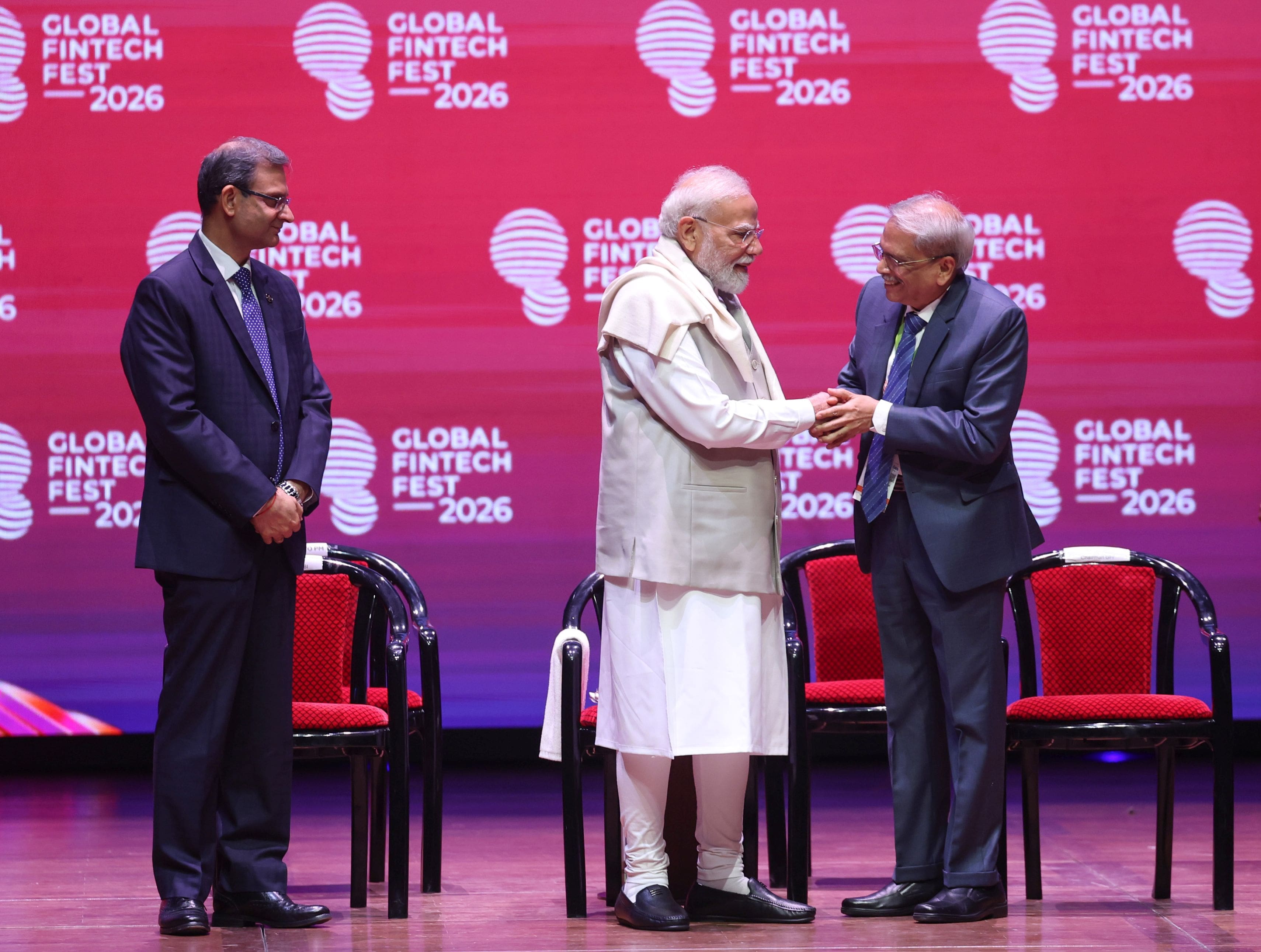
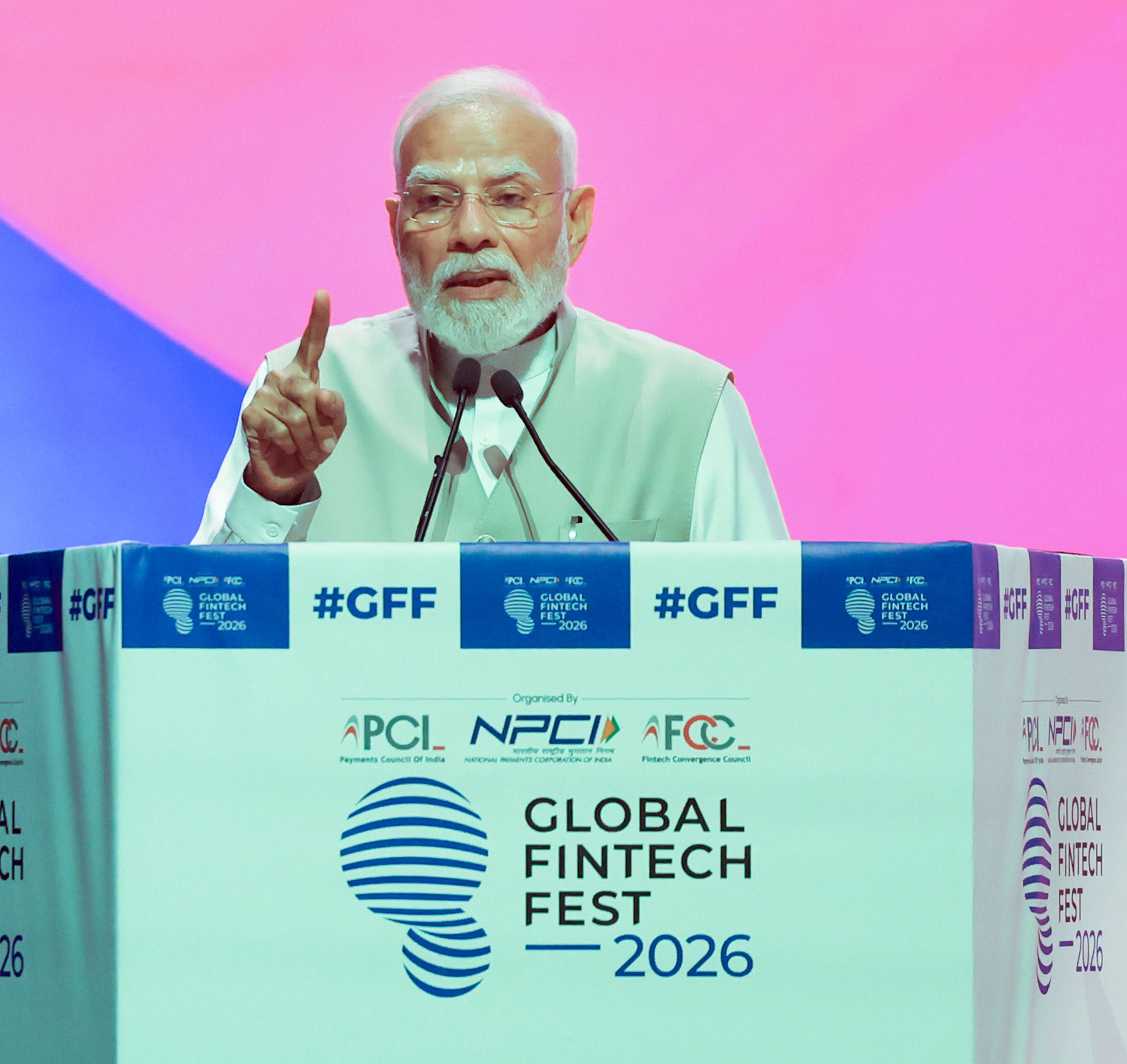
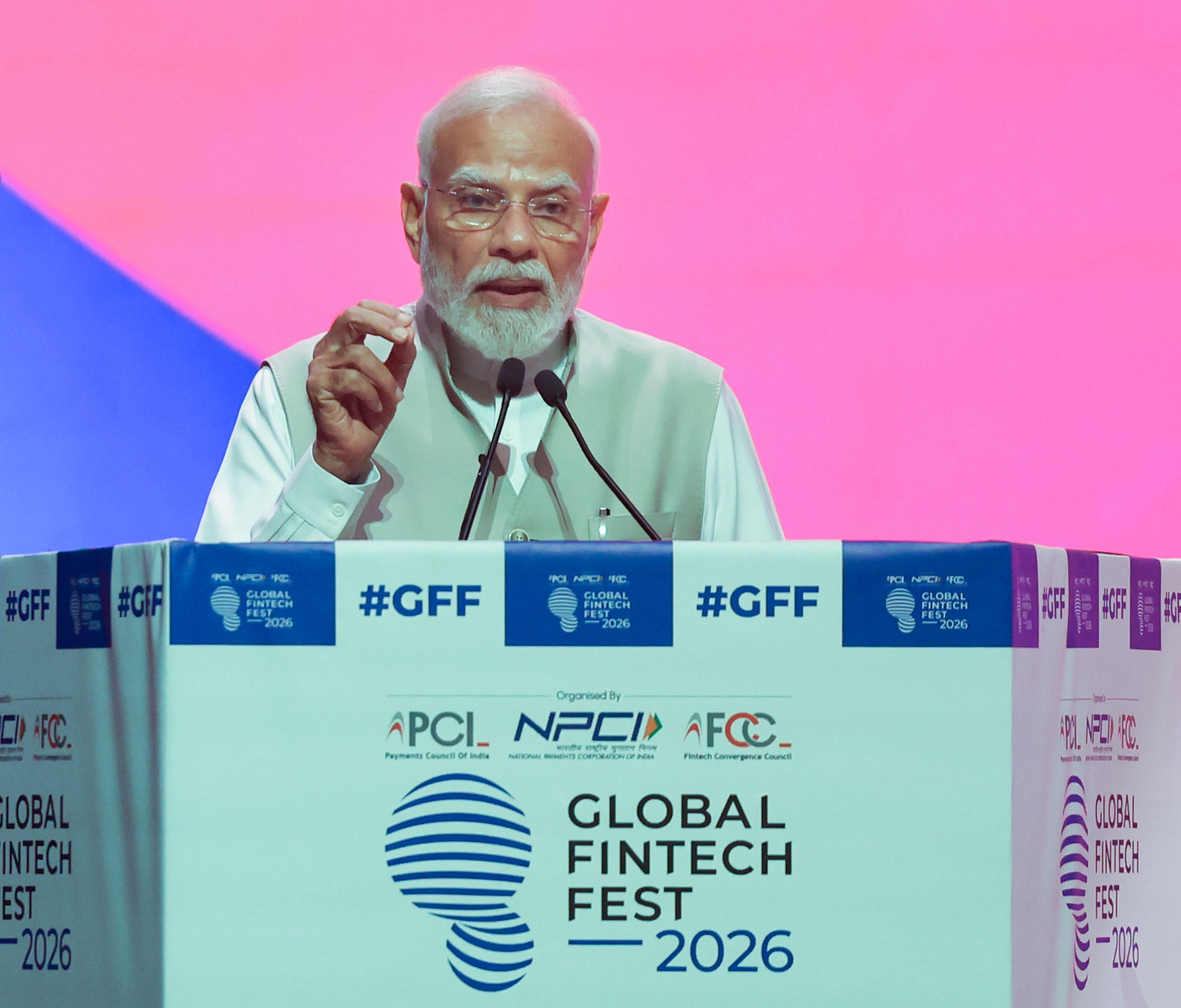
UPI is a major champion of India's FinTech story: PM Modi at Global FinTech Fest in Mumbai
September 08, 2026
India is taking its fintech journey to new heights, with innovation and inclusion at its core: PM
India's growth gives the world renewed confidence: PM
UPI is a major champion of India's FinTech story: PM
Technologies like Agentic AI, tokenisation and quantum are opening new possibilities in the financial sector: PM
PM urges FinTech Sector to focus on Cybersecurity, Ethical Data Protection, Innovation & Consumer Protection Index

RBI Governor Shri Sanjay Malhotra ji, Global Fintech Fest Chairman Kris Gopalakrishnan ji, all innovators, leaders and investors of the fintech world, ladies and gentlemen.

I welcome all guests and delegates who have come from India and abroad to the Global Fintech Fest. I am happy that today another hat‑trick has been achieved. One hat‑trick was in 2024 when the government was formed for the third time, and another hat‑trick is my presence among you. This is my third consecutive year at the Global Fintech Fest. This hat‑trick shows how important you are for a developed India, how important your work is.

Friends,

Every time I come here, I see more youth, I feel more energy. I see the scope of possibilities expanding. It is clear that risk‑taking capacity is increasing, dreams are becoming bolder. And therefore, my confidence in the future of developed India is becoming stronger.

Friends,

Amidst this energy of fintech, Mumbai is also experiencing cultural energy at its peak these days. In just a few days, Ganeshotsav will begin in Maharashtra and across the country. In our tradition, Lord Ganesh is remembered before every auspicious work. Bowing to Ganapati Bappa, I extend my best wishes to all of you for Global Fintech Fest 2026.

Friends,

You all know well what the global situation is. The world is passing through a period of conflicts and uncertainty. Energy and commodity supply chains are under pressure, there are tensions in trade. These conditions have persisted for many months. The quarter from April to June was the most challenging. And even in such a situation, when India grows at 7.8 percent, the world gains new confidence. And this trust, I can clearly see on your faces here.

Friends,

Another example of this growing trust in India is our sovereign ratings. Recently, a Japanese credit rating agency upgraded India’s sovereign ratings to the A category. An upgrade is a matter of happiness, but very few people know that this fortune has come after three decades - after thirty years. This shows how assured the world is about India’s growth momentum, our macro‑economic stability, and the structural reforms carried out in recent years. And I repeat, India’s reform express will move forward at even greater speed.

Friends,

India’s fintech story has been extraordinary. And one of its biggest champions is our UPI. I spoke about it last year too. But this transformation is so big that whenever fintech is discussed, it will always be incomplete without UPI.

Friends,

Just a few days ago, on 25th August, UPI completed 10 years. Ten years ago, when I said that your bank would be at your fingertips, some people thought it impossible - and I am talking about well‑informed people, remember their faces. I am not talking about the millions of Indians whose bank accounts had just been newly opened then. Generations of theirs had never even seen the door of a bank. But today, ten years later, look - those same millions of people, who for generations were outside the banking system, have become the big drivers of fintech growth in India.

Friends,

Today, in the month of August alone, more than 2,400 crore transactions were done through UPI. That means, in just the time we have been sitting here, in 10 minutes alone, on average more than 5 million UPI transactions have taken place across the country. This is the impact because of which France’s President Macron said - he said that UPI is not just a tech story, it is a civilizational story.

And friends,

UPI is no longer limited to India. A few years ago, if someone had said that payments could be made abroad directly from an Indian bank account, hardly anyone would have believed it. But today, it is a reality. India’s UPI is now live in 11 countries. These are extraordinary figures, showing how long a journey we have traveled. But now the question is - should we be satisfied with this journey? Should we consider fintech’s success in India as final?

Friends,

I am completing 25 years in the ecosystem of policy and governance. And those who have seen me in these years know - Modi is not one to stop at a milestone, celebrate, and be satisfied. When one goal is achieved, I immediately begin preparing for an even bigger goal.

Friends,

Today our UPI has reached many countries. But this is only the first step. Our next goal should be to connect with the payment systems of those countries. We have already done this with Singapore. Because of this, transactions between India and Singapore happen just like between two neighborhoods of the same city. This same connection we must build with other countries, other markets. We must move forward with this goal. Wherever Indians live in large numbers, wherever India trades on a large scale, whichever country is ready to walk with us - we must work to connect them all.

Friends,

This is also necessary because abroad, a large number of Indians work. And Indians are the largest in the world in sending money back home. But today, a part of that money is lost in transaction costs. UPI can save Indians even in this, and money can reach Indian families more quickly.

Friends,

Today, how do you make payments in India with cards? This system runs on standards that were designed elsewhere. We adopted those standards and rules that others had created. At that time, we did not have our own option. But now we have our own option. Now we can create our own rules and standards, and connect them with the world. I have full confidence in all of you that you can do this.

Friends,

Technology is the most effective tool of inclusion. And UPI has demonstrated this. When it comes to fintech, its unique feature must be to reach where traditional models could not. Where traditional banks could not reach, where bank branches could not reach, UPI has taken the banking system to that place, to that person.

Friends,

Today, a large part of the fintech market is only payments. But now we must move to the next level, and move quickly. In the fintech market, along with payments, the share of credit transactions must increase, the share of insurance must increase, the share of savings, investments, and pensions must increase.

Friends,

I believe fintech can bring out that strength of the country which is still outside the reach of traditional financial models, or not being addressed properly. For a developed India, bringing out this strength is very necessary.

Friends,

We can already see the impact of this in the success of PM SVANidhi. Our street vendors are the backbone of cities. But they were outside the country’s banking system, outside the formal credit system. PM SVANidhi connected millions of street vendors to the formal system. And now these companions also have the SVANidhi credit card - that means they have a tool of formal credit access. And studies show that the average annual income of these beneficiaries has increased by more than 20 percent. Not only this, their families have seen improvements in housing, nutrition, healthcare access, and children’s education. That is why the government has decided to extend this scheme until 2030.

Friends,

PM SVANidhi would not have achieved this success if UPI did not exist. UPI has played a very big role in the success of this scheme. Learning from this experience, we must use the power of fintech to further increase economic activities. Let me give you an example from the world of capital and credit. There is a sister who runs a small shop. She receives digital payments every day. Now her income and expenses show a clear pattern. Her business is running well. She has moved beyond the level where small capital was enough. Now she needs goods, equipment to scale up her business, and for this she needs a little more money. This is not very large credit. And her business is still so small that traditional credit models cannot serve her efficiently. There are many such businesses whose needs fintech can analyze, anticipate, and address. And the number of such businesses is very large.

Friends,

Technology can help us study the economic activities of such businesses and design curated models for them. I believe the next chapter of fintech will be written here. We have shown speed and scale in payments. Now we must help increase the share of non‑payment transactions. For example, a delivery partner, or a person doing some small work - he earns every month, but he needs access to services like savings and pension products. Fintech can address the needs of such people. Similarly, fintech can make access easier to insurance products and other financial services. All these can be made just as simple, easy, and accessible as making a payment today with a QR code.

Friends,

The first quarter of the 21st century has ended. Now we are in the year 2026. The second quarter has brought even newer possibilities for us. Agentic AI, tokenization, quantum - such technologies are opening new doors of possibilities in the financial sector. Now the challenge before us is how to turn these possibilities into real impact. And for this, I want our fintech companies to set some tasks for themselves. And I want to place some suggestions before you. First - we must make cyber security in India top‑notch. Second - our industry must have its own ethical data protection standards. Third - we must build a strong fintech regulator‑industry innovation ecosystem. And fourth - we must have a fintech consumer protection index, on the basis of which every company can have a transparent rating. If we test ourselves on these parameters, India’s fintech sector can become the gateway of countless possibilities. We have the experience, and we have the way to implement it on the ground. Therefore, we must work quickly.

Friends,

The success story of Digital India is now ready for a new chapter. The success of our fintech story so far has been scale, scope, secure systems, democratization of technology, and public trust. Keeping these core values in mind, the fintech sector must focus on next‑generation innovation. With this appeal, once again I extend my best wishes to all of you. Thank you very much.