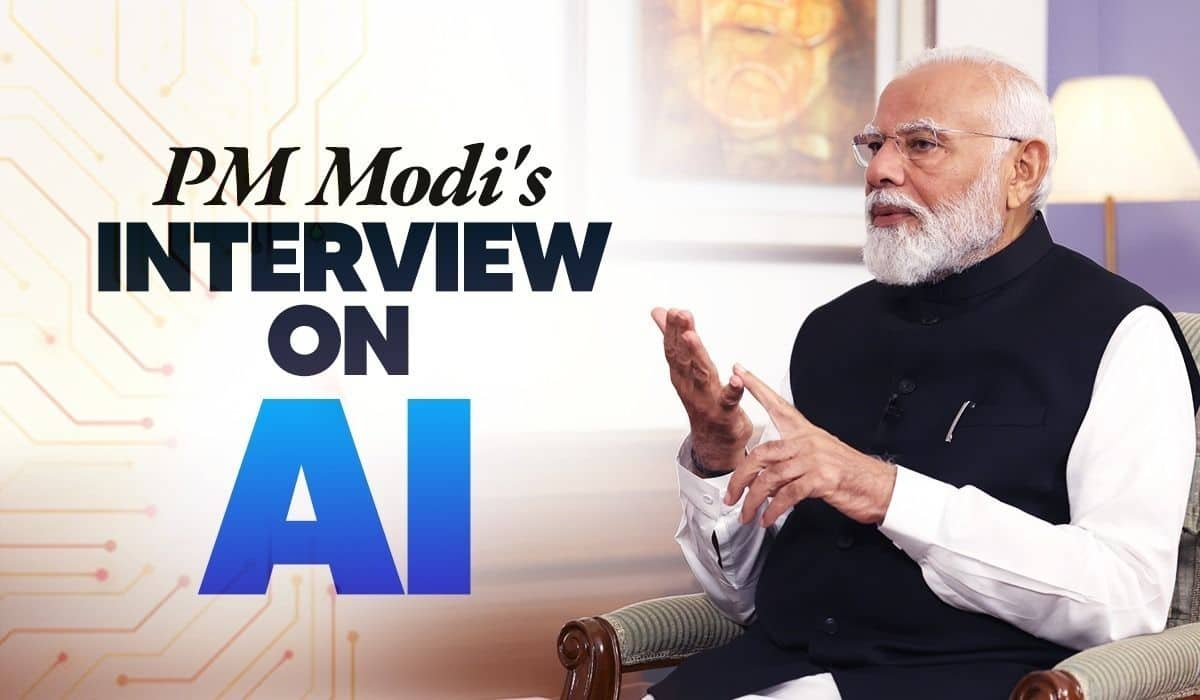
Indian Prime Minister Narendra Modi has praised the “limitless potential” of India’s growing ties with Saudi Arabia as he arrives in Jeddah for a two-day visit, his third to the Kingdom since 2016. In an exclusive interview with Arab News, he described the Kingdom as “a trusted friend and strategic ally,” emphasizing how bilateral relations had expanded significantly since the creation of the Strategic Partnership Council in 2019.
“Our partnership has limitless potential,” Modi said. “In a world full of uncertainties, our bond stands strong, as a pillar of stability.” He praised Saudi Crown Prince and Prime Minister Mohammed bin Salman’s leadership, calling him “a strong advocate of our bilateral ties” and a visionary who has inspired global admiration through the reforms under Vision 2030.
“Every time I have met him, His Royal Highness has left a deep impression on me. His insights, his forward-thinking vision, and his passion for fulfilling the aspirations of his people are truly remarkable,” he said.
Highlighting shared economic ambitions, Modi noted that trade between the two countries had grown even amid global challenges, with energy, agriculture and fertilizers as key sectors. He welcomed deeper integration of Saudi and Indian businesses, particularly in emerging sectors like green hydrogen and technology. “Indian companies have also maintained a strong presence across various sectors in Saudi Arabia,” he said.
Modi congratulated the Kingdom for winning the bids to host World Expo 2030 and FIFA World Cup 2034, describing the dual successes as a matter of “immense pride.” He also pointed to growing defense cooperation and landmark joint military exercises as signs of increasing strategic trust.
On the India-Middle East-Europe Economic Corridor (IMEEC), launched during the G20 Summit in September 2023, Modi said the project would be “a key catalyst of commerce, connectivity and growth in the entire region.”
In a statement, the Indian government said the visit “reflects the importance India attaches to its bilateral relationship with the Kingdom of Saudi Arabia.”
Q. Saudi-India ties are on an upswing. How do you assess the progress made in the strengthening of bilateral relations since the establishment of the Strategic Partnership Council in 2019?
A. First of all, I want to thank His Royal Highness Prince Mohammed bin Salman for his kind invitation. I am delighted to be here on my third visit. I take great pride in our relations with Saudi Arabia. The Kingdom of Saudi Arabia is one of India’s most valued partners — a maritime neighbor, a trusted friend and a strategic ally.
Our connection is not new. It is rooted in civilizational exchanges that go back to centuries. From ideas to trade, there has been a constant flow between our two great nations.
Our relations have been on an upward trajectory since 2014. I fondly recall that in 2016, I had the honor of receiving The Order of King Abdulaziz from His Majesty King Salman.
The formation of the Strategic Partnership Council in 2019 marked a major milestone. Since then, cooperation between us has expanded across many sectors. And let me tell you, this is just the beginning. Our partnership has limitless potential.
What anchors our relationship is mutual trust and goodwill. In a world full of uncertainties, our bond stands strong, as a pillar of stability. I truly believe these are promising times for India-Saudi Arabia ties. And, I must say, the Saudi leadership has played a vital role in strengthening this partnership.
India and Saudi Arabia will keep moving forward together — for peace, progress and prosperity, not just for our people, but for the entire world.
Q. Given your previous seven meetings with Crown Prince and Prime Minister Mohammed bin Salman, how would you characterize the personal rapport between the leadership of both countries? Has his rapport influenced the bilateral relationship in any way?
A. Every time I have met him, His Royal Highness has left a deep impression on me. His insights, his forward-thinking vision, and his passion for fulfilling the aspirations of his people are truly remarkable.
Under his leadership, Saudi Arabia has undergone tremendous social and economic transformation. The reforms he has undertaken have not just inspired the region, but also caught the attention of the entire world. One can see the transformational changes in the country under Vision 2030 in a very short period.
I value the personal warmth and trust we share. And, yes, this personal rapport has naturally translated into how both countries give priority to our partnership. He is a strong advocate of our bilateral ties. He has been a great supporter of the Indian diaspora in Saudi Arabia and our people living in Saudi Arabia deeply admire him.
When we talk, we focus on making this partnership future-ready. Jeddah has had a special connection with India. For centuries, this famed city has been one of the principal arteries for our trade and people-to-people exchanges. As a gateway to Makkah, for ages, our pilgrims have walked the by-lanes of Jeddah on their holy journey for Hajj and Umrah.
Q. Saudi Arabia is India’s fifth-largest trading partner. What initiatives are being considered to further diversify and expand this economic partnership so that both countries can better face challenges together?
A. Our economic ties are as old as the monsoon winds. Given the proximity of our nations and the complementarity of our economies, there is a natural connect. That is why even during global challenges, our trade ties have not just survived, but they have grown.
While sectors like energy, agriculture and fertilizers are the main areas of our trade, efforts at diversification have borne fruits. Indian businesses and Saudi industry are building stronger connections.
Building stronger connect between our businesses and industry and enhancing investment partnership is adding resilience to this relationship. Saudi Arabia is a leading energy partner for India. Likewise, India is contributing to food security in Saudi Arabia. I am told people in Saudi Arabia prefer Indian rice! India too loves Saudi dates.
I also see several complementarities between Saudi Vision 2030 and India’s Viksit Bharat 2047 (Developed India 2047 initiative).
Bilateral investments between our countries have also been increasing. Today, the Indian growth story offers immense opportunities for Saudi majors to invest and partner, from space economy to global supply chain collaborations.
Indian companies have also maintained a strong presence across various sectors in Saudi Arabia. They are playing a crucial role in the realization of Saudi Vision 2030.
Our goal is to enhance this connect.
India and Saudi Arabia are working on a Bilateral Investment Treaty. The proposed Free Trade Agreement between India and GCC has immense potential to transform the economic relationship between India and Saudi Arabia, and the region in general.
Q. With Saudi Arabia’s Vision 2030 emphasizing infrastructure development, what opportunities do you see for Indian companies to contribute to and benefit from these projects, including Riyadh Expo 2030 and Saudi FIFA World Cup 2034?
A. As a close friend, India rejoices in Saudi Arabia’s stellar achievements. I would like to congratulate the people of Saudi Arabia and its leadership for being chosen as the host for World Expo in 2030 and FIFA World Cup in 2034.
It is a matter of immense pride for any country to host two marquee global events within a span of four years. It speaks volumes of the leadership of His Royal Highness and his vision.
These mega events will boost the local economy. They offer opportunities for Indian companies as well. Our companies, as you are aware, have built a global reputation for their quality, competitiveness and efficiency.
I understand that the Indian companies already have a strong participation in Saudi infrastructure and technology sectors. They are also creating value in various mega and giga projects as part of Saudi Arabia’s Vision 2030.
I also invite Saudi companies to take advantage of the remarkable opportunities in India as part of our Viksit Bharat journey. They can participate in the growth of India’s next-generation infrastructure, logistics, renewable energy, healthcare, utilities, innovation, start-ups and “blue economy” sectors.
Deeper engagements and two-way collaborations between companies of both countries will go a long way in strengthening the bilateral economic partnership.
Q: Given Saudi Arabia’s role as a key supplier of crude oil and petroleum products to India, how do you envision the future of energy collaboration between the two nations, especially in the context of global energy transitions?
A. Energy has been an important pillar of our economic partnership. Saudi Arabia has been a strong and reliable energy partner for us. It is one of our top suppliers of crude and other petroleum products. As India seeks to become a developed country, our energy demands will continue to grow. And Saudi Arabia will remain a close partner in our energy security. As strategic partners we agree that our energy cooperation is not limited to mere buyer-seller relationships. We are also exploring joint projects in refineries and petrochemicals.
The world is also witnessing a gradual shift toward cleaner and more sustainable energy resources. India is moving ahead with an ambitious target for green transition. We are confident of achieving 500 GW renewable energy target by 2030.
Even in this journey, there is an immense scope of collaboration with Saudi Arabia. This includes the areas of supply chains, circular economy, energy efficiency and green hydrogen. As partners in the International Solar Alliance, both countries can work toward innovative solutions for future energy needs.
During the New Delhi G20 Summit in 2023, along with His Royal Highness, we launched the India-Middle East-Europe Economic Corridor (IMEEC) initiative. We are now working on feasibility studies for electricity grid interconnectivity between India and Saudi Arabia and the wider region. As you can see, we are moving ahead with the vision of a comprehensive energy partnership between our two countries.
Q. Saudi-India defense engagements and joint exercises have been steadily increasing. What are the key areas of focus for defense and security cooperation in the coming years?
A. We consider Saudi Arabia as a force of positivity and stability in the region. As maritime neighbors, India and Saudi Arabia share a natural interest in safeguarding peace and stability in the region.
The growing defense and security engagement and collaboration between the two countries is a reflection of deep mutual trust. It is also a testament to our shared commitment to regional stability, and our mutual resolve to address the evolving challenges in our extended neighborhood.
We have seen steady progress in security cooperation. This includes areas such as counterterrorism, combating extremism, disrupting terror financing and tackling drug trafficking. We are also exploring new frontiers of cooperation in cybersecurity, recognizing its growing importance in today’s interconnected world.
Last year, we achieved an important milestone: the first-ever joint exercises between the two land forces. These were complemented by two successful rounds of the joint naval exercise Al-Mohed Al-Hindi, which were held in 2021 and 2023.
Both of us support deeper defense-industry collaboration. Over the past decade, defense manufacturing has taken deeper roots in India. Today, there is a strong military industrial complex with the ability to manufacture quality ammunition, small arms, tanks, armored carriers. For the air force, we are building drones, advanced light helicopters and fighter jets. For the navy, we have the capacity to build patrol boats, submarines, and even aircraft carriers.
We are not just fulfilling our own needs. India has also emerged as an important supplier of defense equipment to more than 100 countries around the world.
I am glad that we have been able to meet some needs of the armed forces in Saudi Arabia. We support deeper engagement between private-sector players from both countries. We would welcome Saudi investment into the defense manufacturing sector in India that has been opened for private investment.
Q. The IMEEC initiative that was announced in September 2023 in New Delhi is an ambitious project to connect India and Europe through the Middle East. What are the key elements of IMEEC, and how is India working with Saudi Arabia to achieve the goals envisioned under this initiative?
A. India and Saudi Arabia, along with European Union, the UAE, France, Germany, Italy and the US, jointly launched the India Middle East Europe Corridor initiative in New Delhi in September 2023.
This corridor will define the future of connectivity in all forms for centuries to come. It will become the key catalyst of commerce, connectivity and growth in the entire region. The corridor will enhance connectivity in all its forms, be it physical or digital.
It will facilitate development of resilient and dependable supply chains, increase trade accessibility and improve trade facilitation. The corridor will increase efficiencies, reduce costs, enhance economic unity, generate jobs and lower greenhouse gas emission, resulting in a transformative integration of Asia, Europe and the Middle East.
Both India and Saudi Arabia have a key role to play in the success of this corridor. We are committed to working with our Saudi partners to realize the vision of connectivity, including multi-modal logistic connectivity, data connectivity and electrical grid connectivity. We are working on clean and green hydrogen and related supply chains under this initiative.
I visualize this initiative has a transformational potential for humanity. It can be the new Silk Route of the 21st century that will bring benefit to the generations to come.
Q. The Indian community of 2.7 million in Saudi Arabia has been praised by you as a binding force in bilateral ties. How does your government plan to further support and engage with the Indian diaspora in the Kingdom?
A. First of all, let me put it on record that we are deeply grateful to Their Royal Highnesses, King Salman and Crown Prince Mohammed bin Salman, for the patronage they have provided to the Indian community in Saudi Arabia. We can never forget how they took care of the Indians as one of their own during the difficult times of the COVID pandemic.
Indians have a very important character — whichever country they go, they make it their home. They are law abiding, dedicated and professional to the core. They carry with them the values of empathy, compassion and care.
This very nature earns them respect of their host country. Saudi Arabia is no exception. Whenever I have met His Royal Highness Crown Prince Mohammed bin Salman, he has praised the Indian community and appreciated their significant contribution to the economic growth of the Kingdom. He has even said that they are part of the Saudi family. These words of praise always fill my heart with pride and joy.
For my government, the members of the Indian diaspora are the “rashtradoots” (national ambassadors). The 4Cs — Care, Connect, Celebrate and Contribute — is the motto of our engagement with our diaspora. Their safety, welfare and well-being is paramount for us.
Over the past decade we have launched many initiatives, including insurance schemes, scholarships for their children, and skilling programs. We have established mechanisms for safe and legal migration. The 2.7 million vibrant Indian community in Saudi Arabia is a living bridge connecting our two countries. I commend them for not only preserving their values and traditions, but also promoting them.
I eagerly look forward to reconnecting with the Indian diaspora during this visit.
Q: How do you see religious tourism, cultural and educational exchanges developing as a component of Saudi-India bilateral relations? Do you foresee India’s IITs and IIMs opening campuses in Saudi Arabia, along the lines of IIT Delhi, Abu Dhabi campus?
A. Our people have interacted with each other since the days of “Kalila wa Dimna.” The growing cultural connect between our countries is indicative of the understanding and appreciation for each other.
As far as religious tourism is concerned, as you know we have a large Muslim population and they visit your beautiful country each year for Umrah and Hajj pilgrimage. We are grateful to the Saudi leadership for the continued assistance provided to Indian pilgrims. Yoga has gained considerable popularity in Saudi Arabia over the recent years, thanks to the encouragement and support of the Saudi government. We are also noticing a growing interest in cricket.
I am told that Arab broadcasters run dedicated channels with Indian content that are very popular in the Kingdom. There is also a wide following for Indian films and actors. India is hosting the first edition of the World Audio Visual and Entertainment Summit in Mumbai during May 1-4. We look forward to a strong participation from Saudi Arabia at the summit so that we can give new wings to our cultural and entertainment collaboration.
Educational cooperation is another promising area. Indian higher education institutions are recognized globally. They are ready to take up opportunities, as and when those arise in Saudi Arabia as well.
Finally, let me congratulate Arab News as it completes 50 years of its publication this year. I know Arab News has a special connection with Indians living in the Kingdom. Your media outlet is a strong symbol of our people-to-people ties. My best wishes to you as you continue to nourish India-Saudi Arabia friendship.
Following is the clipping of the interview:


Source: ARAB NEWS