Prime Minister Modi exhorts civil servants to become "Agents of Change"
Redefine your role, move beyond controlling, regulating & managerial capabilities: PM Modi to Civil Servants
Your mantra must be "Reform to Perform to Transform": PM Modi to Civil Servants
PM Modi urges civil servants to engage with people, promote Government schemes & initiatives
Be bold & look at new ways of achieving objectives in the interest of people: PM Modi

The Prime Minister, Shri Narendra Modi, today exhorted civil servants to become “agents of change” in their respective organizations and departments. Addressing civil servants on Civil Services Day, the Prime Minister said that in the 21st century, civil servants need to redefine their role, and move beyond controlling, regulating and managerial capabilities, and think of themselves as change agents.

The Prime Minister urged civil servants to build teams. He said that his mantra of “Reform to Transform”, should be interpreted by civil servants as “Reform to Perform to Transform.” He said if civil servants were able to perform, the transformation on the ground would be evident.

The Prime Minister said that ‘Jan Bhagidari’ (public participation) is the key to success, as highlighted by the initiatives which have received awards today. He therefore urged civil servants to engage with the people, so that the Government’s schemes and initiatives can be better implemented on the ground.

The Prime Minister described Civil Services Day as an occasion to reflect and undertake a critical evaluation of the journey so far, and resolve to move ahead with fresh determination.

Congratulating the awardees for their successful initiatives, he said their success could prove inspirational for other civil servants. The Prime Minister noted that 74 success stories were shortlisted for consideration for awards this year, which represents a substantial jump over previous years. Nevertheless, he added, this represents only about 10 per cent of India’s districts. He urged all districts to become more proactive in this regard.

The Prime Minister urged civil servants to be bold enough to experiment and look at new ways of achieving objectives in the interest of the people.

Recalling the recent Committees of Secretaries which had been formed at his initiative to look into key areas of governance, he said that officers worked on these tasks voluntarily, after office hours and on holidays. He said these teams had successfully broken silos, and presented fresh ideas and suggestions. They had devoted 10,000 manhours to this work, he added.

Click here to read full text speech

Explore More
अयोध्येत श्री राम जन्मभूमी मंदिर ध्वजारोहण उत्सवात पंतप्रधानांनी केलेले भाषण

लोकप्रिय भाषण

अयोध्येत श्री राम जन्मभूमी मंदिर ध्वजारोहण उत्सवात पंतप्रधानांनी केलेले भाषण
India's pace of economic growth shows that its Viksit Bharat dream is not out of reach

Media Coverage

India's pace of economic growth shows that its Viksit Bharat dream is not out of reach
NM on the go

Nm on the go

Always be the first to hear from the PM. Get the App Now!
...
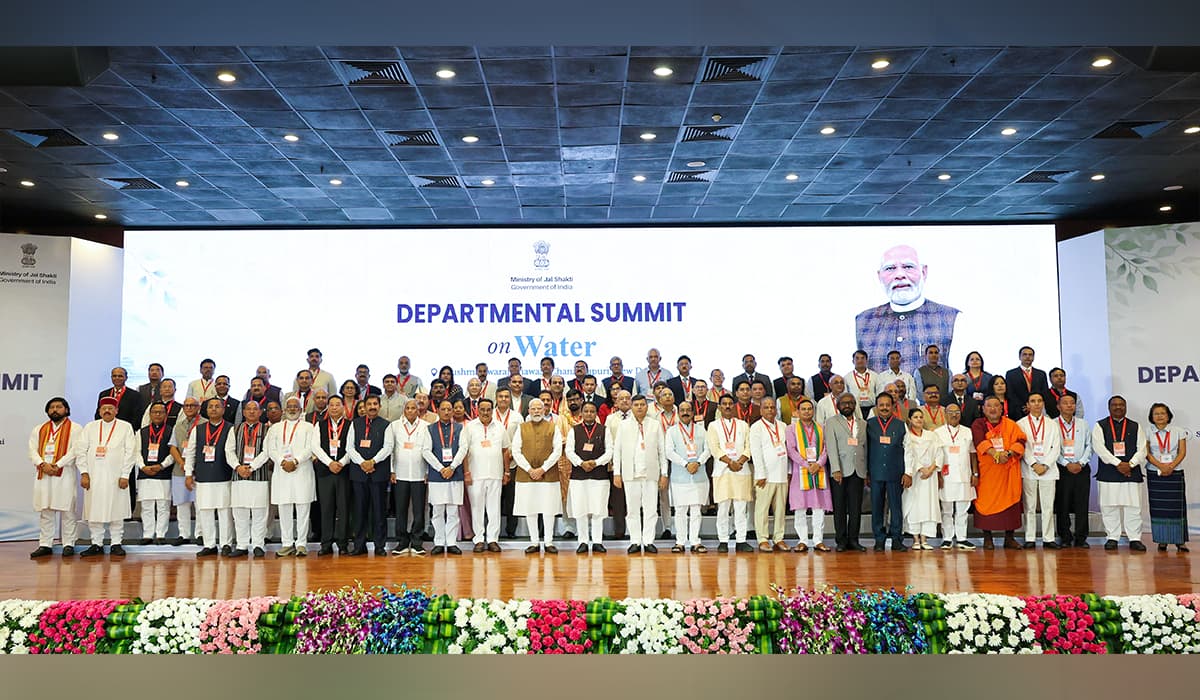
PM chairs valedictory session of National Departmental Summit on Water
September 02, 2026
This marks the first in a series of Summits envisioned by PM to strengthen spirit of Team India and deepen cooperative federalism
PM stresses adoption of a continuous process of review and follow up to act on actionable and time-bound outcomes
Emphasising Jan Bhagidari, PM calls for promoting Jal Utsav to deepen public awareness on water conservation
PM calls for greater adoption of water-saving technologies and learning from global best practices
PM calls for robust water data governance through effective use of AI
PM suggests structured inter-State Study-visits involving public representatives, officials and farmers on water related issues

Prime Minister Shri Narendra Modi today chaired the valedictory session of the two-day National Departmental Summit on Water, organised by the Ministry of Jal Shakti. The Summit is the first in a series of Departmental Summits envisioned by Prime Minister to strengthen the spirit of Team India, deepen cooperative federalism and foster collective ownership of national priorities through closer collaboration between the Centre and the States. It brought together Ministers and senior officials from States and Union Territories for focused deliberations on various dimensions of India’s water security.

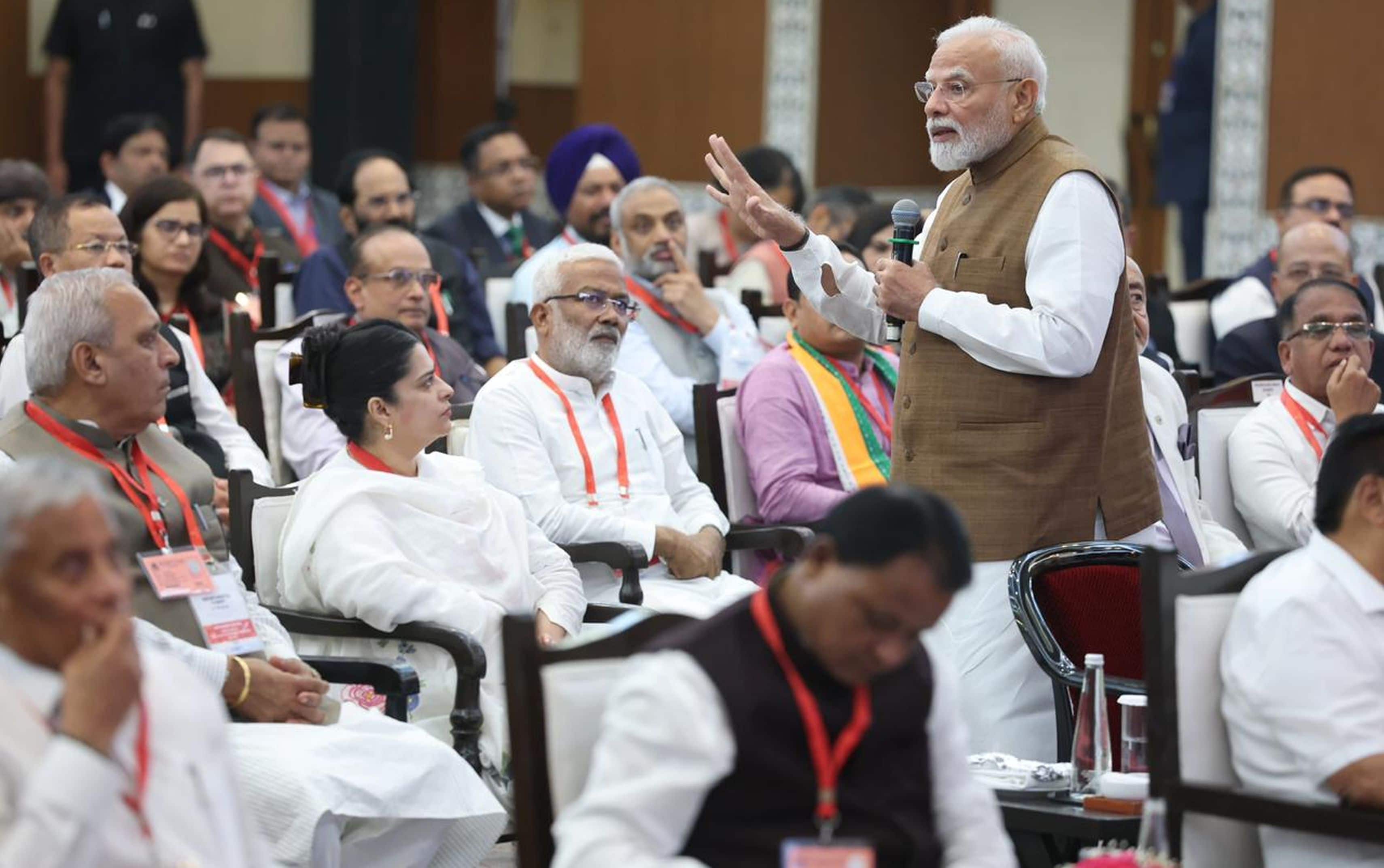
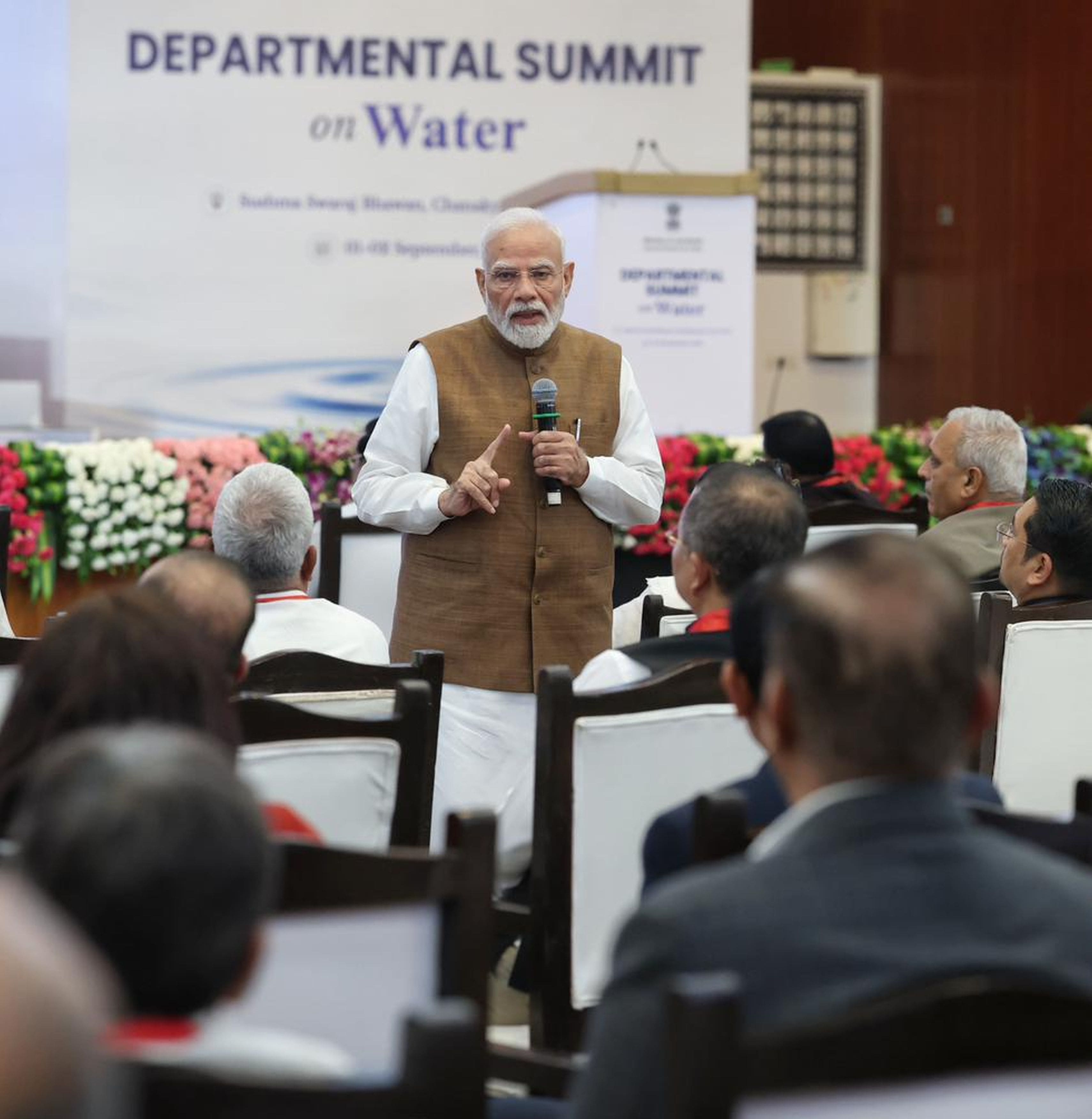
Prime Minister appreciated the intensive two-day deliberations and emphasised that the actionable and time-bound action points emerging from the Summit should be pursued through a continuous process of review and learning. He suggested that the Summit should not remain a one-time exercise and called for a continuous process of review and follow-up.

Prime Minister called for sensitising Urban Local Bodies to the challenges arising from urbanisation, including population growth and future water requirements, and suggested organising similar Chintan Shivirs for Urban Local Bodies. He called for greater adoption of water-saving technologies. He also suggested dedicated exhibitions and workshops, including exposure to global best practices, to enable Indian manufacturers and stakeholders to develop and scale efficient solutions.

Emphasising Jan Bhagidari, Prime Minister suggested promoting “Jal Utsav” to create greater awareness among people. Prime Minister called for making de-silting a regular programme and developing clear criteria and SOPs for de-silting. On dam safety, he stressed rigorous preparedness before every monsoon, adherence to prescribed precautions and creating awareness among school students, including through suitable incorporation in educational curricula.

Prime Minister further called for strengthening knowledge and capacity on water management and governance in universities and higher educational institutions. He suggested structured inter-State study-visits involving public representatives, officials and farmers to facilitate practical learning and replication of successful interventions.

Prime Minister called for robust water data governance, with water-sector data brought together, systematically managed, analysed and effectively utilised. He recommended the use of AI for data collection and analysis through a uniform format. He also stressed anticipatory and integrated planning to address water scarcity through suitable utilisation of treated water for agriculture and industrial purposes.

Drawing upon his experience as Chief Minister of Gujarat, Prime Minister noted that instances of water scarcity could be transformed into opportunities through systematic planning, commitment and deployment of adequate resources and capable officers.

Union Minister for Jal Shakti Shri C. R. Patil highlighted four key outcomes of the summit: accelerated completion of water infrastructure projects; strengthening water conservation as a sustained people’s movement; ensuring long-term sustainability of drinking-water sources; and institutionalising effective operation and maintenance of rural drinking-water schemes.