Life in the era of COVID-19

Published By : Admin | April 19, 2020 | 19:16 IST

The Prime Minister, Shri Narendra Modi has shared few thoughts on Linkedin, which would interest youngsters and professionals.

Following is the text of Prime Minister, Shri Narendra Modi’s thoughts which was shared on Linkedin.

“It has been a topsy-turvy start to the third decade of this century. COVID-19 has brought with it many disruptions. Coronavirus has significantly changed the contours of professional life. These days, home is the new office. The Internet is the new meeting room. For the time being, office breaks with colleagues are history.

I have also been adapting to these changes. Most meetings, be it with minister colleagues, officials and world leaders, are now via video conferencing. In order to get ground level feedback from various stakeholders, there have been videoconference meetings with several sections of society. There were extensive interactions with NGOs, civil society groups and community organisations. There was an interaction with Radio Jockeys too.

Besides that, I have been making numerous phone calls daily, taking feedback from different sections of society.

One is seeing the ways through which people are continuing their work in these times. There are a few creative videos by our film stars conveying a relevant message of staying home. Our singers did an online concert. Chess players played chess digitally and through that contributed to the fight against COVID-19. Quite innovative!

The work place is getting Digital First. And, why not?

After all, the most transformational impact of Technology often happens in the lives of the poor. It is technology that demolishes bureaucratic hierarchies, eliminates middlemen and accelerates welfare measures.

Let me give you an example. When we got the opportunity to serve in 2014, we started connecting Indians, especially the poor with their Jan Dhan Account, Aadhar & Mobile number.

This seemingly simple connection has not only stopped corruption and rent seeking that was going on for decades, but has also enabled the Government to transfer money at the click of a button. This click of a button has replaced multiple levels of hierarchies on the file and also weeks of delay.

India has perhaps the largest such infrastructure in the world. This infrastructure has helped us tremendously in transferring money directly and immediately to the poor and needy, benefiting crores of families, during the COVID-19 situation.

Another case in point is the education sector. There are many outstanding professionals already innovating in this sector. Invigorating technology in this sector has its benefits. The Government of India has also undertaken efforts such as the DIKSHA Portal, to help teachers and boost e-learning. There is SWAYAM, aimed at improving access, equity and quality of education. E-Pathshala, which is available in many languages, enables access to various e-books and such learning material.

Today, the world is in pursuit of new business models.

India, a youthful nation known for its innovative zeal can take the lead in providing a new work culture.

I envision this new business and work culture being redefined on the following vowels.

I call them- vowels of the new normal- because like vowels in the English language, these would become essential ingredients of any business model in the post-COVID world.

Adaptability:

The need of the hour is to think of business and lifestyle models that are easily adaptable.

Doing so would mean that even in a time of crisis, our offices, businesses and commerce could get moving faster, ensuring loss of life does not occur.

Embracing digital payments is a prime example of adaptability. Shop owners big and small should invest in digital tools that keep commerce connected, especially in times of crisis. India is already witnessing an encouraging surge in digital transactions.

Another example is telemedicine. We are already seeing several consultations without actually going to the clinic or hospital. Again, this is a positive sign. Can we think of business models to help further telemedicine across the world?

Efficiency:

Perhaps, this is the time to think of reimagining what we refer to as being efficient. Efficiency cannot only be about- how much time was spent in the office.

We should perhaps think of models where productivity and efficiency matter more than appearance of effort. The emphasis should be on completing a task in the specified time frame.

Inclusivity:

Let us develop business models that attach primacy to care for the poor, the most vulnerable as well as our planet.

We have made major progress in combating climate change. Mother Nature has demonstrated to us her magnificence, showing us how quickly it can flourish when human activity is slower. There is a significant future in developing technologies and practices that reduce our impact on the planet. Do more with less.

COVID-19 has made us realise the need to work on health solutions at low cost and large scale. We can become a guiding light for global efforts to ensure the health and well being of humanity.

We should invest in innovations to make sure our farmers have access to information, machinery, and markets no matter what the situation, that our citizens have access to essential goods.

Opportunity:

Every crisis brings with it an opportunity. COVID-19 is no different. Let us evaluate what might be the new opportunities/growth areas that would emerge now.

Rather than playing catch up, India must be ahead of the curve in the post-COVID world. Let us think about how our people, our skills sets, our core capabilities can be used in doing so.

Universalism:

COVID-19 does not see race, religion, colour, caste, creed, language or border before striking. Our response and conduct thereafter should attach primacy to unity and brotherhood. We are in this together.

Unlike previous moments in history, when countries or societies faced off against each other, today we are together facing a common challenge. The future will be about togetherness and resilience.

The next big ideas from India should find global relevance and application. They should have the ability to drive a positive change not merely for India but for the entire humankind.

Logistics was previously only seen through the prism of physical infrastructure – roads, warehouses, ports. But logistical experts these days can control global supply chains through the comfort of their own homes.

India, with the right blend of the physical and the virtual can emerge as the global nerve centre of complex modern multinational supply chains in the post COVID-19 world. Let us rise to that occasion and seize this opportunity.

I urge you all to think about this and contribute to the discourse.

The shift from BYOD to WFH brings new challenges to balance the official and personal. Whatever be the case, devote time to fitness and exercising. Try Yoga as a means to improve physical and mental wellbeing.

Traditional medicine systems of India are known to help keep the body fit. The Ayush Ministry has come out with a protocol that would help in staying healthy. Have a look at these as well.

Lastly, and importantly, please download Aarogya Setu Mobile App. This is a futuristic App that leverages technology to help contain the possible spread of COVID-19. More the downloads, more its effectiveness.

Will wait to hear from you all.”


Explore More
अयोध्येत श्री राम जन्मभूमी मंदिर ध्वजारोहण उत्सवात पंतप्रधानांनी केलेले भाषण

लोकप्रिय भाषण

अयोध्येत श्री राम जन्मभूमी मंदिर ध्वजारोहण उत्सवात पंतप्रधानांनी केलेले भाषण
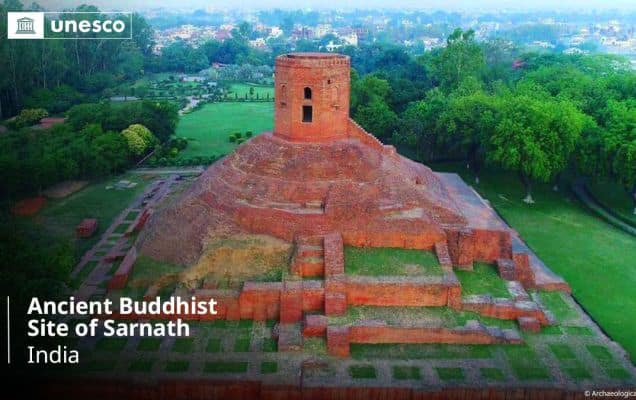
Proud Moment For Every Indian: PM Modi On Sarnath Being Inscribed On UNESCO World Heritage List

Media Coverage

Proud Moment For Every Indian: PM Modi On Sarnath Being Inscribed On UNESCO World Heritage List
NM on the go

Nm on the go

Always be the first to hear from the PM. Get the App Now!
...
Participants of Viksit Vibrant Village Programme share their experiences with PM Modi
July 26, 2026
Solo travel is a way of discovering the world while discovering oneself: PM
Every young person and every daughter of the country should move forward with confidence and self-belief: PM
Border villages may be geographically distant, but their residents are emotionally deeply connected with the nation: PM
Those who were last in priority earlier are now the first: PM
Journey of young participants reflects the spirit of Ek Bharat, Shreshtha Bharat: PM
Citizens should spend at least five per cent of their travel budget on purchasing local products: PM

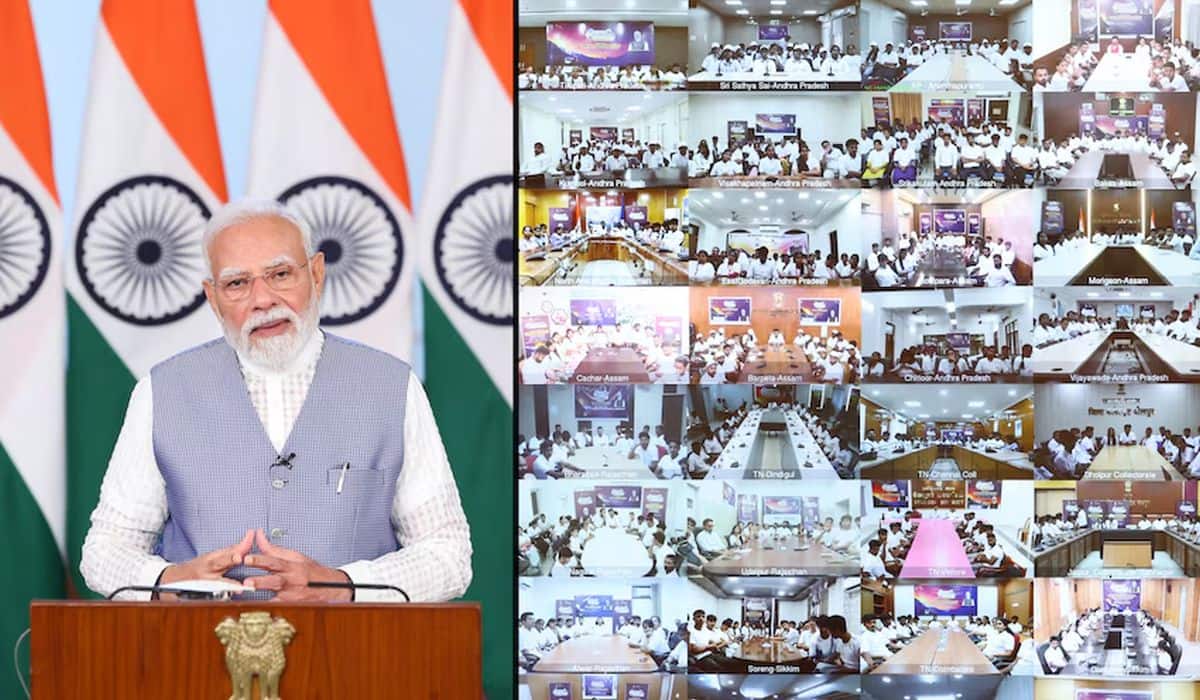
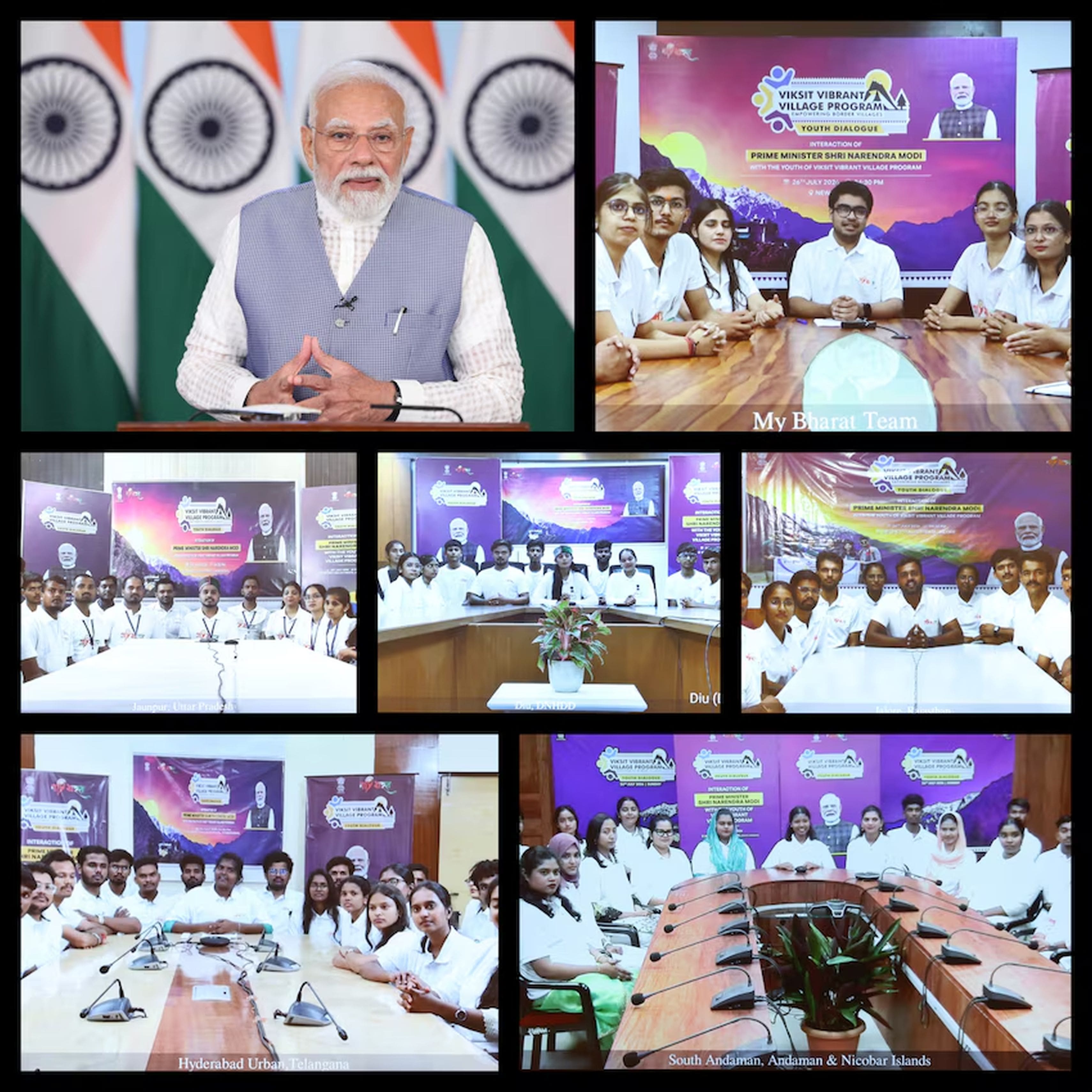
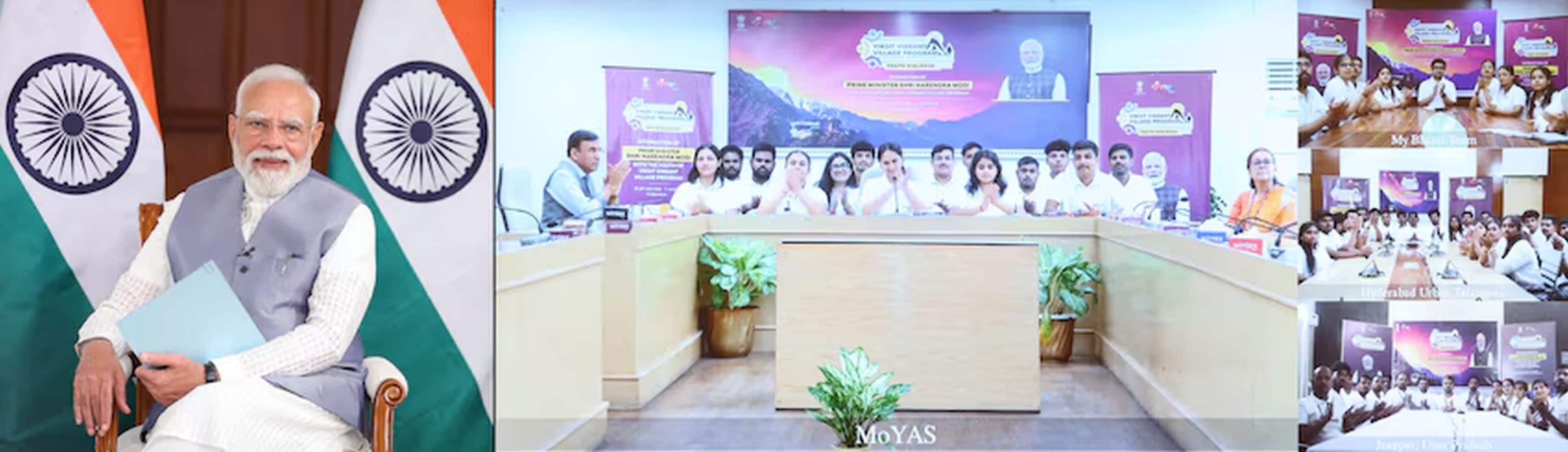
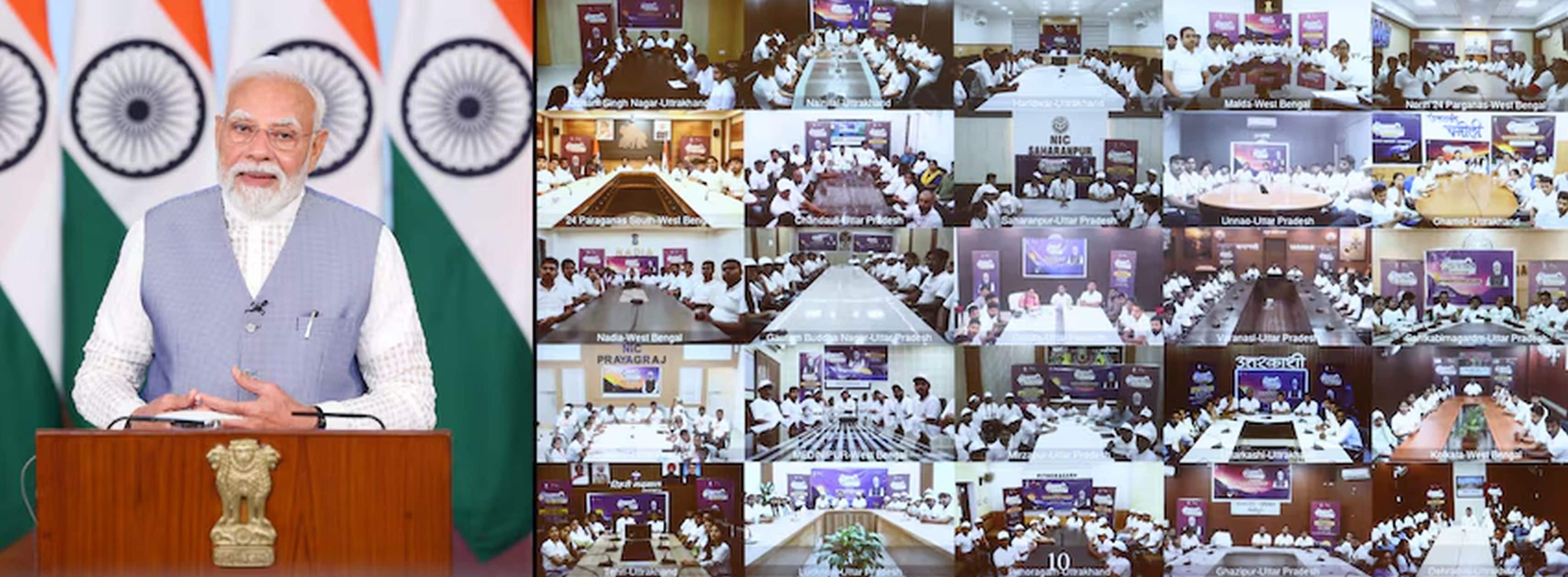
Prime Minister Shri Narendra Modi today interacted virtually with participants of the Viksit Vibrant Village Programme 2026, during which young MYBharat Volunteers shared their experiences from border villages in Himachal Pradesh, Uttarakhand and Ladakh. The interaction highlighted the transformation of these villages through improved infrastructure, connectivity and public services, along with women-led development, tourism, community participation and stronger national integration. More than 5,000 MYBharat Volunteers from 245 districts across the country joined the programme virtually.

Introducing the programme, MYBharat Volunteer Shri Divyansh Joshi from Dadra and Nagar Haveli and Daman and Diu outlined initiatives including the Viksit Bharat Young Leaders Dialogue, Viksit Bharat Youth Parliament, Budget Twist, mentorship and volunteering programmes. He said more than 2.30 crore young people had benefitted from MYBharat initiatives, while 2.86 lakh youth participated in the nationwide quiz through which 403 volunteers were selected to visit border villages. Recounting his visit to Leo village in Kinnaur district of Himachal Pradesh, he highlighted interactions with residents, senior citizens and schoolchildren, career counselling for local youth, sports and cultural activities, the leadership of the woman Sarpanch and the functioning of the Ayushman Arogya Mandir. He said his homestay experience showed that belonging transcends language and State boundaries, adding that the volunteers paid homage to the country’s brave soldiers at the Kargil War Memorial and would compile their experiences for submission to the Prime Minister while remaining committed to the vision of Viksit Bharat.

MYBharat Volunteer Ms Nikita Pravin Solanki from Dadra and Nagar Haveli and Daman and Diu said her selection through the MYBharat quiz enabled her first independent journey to Dhar Chango Nichla village in Kinnaur district. The affectionate welcome extended by the villagers strengthened her confidence and reflected changing societal attitudes towards women. Through her interactions with the woman Pradhan, Panchayat representatives, farmers, senior citizens and children, she witnessed the multiple responsibilities shouldered by rural women and found, contrary to her earlier perceptions, quality roads, regular electricity, drinking-water connections and digital connectivity, which residents attributed to the Pradhan Mantri Gram Sadak Yojana, Jal Jeevan Mission and Ayushman Bharat. She also participated in cleanliness, sports and cultural activities, recalled the curiosity of village children about her home region and said she continued to remain in touch with her host family.

Recalling his Diwali visit to the Chango region in 2016, the Prime Minister said Ms Solanki’s journey reflected the growing confidence of India’s daughters and that MYBharat had transformed individual journeys into one national family. “Solo travelling is a way of discovering the world while discovering yourself,” observed Shri Modi.

MYBharat Volunteer Shri Sunil Kumar Kela from Jalore, Rajasthan, said that being from a border village himself enabled him to connect readily with the people of Dhar Chango Uprela village in Himachal Pradesh. Despite geographical and climatic differences, he found the people of both regions united by courage, patriotism and warmth. He remained connected with his family through video calls, showing them the Sutlej River, school, Jan Aushadhi Kendra, hospital and sports facilities, while his social-media posts encouraged friends to explore MYBharat. His initial apprehensions regarding roads, accommodation, electricity and mobile connectivity were dispelled by the high-quality roads reaching the homestay, solar-energy installations and improved infrastructure that had transformed daily life. He added that he remained in contact with his host family and had invited them to visit Rajasthan.

The Prime Minister observed that young people from border villages across Rajasthan, Kashmir, Himachal Pradesh and the North-East shared a common outlook and that border residents, though geographically distant, remained emotionally deeply connected with the nation. “Those who were last in priority earlier are now the first,” remarked Shri Modi.

MYBharat Volunteer Ms Bhavya Shri from Chittoor district of Andhra Pradesh said her desire to learn beyond academics led her to MYBharat and to Harsil Valley in Uttarkashi district of Uttarakhand. Her initial concerns about the unfamiliar climate, food, culture and lifestyle were dispelled by the hospitality of local residents and officials, while interactions with Indo-Tibetan Border Police personnel deepened her appreciation of their discipline, humility, dedication and commitment to the nation. She said participants from different States, languages and cultures arrived as strangers but returned as one family, reflecting the spirit of Ek Bharat, Shreshtha Bharat. Photographs of the Nelang and Jadung Valleys and apple orchards generated considerable interest among her friends, many of whom subsequently registered on MYBharat. She also recalled the equipment provided to help participants adapt to the cold climate, the resilience of a resident who chose to remain in his landslide-affected native village despite hardship, and the peaceful, meditative character of the Garhwali dance in contrast with the energetic folk dances of her home State.

Recalling his visit to Mukhwa village in Uttarakhand, the Prime Minister said the interaction reaffirmed his belief that India’s youth place the nation first. “The manner in which all of you have lived the spirit of Ek Bharat, Shreshtha Bharat will inspire many more young people,” observed Shri Modi.

Twenty-one-year-old MYBharat Volunteer Ms Sayantika Mistry from the Andaman and Nicobar Islands thanked the Prime Minister for envisioning MYBharat as a platform enabling crores of young people to contribute to nation-building. Recounting her journey from sea level to Maan village in Ladakh at an altitude of nearly 17,000 feet, she described suffering from acute mountain sickness and the care extended by the MYBharat team and ITBP personnel, including doctors who prioritised treating her as their guest before attending to their own personnel. She said the experience showed that ITBP personnel not only protected the borders but also cared deeply for citizens and made her appreciate the resilience required to live in high-altitude conditions. Contrary to her family’s expectation of poor connectivity, she found reliable internet, QR-code and UPI payment facilities and Wi-Fi in the border region. She also interacted with local children, one of whom expressed a desire to visit the Andaman and Nicobar Islands, and highlighted the community spirit through which residents collectively organised weddings and monastery events, restored a damaged mobile tower and constructed a storage facility for its batteries.

Encouraging Ms Mistry to document her experience through articles or a book so that others could better understand the country’s vastness, people and shared sense of belonging, Shri Modi remarked, “When you share joy, it multiplies.”

MYBharat Volunteer Shri Ashish Soni from Jaunpur district of Uttar Pradesh, who is preparing for the Civil Services Examination, thanked the Prime Minister for enabling young people to contribute suggestions during the Budget-making process. Sharing his experience of Kaza Khas in Himachal Pradesh’s Spiti region, he said his parents, who remembered a time when mobile connectivity in remote areas was difficult, were astonished when he video-called them from nearly 14,000 feet. Describing MYBharat as a bridge between a generation that had witnessed struggle and another witnessing transformation, he recounted writing letters from the world’s highest post office at Hikkim to the Prime Minister, his family, the Ministry of Youth Affairs, the Defence Minister and his District Magistrate. He said India was connected not only through metros and airports but also through institutions serving its remotest regions and highlighted QR-code payments at around 14,500 feet as evidence that Digital India had become a source of trust across the country. His interactions with women’s self-help groups introduced him to entrepreneurship through homestays, digital platforms and sea buckthorn-based products, while discussions on the PM MUDRA Yojana and Deendayal Antyodaya Yojana focused on expanding livelihood opportunities. He also highlighted the role of the Border Roads Organisation-built Chicham Bridge in improving connectivity, tourism and economic activity, besides noting the region’s potential for night tourism.

Observing that technology had reached every corner of the country and that purchasing local products would generate employment, support livelihoods and carry regional identities across India, Shri Modi urged, “Wherever you travel, spend at least five per cent of your travel budget on buying products from local people.”

Concluding the interaction, the Prime Minister extended his best wishes to the young participants. The programme highlighted MYBharat’s role in enabling young people to experience first-hand the transformation of India’s border villages, dispel outdated perceptions and deepen their understanding of the country’s cultural diversity, developmental progress, community participation and the spirit of Ek Bharat, Shreshtha Bharat.