Exceeding all expectations and predictions, India's Gross Domestic Product (GDP) has demonstrated a remarkable annual growth of 7.6% in the second quarter of FY2024. Building on a strong first-quarter growth of 7.8%, the second quarter has outperformed projections with a growth rate of 7.6%. A significant contributor to this growth has been the government's capital expenditure, reaching Rs. 4.91 trillion (or $58.98 billion) in the first half of the fiscal year, surpassing the previous year's figure of Rs. 3.43 trillion.
India has emerged as an outstanding performer among major economies, showcasing resilience in the face of a globally uncertain environment characterized by risks related to geopolitical conflicts, fluctuating energy prices, and concerns about a potential recession.
This impressive milestone further substantiates the country’s unique development paradigm. A paradigm, that has been a hallmark of Prime Minister Narendra Modi’s government in the last 9 years, set to leave an inspiring trail for other developing nations to follow.
The GDP growth numbers for Q2 display the resilience and strength of the Indian economy in the midst of such testing times globally. We are committed to ensuring fast paced growth to create more opportunities, rapid eradication of poverty and improving ‘Ease Of Living’ for our…
— Narendra Modi (@narendramodi) November 30, 2023
What is PM Modi’s GDP Plus Welfare model?
GDP, in itself, has been an incomplete measure of development as it overlooks inequality amid growth. However, once PM Modi assumed service of the nation in 2014, growth intertwined with welfare to revolutionize the Indian economic experience. The fruits of the shift are visible today as India continues to be the fastest growing major economy even as the global headwinds don’t show much promise.
PM Modi’s GDP Plus Welfare model has worked wonders for a country that had been long deprived of even basic amenities of life. This success can be attributed to a departure from the previous governments’ approach to welfare, which primarily involved handouts, loan write-offs, or the distribution of consumer goods. Taking a leaf out of his development initiatives in Gujarat, PM Modi focused on building fundamental public infrastructure first, empowering individuals to act as agents of change. We have seen this approach in government schemes like SAUBHAGYA, Jal Jeevan Mission, PM Awas Yojana, and PM Gram Sadak Yojana, among others. Today we have achieved 100% electrification of villages while over 13.7 crore tap water connections make water available to 70% of our families from only 17% about a decade ago. In addition, PM Modi’s government has sanctioned over 4 crore houses towards its guarantee of Housing for All. The Swachh Bharat Mission has successfully constructed over 11.7 crore toilets, contributing to improved sanitation nationwide. In 2014, barely half of the villages had all-weather road connectivity, but today, the number has surged to over 99%.
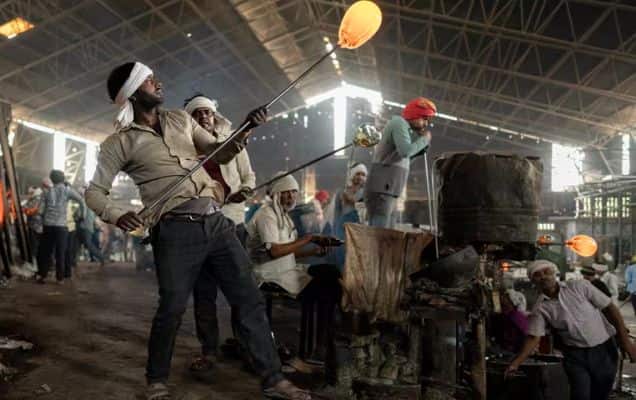
Going beyond the fundamental needs, the government since 2014 has taken transformative measures to augment economic activity in every possible way. In manufacturing, for example, initiatives like Make in India, Production-Linked Incentive schemes, along with labor reforms have greatly energized overall industrial sentiment. Today as the data suggests manufacturing has achieved a real GVA growth of 13.9% in Q2 of FY2024 against 4.7% in Q1. PMI Manufacturing continues to expand, reaching 55.5 in October 2023.
The services sector has also performed well registering a jump of 5.8%, driven by robust financial, public administration and professional services. The construction sector, in particular, is performing exceptionally well, jumping from 7.9% in Q1 to 13.3% in Q2 as the government increased its capex by over 40%.
In addition, schemes like PM Fasal Bima Yojana, PM KISAN, Paramparagat Krishi Vikas Yojana, PM Krishi Sinchayee Yojana, and e-NAM are actively supporting, modernizing and changing the face of Indian agriculture.
PM Modi has been heavily committed to charting the trajectory for Bharat to become a developed country by 2047. His further push towards building long-term infrastructure finds momentum via AMRUT, Smart Cities, Vande Bharat trains, industrial and freight corridors along with Sagarmala and Bharatmala. These bona fide interventions are powered by PM Gati Shakti and National Infrastructure Pipeline that aim to simplify and integrate planning, and funding of infrastructural activity in the country respectively.
Whether it is about building a road for connectivity or restoring an individual’s dignity through toilets, PM Modi’s government has pursued a diverse blend of welfare and GDP spending. Each government initiative focuses on building sustainable assets that not only result in extensive connectivity, robust infrastructure, rural and urban renewal but also generate jobs and aid human capital development. These programs constitute the foundation for 21st-century India, molding the vision of New India, rapidly progressing towards the realization of the goal of becoming a 'Viksit Bharat' (Developed India). All of this transcends the concept of transactional welfarism. It is about creating a virtuous cycle of economic demand via empowerment of individuals cutting across lines of caste, class, community, religion and gender. It is about establishing conditions for growth that are both sustainable and egalitarian. embodying the principle of 'Sabka Saath, Sabka Vikas, Sabka Vishwas aur Sabka Prayas' as stated by the Prime Minister.
PM Modi’s inclusive developmental paradigm stands vindicated today. Along with the growth in our GDP, the government has been able to lift 13.5 crore people out of poverty— an unprecedented achievement. Globally, the model has ensured that India maintains its developmental streak even as countries like China show vulnerability. PM Modi’s GDP plus Welfare model is indeed a formidable recipe for a formidable India—an India which is Aatmanirbhar and Viksit.