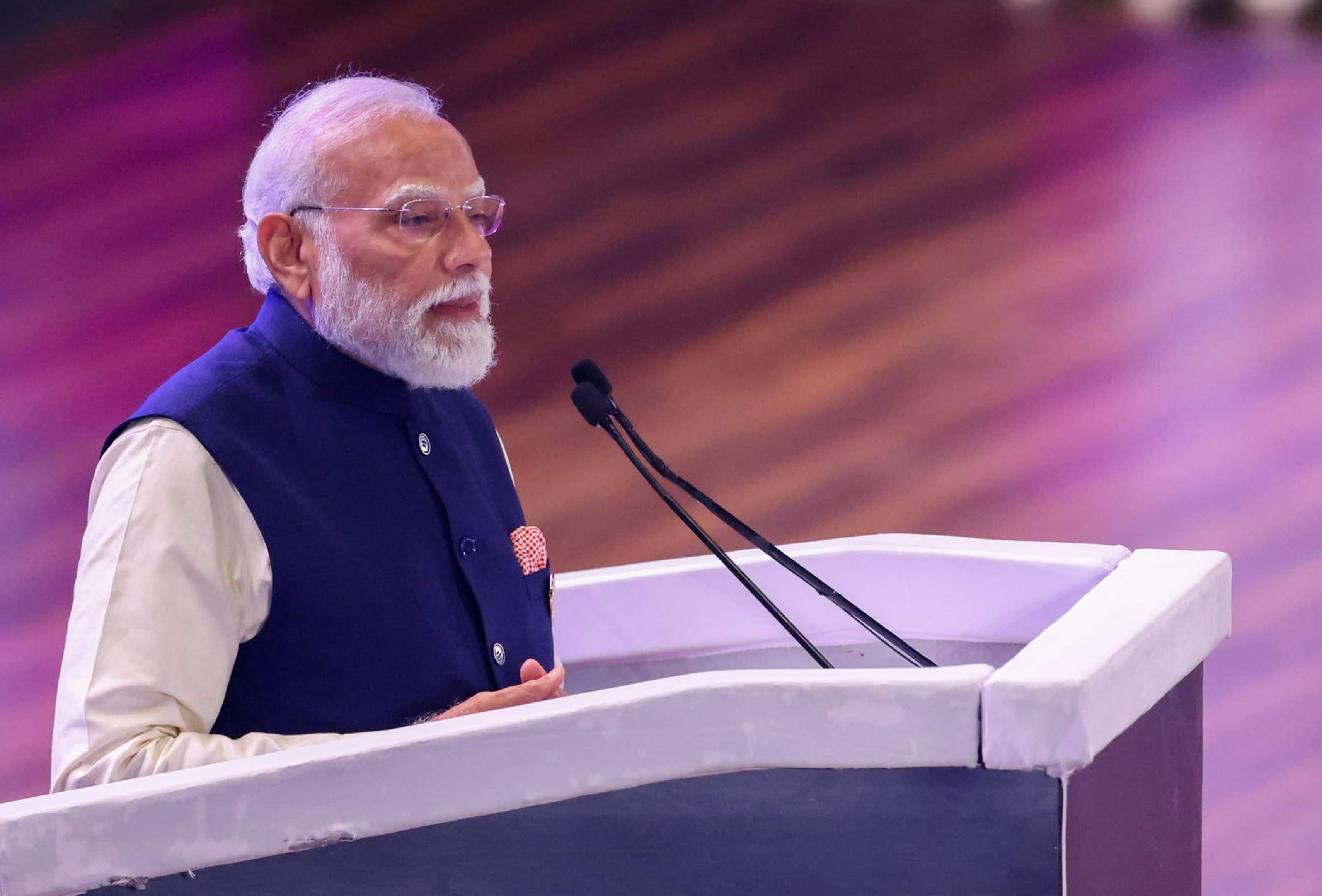
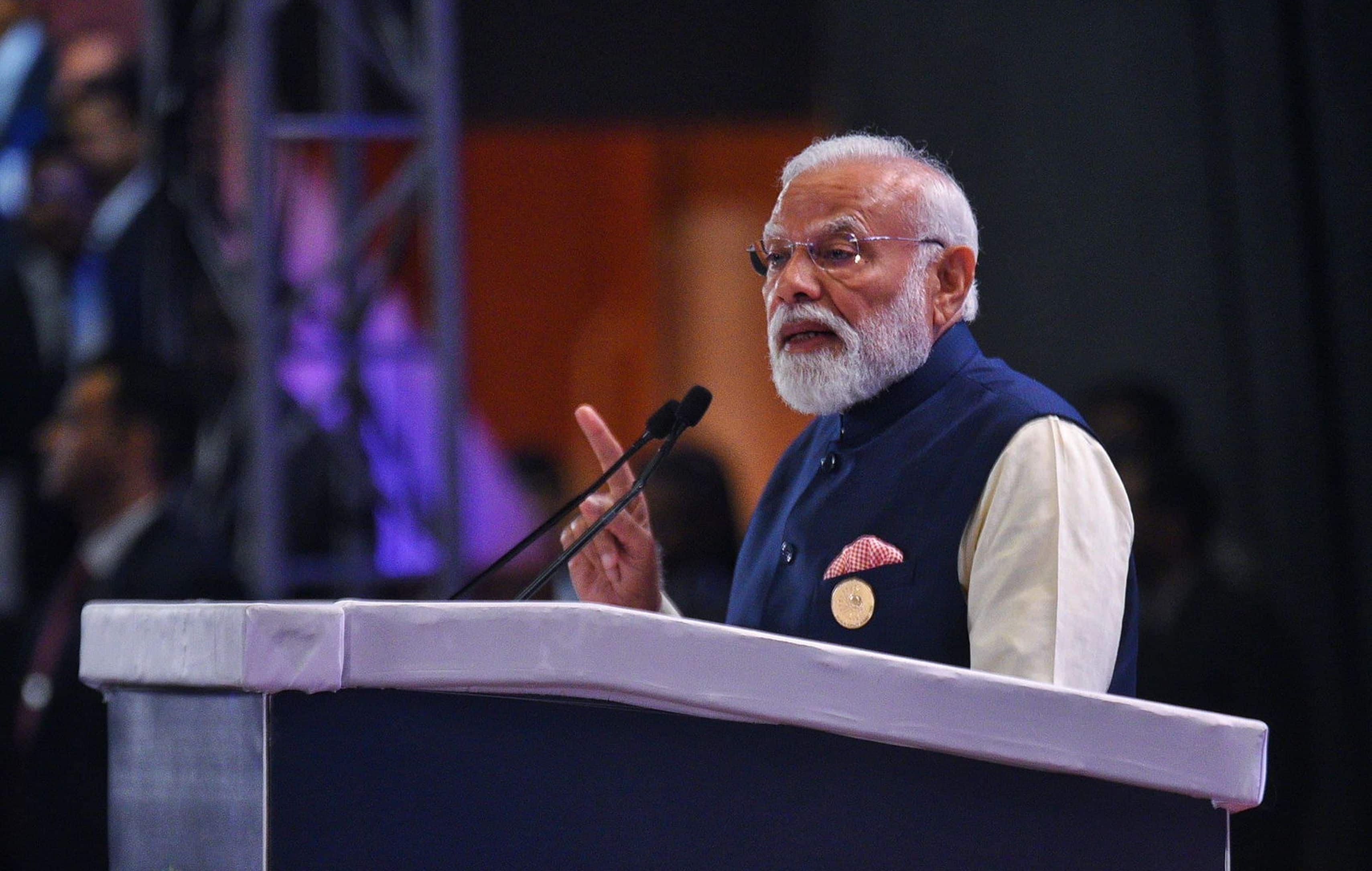
At the recently concluded Vibrant Gujarat Global Summit, Shri Narendra Modi emphasized upon Gujarat’s growing importance in the world. He said, “Earlier, Gujarat was the gateway to the Globe from India. Now it is becoming the Global gateway to India.” This is certainly true metaphorically, because of Gujarat’s engagements with the world in the fields of Industry, Education and Technology, it is also true literally, since today, Gujarat’s ports account for 26% of total national cargo and 72% of cargo handled by ports under State Governments of India. If the Kandla port is included, Gujarat handles 35% of the national cargo.

This has been possible because of Shri Narendra Modi’s vision, leadership and his focus on the holistic development of the entire coastal region. Gujarat has a coastline of 1600 Km, which is the largest among any state in India. Because of the neglect of previous governments; the coastal areas were severely underdeveloped. After 2001, the Government decided to convert the crisis into an opportunity by developing a ‘New Gujarat Within Gujarat.’ Speaking about his ideas for the development of Gujarat’s coasts, Shri Modi said, “We have launched an ambitious programme for all round development of our coastal belts (Sagarkhedu Vikas Yojana). Along with this, we are setting up new port cities in coastal locations. Investments in world-class rail-road-pipeline infrastructure linking the coastline have helped Gujarat’s ports dominate India’s maritime scenario.”

Ports – an integral part of Gujarat’s Development Process
Realizing the potential that modern ports had for attracting investments, the Government ensured the development of ancillary infrastructure and linked Gujarat’s ports to other projects like the Delhi Mumbai Industrial Corridor.
Laying down his vision for integrating ports with other Infrastructure, Shri Modi said, “Our
progress and development is not just limited to ports. Our vision is for port led development with port based Special Economic Zones, ware-houses, cold storage networks, railroad connectivity and related infrastructure facilities being established”. Consequently, many of the SEZs planned and 9 of the 13 existing SIRs in Gujarat are port based.
Realizing the importance of linking ports to roads and railways, the Government has supported privatisation of rail linkages through SPVs with the state, private port players and railways. This model has made broad-gauge rail connectivity possible at Mundra, Dahej, Pipavav Navlakhi, Bhavnagar and Okha.
Furthermore, efforts are being made to develop the Mundra and Pipapav ports as port cities with proposed investments to the tune of Rs. 12,000 crore.
Focus on Public Private Partnerships

Realizing the importance of private participation in the state’s progress, the Government initiated Public-Private Partnerships in port development and developed Pipavav as a joint sector port with private participation. Moreover, to boost the PPP model, the Build Own Operate Transfer (BOOT) Policy was announced. Today four ports (out of the 41 ports in Gujarat) including the Mundra Port (which is the largest private port in India) are operated by the private sector.
Capacity building of Ports and Development of the Shipbuilding Industry
Careful planning and execution by the Government has ensured that since 2001, ports have more than doubled their capacity from 135 million tons to 284 million tons in 2011.

Gujarat has not limited itself to the import and export of goods. The Government’s support has provided impetus to the shipbuilding industry in the state. Gujarat was the first state in the country to have a Shipbuilding Policy. Under this policy, the state will develop integrated clusters of shipyards, which will provide common seaside as well as shore side infrastructure.
Port Security
To increase port security, the government has introduced latest scanning and surveillance technologies. In August 2010, to ensure safe navigation, the country’s most advanced Vessel Traffic and Management System (VTMS) was made operational in the Gulf of Khambat. A similar system is being implemented in the Gulf of Kutch.

Further, the Government plans to develop a separate coastal policing unit. Speaking about ensuring maritime safety and security Shri Modi said, “To strengthen its security apparatus along the coastline, Gujarat government has decided to create a marine commando unit and recruit 600 personnel for it. In addition to 10 existing coastal police stations, we have proposed additional 12 coastal police stations. 31 mechanized 12-tonne boats have also been sanctioned.”
Skill Development and Capacity Building –
Because of the rapid growth in global trade, demand for seafarers is expected to grow considerably by 2020. However, India’s share of seafaring officers in the world is just 6 percent.
The government recognizes the employment potential of this sector for Gujarat’s youth and is committed to providing adequate facilities for skill development. To do so, it has tied up with Gujarat University, Ahmedabad and Ganpat University, Mehsana to introduce maritime related courses with specialisation in Ports, Shipping and Marine subjects at UG and PG levels.
Because of the Government’s vision and propensity for supporting innovative practices, Gujarat’s ports will continue to facilitate India’s trade with the world.
References –
- www.narendramodi.in/speech-of-mr-narendra-modi-chief-minister-gujarat-at-the-global-maritime-security-and-anti-piracy-conference/
- www.narendramodi.in/gujarat-maritime-board-opening-portals-of-development/
- www.narendramodi.in/%E2%80%98new-gujarat-within-gujarat%E2%80%99-a-paradigm-shift-in-developing-gujarat%E2%80%99s-coasts/
- www.narendramodi.in/gujarat-ports-leading-the-way/