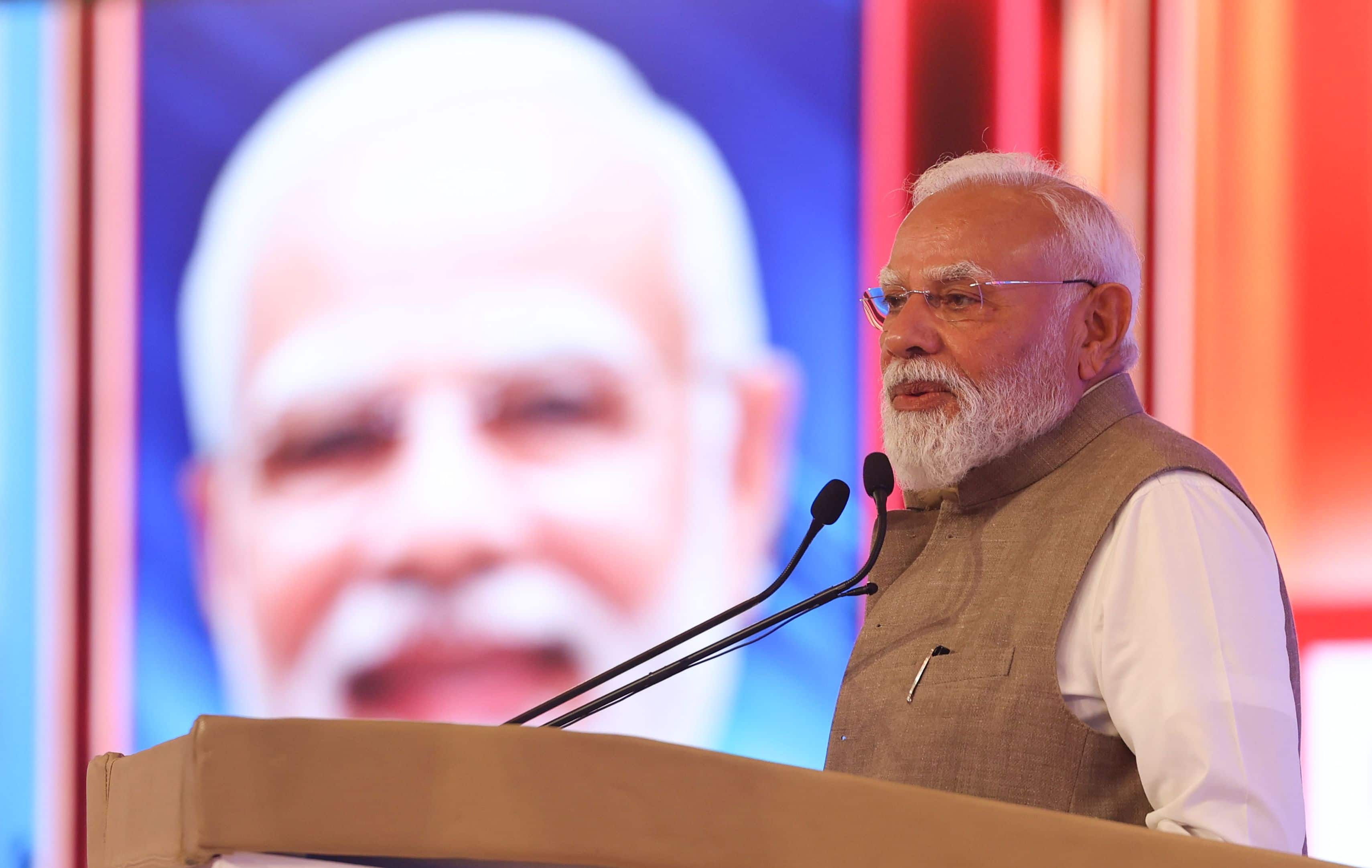
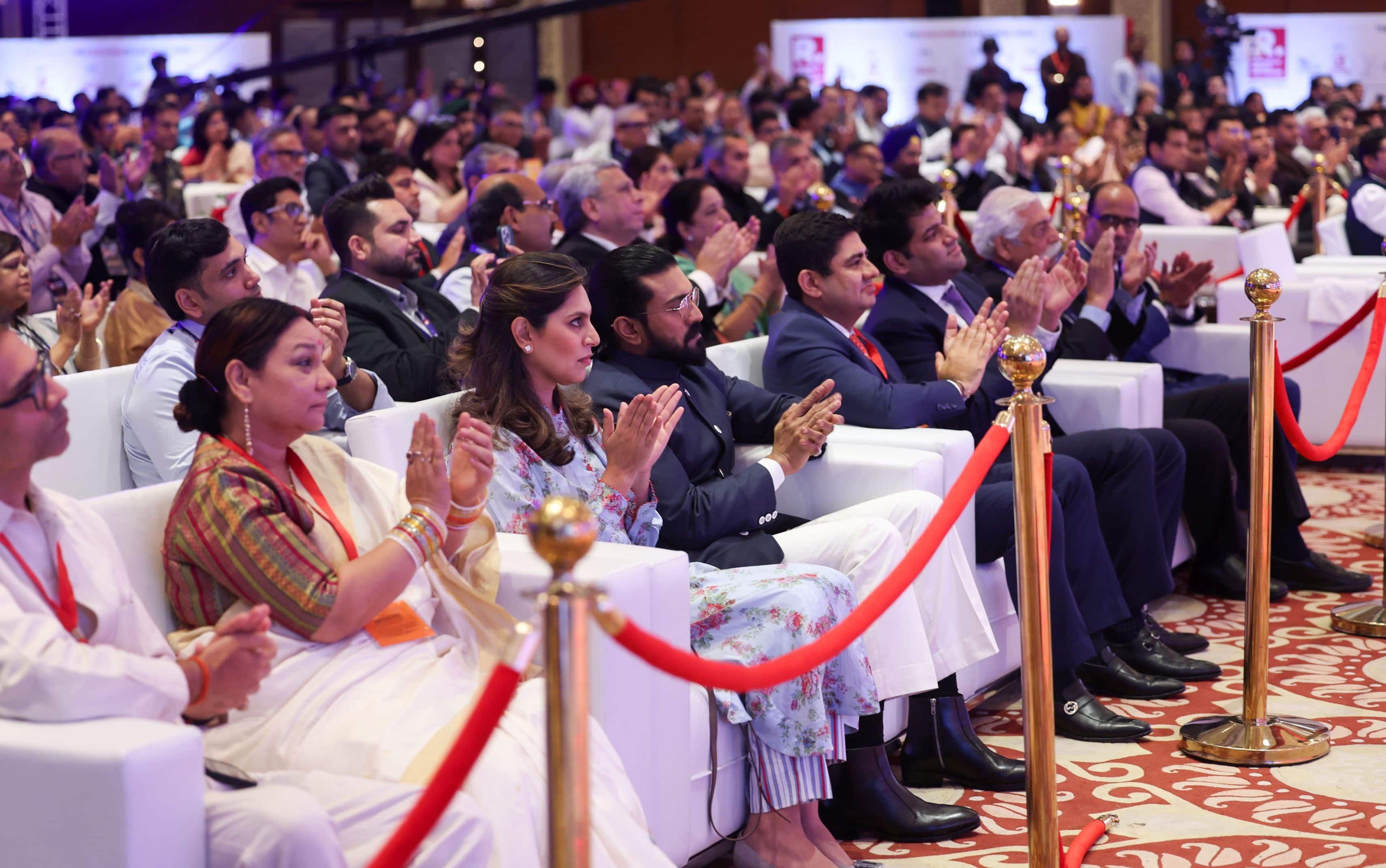
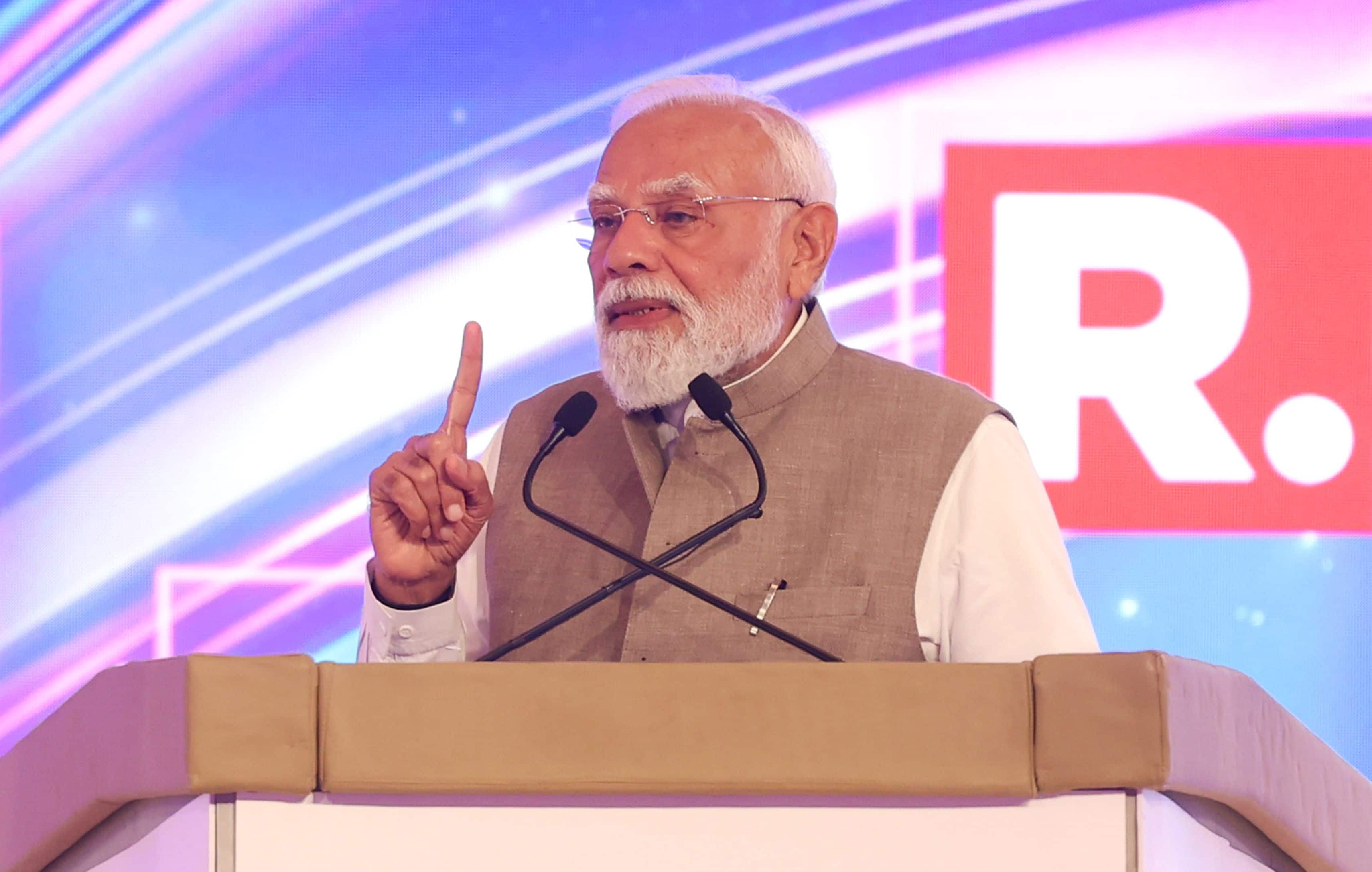
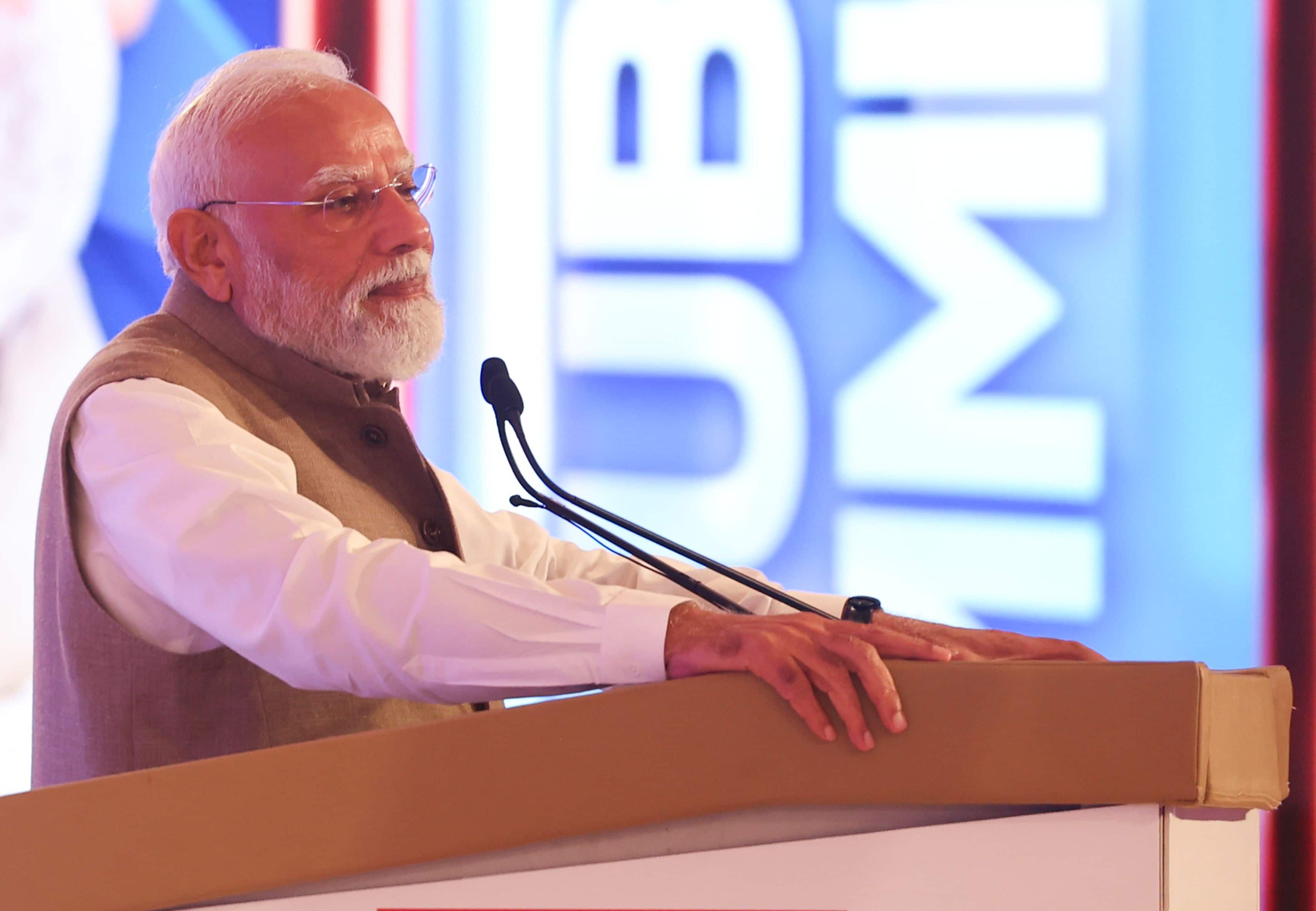
Gautama Buddha is one of the most impactful teachers in world history: PM
Gautama Buddha's teachings have inspired millions of people over centuries, says PM
Gautama Buddha gave eight-fold path and the Panchsheel while Shri Krishna gave invaluable lessons of life: PM Modi
Bodh Gaya is the land of enlightenment: Narendra Modi
Great privilege to have participated in the Inaugural function of the first International Hindu Buddhist Initiative: PM
Hindu philosophy was one of the greatest beneficiaries of advent & teachings of Buddha: PM
Buddha never bowed down to anything, neither Veda, nor caste, nor priest, nor custom: PM Modi
Buddha was the first human being to give to this world a complete system of morality: PM
Buddha was a great preacher of equality, says PM Modi
Enlightenment which Buddha attained in Bodh Gaya lit the light of enlightenment in Hinduism: PM

Shri Ramnath Kovind, Governor of Bihar,

Venerable KHAMBA LAMA CH. DEMBEREL from Mongolia,

Venerable MING KUANG SHI from Taiwan,

Venerable THICH THIEN TAM from Vietnam,

Venerable TELO TULKU RINPOCHE from Russia,

Venerable Banagala Upatissa from Sri Lanka,

Venerable LAMA LOBZANG,

My Ministerial colleague Shri Kiren Rijiju,

Minister Lyonpo Namgay Dorji of Bhutan,

Minister Bayarsaikhan of Mongolia

Venerable members of the Maha Sanga, visiting Ministers and Diplomats from foreign countries,

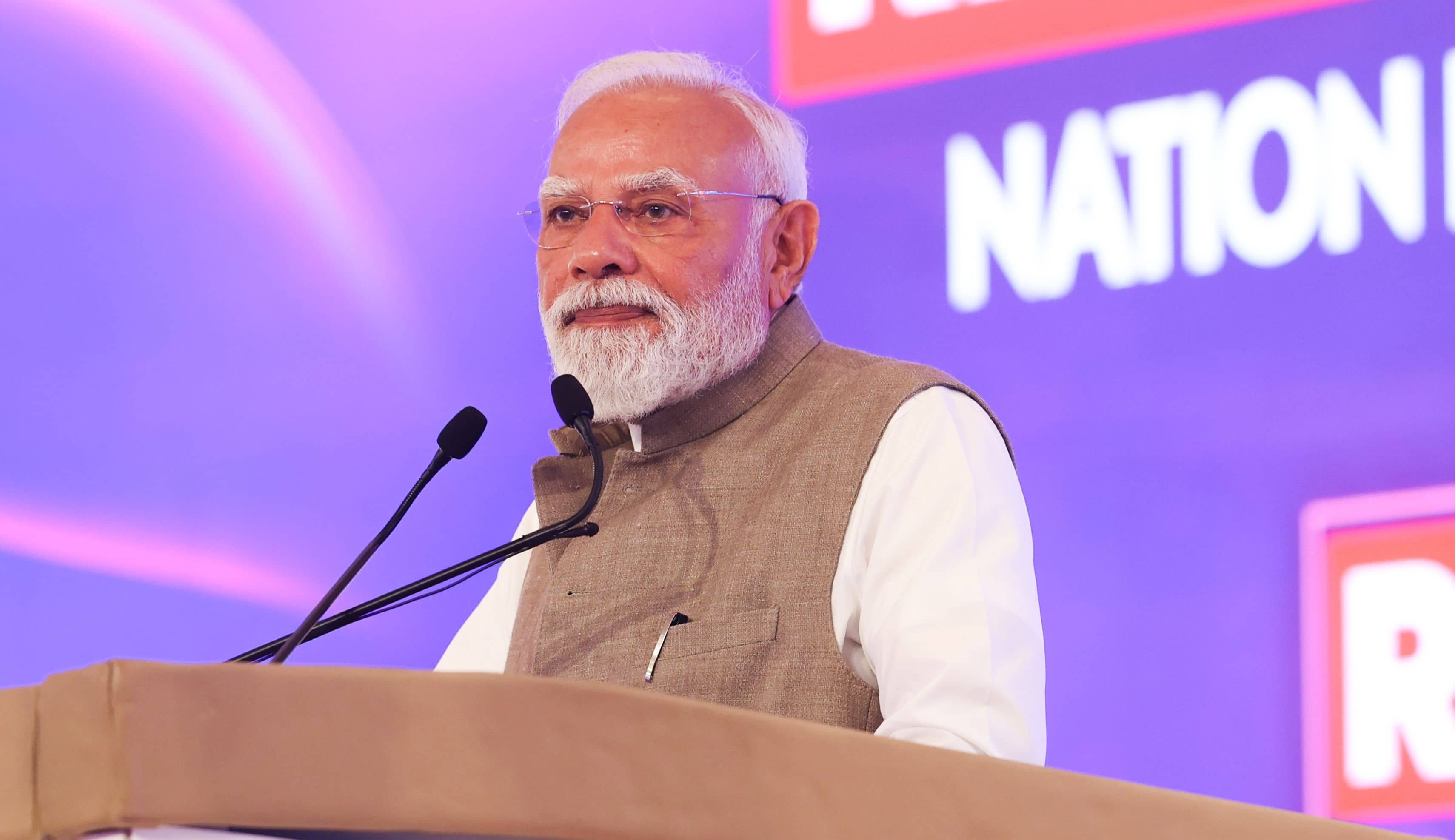
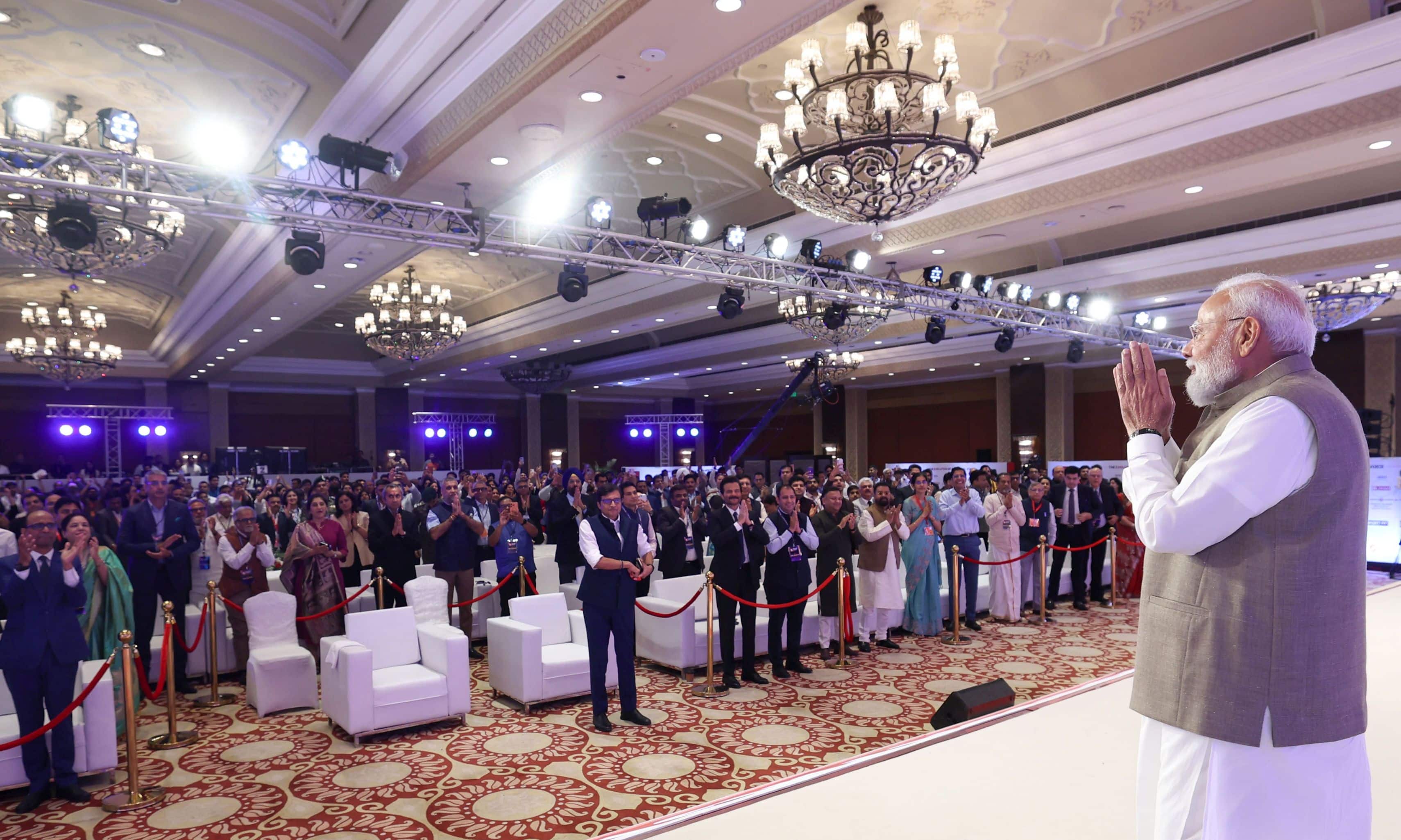
I am very happy to be in the midst of all of you. I feel very blessed to be here at Bodh Gaya. After Pandit Jawaharlal Nehru and Atal Bihari Vajpayee, I have the opportunity to visit this sacred place.

I am meeting you all on a very special day. Today, we in India are observing Teachers’ Day, to commemorate the birth anniversary of our 2nd President, a great scholar and teacher, Dr. Sarvepalli Radhakrishnan.

In this symposium we have been talking about one of the most impactful teachers in world history, Gautama Buddha. His teachings have inspired millions of people over centuries.

Today, we are also celebrating Janmashtami, the day Lord Krishna was born. The world has so much to learn from Lord Krishna. When we talk about Lord Krishna we say, श्री कृष्णम वंदे जगतगुरुम -Shri Krishna, the teacher of all teachers; the Guru of all Gurus.

Both, Gautama Buddha and Lord Krishna have taught the world so much. The themes of this conference, in a way are inspired by the values and ideals given by these two greats.

Shri Krishna gave his message before the start of the Great War in the Mahabharata and Lord Buddha repeatedly emphasized on rising above warfare. The message by both of them was about establishing Dharma.

Both of them gave great prominence to principles and processes. Gautama Buddha gave the eight-fold path and the Panchsheel. while Shri Krishna gave invaluable lessons of life in the form of Karma Yoga. These two divine souls had the strength to bring people together, rising above differences. Their teachings are most practical, eternal and are more relevant in this day and age than ever before.

The place where we are meeting makes it even more special. We are meeting in Bodh Gaya, a land that has a distinctive place in the history of humankind.


This is the land of enlightenment. Years ago, what Bodh Gaya got was Siddhartha but what Bodh Gaya gave to the world was Lord Buddha, the epitome of knowledge, peace and compassion.

This is, therefore the ideal venue for a dialogue and meeting here on the auspicious day of Janmashtami and the special day of Teachers’ Day makes this unique.

It was my great privilege to have participated in the Inaugural function of the first International Hindu Buddhist Initiative on “Conflict Avoidance and Environmental Consciousness” hosted by the Vivekananda International Foundation and Tokyo Foundation with the support of the International Buddhist Confederation at Delhi day before yesterday.

The Conference was conceptualised on shifting the paradigm from conflict resolution to conflict avoidance and from environmental regulation to environmental consciousness.

I had shared some of my thoughts on the two critical themes which are threatening humanity as no other challenge before. I recalled how in the context of both issues and for changing the global paradigm of thinking the world is looking to the Buddha today as conflict resolution mechanisms and environmental regulations — both of them dependent on the instrumentality of nation states — are increasingly failing to measure up to challenges.

Spiritual and religious leaders and also intellectuals, largely from Buddhist societies participated in the two day conference and deliberated on the two issues. At the end of the two day conference, and after a churning in which spiritual, religious and intellectual leaders participated, the Tokyo Foundation has announced that they have decided to hold a similar conference in January 2016. And other Buddhist nations have also offered to hold similar conferences in their countries.

This is an extraordinary development which coincides with the rise of Asia as an economic and civilisational phenomenon. The themes of the conference, informed and shaped by the Hindu-Buddhist civilisational and cultural perspectives, promise to deepen the notion of conflict avoidance philosophy and environmental consciousness in Asia and beyond.

The two day conference seems to have arrived at a broad consensus on both issues. On the issue of conflicts — most of which are being driven by religious intolerance — the participants in the conference seem to have agreed that while there is no problem about the freedom to practise one’s religion, it is when the radical elements try to force their own ideologies on others, that the potential for conflict arises. On the issue of environment, the conference seems to have agreed that the philosophic underpinning of the Dharma, which stresses the protection of natural heritage, is critical for sustainable development. I may add that the United Nations too has arrived at the view that sustainable development is achievable only through aligning development to the local culture of the people.

This, in my view, is a positive turn in the development modelling of the world of diversity. I may add that the turn in thinking at the global level has created the eco-system for the Hindu-Buddhist societies to carry forward their consensual ideas to the global fora. I personally consider the Hindu Buddhist Conference on Conflict Avoidance and Environmental Consciousness as an important development in a world that seems to be short of durable ideas on both issues.

Hindu philosophy was one of the greatest beneficiaries of the advent and the teachings of the Lord Buddha.

Many scholars have analysed the impact of Buddha on Hinduism. In fact, Adi Sankara was even critiqued for the way he was influenced by the Buddha and Sankara was called as “Prachhanna Boudha" — meaning Sankara was Buddha in disguised form. That was the extent of influence of the Buddha on Adi Sankara, regarded by many as the tallest Hindu philosopher. At the mass level Buddha was so venerated that Jayadeva in his Geeta Govinda even praised him as Mahavishnu or God himself who descended to preach Ahimsa. So, Hinduism after the Buddha’s advent became Buddhist Hinduism or Hindu Buddhism. They are today an inseparable amalgam.

This is how Swami Vivekananda praised Buddha. 

I quote:

At the time Buddha was born, India was in need of a great spiritual leader, a prophet.

Buddha never bowed down to anything, neither Veda, nor caste, nor priest, nor custom. He fearlessly reasoned so far as reason could take him. Such a fearless search for truth and such love for every living thing the world has never seen.

Buddha was more brave and sincere than any teacher.

Buddha was the first human being to give to this world a complete system of morality. He was good for good's sake, he loved for love's sake.

Buddha was the great preacher of equality. Every man and woman has the same right to attain spirituality— that was his teaching.

I would personally call India Buddhist India as it has imbibed all the values and virtues of the teachings of Buddha by their religious scholars incorporating them in their literature.


When this highest tribute is paid by one of the great Hindu philosophers would it be wrong to call today’s Hinduism in quality and substance as Buddhist Hinduism?

Buddha is the crown jewel of the Indian nation which accepts all ways of worship of all religions. This quality of Hinduism in India was a product of many great spiritual masters chief among them was Buddha. And this is what sustains the secular character of India.

The Enlightenment which Buddha attained in Bodh Gaya also lit the light of enlightenment in Hinduism.

As the first Servant of this ancient nation I revere Buddha as a reformer of not only Hinduism but also the world, who has given all of us a new world view and vision which is critical for the survival of all of us and the entire world.

I recognise how Buddhists all over the world revere Bodh Gaya as a place of pilgrimage. We in India would like to develop Bodh Gaya so that it can become the spiritual capital and civilisational bond between India and the Buddhist world. The government of India would like to provide all possible support that its Buddhist cousin nations need for the satisfaction of their spiritual needs from this holiest of holy places for them.

I am happy to read the Declaration of Buddhist Religions and Spiritual Leaders. This declaration is the result of hardwork and extensive dialogue, which is why it is a pioneering document that will show us the way ahead. I also echo Prime Minister Shinzo Abe of Japan, who the other day highlighted the importance of tolerance, appreciation of diversity, and spirit of compassion and fraternity. His message to this august gathering and his continuous support for furthering this initiative is a matter of great strength for us.

Once again, my congratulations and best wishes to you all. This conference has raised a hope and urge to go beyond clash and create a dialogue framework for civilizational harmony and world peace. I wish you well in your constant and determined efforts to ensure that our wisdom reaches the future generations and that too in a manner in which they can practically relate to. This is essential not for us or them but for the progress of the entire human race and the beautiful surroundings which we have got from Mother Nature.

Thank you very much. Thanks a lot.

Explore More
প্রধান মন্ত্রীনা শ্রী রাম জন্মভুমি মন্দির দ্বাজরোহন উৎসবতা পীখিবা ৱারোলগী মৈতৈলোন্দা হন্দোকপা

Popular Speeches

প্রধান মন্ত্রীনা শ্রী রাম জন্মভুমি মন্দির দ্বাজরোহন উৎসবতা পীখিবা ৱারোলগী মৈতৈলোন্দা হন্দোকপা
Republic Day sales see fastest growth in five years on GST cuts, wedding demand

Media Coverage

Republic Day sales see fastest growth in five years on GST cuts, wedding demand
NM on the go

Nm on the go

Always be the first to hear from the PM. Get the App Now!
...
India - EU Joint Statement on the State Visit of European Council President and European Commission President to India and the 16th India-EU Summit
January 27, 2026

At the invitation of the Hon'ble Prime Minister of India, Shri Narendra Modi, President of the European Council, H.E. Mr. Antonio Costa, and President of the European Commission, H.E. Ms. Ursula von der Leyen, paid a State Visit to India on 25–27 January 2026 as the Chief Guests for the 77th Republic Day of India. President Costa and President von der Leyen were accompanied by a high-level delegation including High Representative for Foreign Affairs and Security Policy Ms. Kaja Kallas and Trade Commissioner Mr. Maroš Šefčovič.

This is the first visit by the leaders of the European Union as Guests of Honour for the Republic Day. It symbolises the growing closeness, depth and dynamism in India–EU relations, and their joint commitment and shared interest in shaping a resilient multipolar global order that underpins peace and stability, economic growth and sustainable development. The visit follows the historic visit of the European Union College of Commissioners led by President von der Leyen to India on 27–28 February 2025.

The two Leaders were warmly welcomed by Hon’ble President of India Smt. Droupadi Murmu at Rashtrapati Bhavan. They then travelled together in a ceremonial procession to attend the Republic Day celebrations and witness the parade. For the first time ever, a contingent consisting of representatives from both the European Union Military Staff and the European Union Naval Operations ATALANTA and ASPIDES participated in the Republic Day Parade. President Costa and President von der Leyen joined President Murmu, for an ‘At-Home’ reception in Rashtrapati Bhavan. In honour of the visiting dignitaries, President Murmu, hosted a Banquet on 27 January 2026. Earlier that afternoon, Prime Minister Modi also hosted a luncheon in their honour.

Prime Minister Narendra Modi along with President Antonio Costa and President Ursula von der Leyen co‑chaired the 16th India–EU Summit in New Delhi on 27 January 2026 and underlined their commitment to raise the India–EU Strategic Partnership to a higher level based on shared values and principles including democracy, human rights, pluralism, rule of law, and the rules‑based international order with the UN at its core. They committed to tackling security threats, promoting inclusive and sustainable growth, strengthening economic resilience and security, advancing climate and biodiversity action, and accelerating progress on the Sustainable Development Goals.

The leaders also addressed the India–EU Business Forum, attended by CEOs and industry leaders from both sides, where they called for ambitious private sector investments to harness synergies in critical sectors and for new business initiatives to drive closer trade and investment ties.

The leaders commended progress on the ‘India‑EU Strategic Partnership: A Roadmap to 2025’. The two sides reiterated their determination to further reinforce their strategic partnership, delivering tangible benefits for both sides. The Summit took place against the backdrop of the positive momentum in India–EU relations in recent years, and sustained high‑level engagement across all domains.

Delivering on the strategic partnership

The leaders hailed the successful conclusion of negotiations of the landmark India–EU Free Trade Agreement (FTA). This historic deal is a milestone in the India–EU Strategic Partnership that will significantly enhance bilateral trade and investment ties, drive shared prosperity, strengthen resilient and diversified supply chains, and support sustainable and inclusive growth.

The leaders welcomed the signing of the India–EU Security and Defence Partnership, the first such overarching defence and security framework between the two sides that will deepen ties in the domains of maritime security, defence industry and technology, cyber and hybrid threats, space, and counter‑terrorism among others. They also welcomed the launch of negotiations on a Security of Information Agreement that will facilitate the exchange of classified information and pave the way for a stronger cooperation in areas related to security and defence.

Regional and Multilateral co‑operation

The leaders emphasized the importance of an effective multilateral system, with the United Nations at its core. They underlined the necessity of comprehensive reform of the UN Security Council, to make it more representative, inclusive, transparent, efficient, effective, democratic, accountable and reflective of contemporary geopolitical realities. They emphasized the World Trade Organization's central role in the multilateral trading system and global trade governance and underlined that meaningful, necessary and comprehensive reform of the WTO is essential to improve its functions so that it is better suited to advance all Members’ objectives.

The leaders underscored the importance of close cooperation on regional and global security matters, acknowledging that the security and prosperity of Europe and the Indo‑Pacific are interconnected.

The two sides reiterated their shared commitment to promoting a free, open, peaceful and prosperous Indo‑Pacific, in accordance with international law, including UNCLOS, recognising their respective roles and engagement in the region. The leaders welcomed closer engagement in the region, including the inaugural edition of the forthcoming India‑EU Consultations on the Indo‑Pacific, in New Delhi. They also looked forward to joint activities in the Indo‑Pacific Oceans Initiative (IPOI), and to strengthen cooperation in the Indian Ocean Rim Association (IORA) under India's Chairship.

On Ukraine, the two sides expressed concern over the ongoing war, which continues to cause immense human suffering and carries global consequences. Both sides will continue to support efforts towards the achievement of a comprehensive, just and lasting peace in Ukraine through dialogue and diplomacy, based on the principles of the UN Charter and of international law, including independence, sovereignty and territorial integrity.

The leaders noted the adoption of the UN Security Council Resolution 2803 of 17 November 2025 which welcomes the establishment of the Board of Peace and authorizes an International Stabilisation Force, as outlined in the Comprehensive Plan, as a step forward to end the Gaza conflict. They encouraged all parties to implement the resolution in its entirety, in line with international law and relevant UN Security Council resolutions. Both sides restated their readiness to support efforts towards just and durable peace and stressed the need for unhindered humanitarian access. They also called for a just and lasting solution, based on the implementation of the two-State solution, through dialogue and diplomacy.

The two sides discussed the recent developments of concern in Iran and the region. They underscored the importance of dialogue and diplomacy in resolving issues in a peaceful manner.

The leaders unequivocally and strongly condemned terrorism and violent extremism, in all its forms and manifestations including cross‑border terrorism. They called for decisive and concerted international efforts to combat terrorism in a comprehensive and sustained manner and in accordance with international law. They agreed to enhance cooperation to counter radicalisation and violent extremism, combat financing of terrorism, promote internationally agreed anti‑money laundering standards, prevent exploitation of new and emerging technologies for terrorist purposes, and tackle terrorist recruitment. They condemned in the strongest terms the terrorist attack in Pahalgam, Jammu and Kashmir on 22 April 2025 and the terror incident near Red Fort, New Delhi on 10 November 2025.

Towards 2030: India–EU Joint Comprehensive Strategic Agenda

The leaders adopted "Towards 2030: India–EU Joint Comprehensive Strategic Agenda” to elevate the strategic cooperation between two sides. The Joint Comprehensive Strategic Agenda is aimed at accelerating progress across five key pillars: prosperity and sustainability, technology and innovation, security and defence, connectivity and global challenges, as well as enabling factors such as skills, mobility, business and people‑to‑people ties.

In the context of global uncertainty and disruptions, closer economic ties between India and the EU are more important than ever to drive growth, job creation, green transition, industrial development, and more resilient, sustainable and trustworthy supply chains. The leaders of India and the EU are committed to ensure the full implementation of the FTA. Additionally, they tasked their respective teams to complete negotiations, at the earliest opportunity, on an Investment Protection Agreement (IPA) and on an Agreement on Geographical Indications (GIs). They committed to work on scaling up bilateral investments and engage in discussion on Blue Valleys to accelerate private sector engagement in strengthening select value chains. They also undertook to work on scaling up investments together in third countries including through trilateral co‑operation, drawing upon India and the EU’s experience in development assistance, including the EU’s Global Gateway Strategy.

India and the EU have complementary strengths in the technology domain. Both sides will increase collaboration across the entire value chain, linking enhanced research and innovation to business engagement and market operationalisation. In the current geopolitical environment and amidst global disruptions, they reaffirmed the India‑EU Trade and Technology Council (TTC), a high‑level coordination platform to address key trade, technology and economic security issues, as the cornerstone of their technology partnership and aim to further enhance its work. The two sides will continue to advance together on promoting Digital Public Infrastructure including interoperable standards and exchange of best practices on regulatory frameworks, collaboration in new technologies (including semiconductors, artificial intelligence, quantum computing, digital public infrastructure and 6G) to build cyber‑secure, trusted digital ecosystems as well as to advance cooperation in clean tech. They will broaden discussions on economic security, in particular on the resilience of supply chains and research security, underlining the importance of protecting sensitive technologies. Both sides agreed to hold the next TTC ministerial meeting in Brussels in 2026 and to deepen business consultations.

The two sides will further strengthen collaboration on emerging technologies, innovation, and research, including by creating EU–India Innovation Hubs and launching an EU–India Startup Partnership. The leaders welcomed the renewal of the India–EU Agreement for Scientific and Technological Cooperation until 2030 and agreed to launch exploratory talks on the association of India to Horizon Europe, the EU’s research and innovation programme. They welcomed the productive discussions at the inaugural India–EU Space Dialogue in Brussels in November 2025.

The leaders recognised the increasing incidents of extreme climate events and reaffirmed the importance of the Paris Agreement, the successive Conference of the Parties’ (COP) outcomes, and respective Nationally Determined Contributions. They agreed to cooperate closely for their effective implementation and to join forces to raise global action, including by holding the increase in the global average temperature to well below 2°C above pre-industrial levels and pursuing efforts to limit the temperature increase to 1.5°C above pre-industrial levels. They reaffirmed the importance of the principles of equity, and common but differentiated responsibilities and respective capabilities, in the light of different national circumstances. They commended the International Solar Alliance’s (ISA) efforts to provide energy access and install large‑scale solar energy capacities in developing countries.

The leaders committed to accelerated cooperation in clean transition and energy resilience in the framework of the EU-India Clean Energy and Climate Partnership. In this context, they welcomed the creation of the India–EU Task Force on Green Hydrogen, and the announcement of an India-EU Wind Business Summit to be convened in 2026. The signing of the India–EU Administrative Arrangement on Disaster Risk Management will pave the way for enhanced coordination in disaster preparedness and response capacities. Closer engagement of the EU with the Coalition for Disaster Resilient Infrastructure (CDRI) and the International Solar Alliance (ISA) complements this cooperation.

The leaders agreed to strengthen cooperation on environmental issues, deepening collaboration on circular economy, biodiversity, water resilience and security, and launching Ocean and Fisheries Dialogue. They reaffirmed their commitment to the full and effective implementation of the Kunming‑Montreal Global Biodiversity Framework.

Geopolitical realities and growing cross‑regional security threats call for closer EU–India cooperation. As the two sides strengthen their security and defence capabilities, they will enhance preparedness across domains – from maritime security to hybrid threats, counterterrorism, space security, and transnational crime – while deepening crisis‑management engagement and mutually beneficial defence‑industry collaboration. India and EU will also engage on the growing challenge of maritime pollution, safety and security of sea farers, and vessels which circumvent compliance to relevant and applicable international maritime regulations, to which they are party.

The two sides will work together to improve regional connectivity, upholding high standards while unlocking new commercial opportunities for EU and Indian businesses. The leaders underlined the launch of joint projects under the India‑EU Connectivity Partnership supported by Global Gateway and India’s MAHASAGAR, the setting up of a regular Aviation Dialogue, and cooperation in the maritime transport sector. They welcomed advances in the India‑Middle East‑Europe Economic Corridor (IMEC), launched during the 2023 G20 New Delhi Summit, and looked forward to the first Ministerial meeting. The two sides will implement trilateral cooperation projects under the India‑EU Administrative Arrangement on Trilateral Cooperation, in areas such as energy, climate resilience, green mobility, and digitalisation.

The leaders highlighted that education and people‑to‑people ties have emerged as vital enablers of the India‑EU Strategic Partnership. They welcomed the conclusion of the India‑EU Comprehensive Framework of Cooperation on Mobility, in line with the national competences of EU Member States and India and domestic legislation of both Parties. They commended the launch of the first pilot European Legal Gateway Office, as a one‑stop hub to provide information and support the movement of workers, starting with the ICT sector. They reaffirmed their commitment to enhancing collaboration on safe, regular and orderly migration, including through circular pathways, for highly skilled workers, students, researchers, and seasonal workers in shortage occupations, whilst also strengthening cooperation on countering irregular migration, in accordance with national competences and the law of both Parties.

Aspiring to deepen educational and academic collaboration, the two sides agreed to launch Education and Skills Dialogue in 2026 to promote skills development, facilitate recognition of qualifications and learning periods abroad, and support systemic collaboration in higher and vocational education.

President Costa and President von der Leyen welcomed the holding of the AI Impact Summit in New Delhi on 19–20 February 2026, and the leaders looked forward to a successful event, re‑emphasizing their commitment to outcome‑oriented cooperation.

The leaders underlined the importance of regular India–EU Summits to take forward the strategic partnership and implement the India‑EU Joint Comprehensive Strategic Agenda. President Costa and President von der Leyen thanked Prime Minister Modi for the warm hospitality and invited him for the 17th India–EU Summit in Brussels at a mutually convenient time next year.