My Cabinet colleague Dr. Harsh Vardhan Ji, friends associated with the scientific community all over the world, representatives of Vigyan Bharati, students, participants from different parts of the country, ladies and gentlemen!
Although I am interacting with you through technology today, but I can very well feel your enthusiasm and fervour even from here.
Friends,
The 5th edition of the India International Science Festival is taking place at a place that has produced great personalities serving humanity in every field of knowledge and science. This festival is taking place at a time before the celebration of the birth anniversary of CV Raman on 7 November and Jagadish Chandra Bose on 30th November.
There cannot be a better coincidence than this to celebrate the legacy of these Great Masters of Science and to take inspiration from them in the 21st century. And so, my best wishes to the organizers for naming the theme of this festival as "RISEN: Research, Innovation and Science Empowering the Nation”. This theme is in accordance with 21st century India and this is the essence of our future.

Friends,
There is no country in the world that has made progress without science and technology. India also has a very rich past in this field. We have produced great scientists. Our past is glorious. Our present is influenced by science and technology. Amidst all this our responsibilities towards the future increases manifold. These responsibilities are not only humane but are also expected to carry science and technology along. Realizing this responsibility, the government is providing Institutional support to both Invention and Innovation.
Friends,
The science and technology ecosystem in the country should be very strong. We are moving towards an ecosystem that is both effective and also inspires generations together.
We are trying to ensure that students from class VI can go to the Atal Tinkering Lab and then as soon as they leave college, they can get incubation and a start-up ecosystem ready for them. With this idea, more than 5000 Atal Tinkering Labs have been built in the country in a very short time. Besides these, more than 200 Atal Incubation Centers have also been set up. Lakhs of students have been given the opportunity to join different hackathons so that they can bring solutions to the challenges of the country in their own way. In addition, through policies and funding, thousands of start-ups have been supported.
Friends,
As a result of our similar efforts in the last 3 years, we have risen from 81st rank to 52nd rank in the Global Innovation Index. Today, India has become the third largest successful startup ecosystem in the world. Moreover, unprecedented work is also being done in the field of higher education and research. Besides creating new institutions related to higher education, we have also enhanced their functional autonomy.

Friends,
Today we are standing at a turning point in history. This year marks 70 years of our Constitution. Our Constitution has linked the development of the Scientific Temper to the duty of every citizen.
In other words, it is a part of our Fundamental Duty. We all have a responsibility to perform this duty, to always remember it and to make our future generations aware of it.
The society in which the strength of the Scientific Temper increases, development happens equally fast. Scientific Temper eradicates superstition. Scientific Temper increases activity in society. Scientific Temper encourages experiments.
It finds reasoning in everything; builds an understanding to form one's own opinion based on logic and facts and, most importantly, it empowers us to challenge the Fear of Unknown. The power to challenge this Fear of Unknown since the time immemorial has helped in unfolding many new facts.
Friends,
I am glad that today the Scientific Temper is at a different level in the country. Let me give you a recent example. Our scientists worked very hard on Chandrayaan 2 and this generated a lot of expectations. Albeit not everything went according to the plan, yet this mission was successful.
Friends,
This could be a turning point in India's scientific history, more than the mission. How? Let me tell you that I have seen lots of tweets from the parents of many students on social media. They said that they had found their very young children discussing the events related to Chandrayaan. Somebody was talking about lunar topography, while some were discussing satellite trajectory. Some were asking questions on the possibility of water in the south pole of the moon, while some were talking about the lunar orbit. Parents were also surprised as to how these children were motivated at such a young age. All these parents of the country feel that this curiosity arising in their children is also the success of Chandrayaan-2.
It seems that a new wave of interest has arisen in our young students about science.
It is our responsibility to take this power and energy in the right direction and provide them the right platform in the 21st century Scientific Environment.
Friends,
There was a time when it was said that necessity is the mother of invention. This is also true in some sense. But over a period of time, moving beyond invention for necessity, humans have done a very courageous work in using knowledge and science as a power and as a resource. In fact, invention has now expanded the requirements. Just as with the advent of the Internet, a new kind of requirements was born. And see today, a large part of research and development is now being devoted to meeting the needs that arose after the advent of the Internet. In many sectors like healthcare, hospitality sector or all the needs related to the ease of living of the human beings, now internet is becoming the base. If you imagine your mobile without internet, then you will be able to guess how an invention has now expanded the scope for requirements. Similarly, Artificial Intelligence has also opened up new doors of requirements, expanding new dimensions.

Friends,
It is said here
तत् रूपं यत् गुणाः
We have to answer some questions to find out what Science for Society means. Everyone knows about the situation of pollution from plastic.
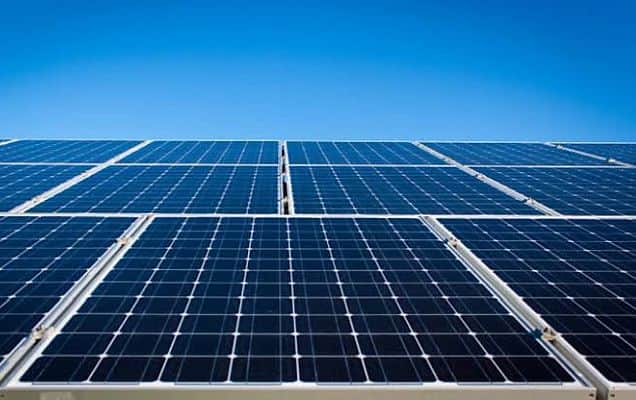
Can our scientists take up the challenge of creating a scalable and cost effective material that can replace plastic? Can we take up the challenge of finding a better way to store energy and electricity? Can we provide any solution that could increase the use of Solar Power? Can we have innovations that are related to batteries and other infrastructure to bring access of Electric Mobility to common man?
Friends,
We have to think about what we can do in our labs that will make the lives of crores of Indians easier. Can we find a solution to the water problem at the local level? How can we provide clean drinking water to the people?
Can we invent any such thing that will reduce healthcare costs? Can any of our inventions benefit the farmers, increase their income and help in reducing their toil?
We need to think about how science can be used to ease people's lives. And so Science for Society has a great importance.
When all the scientists and all the citizens of this country move forward with this idea, then not only will the country benefit but the humanity will also benefit.
Friends,
You should remember another important thing. Today we are living in an era that demands things 'instantly'. We want noodles in two minutes and pizza in 30 minutes. But we cannot have this ‘instant culture’ concept about scientists and scientific processes.
May be the impact of an invention is not visible immediately but it will benefit the people for many centuries to come. From the discovery of an Atom to the current nature and scope of science, this is what our experience tells us. So I would also urge you to think about Long Term Benefit and Long Term Solutions with scientific temper. And in the midst of all these efforts, you also will have to always keep in mind the international rules and parameters. You also need to increase your awareness and activism about your innovations, rights related to your inventions and their patents. Likewise, you should be constantly alert and continuously strive hard so that your research finds a place in the major platforms and in more and more international science magazines. It is equally important for the international world to know about your studies and success.
Friends,
We all know that science is not possible without two things. These two things are - ’problem’ and 'continuous experimentation'. If there is no problem; if everything is perfect then there will be no eagerness. Without eagerness, the need for a new invention will not be felt.
At the same time, if any work is done for the first time, then it is very unlikely to be perfect. Many times the desired results are not achieved. In fact, this is not a failure, but an important stage in the journey to success. Therefore, there are no failures in science; there are only efforts, experiments; and at the end of the day success is achieved. Keeping these things in mind, if you move forward, you will not face any problem in the field of science and there will never be any hindrance in life too. Best wishes to you all for the future. I hope this ceremony proceeds with success. With that, I conclude.
Thanks a lot!!!