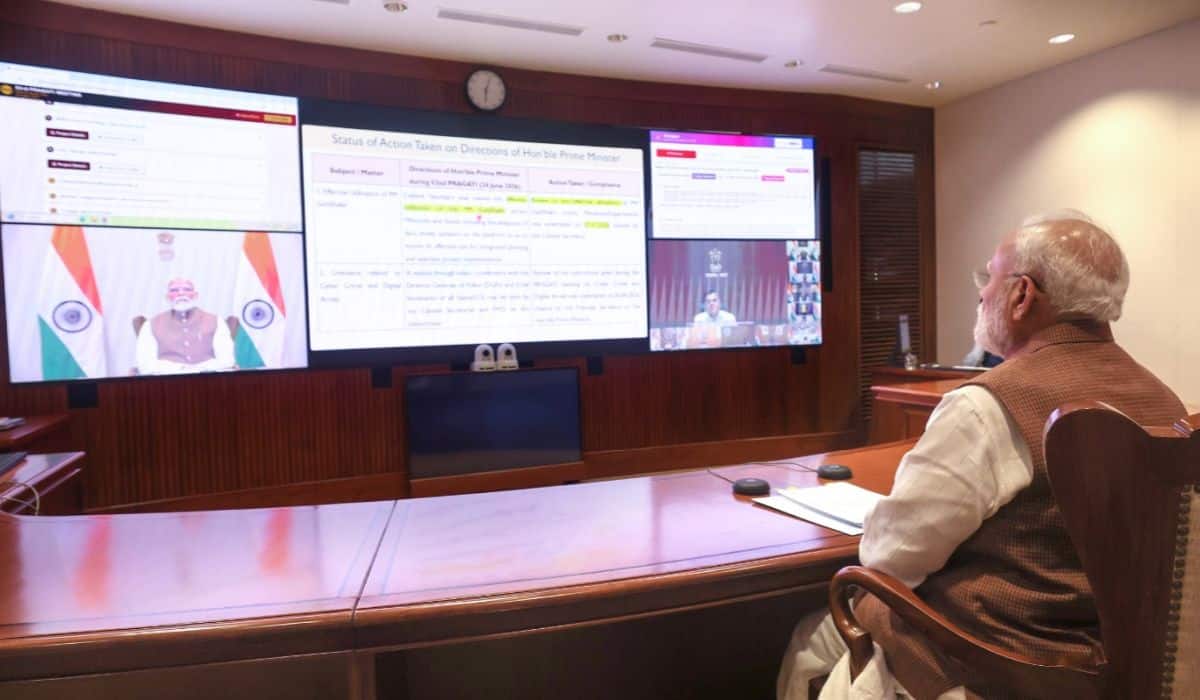
Prime Minister Narendra Modi has always been a votary of technology as a means of empowering oneself and others. For a long time, he has been known as someone keenly interested in keeping himself updated about technological advances. He has often mentioned the latest high-tech trends like Artificial Intelligence, Internet of Things and Big Data as something that everyone - specifically the youth - should keenly track and understand.
He is a pioneer among politicians of his generation, a first-mover in employing technology in the policy space, the political front and the personal realm.
On the policy side, given his tech-savvy personality, the Prime Minister’s vision for Good Governance places great emphasis on technology as a force-multiplier for empowering the un-empowered. Most of this government’s initiatives employ technological innovations to make processes more efficient, accessible and transparent.
The Narendra Modi-led government understands that, in a nation as vast and diverse as India, it is imperative to factor in the enormous reach technology offers. It helps in creating systems which help the poor break the shackles that information asymmetry and geography place upon their socio-economic mobility.

An example of using technology as a transformative catalyst is the e-NAM innovation, a trading portal for farmers. It brings farmers and buyers from all over the nation onto one trading platform. Any buyer can buy from any farmer from anywhere at a price that supply, demand and quality decide.
In one shot, this innovation expands the potential market of a farmer from just his local market to a nation of 125 crore. It also frees farmers from the clutches of endless list of middlemen who dominated the supply-demand chain between the farmer and the buyer.
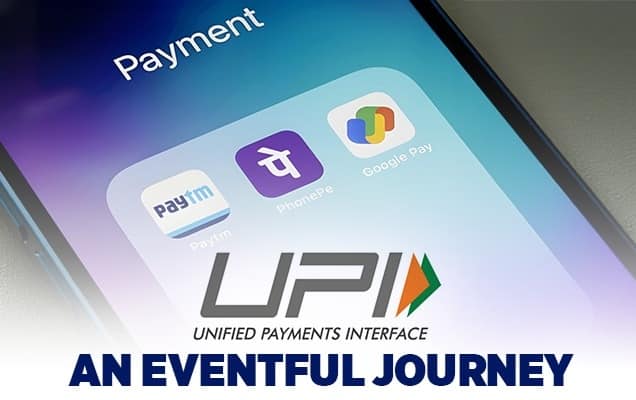
True to the Prime Minister’s vision of a more digital economy, the Digital India programme has spawned frugal innovations like the popular BHIM app which has brought banks and banking into people’s pockets. This hugely popular app saw a record 2 crore downloads in a very short time and has now also been further empowered with the conception of BHIM-Aadhaar.
The vision here is simple – the more digital our economy becomes, the lesser cash it uses and this lessens the scope for corruption. This is apart from the obvious convenience and ease digital transactions offer. That the winners of the recent lucky draws on digital transactions came from extremely diverse social and geographical backgrounds is an indicator that the digital movement has spread beyond urban centres considerably.
However, there’s a deeper dimension to technology that the Prime Minister mentioned recently at the Smart India Hackathon. The success of a democracy depends on Jan Bhagidari or People’s Participation. Democracy does not mean that the voter brings in a government and treats it as a 5 year contract where the onus of progress is now solely on the government. It is a misconception that governments know everything and can get everything done. Problems can be resolved and progress can be made only when the people and the government come together.
Given the scale of India’s population and governmental apparatus, this coming together is possible only through technology. This is where Digital India is playing a key role – in making the government more accessible to people and in making people’s ideas and feedback more accessible to the government. The Prime Minister’s firm commitment to this idea has meant that the Citizen Engagement wings of the administrative machinery have become hubs of activity where feedback is sought, ideas are welcomed and grievances are redressed promptly. If true democracy is to be realised, if the government and people are to be in tune with each other, then technology has to be the vehicle.

Connectivity is fundamental to realise the transformative possibilities that technology offers. To boost this connectivity, the Bharat Net initiative is laying optical fiber networks to 2.5 lakh gram panchayats all over India. While more than 77,000 villages are already connected thus, the implementation is on in mission-mode to complete this infrastructure outreach towards the rest of the villages.
In already connected villages, this has opened up a number of avenues for the rural populace due to the establishment of Common Service Centres. CSCs function as an access point for interaction between the government and a citizen. This is Digital Inclusion at its best since the government can now deliver a plethora of services and the citizen can access services on demand. A government that is connected to its people and delivers efficiently is no longer just a possibility, it is a reality unfolding in the present. This is what Prime Minister Narendra Modi means when he says, “Technology is not only a driving force, it also has great impact and acts as a solution too”.
In the political space, Prime Minister Narendra Modi was among the first to realise the incisive but broad reach that technology offers. His political messaging has been exemplary in its reliance on technology to take his message to the citizens. Be it the phenomenally successful India 272 campaign or his Twitter and Facebook presence, he has dissolved communication barriers and reached the citizens directly.
Personally too, he is probably the first political leader in India and among the select few leaders in the world to have a mobile application to gauge the pulse of the mobile app generation. The app is smartly designed, neatly packaged and content-rich.

Prime Minister Narendra Modi’s popularity in a young nation is no coincidence. In the information era, he has often shown a better understanding of the power of technology than many of his contemporaries.