​PM's interaction through PRAGATI

Published By : Admin | May 25, 2016 | 18:04 IST
PM Modi reviews progress towards handling and resolution of grievances related to disbursement of scholarships/fellowships to students
Prime Minister Modi calls for quick and effective resolution of students’ issues with regard to scholarships and fellowships
PM Modi reviews progress of vital infrastructure projects in the road, railway, steel and power sectors
PM Modi reviews progress of expansion works for the Bhilai Steel Plant, calls for completion of project at the earliest
States submit results on progress of the “waste to wealth” initiative under the Swachh Bharat Mission to PM Modi
PM reviews progress under Revised National Tuberculosis Control Programme, directs necessary equipments to be installed at priority

The Prime Minister, Shri Narendra Modi, today chaired his twelfth interaction through PRAGATI - the ICT-based, multi-modal platform for Pro-Active Governance and Timely Implementation.

The Prime Minister reviewed the progress towards handling and resolution of grievances related to disbursement of scholarships/fellowships to students. He sought to know the reasons for the delay, and enquired about the progress of Aadhaar-linkage to disbursal of benefits to students. He urged the concerned officials to increase the speed of addressing grievances, and aim for quick and effective resolution of students’ issues with regard to scholarships and fellowships.

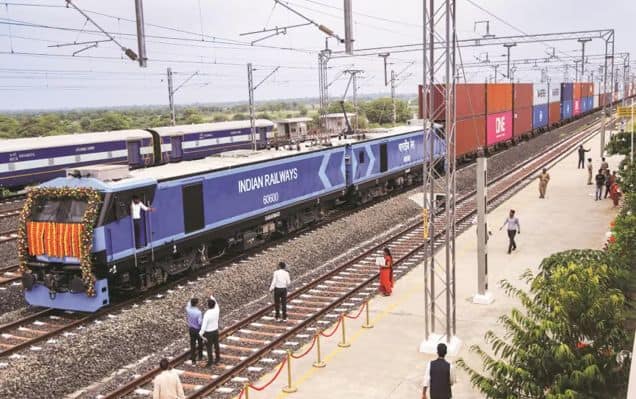
The Prime Minister reviewed the progress of vital infrastructure projects in the road, railway, steel and power sectors, spread over several states including Tripura, Mizoram, Uttar Pradesh, Karnataka, Odisha, Telangana, Chhattisgarh and Maharashtra. The railway projects reviewed included the Akhaura-Agartala rail line, which will be a vital link between India and Bangladesh.

The Prime Minister reviewed the progress of modernization and expansion works for the Bhilai Steel Plant. Taking serious note of the delay in this project, he asked the Steel and Heavy Engineering Ministries to sort out all issues, and complete the project at the earliest.

Shri Narendra Modi reviewed the progress of the “waste to wealth” initiative under the Swachh Bharat Mission. This includes both “waste to compost,” and “waste to energy” components. Various States gave details about the progress of works under this initiative.

Turning to the health sector, the Prime Minister reviewed the progress under the Revised National Tuberculosis Control Programme, aimed at further reducing the incidence and mortality rate of the disease. He directed that necessary equipment for timely detection of Multi-Drug Resistant Tuberculosis be installed in the districts on priority. He also called for a review of the progress towards combating the disease to be undertaken at the district level.

The Prime Minister reviewed the progress towards further reducing Infant Mortality Rate and Maternal Mortality Rate (IMR and MMR), and the initiatives that have been taken in various States in this regard.

Explore More
প্রধান মন্ত্রীনা শ্রী রাম জন্মভুমি মন্দির দ্বাজরোহন উৎসবতা পীখিবা ৱারোলগী মৈতৈলোন্দা হন্দোকপা

Popular Speeches

প্রধান মন্ত্রীনা শ্রী রাম জন্মভুমি মন্দির দ্বাজরোহন উৎসবতা পীখিবা ৱারোলগী মৈতৈলোন্দা হন্দোকপা
GCCs now influence up to $55 billion of India's IT services exports: Deloitte

Media Coverage

GCCs now influence up to $55 billion of India's IT services exports: Deloitte
NM on the go

Nm on the go

Always be the first to hear from the PM. Get the App Now!
...
Cabinet approves scheme of Chemical Parks “Bharat Audyogik Vikas Yojana Rasayan (BHAVYA Rasayan)
July 24, 2026

The Union Cabinet chaired by the Prime Minister Shri Narendra Modi has approved Bharat Audyogik Vikas Yojana Rasayan or BHAVYA - Rasayan Scheme for establishing three dedicated Chemical Parks in the country. The Scheme was announced in the Union Budget of FY 2026–27.

The Scheme will have a total financial outlay of Rs.3,030 crore, with Rs.3,000 crore towards meeting the cost of establishing the Common Infrastructure Facilities and Basic Utilities inside the park and Rs. 30 Crores as administrative expenditure. The scheme would run for a period of 5 years from FY 2026-27 to FY 2030-31.

In terms of the said scheme, the Centre would provide a grant of up to Rs.1,000 crore per park. This will be subject to minimum contribution of Rs.500 crore by the concerned State Government.

BHAVYA Rasayan Scheme is expected to bring the following benefits to the economy:

  • It will promote development of the Chemical industry along the whole value chains including upstream, downstream and ancillary industries promoting efficient utilization of resources, leading to lower logistics cost.
  • Through shared Common Infrastructure Facilities and Basic Utilities, keeping the needs of chemicals industry in mind, it will lead to enhanced cost competitiveness and will make the Indian Industry globally competitive.
  • It will help the Indian Chemical industry better integrate in Global Value Chains leading to greater exports and higher import substitution.
  • It will promote development of Indian Chemical industry in a sustainable way by creating an environment friendly ecosystem which will consist of centralized facilities such as Common Effluent Treatment Plant, Treatment, Storage, and Disposal Facility, and Hazardous Waste Management infrastructure. It will ensure better compliance management with environmental regulations, thereby promoting development of industry in eco-friendly manner.
  • Development of Chemical sector will lead to a cascading effect through enhanced development of downstream sectors of the economy as well, thereby leading to higher employment generation and greater development of the economy, helping achieve the goal of Viksit Bharat @ 2047.
Recognising that this sector produces Chemicals and Petrochemicals which are used in various downstream industries such as Agriculture, Textiles, Pharmaceuticals, Nutraceuticals, Construction, Automobile, Electronics, introducing BHAVYA Rasayan Scheme shall facilitate development of the sector by attracting domestic and foreign investments, enhancing domestic production capacity and generating employment. It will boost the global competitiveness of the sector thereby, promoting Atmanirbharta.
 
In terms of the said Scheme, the Centre will facilitate development of three dedicated Chemical Parks by the State Governments under Challenge Route. Each such park will have a minimum contiguous area of 8 sq. km. (minimum 2,000 acres) of encumbrance-free land. These parks will provide plug-and-play infrastructure, in the form of Common Infrastructure Facilities and Basic Utilities for the chemical industry such as:
  • Common Effluent Treatment Plant (CETP),
  • Treatment, Storage, and Disposal Facility (TSDF),
  • Water supply and distribution systems,
  • Solvent recovery and distillation facilities,
  • Steam generation and distribution network,
  • Interconnected pipeline network,
  • Logistics and warehousing facilities.