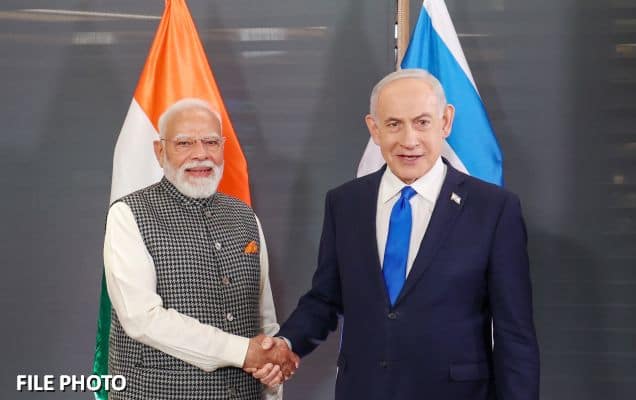
Prime Minister Narendra Modi addressed Jan Jatiya Mahasabha in Jhabua, Madhya Pradesh, where he expressed his gratitude and offered his respects to the people of the region. The event witnessed an overwhelming turnout, indicative of the strong support and enthusiasm of the people towards the government's initiatives and vision for the state, PM Modi expressed happiness.
PM Modi commenced his address by paying homage to Lord Deva Zhiri Mahadev and acknowledging the sacred soil of Jhabua. He extended his respects to the indigenous communities, mothers, and sisters of the region, expressing heartfelt joy in meeting them, akin to meeting his relatives. Reflecting on the deep-rooted connection between Jhabua and Gujarat, PM Modi emphasized the geographical and emotional ties shared by the people of both regions.

Amidst the preparations for Bhagoria, PM Modi conveyed his best wishes to the community for the upcoming festivities. He announced the release of the development fund for the Adarsh Gram Yojana and the initiation of major railway projects in Madhya Pradesh, underscoring the government's commitment to enhancing connectivity and fostering progress in the region.
PM Modi clarified that his visit was not for the promotion of Lok Sabha elections but to express gratitude to the people of Madhya Pradesh. He lauded the support received in the assembly elections and highlighted the increasing public endorsement of the BJP government's governance model.
Drawing a contrast between the governance eras in Madhya Pradesh, PM Modi praised the transformative efforts of the double-engine government in propelling the state towards development. He criticized the Congress party's neglect of tribal welfare and highlighted the BJP government's initiatives aimed at empowering tribal communities.

He said, “Young people may not even remember, but today Madhya Pradesh, which was once counted among the sickest states in the country before the BJP government, is rapidly progressing on the path of development. The biggest reason behind making Madhya Pradesh sick was the Congress' hate-filled attitude towards villages, the poor, and tribal areas. They never cared about the development of tribal society or thought about their dignity. For them, the tribal people only meant some votes. They remembered villages, the poor, and the backward only when elections approached.”
PM Modi emphasized the government's focus on education, healthcare, and infrastructure development in Madhya Pradesh. He underscored the significance of the ownership scheme in providing land documents to the people and highlighted the PM JANMAN Yojana's impact on the rapid development of tribal communities.

“For us, the tribal society is not just a vote bank, but it is the pride of the nation. Your respect and your development, both are guaranteed by Modi. Modi does not approve if even a single tribal child falls behind due to lack of education. Our tribal society has been sustaining itself on forest resources for thousands of years. During the Congress era, legal barriers were imposed on the rights of tribals. By amending the forest laws, our government has returned forest rights to the tribal society” said Prime Minister Narendra Modi.
Addressing the Congress party's divisive tactics, PM Modi warned against their attempts to incite unrest and divide communities for political gain. He condemned Congress' attitude towards tribal society and criticized their opportunistic approach during elections.

“Congress has been in power for so many years. However, they did not worry about the untimely deaths of tribal youths and children. They knew that innocent tribal people would not hold their government responsible for diseases. This wasn't just an election issue,” said PM Modi.
Highlighting the government’s initiative towards tribal communities and their upliftment, PM Modi said, “Those who are the most deprived, the most backward, are the top priority in our government. The tribal society, which was cut off from the mainstream of development till now, has now started rapid development under the PM JANMAN Yojana. Its benefits will be for tribal communities like Baera, Bharia, and Sahariya in this region.”

Speaking of the infrastructural developmental journey in Madhya Pradesh, the Prime Minister said that the government is focusing equally on modern infrastructure in MP. In the ten years of the Congress government, MP received as much money for railway development as we are sending 24 times more to MP today.
PM Modi lashed out at Congress’ and its allies' intentions when it comes to public welfare. He said, “Those who neglect the public face this fate. Congress is now trapped in its own sins. It will struggle as much to get out of it as it struggles more. Congress and its friends have only two strengths. When they are in power, they loot. When they are out of power, they incite people. In other words, loot and unrest are the oxygen of Congress. When these are stopped, the political strength of the Congress party starts to wane. In most states, the public has shut down their loot by rejecting them from power. Now, they are trying to divide people based on caste, language, and region to regain power. But the country is watching their actions. The country will not let their schemes succeed.”

Underscoring the government’s initiatives towards empowering women and self-help groups, PM Modi said, “The Namodrone Didi campaign by the central government is also going to provide modern drones to 15 thousand self-help groups across the country. Soon, Namodrone Didis will also be seen leading the agricultural revolution in Jhabua.”

PM Modi concluded his address by expressing confidence in the continued progress of Madhya Pradesh with the support of its people. He thanked the audience for their overwhelming presence and reiterated his commitment to the state's development and prosperity.
24 में 400 पार!
— narendramodi_in (@narendramodi_in) February 11, 2024
फिर एक बार- मोदी सरकार। pic.twitter.com/MYT15xK6kS
हमारे लिए जनजातीय समाज वोट बैंक नहीं, देश का गौरव है।
— narendramodi_in (@narendramodi_in) February 11, 2024
आपका सम्मान भी, और आपका विकास भी, ये मोदी की गारंटी है: PM @narendramodi pic.twitter.com/YBAWW1YBO4
वन संपदा कानून में बदलाव करके हमारी सरकार द्वारा आदिवासी समाज को वन भूमि से जुड़े अधिकार लौटाए गए हैं: PM @narendramodi pic.twitter.com/X80kvIRKMV
— narendramodi_in (@narendramodi_in) February 11, 2024
हमने वोट बैंक के लिए नहीं, आदिवासी समाज के स्वास्थ्य के लिए सिकल सेल एनीमिया के खिलाफ अभियान शुरू किया: PM @narendramodi pic.twitter.com/0mPhVOSpjY
— narendramodi_in (@narendramodi_in) February 11, 2024
आज जो सबसे वंचित है, सबसे पिछड़ा है, हमारी सरकार में वो सबसे पहली प्राथमिकता है।
— narendramodi_in (@narendramodi_in) February 11, 2024
समाज में जो सबसे आखिरी वर्ग होता था, हमने विकास में उसे सबसे पहला दर्जा दिया है: PM @narendramodi pic.twitter.com/H0gof6f9ol
काँग्रेस अब अपने पापों के दलदल में फंस चुकी है।
— narendramodi_in (@narendramodi_in) February 11, 2024
वो उससे निकलने की जितनी कोशिश करेगी उतना ही और धँसेगी: PM @narendramodi pic.twitter.com/yJXIAtdeyV
लूट और फूट - यही काँग्रेस की ऑक्सीजन हैं। pic.twitter.com/NdrJTszlla
— narendramodi_in (@narendramodi_in) February 11, 2024
कांग्रेस के भीतर आदिवासी समाज के लिए नफरत कूट-कूट कर भरी है। pic.twitter.com/eq8dZ25wOf
— narendramodi_in (@narendramodi_in) February 11, 2024