PM’s address at the Global ‘Call to Action’ Summit 2015

Published By : Admin | August 27, 2015 | 10:43 IST
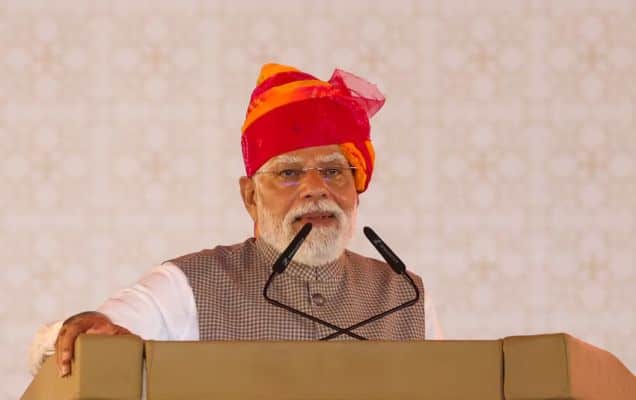
PM Narendra Modi inaugurates Global Call to Action Summit 2015
Call to Action Summit will showcase power of new partnerships, innovations & systems to bring improvements in life-saving interventions: PM
A truly historic accomplishment has been victory over Polio; being declared free reflects India’s deep commitment to child health: PM
Happy that India has eliminated maternal and neonatal tetanus: PM Modi
Government has added another mission known as “Mission Indradhanush” to the world’s largest immunization drive: PM
India has always partnered with the global efforts on issues of child and maternal health: PM
Firmly believe that clean and hygienic environ is the stepping stone to a healthy nation: PM
We need to ensure that the girl child survives, thrives and plays a very crucial role in society, says PM Modi

My colleague Shri J. P. Nadda, Minister of Health and Family Welfare, Govt. of India, Shri. Kesetebirhan Admasu, Minister of Health, Govt. of Ethiopia, Hon’ble Ministers from participating countries, representatives of Development Partners, friends from the civil society, the private sector, media, academia, national and international speakers and esteemed delegates. On behalf of my Government and all the co-hosts for this international summit, I warmly welcome you to the Global Call to Action Summit 2015.

This is a landmark occasion, as for the first time, the Global Call to Action Summit is being held outside USA. My Government is honoured to host this Summit. All those delegates who have travelled a long distance to attend this Summit – I heartily welcome you to India and to New Delhi. I am delighted to be with you this morning.

This two-day Summit, celebrating the achievements of the participating countries in the area of Maternal and Child Health, was conceptualized to accelerate joint leadership for ending preventable deaths among mothers and children. It will showcase the power of new partnerships, innovations and systems to bring about improvements in life-saving interventions. I firmly believe that this Summit will provide a highly effective platform to address common challenges that will help us achieve the desired goals.

How we shape the world in the next 15 years will make the difference between prosperous, optimistic nations, and insecurity and unrest. I am glad to see 24 nations present here to join together in their commitment to end preventable maternal and child death. This is a “Call to Action” to all of us to seize this opportunity and think big.

Today, as we gather here to discuss strategies and as we transit from the Millennium Development Goals to Sustainable Development Goals, let us acknowledge the sad reality that the world continues to lose about 289 thousand mothers and 6.3 million under-5 children every year. The 24 priority countries participating in the Summit contribute nearly 70% of the preventable maternal and child deaths. For India, with its birth cohort of 26 million, the challenges are formidable but the commitment to succeed is also as strong. What, however, does offer hope is that most of these deaths can be prevented through simple yet effective and proven interventions. This forms the key peg for this Summit. This also formed a crucial part of the joint statement issued subsequent to the visit of the US President in January this year, where we agreed to further accelerate the joint leadership to end all preventable maternal and child deaths.

Keeping aside the work that still needs to be done, there have been significant achievements on the global front in the area of maternal and child health. Looking at the big picture, we find that in 1990, India’s under-five mortality rate stood at 126 while the global average was 90. In 2013, this figure dropped to 49 against a global average of 46. Therefore, the gap to the global average reduced from 36 points in 1990, to just 3 points in 2013 reflecting that India has achieved under-five mortality rate decline at an accelerated pace compared to global rate of decline. What this translates into is this: India is likely to reach close to achieving the MDG target if the current trend of annual decline is sustained.

In addition to this remarkable achievement, another truly historic accomplishment has been the victory over Polio. India was declared as “Polio-Free” on 27 March 2014. From being a country which accounted for more than half of the global polio cases in 2009, to being declared free of the wild polio virus: the journey reflects India’s deep commitment to child health.

I am also happy to share with you today another major milestone achieved by India. India has eliminated maternal and neonatal tetanus. The validation for this has happened much before the global target date of December 2015. This gives us the confidence to achieve other targets well before the target date.

To sustain the efforts of being a Polio-free and maternal and neonatal tetanus free nation, and to accelerate the full immunization coverage in the country, my Government has added to the world’s largest immunization drive another mission known as “Mission Indradhanush”. It focusses on vaccinating the left-outs. It also targets to accelerate the current increase in annual rate of immunization from existing 1% to more than 5% per year. This will help us achieve more than 90% coverage by 2020, which otherwise would take more than 25 years at the current pace. The first phase has been successfully implemented. We want to ensure that no child in India dies of a vaccine-preventable disease.

India has always partnered with the global efforts on issues of child and maternal health. India is the first country to respond to the global commitment to reduce newborn mortality, subsequent to the launch of Global Every Newborn Action Plan (ENAP) at the World Health Assembly in June 2014. India launched the India Newborn Action Plan (INAP) in September 2014, targeting reduction in Neonatal Mortality Rate (NMR) and still births to single digit by 2030. India also responded by acting on the first “Call to Action” through its commitment and launch of RMNCH+A

These remarkable successes in the field of maternal and child health have been possible through our National Health Mission (NHM). The Mission, with its urban and rural health components – perhaps one of the largest public health programmes in the world – has resulted in improved health outcomes. 52% of India’s under-5 mortality is contributed to by deaths of newborns in the first month of life. Under the NHM, our approach emphasises a continuum of newborn care both at the community and facility level.

Our focus has been to get pregnant women to have safe delivery in our institutions. We launched an ambitious program – Janani Suraksha Yojana (JSY) – wherein incentives were given for delivering in public institutions to the beneficiaries directly. As a result, today, more than 75% of the deliveries take place in our institutions. This has directly contributed to reduction in maternal mortality. We are fully aware that out-of-pocket expenses remain a key barrier for women to access timely health care and services. To overcome this, we have launched a programme called Janani Shishu Suraksha Karyakram (JSSK) under which every woman delivering in a public health institution as well as the newborn is entitled to free and cashless health services, with an assured provision of free drugs, diagnostics and diet besides free to and fro transport. This has helped to further improve our institutional deliveries.

Not only are the mothers provided focused health services, but individual beneficiary tracking is being done through the countrywide Maternal and Child Health Tracking System, which ensures close tracking of inputs and outputs at the level of service provision. More than 92 million mothers and 78 million children have already been registered so far in the system. 

One of our major concerns is equity. As a step towards ensuring equitable health services across regions that suffer from intra-state disparities, and to bring about sharper improvements in health outcomes, a total of 184 poorest performing districts all over the country have been identified. Special efforts are being made to put in more resources and focussed programmes in these areas.

One of the flagship programmes of my Government is the ‘Swacch Bharat Abhiyaan’ (The Clean India Campaign) . As a part of this large campaign, the Health Ministry has launched the Kayakalp scheme to encourage public health facilities to maintain high standards of hygiene and sanitation, as I firmly believe that clean and hygienic environment is the stepping stone to a healthy nation. To save and educate the girl child we have launched an ambitious program – Beti bachao Beti padhao. We need to ensure that the girl child survives, thrives and plays a very crucial role in society. 

I have witnessed people getting poorer because of unfortunate health episodes. We need to institutionalise a system where marginalised communities receive universal health care and financial protection. We must experiment and learn from each other. India stands ready to boost its commitment and partner with other countries and move forward on our promise to end maternal and child deaths and provide a better life to the adolescent. I invite you, to commit to bold measures and hold each other accountable to these promises.

As we assemble here, we need to send a very very strong message not only to ourselves, not only to the 24 countries present here, but to the entire world. The message is of our commitment, that we will ensure that every woman, every child who can be saved will be saved. We also need to make a clarion call to the world to join hands in taking such steps that would ensure this. India stands committed to not only allocate resources towards this in our country, but also to help the world and all those countries which needed any support. It is my personal vision and my Government’s firm commitment.

While every country present here has something to offer, India also has a wealth of experience. India has done well in many ways and would be extremely happy to share its experience with other countries. Last year, I had made a commitment of assisting the SAARC countries in keeping it Polio free. We have also made a commitment to provide Pentavalent vaccines to such SAARC countries as would need it. We will offer whatever experience we have to the world community.

India would be happy to assist any country with technology, system strengthening and programme implementation capsules. We could train personnel and skill them for better management of child sickness in our Special Newborn Care Units (SNCUs) as well as share our experience at home based new born care. India’s rich experience in Universal immunization and particularly its experience this year with the Mission Indradhanush could be shared with all the countries. We had offered this to SAARC countries earlier. Today I repeat this offer to all countries present here. This will be apart from our offer of support for Polio eradication.

I again warmly welcome you all to this important international Summit. I hope the next two days would provide a new direction to the global community in its journey towards ending maternal and child deaths.

I wish you a pleasant stay in New Delhi.

Thank you very much. Jai Hind!

Explore More
প্রধান মন্ত্রীনা শ্রী রাম জন্মভুমি মন্দির দ্বাজরোহন উৎসবতা পীখিবা ৱারোলগী মৈতৈলোন্দা হন্দোকপা

Popular Speeches

প্রধান মন্ত্রীনা শ্রী রাম জন্মভুমি মন্দির দ্বাজরোহন উৎসবতা পীখিবা ৱারোলগী মৈতৈলোন্দা হন্দোকপা
Republic Day sales see fastest growth in five years on GST cuts, wedding demand

Media Coverage

Republic Day sales see fastest growth in five years on GST cuts, wedding demand
NM on the go

Nm on the go

Always be the first to hear from the PM. Get the App Now!
...
India - EU Joint Statement on the State Visit of European Council President and European Commission President to India and the 16th India-EU Summit
January 27, 2026

At the invitation of the Hon'ble Prime Minister of India, Shri Narendra Modi, President of the European Council, H.E. Mr. Antonio Costa, and President of the European Commission, H.E. Ms. Ursula von der Leyen, paid a State Visit to India on 25–27 January 2026 as the Chief Guests for the 77th Republic Day of India. President Costa and President von der Leyen were accompanied by a high-level delegation including High Representative for Foreign Affairs and Security Policy Ms. Kaja Kallas and Trade Commissioner Mr. Maroš Šefčovič.

This is the first visit by the leaders of the European Union as Guests of Honour for the Republic Day. It symbolises the growing closeness, depth and dynamism in India–EU relations, and their joint commitment and shared interest in shaping a resilient multipolar global order that underpins peace and stability, economic growth and sustainable development. The visit follows the historic visit of the European Union College of Commissioners led by President von der Leyen to India on 27–28 February 2025.

The two Leaders were warmly welcomed by Hon’ble President of India Smt. Droupadi Murmu at Rashtrapati Bhavan. They then travelled together in a ceremonial procession to attend the Republic Day celebrations and witness the parade. For the first time ever, a contingent consisting of representatives from both the European Union Military Staff and the European Union Naval Operations ATALANTA and ASPIDES participated in the Republic Day Parade. President Costa and President von der Leyen joined President Murmu, for an ‘At-Home’ reception in Rashtrapati Bhavan. In honour of the visiting dignitaries, President Murmu, hosted a Banquet on 27 January 2026. Earlier that afternoon, Prime Minister Modi also hosted a luncheon in their honour.

Prime Minister Narendra Modi along with President Antonio Costa and President Ursula von der Leyen co‑chaired the 16th India–EU Summit in New Delhi on 27 January 2026 and underlined their commitment to raise the India–EU Strategic Partnership to a higher level based on shared values and principles including democracy, human rights, pluralism, rule of law, and the rules‑based international order with the UN at its core. They committed to tackling security threats, promoting inclusive and sustainable growth, strengthening economic resilience and security, advancing climate and biodiversity action, and accelerating progress on the Sustainable Development Goals.

The leaders also addressed the India–EU Business Forum, attended by CEOs and industry leaders from both sides, where they called for ambitious private sector investments to harness synergies in critical sectors and for new business initiatives to drive closer trade and investment ties.

The leaders commended progress on the ‘India‑EU Strategic Partnership: A Roadmap to 2025’. The two sides reiterated their determination to further reinforce their strategic partnership, delivering tangible benefits for both sides. The Summit took place against the backdrop of the positive momentum in India–EU relations in recent years, and sustained high‑level engagement across all domains.

Delivering on the strategic partnership

The leaders hailed the successful conclusion of negotiations of the landmark India–EU Free Trade Agreement (FTA). This historic deal is a milestone in the India–EU Strategic Partnership that will significantly enhance bilateral trade and investment ties, drive shared prosperity, strengthen resilient and diversified supply chains, and support sustainable and inclusive growth.

The leaders welcomed the signing of the India–EU Security and Defence Partnership, the first such overarching defence and security framework between the two sides that will deepen ties in the domains of maritime security, defence industry and technology, cyber and hybrid threats, space, and counter‑terrorism among others. They also welcomed the launch of negotiations on a Security of Information Agreement that will facilitate the exchange of classified information and pave the way for a stronger cooperation in areas related to security and defence.

Regional and Multilateral co‑operation

The leaders emphasized the importance of an effective multilateral system, with the United Nations at its core. They underlined the necessity of comprehensive reform of the UN Security Council, to make it more representative, inclusive, transparent, efficient, effective, democratic, accountable and reflective of contemporary geopolitical realities. They emphasized the World Trade Organization's central role in the multilateral trading system and global trade governance and underlined that meaningful, necessary and comprehensive reform of the WTO is essential to improve its functions so that it is better suited to advance all Members’ objectives.

The leaders underscored the importance of close cooperation on regional and global security matters, acknowledging that the security and prosperity of Europe and the Indo‑Pacific are interconnected.

The two sides reiterated their shared commitment to promoting a free, open, peaceful and prosperous Indo‑Pacific, in accordance with international law, including UNCLOS, recognising their respective roles and engagement in the region. The leaders welcomed closer engagement in the region, including the inaugural edition of the forthcoming India‑EU Consultations on the Indo‑Pacific, in New Delhi. They also looked forward to joint activities in the Indo‑Pacific Oceans Initiative (IPOI), and to strengthen cooperation in the Indian Ocean Rim Association (IORA) under India's Chairship.

On Ukraine, the two sides expressed concern over the ongoing war, which continues to cause immense human suffering and carries global consequences. Both sides will continue to support efforts towards the achievement of a comprehensive, just and lasting peace in Ukraine through dialogue and diplomacy, based on the principles of the UN Charter and of international law, including independence, sovereignty and territorial integrity.

The leaders noted the adoption of the UN Security Council Resolution 2803 of 17 November 2025 which welcomes the establishment of the Board of Peace and authorizes an International Stabilisation Force, as outlined in the Comprehensive Plan, as a step forward to end the Gaza conflict. They encouraged all parties to implement the resolution in its entirety, in line with international law and relevant UN Security Council resolutions. Both sides restated their readiness to support efforts towards just and durable peace and stressed the need for unhindered humanitarian access. They also called for a just and lasting solution, based on the implementation of the two-State solution, through dialogue and diplomacy.

The two sides discussed the recent developments of concern in Iran and the region. They underscored the importance of dialogue and diplomacy in resolving issues in a peaceful manner.

The leaders unequivocally and strongly condemned terrorism and violent extremism, in all its forms and manifestations including cross‑border terrorism. They called for decisive and concerted international efforts to combat terrorism in a comprehensive and sustained manner and in accordance with international law. They agreed to enhance cooperation to counter radicalisation and violent extremism, combat financing of terrorism, promote internationally agreed anti‑money laundering standards, prevent exploitation of new and emerging technologies for terrorist purposes, and tackle terrorist recruitment. They condemned in the strongest terms the terrorist attack in Pahalgam, Jammu and Kashmir on 22 April 2025 and the terror incident near Red Fort, New Delhi on 10 November 2025.

Towards 2030: India–EU Joint Comprehensive Strategic Agenda

The leaders adopted "Towards 2030: India–EU Joint Comprehensive Strategic Agenda” to elevate the strategic cooperation between two sides. The Joint Comprehensive Strategic Agenda is aimed at accelerating progress across five key pillars: prosperity and sustainability, technology and innovation, security and defence, connectivity and global challenges, as well as enabling factors such as skills, mobility, business and people‑to‑people ties.

In the context of global uncertainty and disruptions, closer economic ties between India and the EU are more important than ever to drive growth, job creation, green transition, industrial development, and more resilient, sustainable and trustworthy supply chains. The leaders of India and the EU are committed to ensure the full implementation of the FTA. Additionally, they tasked their respective teams to complete negotiations, at the earliest opportunity, on an Investment Protection Agreement (IPA) and on an Agreement on Geographical Indications (GIs). They committed to work on scaling up bilateral investments and engage in discussion on Blue Valleys to accelerate private sector engagement in strengthening select value chains. They also undertook to work on scaling up investments together in third countries including through trilateral co‑operation, drawing upon India and the EU’s experience in development assistance, including the EU’s Global Gateway Strategy.

India and the EU have complementary strengths in the technology domain. Both sides will increase collaboration across the entire value chain, linking enhanced research and innovation to business engagement and market operationalisation. In the current geopolitical environment and amidst global disruptions, they reaffirmed the India‑EU Trade and Technology Council (TTC), a high‑level coordination platform to address key trade, technology and economic security issues, as the cornerstone of their technology partnership and aim to further enhance its work. The two sides will continue to advance together on promoting Digital Public Infrastructure including interoperable standards and exchange of best practices on regulatory frameworks, collaboration in new technologies (including semiconductors, artificial intelligence, quantum computing, digital public infrastructure and 6G) to build cyber‑secure, trusted digital ecosystems as well as to advance cooperation in clean tech. They will broaden discussions on economic security, in particular on the resilience of supply chains and research security, underlining the importance of protecting sensitive technologies. Both sides agreed to hold the next TTC ministerial meeting in Brussels in 2026 and to deepen business consultations.

The two sides will further strengthen collaboration on emerging technologies, innovation, and research, including by creating EU–India Innovation Hubs and launching an EU–India Startup Partnership. The leaders welcomed the renewal of the India–EU Agreement for Scientific and Technological Cooperation until 2030 and agreed to launch exploratory talks on the association of India to Horizon Europe, the EU’s research and innovation programme. They welcomed the productive discussions at the inaugural India–EU Space Dialogue in Brussels in November 2025.

The leaders recognised the increasing incidents of extreme climate events and reaffirmed the importance of the Paris Agreement, the successive Conference of the Parties’ (COP) outcomes, and respective Nationally Determined Contributions. They agreed to cooperate closely for their effective implementation and to join forces to raise global action, including by holding the increase in the global average temperature to well below 2°C above pre-industrial levels and pursuing efforts to limit the temperature increase to 1.5°C above pre-industrial levels. They reaffirmed the importance of the principles of equity, and common but differentiated responsibilities and respective capabilities, in the light of different national circumstances. They commended the International Solar Alliance’s (ISA) efforts to provide energy access and install large‑scale solar energy capacities in developing countries.

The leaders committed to accelerated cooperation in clean transition and energy resilience in the framework of the EU-India Clean Energy and Climate Partnership. In this context, they welcomed the creation of the India–EU Task Force on Green Hydrogen, and the announcement of an India-EU Wind Business Summit to be convened in 2026. The signing of the India–EU Administrative Arrangement on Disaster Risk Management will pave the way for enhanced coordination in disaster preparedness and response capacities. Closer engagement of the EU with the Coalition for Disaster Resilient Infrastructure (CDRI) and the International Solar Alliance (ISA) complements this cooperation.

The leaders agreed to strengthen cooperation on environmental issues, deepening collaboration on circular economy, biodiversity, water resilience and security, and launching Ocean and Fisheries Dialogue. They reaffirmed their commitment to the full and effective implementation of the Kunming‑Montreal Global Biodiversity Framework.

Geopolitical realities and growing cross‑regional security threats call for closer EU–India cooperation. As the two sides strengthen their security and defence capabilities, they will enhance preparedness across domains – from maritime security to hybrid threats, counterterrorism, space security, and transnational crime – while deepening crisis‑management engagement and mutually beneficial defence‑industry collaboration. India and EU will also engage on the growing challenge of maritime pollution, safety and security of sea farers, and vessels which circumvent compliance to relevant and applicable international maritime regulations, to which they are party.

The two sides will work together to improve regional connectivity, upholding high standards while unlocking new commercial opportunities for EU and Indian businesses. The leaders underlined the launch of joint projects under the India‑EU Connectivity Partnership supported by Global Gateway and India’s MAHASAGAR, the setting up of a regular Aviation Dialogue, and cooperation in the maritime transport sector. They welcomed advances in the India‑Middle East‑Europe Economic Corridor (IMEC), launched during the 2023 G20 New Delhi Summit, and looked forward to the first Ministerial meeting. The two sides will implement trilateral cooperation projects under the India‑EU Administrative Arrangement on Trilateral Cooperation, in areas such as energy, climate resilience, green mobility, and digitalisation.

The leaders highlighted that education and people‑to‑people ties have emerged as vital enablers of the India‑EU Strategic Partnership. They welcomed the conclusion of the India‑EU Comprehensive Framework of Cooperation on Mobility, in line with the national competences of EU Member States and India and domestic legislation of both Parties. They commended the launch of the first pilot European Legal Gateway Office, as a one‑stop hub to provide information and support the movement of workers, starting with the ICT sector. They reaffirmed their commitment to enhancing collaboration on safe, regular and orderly migration, including through circular pathways, for highly skilled workers, students, researchers, and seasonal workers in shortage occupations, whilst also strengthening cooperation on countering irregular migration, in accordance with national competences and the law of both Parties.

Aspiring to deepen educational and academic collaboration, the two sides agreed to launch Education and Skills Dialogue in 2026 to promote skills development, facilitate recognition of qualifications and learning periods abroad, and support systemic collaboration in higher and vocational education.

President Costa and President von der Leyen welcomed the holding of the AI Impact Summit in New Delhi on 19–20 February 2026, and the leaders looked forward to a successful event, re‑emphasizing their commitment to outcome‑oriented cooperation.

The leaders underlined the importance of regular India–EU Summits to take forward the strategic partnership and implement the India‑EU Joint Comprehensive Strategic Agenda. President Costa and President von der Leyen thanked Prime Minister Modi for the warm hospitality and invited him for the 17th India–EU Summit in Brussels at a mutually convenient time next year.