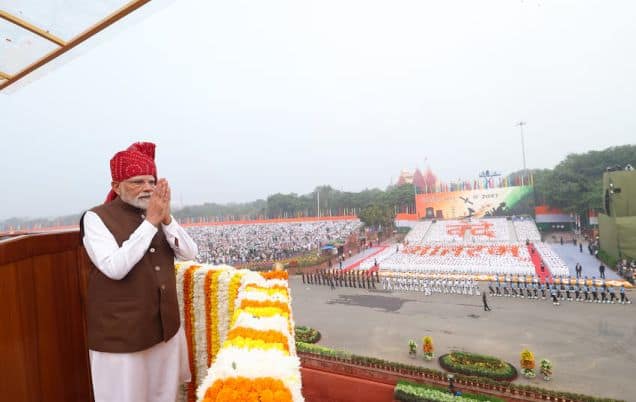
Prime Minister Narendra Modi today addressed a series of public meetings in Hanumangarh, Sikar and Jaipur in the poll-bound state of Rajasthan. The rallies witnessed huge crowds of supporters turning in to listen to the Prime Minister in the last leg of election campaigning before Rajasthan heads to the polls on 7th December.


Beginning his address in Hanumangarh, PM Modi took on the Congress party heads on for failing to keep the Kartarpur Corridor in India at the time of the country’s Partition in 1947. He said that their failure to arrange for Indians to visit the holy Sikh shrine of Kartarpur Sahib in Pakistan despite ruling the country for seven decades shows the utter neglect and ignorance that the Congress has for Indian culture. He further reminded people that the successful inaugural of the Kartarpur Corridor in recent days has been made possible by the power of every single citizen’s vote, all the votes that voted the BJP in power in Rajasthan and in the Centre.


The rally in Sikar witnessed Prime Minister Modi again blasting the Congress leaders for suggesting that the PM should not begin his rallies by saying ‘Bharat Mata Ki Jai.’ He said, “They should be ashamed of themselves for saying this and disrespecting our Motherland.”


Taking a jibe at Congress leader Shri Ashok Gehlot’s remarks on who would be the Chief Minister of Rajasthan, the PM said, “Congress' Ashok Gehlot Ji, when he was asked who would be the CM of Rajasthan, he answered - "What kind of question is this? Does anyone know Kaun Banega Crorepati?" Congress must tell do they want to come in power to become Crorepati (a millionaire)!”


He further scathingly criticized the Congress party leaders for calling the Army Chief of India ‘a goon.’ He added that such statements of disrespect and insult towards our Army Chief are absolutely unacceptable and such a political party must not be voted to power in Rajasthan.

Addressing his last public meeting for the day in the state capital Jaipur, PM Modi applauded the state government led by CM Vasundhara Raje for constructing 11 medical colleges in Rajasthan in just 4-5 years while it took 65 years for the Congress governments to construct 11 medical colleges in Rajasthan. He asked his supporters to compare the pace of governance activities under the BJP and Congress and vote on the basis of these facts.

Concluding his address, he urged his supporters to come out in large numbers and give the BJP a resounding victory in the upcoming elections.

आज 4 दिसंबर है और आज भारतीय नौसेना का दिवस है और मैं आज ये नौसेना दिवस पर वीरों की धरती से नौसेना को अनेक-अनेक शुभकामनाएं देता हूं। विराट समंदर में शौर्य और साहस का प्रतीक बनी हमारी नौसेना हमारे देश की आन, बान और शान है: PM @narendramodi in Hanumangarh https://t.co/FSr0DctkGn
— narendramodi_in (@narendramodi_in) December 4, 2018
हमारे नौसेना की 6 बेटियों ने दुनिया में कमाल करके दिखाया है। देश की बेटियां मेक इन इंडिया के तहत बनी नाव से पूरे विश्व का समुद्री मार्ग से भ्रमण करके विश्व में हिन्दुस्तान का झंडा गाड़ के हमारी 6 बेटियां लौट आईं: PM @narendramodi https://t.co/FSr0DctkGn
— narendramodi_in (@narendramodi_in) December 4, 2018
70 साल तक कांग्रेस पार्टी सत्ता में रही, लड़ाइयां भी, लड़ाइयां जीती भी, लाहौर में झंडा फहराने की बातें भी हुई लेकिन गुरू नानक देव जी के चरणों में मत्था टेकने का प्रबंध उन्होंने नहीं किया: PM @narendramodi https://t.co/FSr0DctkGn
— narendramodi_in (@narendramodi_in) December 4, 2018
क्यों कांग्रेस को सन 1947 में याद नहीं आया की करतारपुर हिन्दुस्तान में होना चाहिए।
— narendramodi_in (@narendramodi_in) December 4, 2018
आज अगर करतारपुर कॉरिडोर बन रहा है तो इसका क्रेडिट मोदी को नहीं, आपके एक वोट को जाता है: PM @narendramodi https://t.co/FSr0DctkGn
आपने एक ऐसे व्यक्ति को प्रधानमंत्री बताया है जो जीता है तो आपके लिए, जागता है तो आपके लिए, अगर वो जूझता है तो सिर्फ आपके लिए और अगर वो झुकता भी है तो सिर्फ और सिर्फ आपके लिए: PM @narendramodi https://t.co/FSr0DctkGn
— narendramodi_in (@narendramodi_in) December 4, 2018
5 साल पहले अखबार में हेडलाइन होती थी – आज कोयले में इतना घोटाला हुआ, 2जी का घोटाला हुआ, पनडुब्बी में घोटाला हुआ, इसने चोरी की, उसने लूट लिया… ऐसी ही खबरें आती थी।
— narendramodi_in (@narendramodi_in) December 4, 2018
आज सरकार बने इतने साल हो गए अब ऐसी खबरें नहीं आती, देश के पैसों की लूट बंद हो गई: PM @narendramodi
सेना तो पहले भी थी, वीरता तो पहले भी थी, वीर जवान तो पहले भी थे, उनके पास शस्त्र पहले भी थी, सबकुछ था।
— narendramodi_in (@narendramodi_in) December 4, 2018
हमारे जवानों ने सर्जिकल स्ट्राइक करके दुश्मनों को मुंहतोड़ जवाब देने का काम किया है: PM @narendramodi https://t.co/FSr0DctkGn
अगर सरदार पटेल देश के पहले प्रधानमंत्री बने होते तो मेरे देश के किसानों की यह हालत न होती।
— narendramodi_in (@narendramodi_in) December 4, 2018
एक ही परिवार की 4 पीढ़ी जिनको न खेत की समझ है न किसान की समझ है उन्होंने ऐसी नीति बनाई कि मेरे देश का किसान बर्बाद हो गया: PM @narendramodi https://t.co/FSr0DctkGn
कांग्रेस वालों ने हवा बना दी कि हम तो सत्ता में आ ही रहे हैं। 5 साल हम 5 साल वो... लेकिन यही भैरोंसिंह शेखावत जी की सरकार थी जिन्होंने कांग्रेस का ये भ्रम भी तोड़ दिया था।
— narendramodi_in (@narendramodi_in) December 4, 2018
अब उन्ही के राग दरबारी लिख रहे हैं कि कांग्रेस से सीखना चाहिए कि जीती हुई बाज़ी कैसे हारते है: PM
कोई दुविधा नहीं है कि भाजपा की विजय निश्चित है अब राजस्थान की जनता को विकास चाहिए और यहां की जनता को भरोसा है दिल्ली में मोदी सरकार और राजस्थान में वसुंधरा जी ही लोगों के सपने को पूरा कर सकती हैं: PM @narendramodi https://t.co/FSr0DctkGn
— narendramodi_in (@narendramodi_in) December 4, 2018
Congress has come up with a "fatwa" that I should not begin rallies with "Bharat Mata Ki Jai"... How can they deny this? They must be ashamed of even saying such a thing. This shows their disrespect for our Motherland: PM @narendramodi https://t.co/5zyeugCZMr
— narendramodi_in (@narendramodi_in) December 4, 2018
Congress' Ashok Gehlot Ji, when he was asked who would be the CM of Rajasthan, he answered - "What kind of question is this? Does anyone know Kaun Banega Crorepati?"
— narendramodi_in (@narendramodi_in) December 4, 2018
Congress must tell, do they want to come in power to become Crorepati (a millionaire): PM @narendramodi
A leader of Namdar's Congress party termed our Army Chief as a goon! How can such a thing be accepted? And look how the Congress has even elevated that leader in the party: PM @narendramodi https://t.co/5zyeugCZMr
— narendramodi_in (@narendramodi_in) December 4, 2018
Congress ruined the banks. They got loans for their cronies cleared by making just a telephone call: PM @narendramodi https://t.co/5zyeugCZMr
— narendramodi_in (@narendramodi_in) December 4, 2018
जयपुर हमारे देश की आन, बान, शान रहा है। अगर आईटी की चर्चा होगी तो लोग बेंगलुरु को याद करते हैं लेकिन अगर टूरिज्म की चर्चा होती है तो बात जयपुर से शुरू होती है: PM @narendramodi https://t.co/aDhEiGyEZv
— narendramodi_in (@narendramodi_in) December 4, 2018
आपको फैसला लेना है कि पिछले 70 सालों में देश जैसा चला है वैसे चलने देना है या पिछले 4 वर्षों में देश ने जो गति पकड़ी है उस गति को बरकरार रखना है: PM @narendramodi in Jaipur https://t.co/aDhEiGyEZv
— narendramodi_in (@narendramodi_in) December 4, 2018
65 साल में इतनी सरकारें आकर के गई। दिल्ली में एक परिवार की 4-4 पीढ़ियों ने राज किया लेकिन राजस्थान में इतने सालों में सिर्फ 11 मेडिकल कॉलेज का निर्माण हुआ।
— narendramodi_in (@narendramodi_in) December 4, 2018
वहीं वसुंधरा जी की सरकार ने सिर्फ़ 5 साल में राजस्थान में 11 मेडिकल कॉलेज का निर्माण किया: PM @narendramodi
सोने का चम्मच लेकर पैदा हुए लोगों को सामान्य मानविकी के जीवन के दुख दर्द का कुछ अता-पता नहीं है: PM @narendramodi https://t.co/aDhEiGyEZv
— narendramodi_in (@narendramodi_in) December 4, 2018
वसुंधरा जी ने राजस्थान को बीमारू राज्य की श्रेणी से बाहर निकाला है और Rising Rajasthan की श्रेणी में लाकर के उसे खड़ा कर दिया है: PM @narendramodi https://t.co/aDhEiGyEZv
— narendramodi_in (@narendramodi_in) December 4, 2018
जीवन में बदलाव विकास के द्वारा होगा, व्यवस्थाओं में बदलाव विकास के द्वारा होगा, सपनो को सकार करना होगा तो विकास से होगा, संकल्प को सिद्ध करना होगा तो विकास से होगा... ये राजस्थान की जनता के दिल दिमाग में बैठ गया है: PM @narendramodi https://t.co/aDhEiGyEZv
— narendramodi_in (@narendramodi_in) December 4, 2018
कांग्रेस में अगर हिम्मत है तो वे मुद्दों पर मैदान में आकर बहस करें: PM @narendramodi in Jaipur https://t.co/aDhEiGyEZv
— narendramodi_in (@narendramodi_in) December 4, 2018
देश की जनता कांग्रेस के झूठ को स्वीकार नहीं करती, देश की जनता कांग्रेस के वंशवाद को स्वीकार नहीं करती, देश की जनता कांग्रेस के जातिवाद को स्वीकार नहीं करती, देश की जनता कांग्रेस के संप्रदायवाद को स्वीकार नहीं करती... देश के नौजवान को अब विकास चाहिए: PM @narendramodi
— narendramodi_in (@narendramodi_in) December 4, 2018