You have completed two years as Prime Minister. What do you consider the biggest gain for the government? Is there anything that you feel the government could have achieved but has not yet — any regrets?
From my point of view what we need is not the government’s gain but the country’s gain. The government exists, and should exist, for the benefit of the people, the Janata Janardan. When we assess the last 25 months, we have to do so in comparison to the period before that. When we took office, there was a pervasive atmosphere of gloom and pessimism. Newspapers were filled with scams and their aftermath. In the preceding months, share prices had fallen and India’s stock in the global market place had also fallen. Inflation was high. Above all, the common citizen felt helpless. Today, all of these have disappeared along with the previous government. There is belief and there is hope. A strong foundation has been laid for a takeoff. This transformation from gloom to confidence in the future and from economic decline to sustained growth has the potential to transform India.
As regards regrets, I am not sure if my answer will be to your liking. Before and during the parliamentary elections, there was a section of the media which strongly hoped that we would not win. My regret is that in the last two years, I have not been able to convince or persuade that section regarding our point of view. My challenge is to win over these sceptics, and persuade them of our sincerity and good intentions.
Countries across the world appear to have become more inward-looking; Brexit is one of the signs. Do you think global trade, including movement of people, will suffer in the near future?
The world is witnessing several crucial developments. It is important to view them in their correct perspective, and separate local drivers from regional and global impulses. For centuries it has been clear that for each country its own interests are supreme. It is with supremacy of these interests in mind that each country seeks to build its externalities and connect with other countries in the world. Global linkages can be strengthened by harnessing the interests of other countries. Today, whether it is technology or trade, in movement of human resources or capital and in research and innovation, we live in an interconnected and interdependent world. And, the nations naturally keep their interests in mind even as they forge bonds of economic cooperation with other countries. Regarding Brexit, it is a subject that requires in-depth examination. In this regard, we will take correct decisions keeping in mind our interests.
You have often talked about cooperative federalism. But there has been criticism that you are not accommodating enough of other parties, and other party-ruled states. Delhi, Uttarakhand, West Bengal, have complaints against the Union government. Wouldn’t you like to them along on the path to development?
If you look at the facts, you will find that this government has done more for states, regardless of the party they are ruled by, than any government since Independence. The recommendations of the 14th Finance Commission led to an increase in the states’ share of central taxes from 32% to 42%. Despite advice to the contrary from many civil servants, we decided to accept the recommendations. Initially, some of our critics said the increase would be offset by reduction in centrally sponsored schemes. The figures for fiscal year 2015-16 are now available and they show clearly that even after adjusting for the unavoidable cuts in centrally sponsored schemes, the overall transfer from the Centre to the states has increased by over 21% in 2015-16. The total additional resources transferred to the states, after adjusting for the reduction in centrally sponsored schemes, was nearly Rs 1,44,800 crore. The increased devolution has been made strictly in accordance with the recommendations of the Finance Commission, a non-partisan body appointed during the tenure of the previous government. To give you some examples, the net increase in resources transferred to West Bengal was 37%, to Kerala 38%, to Telangana 25%, to Himachal Pradesh 49% to Uttar Pradesh 22% and to Karnataka 21%. I am proud of my government’s record in treating opposition-ruled states as full and as equal partners in ‘Team India’.
Let me give you another concrete example. The sharp reduction in the Centre’s share of taxes made by the Finance Commission necessitated redesign of centrally sponsored schemes. In fact the Commission had recommended their scrapping. Since Independence, the structure and funding pattern of centrally sponsored schemes have always been decided by the Centre unilaterally. This time, we constituted a sub-group of chief ministers under NITI and gave them the task of evolving a new pattern. This sub-group, which included the chief ministers of Kerala, Uttar Pradesh and Telangana among others, came up with unanimous recommendations and we accepted the recommendations as soon as they were presented. There can be no greater testimony to our commitment to taking along all the states with us on the path of development.
China has constantly created hindrances to India’s interests, be it in trade or more recently NSG. While New Delhi can look Beijing in the eye, how can you leverage your strengths to discourage China from making such adverse interventions?
Your question suggests that international relations are a zero-sum game. I believe that nations can move forward in their own interest in several areas while managing differences in other areas. No country is an island unto itself today. We have to work together. India and China are neighbours, important players in Asia and increasingly significant actors on the global stage. We need to work together more, understand each other’s interests and priorities and be sensitive to mutual concerns and interests. But, I also firmly stand by what our strategic interests are and will continue to pursue them strongly.
How important is winning Uttar Pradesh for you and for your party? Would you look at the verdict as a referendum on the central government?
Uttar Pradesh has its own importance. Keeping in mind the conditions that have been created in the state in the last 15 years, the only way to save the state is through development. And only the BJP can guarantee development. Fifteen years of misrule has resulted in the state declining not just in the field of education, but also in industrial development. In the ranking of the composite educational development index — U-DISE — Uttar Pradesh was at the bottom among all states and Union territories in 2014-15. This ranking was based on four parameters: accessibility of schemes for the people, infrastructure, teachers, and outcomes. So this means Uttar Pradesh is in bad shape on each of these parameters. Our strategy will be to take Uttar Pradesh on the path of development. The Union government has especially approved projects worth more than Rs 1 lakh crore for Uttar Pradesh. Out of this, Rs 68,000 crore is for roads, and Rs 27,000 crore for railway, power and petroleum projects.
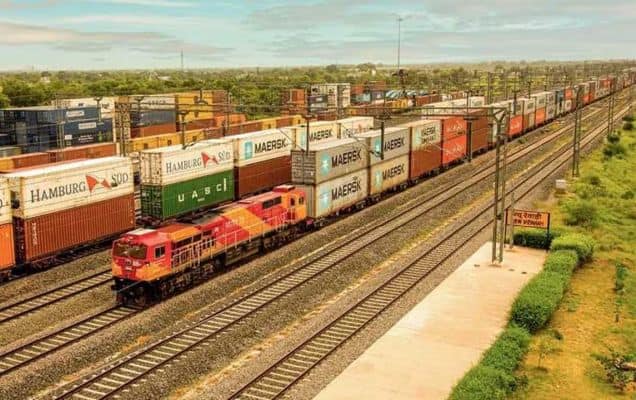
We must pay attention to balanced industrial development in the state. Eastern Uttar Pradesh cannot be neglected. It is an area that is economically, educationally, and industrially backward. To reduce this imbalance, we are investing significantly in the region for the Dedicated Freight Corridor project. Eighteen nodes are proposed along the Dedicated Freight Corridor, which will spur development. The corridor will also provide a boost to chemical, cement, fertiliser and other industries. The Union government is also working to restart the fertiliser plant in Gorakhpur at a cost of Rs 6,000 crore. A new AIIMS is also proposed in eastern Uttar Pradesh. These steps will transform the industrial and economic landscape of eastern Uttar Pradesh.
You have often expressed your exasperation with the Opposition as far as pushing the legislative agenda of the government is concerned. Do you really think you can still work out an amicable formula with the Opposition for meeting your targets?
In a democracy, there will always be parties with their own policies, their own strategies and their own priorities. This is a basic feature of a vibrant democracy. But along with their priorities and compulsions, all parties also have to keep in mind the larger good and keep the country above party considerations. It is for this reason that I had said in Parliament that even in the Lok Sabha, though in arithmetic terms we have a majority of our own, it will always be our intention to seek consensus and proceed on the basis of general agreement. I am happy to see that in two years of this Parliament, it has been extremely productive. Apart from the completion of much legislative work, we have also witnessed healthy debates on topics of national importance ranging from the 125th birth anniversary of Dr Ambedkar, to drought, to the attack in Pathankot. These debates took place in a healthy spirit.
In terms of the legislative agenda, most parties have cooperated with the government in the national interest. In your question, you have lumped together the entire Opposition. The fact is that barring one party, the Opposition has been constructive in pursuing the larger national interest. The whole nation knows that it is only one party which, unable to adjust to the reality of its defeat, has made obstructionism its response to every issue, regardless of the negative consequences for the nation.