



1. The Government of the Republic of India and the Government of the People’s Republic of China (hereinafter referred to as ‘the Two Sides’) recognize that climate change and its adverse effects are the common concern of mankind and one of the greatest global challenges of the 21st century, which needs to be addressed through international cooperation in the context of sustainable development.
2. The Two Sides recall the Agreement on Cooperation on Addressing Climate Change between the Government of the Republic of India and the Government of the People’s Republic of China signed in 2009 and the Memorandum of Understanding (MoU) between the Government of the Republic of India and the Government of the People’s Republic of China on Cooperation on Green Technologies signed in 2010. They decide to further promote bilateral partnership on climate change and enhance the role of this partnership in their overall strategic cooperation partnership through the implementation of this Joint Statement and the MoU as well as the Agreement.
3. The Two Sides emphasize that the United Nations Framework Convention on Climate Change (UNFCCC) and its Kyoto Protocol are the most appropriate framework for international cooperation for addressing climate change. They reaffirm the principles of equity and common but differentiated responsibilities and call for the leadership of developed countries in reducing greenhouse gas emissions and providing finance, technology and capacity building support to developing countries.
4. The Two Sides will work together, and with other Parties, to advance the multilateral negotiations to achieve a comprehensive, balanced, equitable and effective agreement under the UNFCCC in 2015, with a view to ensuring the full, effective and sustained implementation of the UNFCCC. In this context, the Two Sides express their full support for the success of the UN Climate Conference to be held in Paris, France (Paris Conference) this year.
5. The Two Sides reaffirm that the 2015 agreement shall be in full accordance with the principles, provisions and structure of the UNFCCC, in particular the principles of equity and common but differentiated responsibilities and respective capabilities, reflecting different historical responsibilities, development stages and national circumstances between developed and developing countries. The 2015 agreement shall address mitigation, adaptation, finance, technology development and transfer, capacity building and transparency of action and support in a comprehensive and balanced manner.
6. The Two Sides stress the equal importance and urgency of implementing the outcomes of the Bali Road Map in order to increase the pre-2020 ambition and build mutual trust amongst countries. The Two Sides urged the developed countries to raise their pre-2020 emission reduction targets and honour their commitment to provide 100bn US dollars per year by 2020 to developing countries.
7. As the two biggest developing countries, China and India are undertaking ambitious actions domestically on combating climate change through plans, policies and measures on mitigation and adaptation despite the enormous scale of their challenges in terms of social and economic development and poverty eradication.,.
8. China and India are fully engaged in their domestic preparations for their respective intended nationally determined contributions (INDCs) in the context of the 2015 agreement and will communicate their INDCs as early as possible and well before the Paris Conference.
9. The Two Sides believe that their bilateral partnership on climate change is mutually beneficial and contributes to the global efforts to address Climate Change. In this regard, the Two Sides decide to enhance high-level bilateral dialogue on domestic climate policies and multilateral negotiations and to further strengthen practical bilateral cooperation, including in areas of clean energy technologies, energy conservation, energy efficiency, renewable energy, sustainable transportation including electronic vehicles, low-carbon urbanization and adaptation.
Published By : Admin |
May 15, 2015 | 10:34 IST
-
Share
-

-

-


Login or Register to add your comment
Explore More

Popular Speeches
প্রধান মন্ত্রীনা শ্রী রাম জন্মভুমি মন্দির দ্বাজরোহন উৎসবতা পীখিবা ৱারোলগী মৈতৈলোন্দা হন্দোকপা


Nm on the go
Always be the first to hear from the PM. Get the App Now!

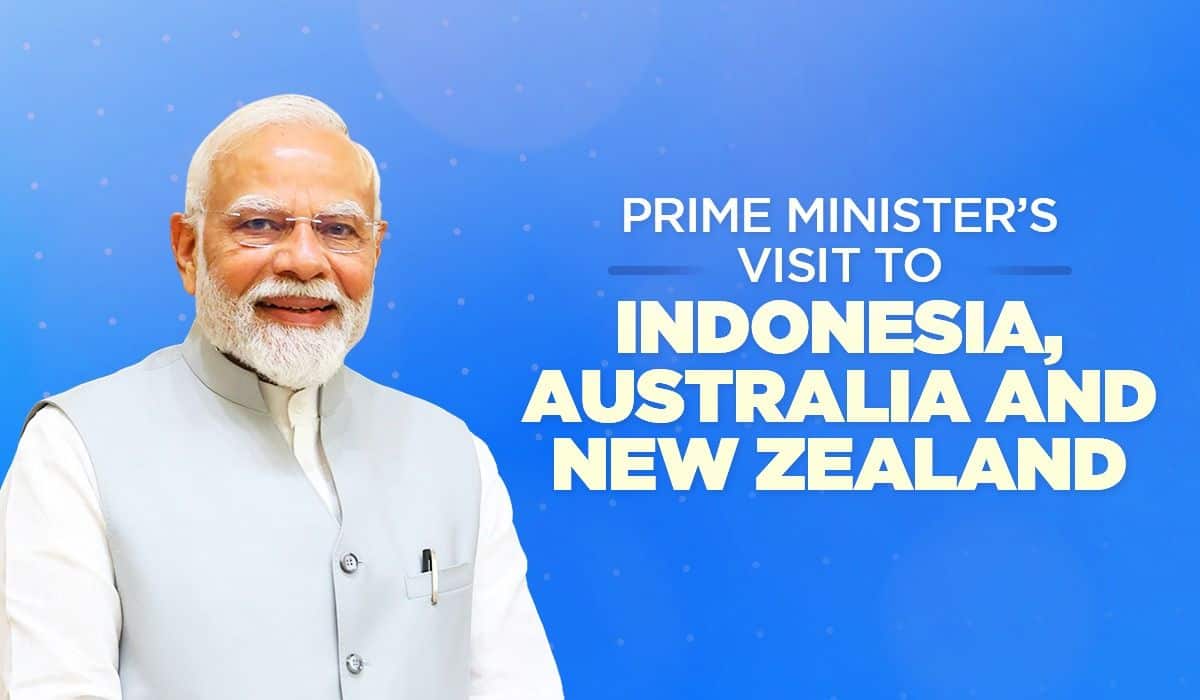
Prime Minister’s visit to Indonesia, Australia and New Zealand
July 03, 2026
-
Share
-
-
-
At the invitation of the President of the Republic of Indonesia, H.E. Mr. Prabowo Subianto, Prime Minister Shri Narendra Modi will pay a visit to Indonesia from 6-8 July, 2026. This will be Prime Minister’s fourth visit to Indonesia and his first bilateral visit since the elevation of India-Indonesia ties to the level of Comprehensive Strategic Partnership in May 2018. During the visit, Prime Minister will hold bilateral discussions with President Prabowo and review the progress made in the partnership. In Jakarta, Prime Minister will address a large gathering of the Indian Diaspora. India and Indonesia share historical and warm people-to-people ties. In keeping with these special bonds, Prime Minister will visit the Prambanan Temple complex at Yogyakarta, a prominent UNESCO world heritage site in Indonesia.
From Indonesia, at the invitation of the Prime Minister of Australia, the Honourable Anthony Albanese MP, Prime Minister will travel to Melbourne from 8-10 July, 2026. In Melbourne, Prime Minister will hold bilateral discussions with Prime Minister Albanese. He will also call on the Governor General of Australia, the Honourable Ms Sam Mostyn AC. During his visit, Prime Minister will also participate in the India-Australia CEOs Forum, where he will address a gathering of top business leaders from both countries. Prime Minister will also address a large gathering of the Indian Diaspora, who constitute a strong pillar of the India-Australia relationship.
From Melbourne, at the invitation of the Prime Minister of New Zealand, Rt Honourable Christopher Luxon, Prime Minister will travel to Auckland for a state visit from 10-11 July, 2026. This will be the first state visit of an Indian Prime Minister to New Zealand in four decades. In Auckland, Prime Minister will hold bilateral discussions with Prime Minister Luxon and review the entire gamut of the bilateral relationship, which has seen significant progress in the last two years, especially in the areas of trade and commerce and defence. While in Auckland, Prime Minister will also interact with prominent business and sports personalities. In a reflection of the strong people-to-people ties that exist between India and New Zealand, Prime Minister will address a large gathering of the Indian Diaspora during the visit.


Posted via www.narendramodi.in