



1. H.E. Mr. Narendra Modi, Prime Minister of the Republic of India, is currently paying an official visit to China at the invitation of H.E. Mr. Li Keqiang, Premier of the State Council of the People’s Republic of China. Prime Minister Modi called on H.E. Mr. Xi Jinping, President of the People’s Republic of China and held talks with H.E. Mr. Li Keqiang, Premier of the State Council. He also met with H.E. Mr. Zhang Dejiang, Chairman of the Standing Committee of the National People’s Congress of China. Prime Minister Modi expressed his deep appreciation for the special gestures extended by President Xi Jinping and Premier Li Keqiang during the visit and thanked the Chinese people for the warm welcome accorded to him.
2. Leaders of the two countries reviewed the progress of bilateral relations. The two sides shared the view that President Xi’s visit to India in September 2014 was a significant milestone in the development of bilateral relations. The leaders noted that there is a historic imperative for India and China to enrich their bilateral relations, with the agreement on building closer developmental partnership reached during President Xi’s visit to India as a core component.
3. The leaders agreed that simultaneous re-emergence of India and China as two major powers in the region and the world offers a momentous opportunity for realisation of the Asian Century. They noted that India-China bilateral relations are poised to play a defining role in the 21st Century in Asia and indeed, globally. The leaders agreed that the process of the two countries pursuing their respective national developmental goals and security interests must unfold in a mutually supportive manner with both sides showing mutual respect and sensitivity to each other’s concerns, interests and aspirations. This constructive model of relationship between the two largest developing countries, the biggest emerging economies and two major poles in the global architecture provides a new basis for pursuing state-to-state relations to strengthen the international system.
Strengthening Political Dialogue and Strategic Communication
4. Recognizing the expanding bilateral relationship, the growing international role of India and China and the imperative of forging strategic trust, the leaders agreed to enhance communication through frequent exchanges at the leadership level and by fully utilising the existing dialogue mechanisms.
5. The two sides agreed to regular visits at the level of Heads of State/ Government. Full use will be made of the opportunities provided by the presence of their leaders at various multilateral fora to hold consultations on bilateral relations and issues of regional and global importance.
6. Noting the increasingly important role played by Indian States and Chinese Provinces in advancing the bilateral relationship, the two sides agreed to establish a State/Provincial Leaders’ Forum. The first meeting of the Forum was held in Beijing on 15 May 2015, with the participation of Prime Minister Modi and Premier Li.
7. Acknowledging the contribution of high-level exchanges organised under the aegis of the Ministry of External Affairs of India and the International Department of the Central Committee of the Communist Party of China in fostering cooperation and understanding, the two sides agreed to institutionalise and expand the exchange mechanism.
8. In order to facilitate and promote greater cultural, tourism, economic and people-to-people engagement between the two countries, an additional Consulate General shall be established in each other's country. India shall open a new Consulate General in Chengdu, while China shall open a new Consulate General in Chennai.
9. The two sides believed that enhanced military ties are conducive to building mutual trust and confidence. The Indian side welcomed visit of a Vice Chairman of the Central Military Commission of China to India this year, and the Chinese side invited Indian Defence Minister and other military leaders to visit China this year. The fifth joint counter-terrorism training between the two armies will be held in China in 2015. The two sides will exchange visits of naval ships and hold PASSEX and SAR exercises.
10. The two sides acknowledged the positive role of the Agreements and Protocols that have been signed so far in maintaining peace and tranquillity in the border areas. Committed to enhance border defence cooperation, the two sides will carry out annual visits and exchanges between the two Military Headquarters and neighbouring military commands, endeavour to operationalize the hotline between the two Military Headquarters, expand the exchanges between the border commanders, and establish border personnel meeting points at all sectors of the India-China border areas.
11. The two sides affirmed that an early settlement of the boundary question serves the basic interests of the two countries and should be pursued as a strategic objective by the two governments. Bearing in mind the overall bilateral relations and the long-term interests of the two peoples, the two sides are determined to actively seek a political settlement of the boundary question. They made a positive assessment of the important progress made through the mechanism of the Special Representatives, and reaffirmed the commitment to abide by the three-stage process for the settlement of the boundary question, and continuously push forward negotiation on the framework for a boundary settlement based on the outcomes and common understanding achieved so far, in an effort to seek a fair, reasonable and mutually acceptable solution as early as possible.
12. The two sides will resolve outstanding differences, including the boundary question, in a proactive manner. Those differences should not be allowed to come in the way of continued development of bilateral relations. Peace and tranquillity on the India-China border was recognized as an important guarantor for the development and continued growth of bilateral relations. Pending a final resolution of the boundary question, the two sides commit to implementing the existing agreements and continue to make efforts to maintain peace and tranquillity in the border areas.
Next Steps in Closer Developmental Partnership
13. The two sides resolved to work together to further strengthen their closer developmental partnership as it would provide impetus to economic growth and prosperity of the two countries as well as of their respective regions and the world at large.
14. Taking note of the increase in two-way trade and investment flows in the past few years, the two sides acknowledged its positive contribution to strengthening their overall bilateral relationship and to supporting each other’s growth and development processes. In this regard, it was agreed that both sides will take necessary measures to remove impediments to bilateral trade and investment, facilitate greater market access to each other’s economies, and support local governments of the two countries to strengthen trade and investment exchanges, with a view to optimally exploiting the present and potential complementarities in identified sectors in the Five Year Trade and Economic Development Plan signed in September 2014, including Indian pharmaceuticals, Indian IT services, tourism, textiles and agro-products.
15. The two sides resolved to take joint measures to alleviate the skewed bilateral trade so as to realize its sustainability. Such measures will include cooperation on pharmaceutical supervision including registration, speedier phytosanitary negotiations on agro-products for two-way trade, stronger links between Indian IT companies and Chinese enterprises, and increasing services trade in tourism, films, healthcare, IT and logistics. Both sides will make full use of the India-China Joint Economic Group to work on this. The leaders welcomed the decision to expedite discussion and endeavour to favourably address, in the spirit of mutual cooperation and reciprocity, the issues pertaining to tariff reduction in respect of relevant Indian products under the framework of Asia-Pacific Trade Agreement.
16. The two leaders agreed that the Strategic Economic Dialogue is an important mechanism to explore new areas of bilateral economic cooperation. The next meeting of the Strategic Economic Dialogue, co-chaired by Vice Chairman of NITI Aayog of India and Chairman of NDRC of China, will be held in India during the second half of 2015.
17. The leaders noted with appreciation the positive momentum in investment projects as Chinese companies respond to the invitation to ‘Make in India’ and Indian companies expand their presence in China.
18. The two leaders noted with satisfaction the steps taken and the progress achieved in the Railway sector cooperation including the projects on speed raising on the existing Chennai-Bengaluru-Mysore line, the proposed feasibility studies for the Delhi-Nagpur section of high speed rail link, the station redevelopment planning for Bhubaneswar & Baiyappanahalli, heavy haul transportation training and setting up of a railway university. They welcomed the Action Plan outlining the next steps in the partnership in this key infrastructure sector.
19. The leaders welcomed the signing of the MoU to institute a dialogue mechanism between the NITI Aayog of India and the Development Research Centre of the State Council of China.
20. The two sides expressed their readiness to enhance cooperation between the financial regulators and enterprises of the two countries in support of the building of the Closer Developmental Partnership.
Culture and People-to-people Exchanges
21. Prime Minister Modi and Premier Li attended the Yoga-Taichi demonstration event in Beijing on 15 May 2015. The two sides also agreed to work together to successfully organize events related to the International Yoga Day on 21 June 2015. The leaders welcomed collaboration between the Indian Council for Cultural Relations and Yunnan National University.
22. The leaders noted that enhanced exchanges among education institutions of the two sides will play a positive role in socio-economic development of the two sides. They welcomed the signing of the expanded Educational Exchange Programme.
23. The two sides expressed satisfaction with the progress achieved in the India-China Cultural Exchange Initiative. The two sides will have the annual exchange of 200 youths from each side in the second half of this year.
24. The agreements on establishing a provincial partnership between Karnataka and Sichuan and sister-city relationships between Aurangabad - Dunhuang, Chennai – Chongqing and Hyderabad – Qingdao were welcomed.
25. With a view to foster closer dialogue and mutual understanding, the two sides decided to establish a ‘India-China Think Tanks Forum’, which will meet annually, alternately in India and China. They also agreed to institutionalize the ‘High Level Media Forum’ and tasked the Ministry of External Affairs of India and the State Council Information Office of China to convene it on an annual basis, alternately in India and China. The leaders welcomed the establishment of the Center for Gandhian and Indian Studies at Fudan University, Shanghai.
New Avenues for Cooperation
26. The leaders welcomed continuous enrichment of India-China Closer Developmental Partnership with its expansion into newer areas of cooperation. The leaders welcomed initiation and expansion of cooperation in the following fields and mandated the relevant agencies to implement the projects in a purposeful manner:
i. Enhanced cooperation in vocational training and skill development, including through the signing of the Action Plan on the establishment of Mahatma Gandhi National Institute for Skill Development and Entrepreneurship at Gandhinagar/Ahmedabad in Gujarat;
ii. Initiating cooperation in development of smart cities with identification of GIFT City in India and Shenzhen in China as pilot smart cities for joint demonstration projects;
iii. In peaceful uses of outer space and the peaceful use of nuclear energy;
iv. In the sphere of public health, medical education and traditional medicine;
v. Welcomed the establishment of the Space Cooperation Mechanism between space authorities of India and China and the signing of the 2015-2020 Space Cooperation Outline between the Indian Space Research Organization of the Republic of India and China National Space Administration of the People’s Republic of China. The two sides agreed to reinforce the cooperation in the field of Satellite Remote Sensing, Space-Based meteorology, Space Science, Lunar and Deep Space Exploration, Satellite Navigation, Space Components, Piggy-back Launching Services, and Education and Training.
vi. Noting the recent visit of the Minister of Justice of China to India, the two sides agreed to strengthen cooperation between the law enforcing agencies of the two sides including on measures to enhance welfare of nationals of either side in the prisons of the other side. The two sides welcomed start of discussions on an agreement for transfer of sentenced persons.
Trans-border Cooperation
27. The Indian side expressed appreciation to China for providing flood-season hydrological data and the assistance in emergency management. The two sides will further strengthen cooperation through the Expert-Level Mechanism on the provision of flood-season hydrological data and emergency management, and exchange views on other issues of mutual interest.
28. The two sides recognized that enhancing border areas cooperation through border trade, pilgrimage by people of the two countries and other exchanges can effectively promote mutual trust, and agreed to further broaden this cooperation so as to transform the border into a bridge of cooperation and exchanges. The two sides agreed to hold negotiation on augmenting the list of traded commodities, and expand border trade at Nathu La, Qiangla/Lipu-Lekh Pass and Shipki La.
29. The Indian side appreciated the support and cooperation by the Ministry of Foreign Affairs and the local government of Tibet Autonomous Region of the People’s Republic of China to Indian pilgrims for the Kailash Manasarover Yatra (Gang Renpoche and Mapam Yun Tso Pilgrimage). To further promote religious exchange between the two countries and provide facilitation for Indian pilgrims, the Chinese side would launch the route for the Yatra through Nathu La Pass in 2015.
Shaping the Regional and Global Agenda
30. As two major powers in the emerging world order, engagement between India and China transcends the bilateral dimension and has a significant bearing on regional, multilateral and global issues. Both Sides agreed to not only step up their consultations on developments affecting international peace, security and development but also coordinate their positions and work together to shape the regional and global agenda and outcomes. They agreed to further strengthen coordination and cooperation in multilateral forums including RIC, BRICS and G20, promote the interests of developing countries and the building of a better world. India will support China in hosting the G20 summit in 2016.
31. The leaders welcomed the decision to launch a bilateral consultative mechanism on WTO-related issues as a positive step for enhancing coordination in the context of global trade talks.
32. Both sides reiterated their strong condemnation of and resolute opposition to terrorism in all its forms and manifestations and committed themselves to cooperate on counter-terrorism. They agreed that there is no justification for terrorism and urged all countries and entities to work sincerely to disrupt terrorist networks and their financing, and stop cross-border movement of terrorists, in accordance with the relevant principles and purposes of the UN Charter and international laws. They called for early conclusion of negotiations on the Comprehensive Convention on International Terrorism.
33. The two sides support a comprehensive reform of the United Nations, including recognizing the imperative of increased participation of developing countries in UN’s affairs and governance structures, so as to bring more effectiveness to the UN. China attaches great importance to India’s status in international affairs as a large developing country, and understands and supports India’s aspiration to play a greater role in the United Nations including in the Security Council.
34. The two sides are ready to continue cooperation under the framework of Shanghai Cooperation Organization. China welcomed India's application for full membership of Shanghai Cooperation Organization.
35. The two sides agreed to work together with relevant parties to accelerate the preparation for establishment of the Asian Infrastructure Investment Bank to promote regional infrastructure and economic development.
36. The two sides welcomed the progress made in promoting cooperation under the framework of the BCIM (Bangladesh, China, India and Myanmar) Economic Corridor. Both sides recalled the second meeting of the Joint Study Group of BCIM Economic Corridor, and agreed to continue their respective efforts to implement understandings reached at the meeting.
37. The two sides agreed to broaden cooperation in SAARC.
38. Both sides recognized that APEC has a significant role in advancing regional economic integration and in promoting regional economic growth and prosperity, and welcomes the success of the Beijing APEC meeting. China acknowledged India’s important role in driving the global economic growth, supported the openness of APEC, and welcomed India’s desire to strengthen its link with APEC.
39. The two sides welcomed the India-China Dialogue on Arms Control and Non-Proliferation held in Beijing on April 17, 2015. Noting the commonalities in their approach to global arms control and non-proliferation, they agreed to continue their engagement bilaterally and in multilateral fora on arms control and non-proliferation. The Chinese side took note of India’s aspirations to become a member of the NSG, in a bid to strengthen international non-proliferation efforts.
40. The two sides shared the view that the issue of climate change is of vital importance for the sake of today’s world and future generations. They underscored the importance of working together and with other countries to conclude an ambitious, comprehensive, universal, balanced and equitable climate agreement at the forthcoming CoP 21 to UNFCCC to be held in Paris later this year that will also encourage genuine technology transfer, collaboration for adaptation and mitigation and financial support in meeting this common global challenge. The two sides issued Joint Statement on Climate Change between the Government of the Republic of India and the Government of the People’s Republic of China during the visit.
41. Prime Minister Narendra Modi invited Premier Li Keqiang to visit India at a mutually convenient time. Premier Li accepted the invitation with pleasure.
Published By : Admin |
May 15, 2015 | 10:57 IST
-
Share
-

-

-


Login or Register to add your comment
Explore More

Popular Speeches
প্রধান মন্ত্রীনা শ্রী রাম জন্মভুমি মন্দির দ্বাজরোহন উৎসবতা পীখিবা ৱারোলগী মৈতৈলোন্দা হন্দোকপা


Nm on the go
Always be the first to hear from the PM. Get the App Now!

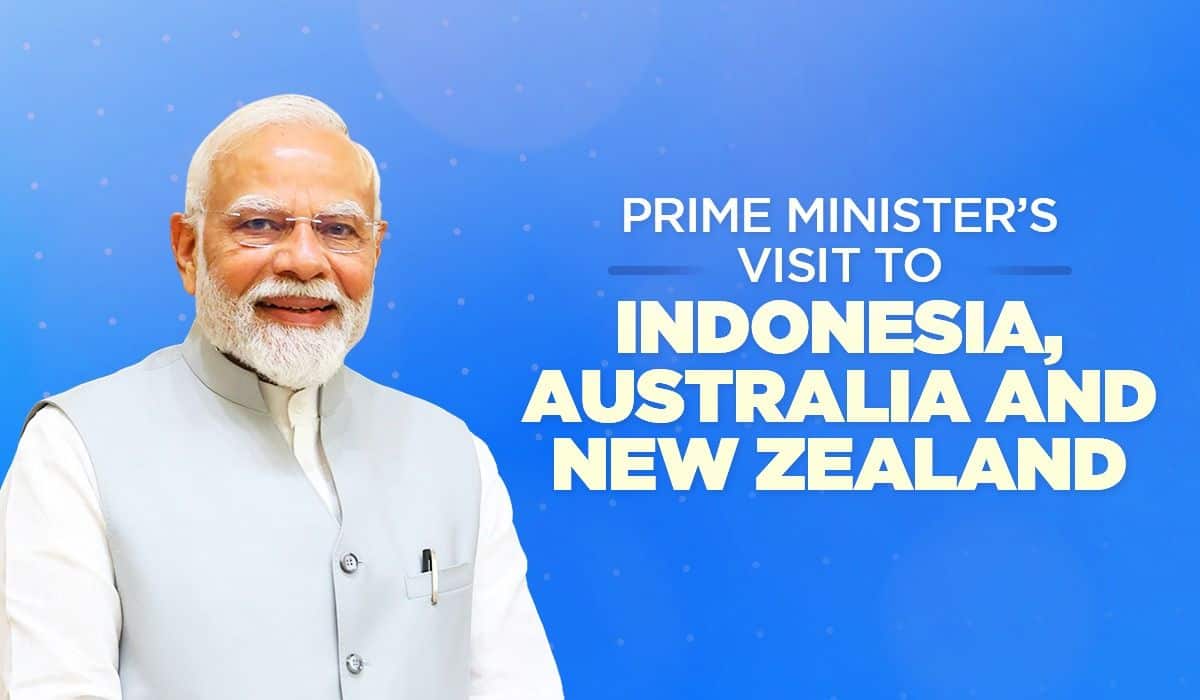
Prime Minister’s visit to Indonesia, Australia and New Zealand
July 03, 2026
-
Share
-
-
-
At the invitation of the President of the Republic of Indonesia, H.E. Mr. Prabowo Subianto, Prime Minister Shri Narendra Modi will pay a visit to Indonesia from 6-8 July, 2026. This will be Prime Minister’s fourth visit to Indonesia and his first bilateral visit since the elevation of India-Indonesia ties to the level of Comprehensive Strategic Partnership in May 2018. During the visit, Prime Minister will hold bilateral discussions with President Prabowo and review the progress made in the partnership. In Jakarta, Prime Minister will address a large gathering of the Indian Diaspora. India and Indonesia share historical and warm people-to-people ties. In keeping with these special bonds, Prime Minister will visit the Prambanan Temple complex at Yogyakarta, a prominent UNESCO world heritage site in Indonesia.
From Indonesia, at the invitation of the Prime Minister of Australia, the Honourable Anthony Albanese MP, Prime Minister will travel to Melbourne from 8-10 July, 2026. In Melbourne, Prime Minister will hold bilateral discussions with Prime Minister Albanese. He will also call on the Governor General of Australia, the Honourable Ms Sam Mostyn AC. During his visit, Prime Minister will also participate in the India-Australia CEOs Forum, where he will address a gathering of top business leaders from both countries. Prime Minister will also address a large gathering of the Indian Diaspora, who constitute a strong pillar of the India-Australia relationship.
From Melbourne, at the invitation of the Prime Minister of New Zealand, Rt Honourable Christopher Luxon, Prime Minister will travel to Auckland for a state visit from 10-11 July, 2026. This will be the first state visit of an Indian Prime Minister to New Zealand in four decades. In Auckland, Prime Minister will hold bilateral discussions with Prime Minister Luxon and review the entire gamut of the bilateral relationship, which has seen significant progress in the last two years, especially in the areas of trade and commerce and defence. While in Auckland, Prime Minister will also interact with prominent business and sports personalities. In a reflection of the strong people-to-people ties that exist between India and New Zealand, Prime Minister will address a large gathering of the Indian Diaspora during the visit.


Posted via www.narendramodi.in