"Haryana is emerging as a top state for investment, and increasing investment means an increase in new job opportunities."
- Prime Minister Narendra Modi
In recent years, Haryana has witnessed a transformation. The state has emerged as a shining example of comprehensive and inclusive growth and development, touching various sectors, including agriculture, infrastructure, and cultural enrichment. This transformation underscores the effectiveness of a 'double engine government', where the synergy between the state and central governments has harnessed the resources at hand into productive assets of growth.
One of the critical areas where PM Modi's government has significantly contributed to Haryana's development is infrastructure. The state infrastructure has experienced a significant boost, focusing on creating world-class facilities that bolster connectivity and economic activities. "Double engine government of Haryana is committed to building world-class infrastructure," said PM Modi while laying the foundation stone for development projects worth nearly Rs. 10,000 crore in Haryana in February 2024. These projects include Metro Rail, which will be developed at almost Rs. 5,450 crore.
In the last ten years, 15 new AIIMS have been approved by the Modi government and 300 new medical colleges constructed across the country. —with one medical college in each district of the state. Adding heft to the state public health infrastructure is AIIMS Rewari, which is to be built at a cost of nearly Rs. 1,650 crore.
The Prime Minister dedicated multiple railway projects to the state, including laying double lames for the Rewari-Kathuwas rail and Bhiwani-Dobh Bhali rail lines. In addition to the new rail lines for Rohtak-Meham-Hansi and Jind-Sonipat, it will boost rail infra and connectivity in the state and further enhance Ease of Living and Ease of Doing Business for lakhs of people. The yearly railway budget of Haryana has been increased to Rs. 3,000 crore in the last ten years compared to an average of Rs. 300 crore before 2014.
PM Modi has given special attention to enhancing high-speed connectivity, reducing logistical costs, and improving the country's business environment. The Haryana Orbital Rail Corridor project sanctioned in 2020 exemplifies how the government is dedicated to building a multimodal logistics hub, effectively linking the region to the Dedicated Freight Corridor network. The government is also developing 11 industrial corridor projects in the country by establishing an integrated multimodal logistics hub at Nangal Chaudhary in Haryana. The state also boasts of economic corridor projects worth Rs. 20,000 crore — dubbed as highways of emerging Bharat, taking development to all corners of the state.
Further, PM Gram Sadak Yojana has played a pivotal role in improving rural connectivity, ensuring that even the remotest villages are linked to the broader network.
Improving the education landscape in Haryana are 124 PM SHRI Schools, with 21st-century modern education promoting modern skills, mother tongue, and a system based on the concept of people-life-culture. The proposed Science City in Faridabad also promises to encourage scientific innovation and outreach in the state.
In agriculture, 2,374 projects have been sanctioned with a loan of Rs. 2,000 crore for the state under the Agriculture Infrastructure Fund since 2020. Today, PM-KISAN has benefitted almost 20 lakh farmers in the state with an assistance of over Rs. 5,000 crore. Farmers have also received due protection under PM Fasal Bima Yojana as they secured over Rs. 8,000 crore in claims against their Rs. 2,394 crore premium since 2016.
As the agriculture sector is growing at a promising pace, the last nine years of PM Modi have proved crucial in building robustness. In the case of procurement at Minimum Support Price (MSP), for example, 283.88 LMT of paddy was procured between 2004-05 and 2013-14; it increased to 539.01 LMT between 2014-15 and 2023-24. Similarly, for wheat, the procurement increased from 552.26 LMT to 719.17 LMT as of February 2024. Sunflower, grown mainly in Haryana, increased its MSP from Rs. 6,400 per quintal (2022-23) to Rs. 6,760 (2023-24). Overall, the crop has seen an 80% rise in its MSP compared to 2014-15. The state's farmers have also secured better market prices and access through the peerless e-NAM initiative.
Regarding fertilisers, Haryana has received a total subsidy of over Rs. 40,000 crore in the last six years. The farmers have further been assisted via schemes like Sub Mission on Agricultural Mechanisation, wherein over 24,000 machines have been distributed to individual farmers, and over 2,300 custom hiring centres, farm machinery banks, and hi-tech hubs have been established.
Recognising the pressing concerns surrounding crop residue and the detrimental impact of stubble burning, the Modi government has taken proactive measures. With a commitment to address farmers' challenges, the government has allocated funds exceeding Rs. 1,000 crore. This financial support has facilitated the distribution of approximately 90,000 machines and the establishment of more than 6,700 custom hiring centres to provide valuable assistance to farmers.
The government has also been at the forefront of making institutional credit accessible for farmers. In Haryana, crop loan accounts have increased from 27.48 lakh in 2018-19 to 35.5 lakh in 2022-23. During the same period, the disbursed crop loan increased from over Rs. 41,000 crore to more than Rs. 60,000 crore. Almost 69% of these agricultural loans are disbursed via the Kisan Credit Card (KCC) scheme. As of March 31, 2023, the state has nearly 23 lakh operative KCC accounts.
The farmers also receive support via the PM Kisan Maan Dhan Yojana—more than 4.3 lakh farmers have registered under the scheme since 2019.
The Modi government's commitment to fundamental development initiatives has been a driving force behind Haryana's progress. The Swachh Bharat Abhiyan has resulted in the construction of millions of toilets, ensuring better sanitation and hygiene practices across the state. Furthermore, implementing the Pradhan Mantri Awas Yojana has addressed the housing needs of the economically weaker sections, ensuring that every citizen has access to a dignified and secure living space.
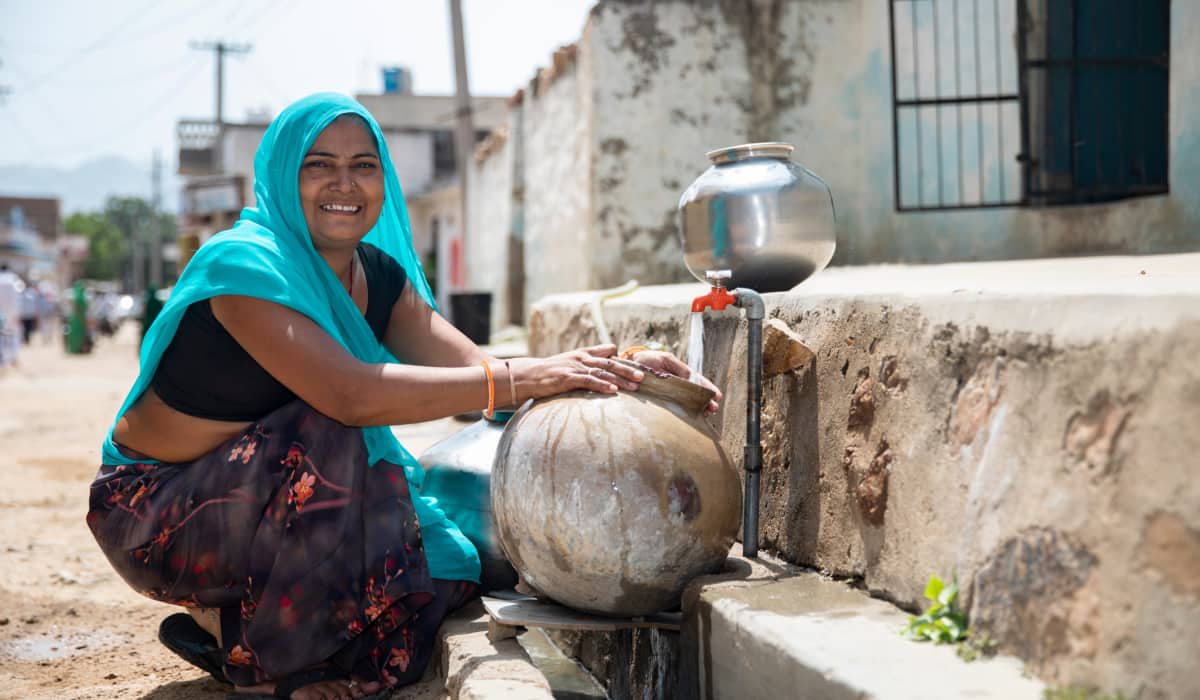
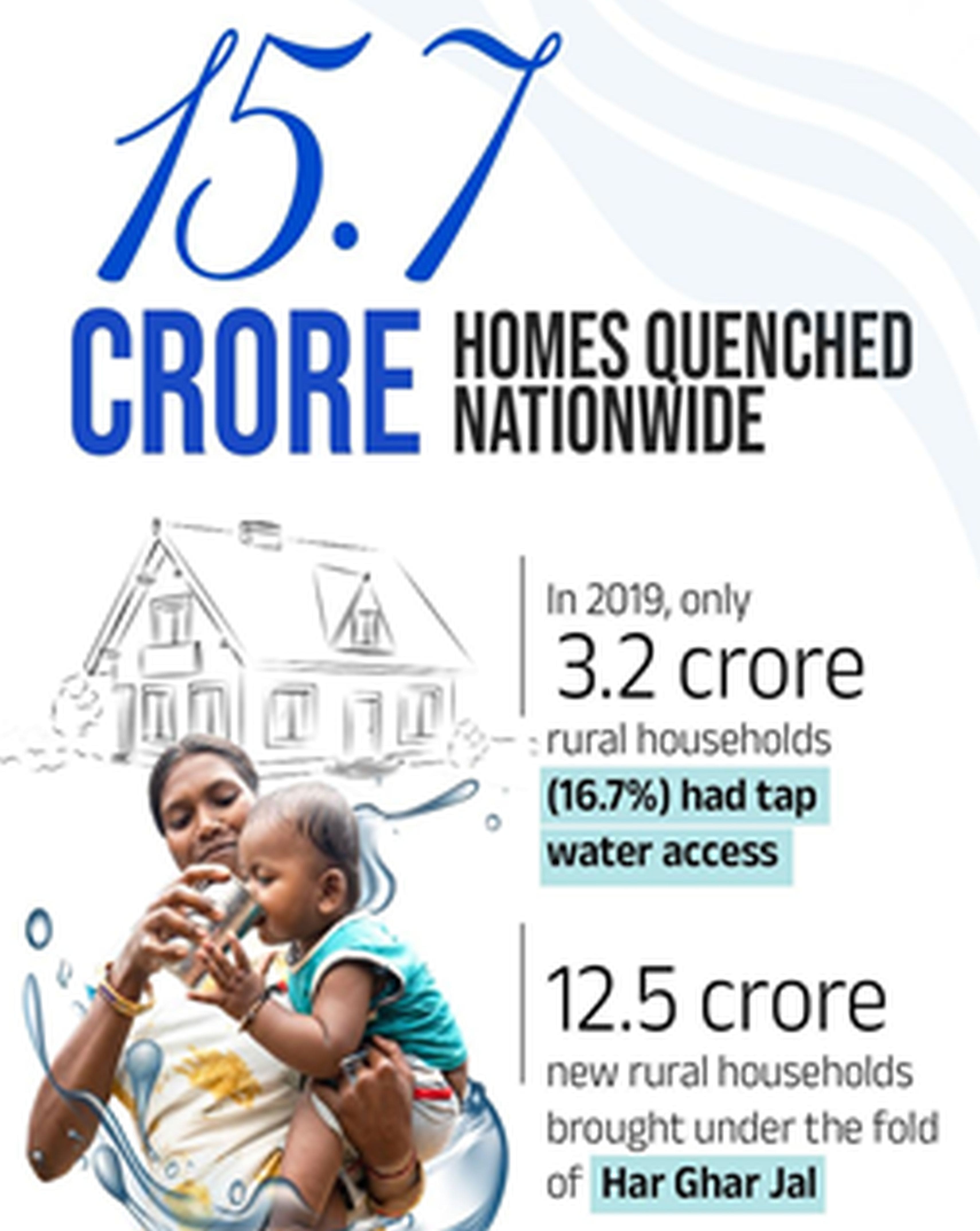
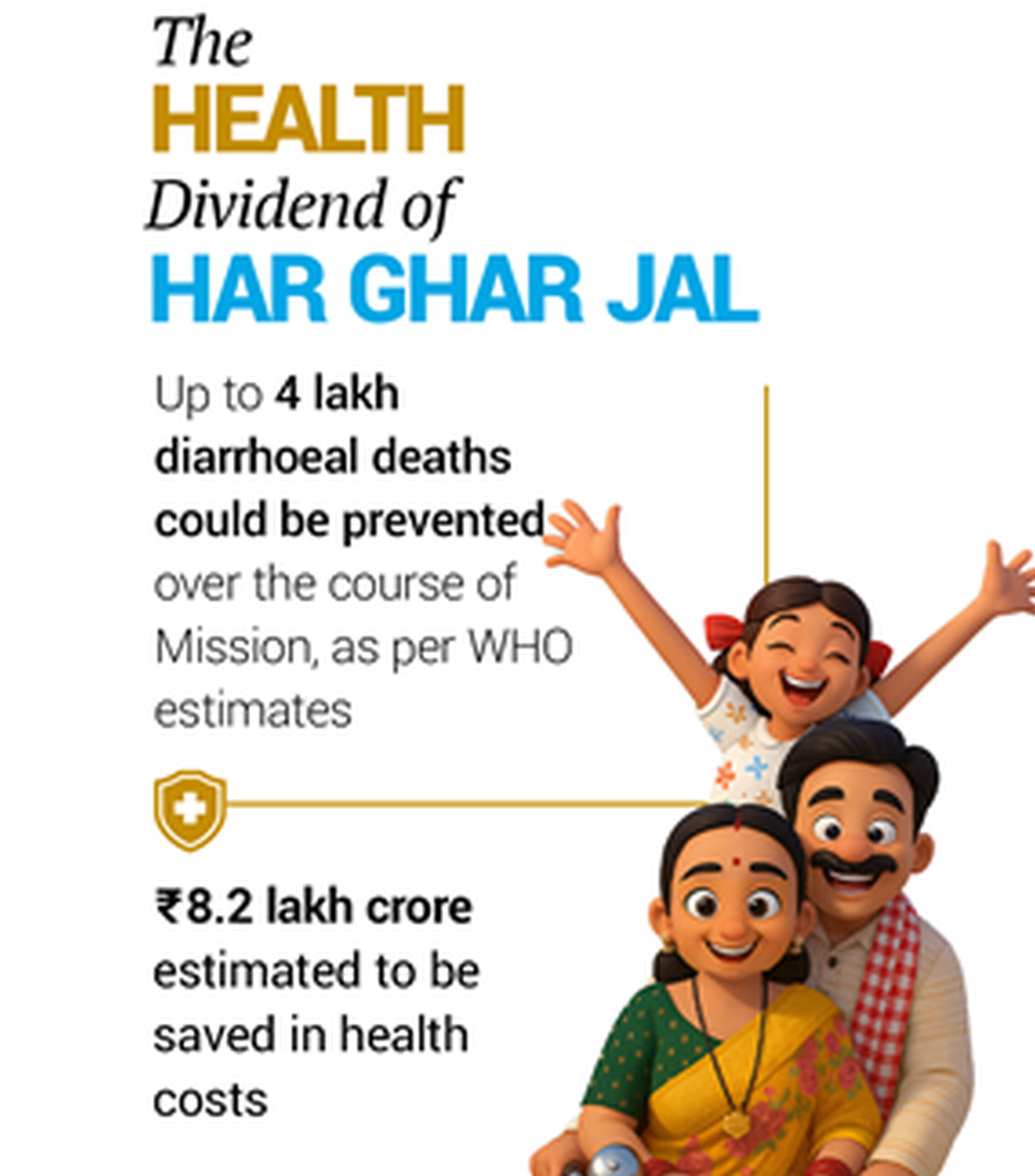
The Jal Jeevan Mission, started by PM Modi's government, ensures that all rural households can access potable tap water. Today, over 95% of the rural population in Haryana has access to potable drinking water.
The state has also improved nutritional outcomes for children, adolescents, pregnant women and lactating mothers via the POSHAN Abhiyan. Today, the state has nearly 14,000 Anganwadi centres (till March 2023) equipped with Poshan Vatikas.
Traditional artisans today receive tremendous support under the PM Vishwakarma Yojana, wherein the government is spending Rs. 13,000 crore to effect constructive change in their lives. Further, the government has guaranteed support to the poor, Dalits, and backward communities via schemes like PM Mudra Yojana and PM SVANidhi (for street vendors). As of March 2023, disbursements under PM SVANidhi rose from 16.78 crore in FY21 to 18.08 crore in FY23.
All these efforts have led to a remarkable reduction in the number of multidimensional poor in the state. According to a NITI Aayog report (2023), the percentage of multifaceted poor has reduced from 11.88% to 7% between 2016 and 2021.
In addition to physical infrastructure and fulfilment of basic needs, PM Modi's government has also recognised the importance of preserving and promoting the rich cultural heritage of Haryana. Initiatives like the 'Ek Bharat Shreshtha Bharat' program have fostered cultural exchange between states, creating a sense of unity in diversity. Haryana's unique cultural identity has been celebrated and showcased nationally, fostering a sense of pride among its residents.
The Prime Minister recently inaugurated Anubhav Kendra Jyotisar, Kurukshetra—a museum that will bring Mahabharata and the teachings of Shri Krishna and Gita to life. Built at around Rs. 240 crore, the museum spans over 17 acres and leverages modern technology such as augmented reality, projection mapping and 3D laser to give visitors an immersive, enriching experience.
The ancient city of Rakhi Garhi, one of the five identified iconic archaeological sites, is being developed. In addition, a Centre of Excellence for Research has been established on the Sarasvati River to validate the antiquity of civilisation that thrived on the banks of the sacred river. Apart from reviving and reclaiming our cultural and civilisational heritage, these efforts promote tourism, further expanding development and investment opportunities in the state.
The journey towards a comprehensive overhaul in fundamental public infrastructure and welfare measures has touched the people of the Haryana state. As the PM says—Viksit Haryana for Viksit Bharat—a spirit of cooperative federalism coupled with a developmental approach will go a long way in realising our collective dream of Viksit Bharat by 2047.