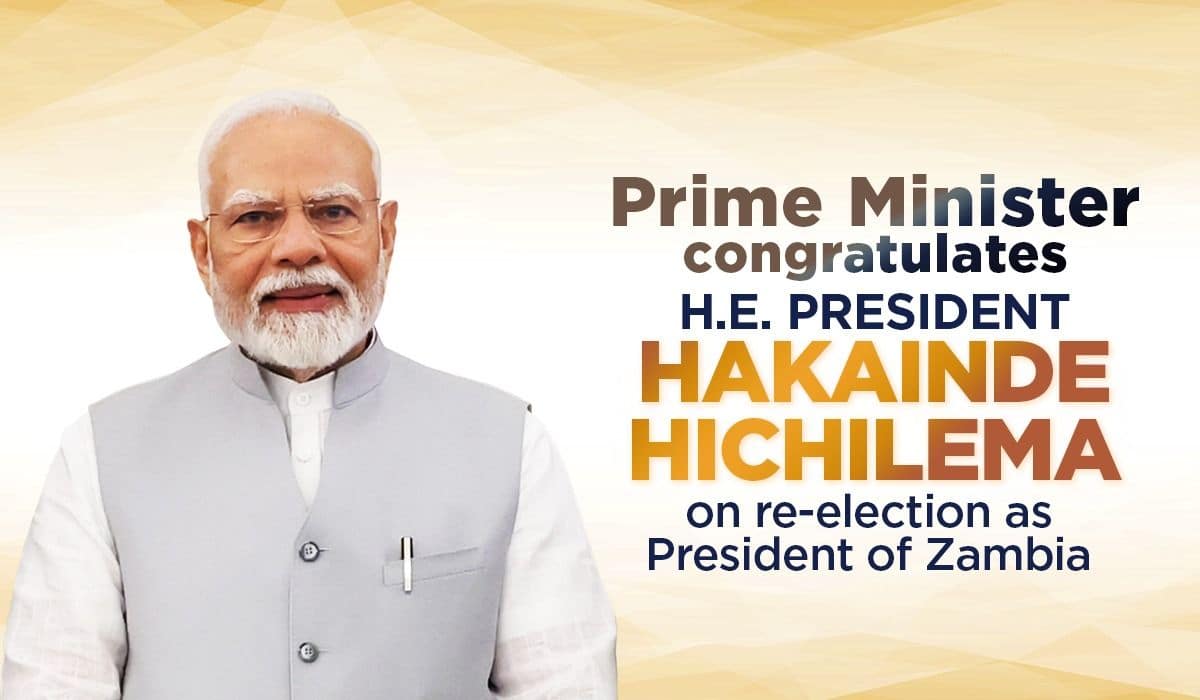
His Excellency Mr. Narendra Modi, Prime Minister of the Republic of India, paid a State Visit to Brazil on 8 July 2025, upon invitation of His Excellency Mr. Luiz Inácio Lula da Silva, President of the Federative Republic of Brazil. In a spirit of friendship and trust that has been the cornerstone of Brazil - India relationship along almost eight decades. The relationship was elevated to Strategic Partnership in 2006.
The leaders exchanged views on a wide range of bilateral, regional and global affairs. They reaffirmed their resolve to bolster the India-Brazil Strategic Partnership, while sustaining their countries’ distinct roles in global affairs, grounded in shared values and oriented by higher purposes, thus contributing to the pursuit of peace, prosperity and sustainable development of their peoples.
Building on strong economic and technological complementarities between India and Brazil, the leaders decided to charter a strategic roadmap to further strengthen bilateral ties over the next decade around five priority pillars:
i. defense and security;
ii. food and nutritional security;
iii. energy transition and climate change;
iv. digital transformation and emerging technologies;
v. industrial partnerships in strategic areas.
The leaders directed their relevant government agencies to work together towards strengthening bilateral cooperation in the five priority pillars and to report on progress made to the Brazil-India Joint Commission.
(i) Defense and Security
Recognizing the convergent views and strategic complementarities in defense and security matters between Brazil and India, the leaders welcomed the growing defense cooperation, including participation in joint military exercises and the exchange of high-level defense delegations. They expressed satisfaction with the signing of the Agreement on the Exchange and Mutual Protection of Classified Information, which will enable deeper cooperation in various strategic areas. They also welcome the establishment of a Bilateral Cybersecurity Dialogue as a platform to deepen cooperation through the exchange of information, experiences, and national perspectives on cybersecurity issues.
Prime Minister Modi expressed his deep appreciation to Brazil for its strong condemnation of the terrorist attack in Pahalgam, Jammu and Kashmir, India, as well as for the sincere condolences and solidarity expressed with the people and government of India. Both leaders unequivocally condemned terrorism, including cross-border terrorism and violent extremism in all its forms and manifestations. Both sides stressed the urgent need for a united international response to terrorism and stressed that such heinous acts have no justification. The leaders reaffirmed their commitment to cooperate in preventing and combating transnational organized crime and terrorism. In this context, they welcome the signing of the Brazil-India Agreement on Cooperation in Combating International Terrorism and Transnational Organized Crime. They praised the adoption of the United Nations Convention on Cybercrime and pledged to support its signing ceremony scheduled to take place in Hanoi in 2025.
The leaders called for concerted actions against all UN designated terrorists and terrorist entities, including those designated by the 1267 UNSC Sanctions Committee like Lashkar-e-Tayyiba (LeT) and Jaish-e-Mohammad (JeM). The leaders reaffirmed strong commitment to continue taking active measures to disrupt the terror financing channels including at the UN and FATF.
President Lula congratulated PM Modi and India for the achievements of its space programme. The leaders agreed on the importance to enhance cooperation on strategic areas, including the peaceful uses of outer space and maritime and oceanic cooperation. Both sides agreed to explore more opportunities for collaboration between their respective space agencies, including in the areas of satellite design, development, launch vehicles, commercial launch and control stations apart from research & development and training.
In the current context of rising geopolitical tensions, the leaders emphasized the need to strengthen multilateralism. They underscored the urgent need to revitalize dialogue and other mechanisms for the peaceful resolution of disputes, affirming that diplomacy is the most effective means of ensuring international peace and security. They highlighted the interdependence between security and development and stressed the importance of enhancing measures for peacebuilding, which are essential to guaranteeing lasting peace.
The leaders reaffirmed their commitment to a comprehensive reform of the United Nations Security Council, including its expansion in both permanent and non-permanent membership categories, with greater representation from developing countries from underrepresented regions such as Latin America and the Caribbean, Asia and Africa. In this context, they reiterated their mutual support for the permanent membership of their countries in an expanded Security Council. The leaders reaffirmed that Brazil and India will continue to work in close coordination on matters of the Security Council reform. India welcomed Brazil’s support to India’s candidature for the non-permanent UNSC seat for the term 2028-29.
The leaders recalled their countries´ historic struggle of overcoming of colonialism and affirmation of sovereignty and coincided on the purposes of building a fairer international order, under the rule of International Law, and attentive to the aspirations of the Global South. Recalling the 80th anniversary of the United Nations in 2025, they expressed their support for an urgent and comprehensive reform of global governance institutions that increase the representation of developing countries in their decision-making bodies and adapt them to contemporary geopolitical realities. Recognizing that the magnitude of today's collective challenges demands an equally ambitious response, they encouraged a comprehensive reform of the UN Charter, including the convening of a review conference, in accordance with its Article 109.
The leaders expressed concern at the recent escalation of the security situation in the Middle East and reiterated that there is no alternative to dialogue and diplomacy in order to address and resolve the multiple conflicts in the region. In this context, the leaders expressed hope that all concerned parties will work towards sustained peace, security and stability in the Middle East.
Both leaders stressed the importance of a negotiated two state solution leading to the establishment of a sovereign viable and independent state of Palestine living within secure and mutually recognized borders side by side in peace and security with Israel. They also reiterated their call for continued negotiations to secure a permanent peace which includes the release of all hostages and the rapid, safe and unimpeded humanitarian access through out Gaza.
The leaders reasserted their steadfast support for UNRWA and stressed the need to fully respect the mandate, bestowed on it by the UNGA, for the provision of basic services to Palestine refugees in its five fields of operations.
The leaders discussed the conflict in Ukraine and regretted the enormous human and material losses, as well as their impact on the countries of the Global South. They welcomed the diplomatic efforts towards cessation of hostilities and called on the parties to continue moving forward towards a peaceful and lasting solution to the conflict.
(ii) Food and Nutritional Security
The leaders reaffirmed their resolve to pursue development, fight inequalities and promote social inclusion policies in their countries. They stressed the urgent need to take concrete action aimed at increasing food and nutritional security by enacting policies and programs aimed to achieve objectives of increasing productivity, including through sustainable agriculture, remunerative returns and income support to farmers, and also providing greater access to health and quality education, with focus on those most affected by poverty, hunger and malnutrition. They recalled the goal of eradicating hunger worldwide by 2030 and renewed their support to the Global Alliance Against Hunger and Poverty, recognizing the crucial role that the Alliance can play in mobilizing resources and knowledge for the implementation of public policies and social technologies of proven effectiveness.
As leaders of major world food producers, they emphasized the critical importance of fair and open agricultural trade as a means of achieving productive, sustainable, and resilient agrifood systems. They reaffirmed the central role of the government in maintaining well-functioning agricultural markets and agricultural policies – including public stockholding for food security purposes- in supporting the livelihoods of farmers and workers across the entire food supply chain, as well as in promoting national, regional, and global food security. They also concurred on the potential to increase bilateral cooperation on agriculture and rural development, including at the multilateral level, with the aim of contributing to ensuring food and nutritional security of both countries and introducing technologies for sustainable agricultural practices. They called on the international community to ensure that agricultural trade is not undermined by unilateral restrictions or protectionist measures introduced under the pretext of environmental, security or climate concerns while respecting open, fair, transparent, inclusive, equitable, non-discriminatory and rules-based multilateral trading system, with WTO at its core.
The leaders underscored the potential of joint research and development aimed at increasing agricultural productivity and improving animal genetics, through the application of reproductive biotechnology techniques and the enhancement of animal nutrition, among other initiatives of common interest. In this context, they encourage relevant R&D institutions from both countries to work together towards achieving positive results in this area.
(iii) Energy Transition and Climate Change
The leaders applauded the outstanding collaboration between India and Brazil in the field of bioenergy and biofuels and renewed their engagement in the Global Biofuels Alliance, of which both countries are founding members. The leaders recognized the urgent need to promote clean, sustainable, just, affordable, and inclusive energy transitions through multiple pathways, while emphasizing the importance of technology-neutral, integrated, and inclusive approaches to deploying a variety of low-emission energy sources, sustainable fuels, and technologies. In this context, they highlighted the critical role of sustainable biofuels and flex-fuel vehicles in decarbonizing the transport and mobility sector and in promoting sustainable development. They also noted that currently Sustainable Aviation Fuel (SAF) remains the major, mature, and viable pathways to reduce emissions from the aviation sector and recognize the role that India-Brazil partnership in SAF can play in the deployment and development of the SAF.
The Prime Minister of India welcomed Brazil’s initiative to launch the Tropical Forests Forever Fund (TFFF), in the lead-up to COP30, and expressed its expectation that the initiative could play a constructive and impactful role. Both leaders underscored the importance of enhancing exchanges and joint efforts aimed at promoting concrete actions to support the establishment of an international mechanism dedicated to the protection and preservation of tropical forests. India expressed its appreciation for the invitation extended by Brazil to join the COP30 Circle of Finance Ministers, with the objective of contributing to the development of the "Baku to Belém Roadmap for USD 1.3 trillion,” and conveyed his government´s interest in making an active contribution to the process.
The leaders concurred that climate change is one of the greatest challenges of our time and needs to be addressed in the context of sustainable development and of poverty eradication. They renew their commitment to broaden, deepen and diversify bilateral cooperation on the matter, and to continue to seek dialogue and coordination towards strengthening the climate change regime under the United Nations Framework Convention on Climate Change (UNFCCC), its Kyoto Protocol and its Paris Agreement. They pledged to continue working together towards implementing the Convention and achieving the goals of its Paris Agreement, in light of equity and the best available science, bearing in mind the gravity and sense of urgency of the global climate crisis. They reiterated their determination to enhance the multilateral response to climate change in a way that also tackles inequalities within and among countries. The leaders also underscored the importance of joint projects in partnership with ISA (International Solar Alliance) and CDRI (Coalition for Disaster Resilient Infrastructure) in third countries. India assured its support to the Brazilian presidency of the 30th Conference of the Parties to the UNFCCC (COP30), to be held in Belém, in November 2025.
The leaders acknowledged the importance of deepening India-Brazil economic and financial relations and expressed a shared commitment to broadening areas of cooperation, including sustainable development, local currency financing, climate finance, and capital markets. They reaffirmed their commitment to strengthening collaboration within relevant multilateral fora and other international financial institutions, such as the G20 Finance Track, BRICS, IBSA, the World Bank, the International Monetary Fund (IMF), the Asian Infrastructure Investment Bank (AIIB), and the New Development Bank (NDB). The leaders agreed to explore the mechanisms for establishing regular consultations in areas of mutual interest.
The leaders supported the adoption of the Seville Commitment as a constructive step towards strengthening financing for development. They reaffirmed their commitment to a stronger, more coherent and more inclusive international economic and financial architecture with the United Nations having a leadership role in promoting development. They emphasized the need to improve access to concessional finance, reverse declining trends in Official Development Assistance (ODA) and urged developed countries to scale up and fulfill their respective ODA commitments towards developing countries.
The leaders reaffirmed their commitment to the full implementation of the 2030 Agenda for Sustainable Development in a balanced and integrated manner, by mobilizing the necessary means of implementation. They also underscored the key role bioeconomy and circular economy can play as a tool to promote sustainable development in its three dimensions – environmental, economic and social.
(iv) Digital Transformation and Emerging Technologies
Recognizing that the Digital Agenda—including Digital Public Infrastructure (DPI), Artificial Intelligence (AI), and other emerging technologies — is vital for the economic development and digital transformation of their societies, the leaders welcomed collaboration in exploring and advancing collaborative frameworks and projects with the use of innovative Digital Public Infrastructures. Both sides agreed to work on forging joint partnerships in this regard and welcomed the signing of a Memorandum of Understanding to expand this collaboration, fostering joint initiatives for capacity building, exchange of good practices, development of pilot projects and institutional cooperation, supporting digital transformation and the provision of quality public services at scale for their citizens. They also pledged to work together in multilateral fora related to digital governance and to pay particular attention to the topic of artificial intelligence and its potential risks and benefits. President Luiz Inácio Lula da Silva congratulated India for leading the next AI Summit in 2026.
The leaders reaffirmed their view on the potential for increasing bilateral cooperation in Science, Technology, and Innovation (STI), based on shared values and complementary strengths of both countries. They agreed on the need to convene the Joint Commission on Scientific and Technological Cooperation, to foster collaboration in priority areas for both countries, such as digital public infrastructure, artificial intelligence, quantum technologies, renewable energy, and outer space. The leaders also underscored the importance of promoting direct connections between researchers, innovation hubs, and startups to foster concrete, results-oriented bilateral partnerships.
(v) Industrial Partnerships in Strategic Areas
In an increasingly challenging global scenario marked by growing protectionism, the leaders reaffirmed their willingness to deepening bilateral economic and trade relations. Recognizing the huge potential for growth in trade flows between their countries, they agreed to explore commercial and technological complementarities between both countries and to further collaborate, including through bilateral partnerships, in the following key industrial sectors: (i) pharmaceutical industry; (ii) defence equipment; (iii) mining & minerals; and (iv) oil & gas sector, including research, exploration, extraction, refining, and distribution.
The leaders welcomed the increasing bilateral cooperation in the pharmaceutical sector, driven by the complementarity between the two countries. They noted with satisfaction the increasing number of Indian pharmaceutical companies with operations in Brazil and further encouraged the establishment of partnerships with Brazilian health and pharmaceutical companies to assist in local production of essential medicines, including generic medicines and active pharmaceutical ingredients (APIs). They also encouraged relevant institutions from both countries to explore joint research and development initiatives to develop new medicines, including for neglected and tropical diseases. They shared the view that further collaboration in pharmaceutical industry will strengthen the health sector in both countries and contribute to building an agenda of equitable access to affordable quality medicines across the Global South.
The leaders noted with interest opportunities for further collaboration in the aviation sector between Indian and Brazilian public and private sector companies and encouraged them to strengthen their collaboration.
The leaders reiterated their commitment to promote stronger bilateral cooperation in the field of defence. Both leaders encouraged their defence industries to explore new avenues of collaboration and to establish industrial partnerships. They further convey their appreciation for the prospects of enhanced cooperation in the domains of land systems, maritime assets and aerial capabilities.
Emphasizing that critical minerals are essential for economic development and national security, as well as for clean energy technologies like solar panels, wind turbines, electric vehicles and energy storage systems, the leaders welcomed joint collaboration between public and private companies from the two sides in new and emerging areas, including strengthening the supply value chains and global competitiveness in mineral exploration, mining, beneficiation, processing, recycling, and refining of critical minerals.
The leaders encouraged oil & gas enterprises from both sides to further engage in bilateral cooperation, including through joint projects in offshore fields, and expressed their willingness to achieve early production and tangible returns. They also encouraged enterprises on both sides to explore new avenues of collaboration, for example in abatement and carbon capture technologies.
Both leaders instructed their respective authorities to identify and address existing non-tariffs barriers in bilateral trade, in order to unlock the full potential of trade exchanges between the two countries.
Both countries commit to adopting measures to facilitate mobility between them, increasing the flow of travel for tourism and business, while working in a coordinated manner to streamline visa processes.
Acknowledging the recent increase in investments in both directions and the successful partnerships established between Brazilian and Indian businesses, both leaders agreed with the establishment of a Commerce and Trade review mechanism, at Ministerial level, aimed at boosting bilateral trade, commerce and investment. The leaders underscored the role of the private sector in that regard and called on business leaders from both countries to continue seeking opportunities for reciprocal business and investment. They agreed to expedite enforcement of the Bilateral Investment Cooperation and Facilitation Treaty, signed on 25 January 2020, and the Protocol amending the Convention for Avoidance of Double Taxation, signed on 24 August 2022, to further encourage entrepreneurs to engage in bilateral business partnerships and joint ventures. They invited entrepreneurs and industry chambers from both countries to continue working together towards this goal through the Brazil-India Business Council.
The leaders welcomed the signing of the MoU between the Department for Promotion of Industry and Internal Trade of India and the Ministry of Development, Industry, Trade and Services of Brazil and encouraged both institutions to implement concrete initiatives to promote innovation, creativity, technological advancement, exchange of best practices, and fostering IP awareness for mutual advantage. They welcomed the recent opening of representative office of Exim Bank of India in Sao Paulo and of ANVISA (Agência Nacional de Vigilância Sanitária - Brazilian Health Regulatory Agency) in Delhi.
Other Areas of Bilateral Cooperation
The leaders noted with satisfaction the progress on bilateral understandings aimed at enhancing cooperation in the areas of culture, health, sports, and traditional knowledge. Recognizing the importance of cultural exchanges for deepening mutual understanding and celebrating the rich cultural diversity of both nations, the leaders encouraged the renewal of the Cultural Exchange Programme for the years 2025-2029, to support new cultural initiatives aiming at fostering a vibrant flow of ideas, arts, and traditions between both countries. They also agreed to engage relevant government agencies in discussions on strategies for the competitive integration of emerging creative industries into international markets, thereby generating economic opportunities and expanding their global cultural reach.
The leaders coincided on the potential to strengthen bilateral educational cooperation. They recalled that Indian students are eligible for Brazil’s Exchange Program for Undergraduate Students (PEC) and Brazilian students are eligible for scholarships offered by the Indian Council for Cultural Relations (ICCR). Both sides encouraged cooperation in training and capacity-building, including in defence training. Prime Minister Narendra Modi expressed his appreciation for Brazil´s participation in the 2025 Annual Conference of the Asia-Pacific Association for International Education (APAIE), the leading higher education event in the Asia-Pacific region, held in New Delhi.
In line with the shared goal of strengthening bilateral cooperation and fostering people-to-people and business-to-business connections, the leaders welcome the signing of the following instruments during the State visit:
• Agreement on Cooperation in Combating International Terrorism and Transnational Organized Crime.
• Agreement on the Exchange and Mutual Protection of Classified Information.
• MoU on Cooperation in Renewable Energy.
• MoU on Agricultural Research between EMBRAPA and the Indian Council of Agricultural Research.
• MoU on Cooperation for the Sharing of Successful Large-Scale Digital Solutions for Digital Transformation.
• MoU on Cooperation in the field of Intellectual Property between DPIIT of India and MDIC of Brazil
The leaders directed the relevant government bodies in each country to collaborate with a view to concluding the following bilateral instruments at the earliest opportunity:
• Agreement on Mutual Legal Assistance in Civil Matters.
• MoU on Defense Industry Cooperation.
• MoU on Sports Cooperation.
• MoU on Archival Cooperation.
• Cultural Exchange Programme (CEP) 2025–2029.
Recalling the higher purposes of peace, prosperity, and sustainable development that guide Brazil and India foreign policies, the leaders of these two vibrant democracies from the Global South, with plural identities and resilient peoples, agreed to further enhance their bilateral channels of dialogue and to promote a growing and diversified cooperation agenda, corresponding to both countries’ distinct role at international affairs as co-architects of a fairer, more inclusive, and more sustainable world for all.
Prime Minister Narendra Modi thanked President Luiz Inácio Lula da Silva for the warmth and hospitality extended to him and his delegation during the State Visit and 17th BRICS Summit and invited President Lula to visit India at a mutually convenient time. President Lula gladly accepted the invitation.