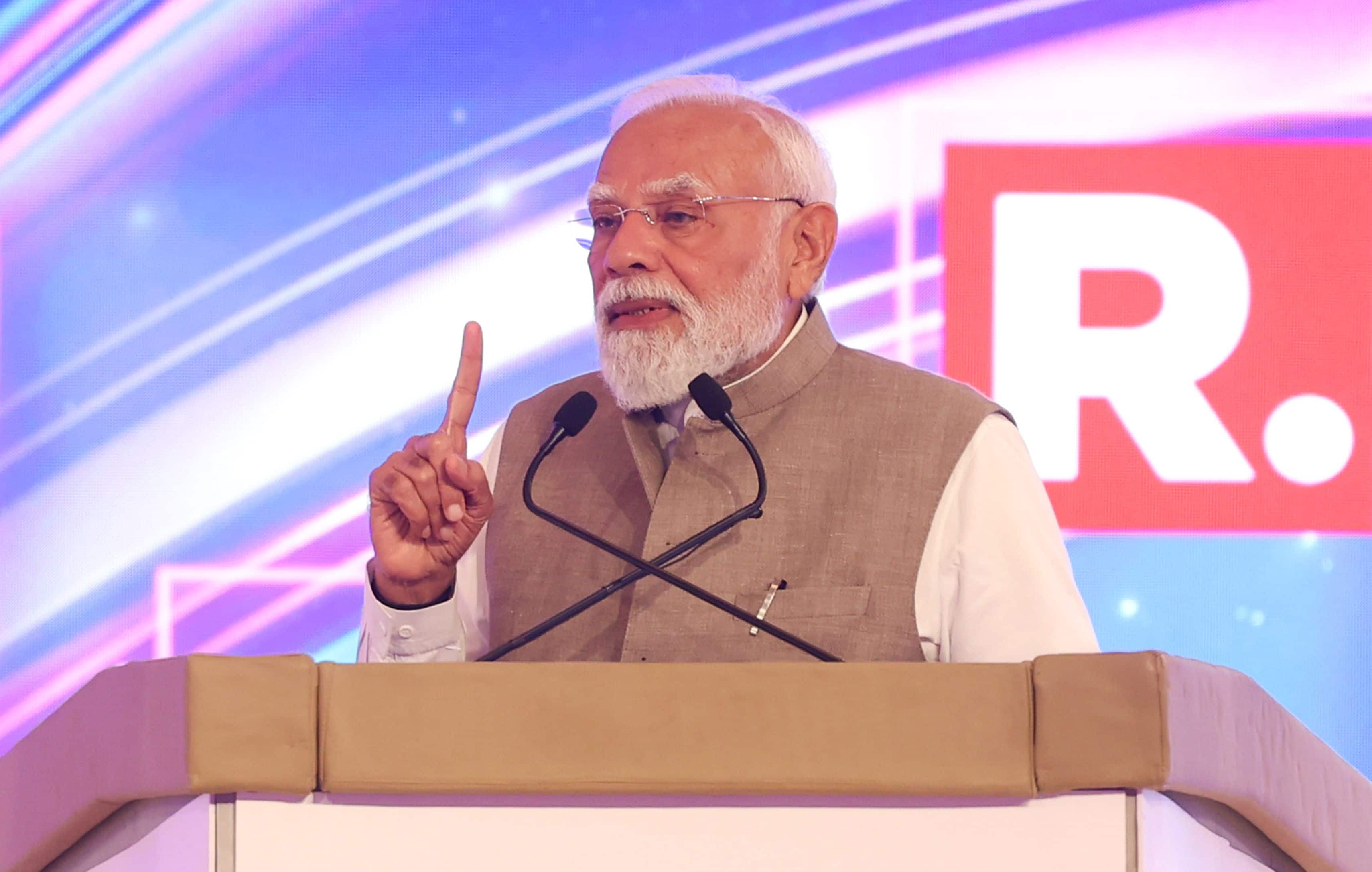
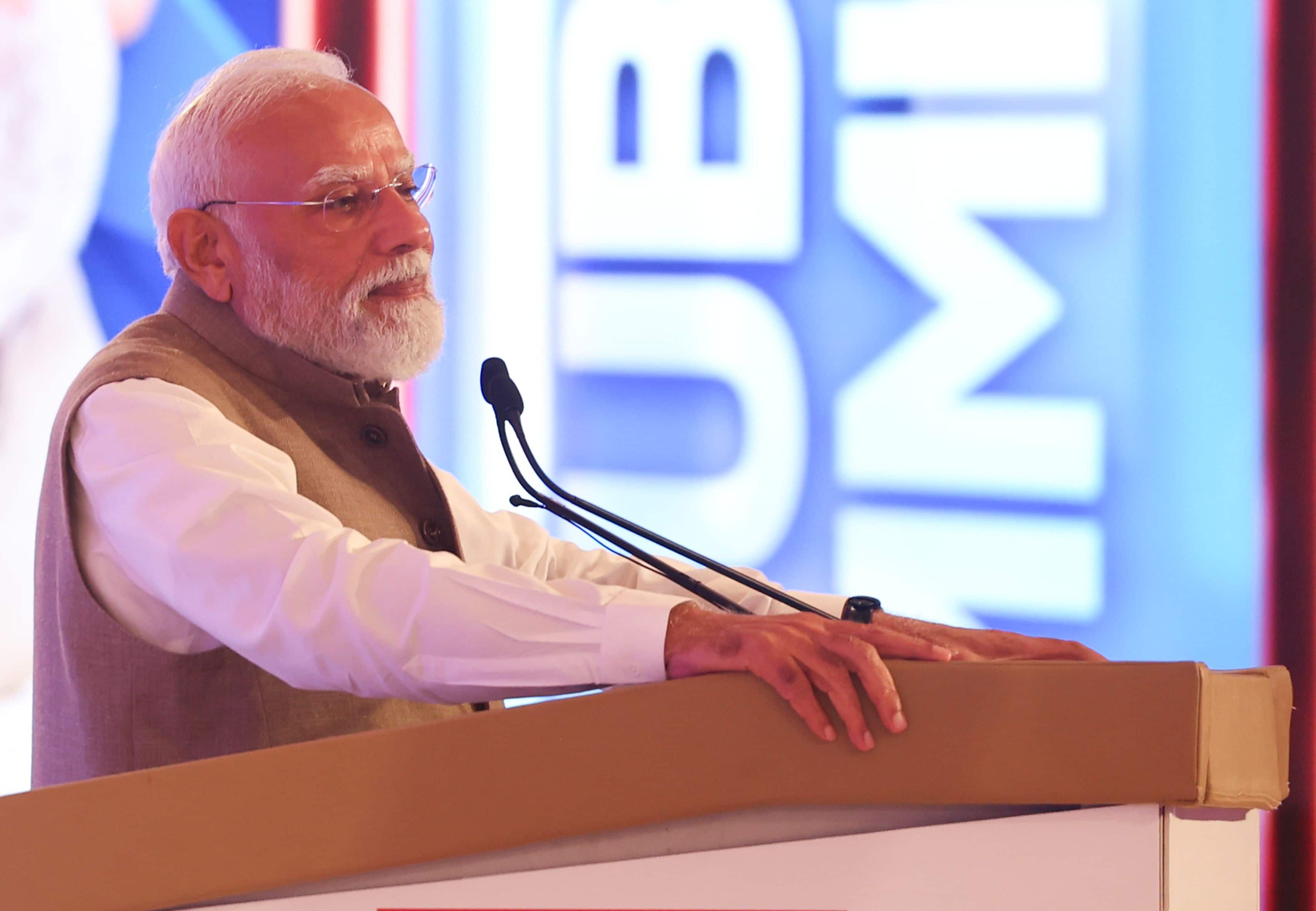
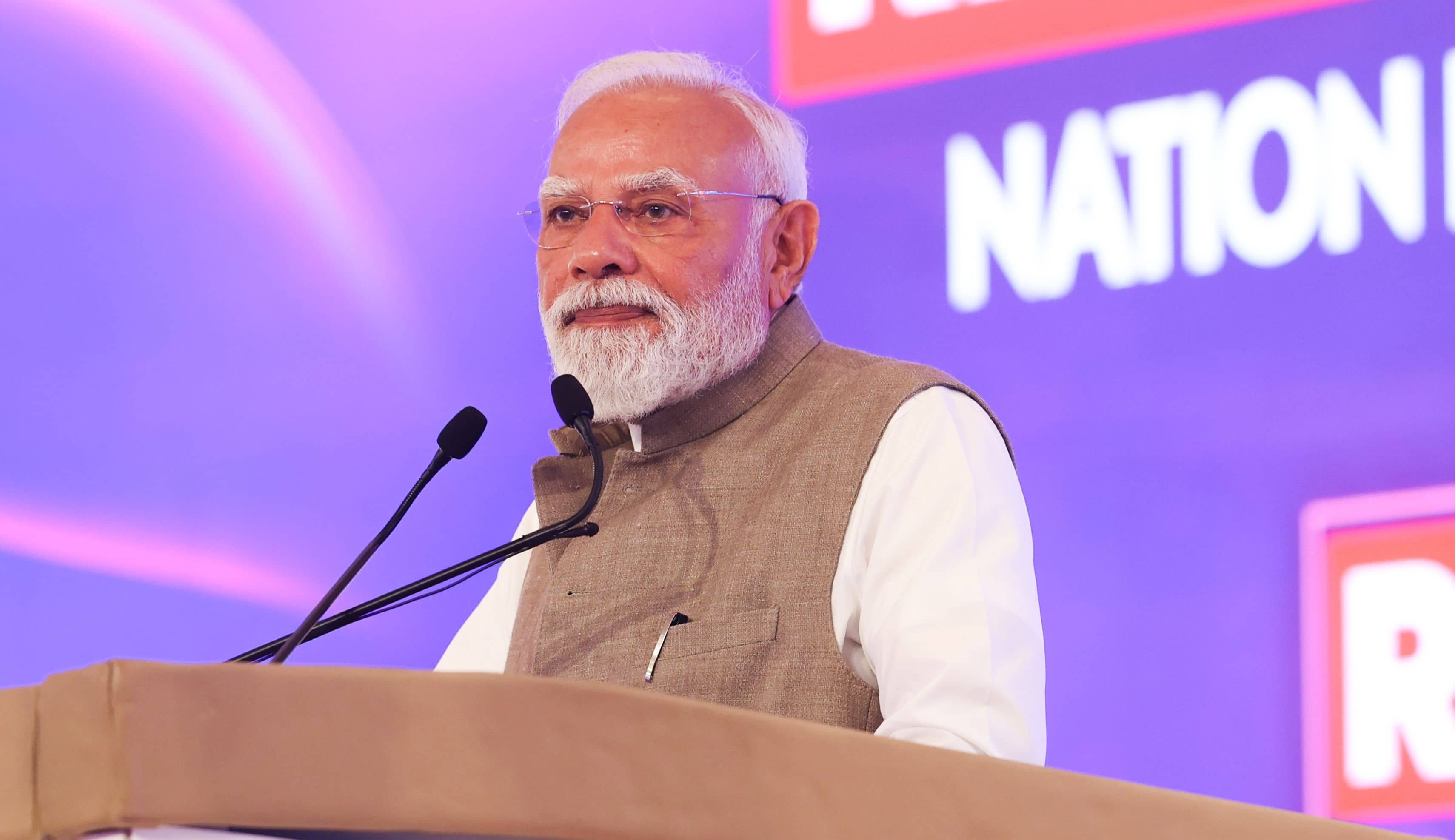
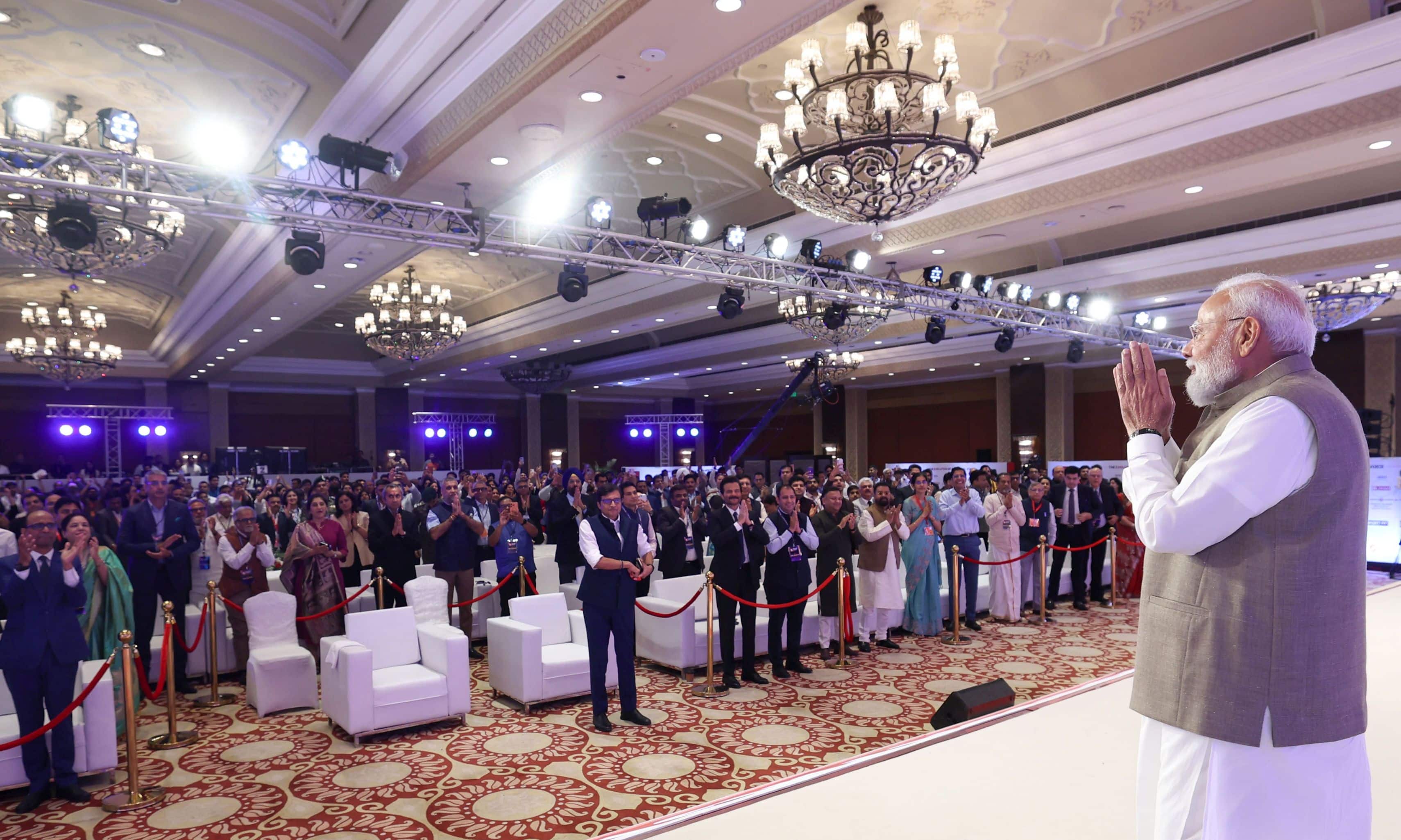
Excerpts from PM’s speech at Samvad, Global Hindu Buddhist Initiative
E-Book: PM Narendra Modi's Address at 'Samvad' Global Hindu-Buddhist Initiative
Most Venerable Sayadaw Dr. Asin Nyanissara, Founder Chancellor, Sitagu International Buddhist Academy , Myanmar;
Her Excellency Mrs Chandrika Bandaranaike Kumaratunga, former President of Sri Lanka;
Mr. Minoru Kiuchi, State Minister for Foreign Affairs of Japan
Pujya Sri Sri Ravi Shankar ji;
My Ministerial colleague Dr Mahesh Sharma and Kiren Rijiju ji;
General N.C. Vij, Director Vivekananda International Foundation;
Mr.Masahiro Akiyama President, The Tokyo Foundation, Japan;
Lama Lobzang;
Distinguished religious and spiritual leaders, Venerables from the Maha Sangha, Dharma Gurus,
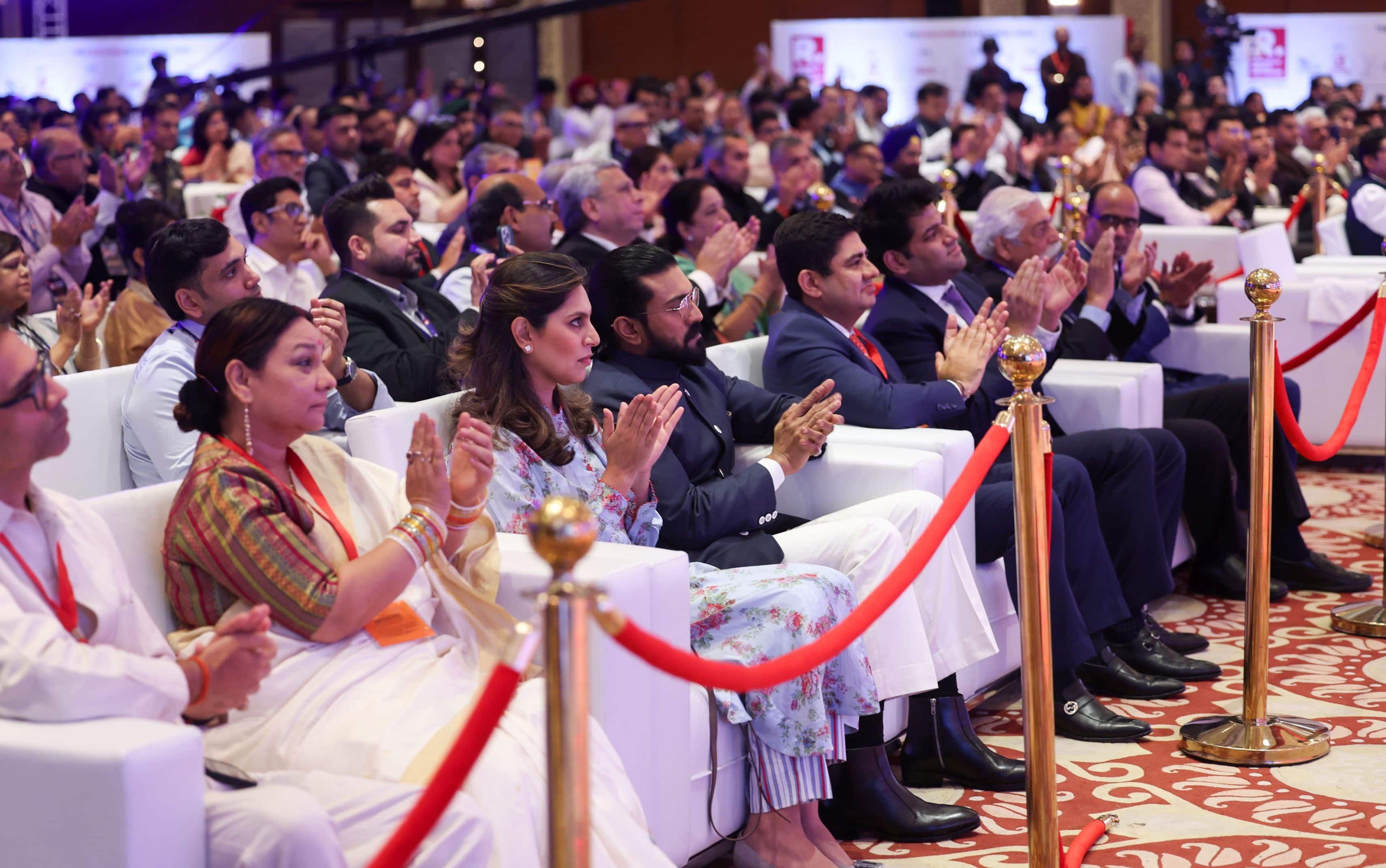
I am delighted to be here, at the inauguration of Samvad, the Global Hindu-Buddhist Initiative on Conflict Avoidance and Environment Consciousness.
This is truly an esteemed gathering of spiritual leaders, scholars and leaders from several countries of the world where Buddhism is a prevalent way of life.
It is a matter of immense happiness that this conference is being held in India, including in Bodh Gaya. India is the ideal venue to host a symposium of this nature. We in India are proud of the fact that it was from this land that Gautama Buddha gave the world the tenets of Buddhism.
The life of Gautama Buddha illustrates the power of service, compassion and, most importantly, renunciation. He was born into privilege. The hardships he faced were relatively fewer. Yet, with age grew a distinct consciousness about human suffering, about illness, about old age and about death.
He was convinced that material wealth is not the sole goal. Human conflicts repulsed him. And then, he set out, on the path to create a peaceful and compassionate society. In those days, he had the courage and conviction to hold a mirror to the society, and sought to break free from practices and systems seen as regressive.
Gautam Buddha was a revolutionary. He nurtured a faith where a human being is at the core, nothing else. The innermost being of man manifests godliness. In a way, he created a faith without God, and a faith where divinity is not about looking anywhere outside, but about looking within. In three words, Appa Deepo Bhavah (अप्प दीपो भव) or be your own light, Gautam Buddha gave humanity the greatest management lesson. Nothing pained him more than mindless conflict that caused human suffering. Non-violence was integral to his worldview.
The message and teachings of Gautama Buddha resonate loudly and clearly with the major themes chosen for this symposium– the themes of avoiding conflicts, moving towards environmental consciousness and a concept of free and frank dialogue.
The three themes may appear independent but they are not mutually exclusive. Infact, they are mutually dependent and supportive.
The conflict in the first theme is among humans, religions, communities and nation-states, also between non-state actors and states, and even the world. Intolerant non-state actors now control large territories where they are unleashing barbaric violence on innocent people.
The second conflict is between nature and man, between nature and development, and also between nature and science. These types of conflicts call for dialogue to bring about conflict avoidance – not just ‘give and take’ conflict resolution negotiations as what is happening today.
Ethical values of personal restraint in consumption and environmental consciousness are deeply rooted in Asian philosophical traditions, especially in Hinduism and Buddhism.
Buddhism, along with other faiths, such as Confucianism, Taoism and Shintoism, has undertaken greater responsibility to protect the environment. Hinduism and Buddhism with their well-defined treatises on Mother Earth can help examine the changes in approach that need to be made.
Climate change is a pressing global challenge. It calls for a collective human action and a comprehensive response. In India, faith and Nature have had a deep link since ancient times. Buddhism and environment are deeply co-related.
The Buddhist tradition, in all of its historical and cultural manifestations, encourages greater identification with the natural world because from a Buddhist perspective nothing has a separate existence. The impurities in the environment affect the mind, and the impurities of mind also pollute the environment. In order to purify the environment, we have to purify the mind.
The eco crisis, in fact, is a reflection of imbalance of mind. Lord Buddha, therefore, accorded importance to the need for preserving natural resources, and created tools related to water conservation and forbid the monks from polluting water resources. The nature, forests, trees and the well-being of all beings play a great role in the teachings of Lord Buddha.
I wrote a book ‘Convenient Action’ which was released by the former President of India, Dr. APJ Abdul Kalam. In my book I have shared my experiences of dealing with climate change as the Chief Minister.
Personally, it is my reading of Vedic literature that educated me about the strong bond between humans and Mother Nature. We are all aware of Mahatma Gandhi’s Doctrine of Trusteeship.
In this context, I want to say that we, the present generation, have the responsibility to act as a trustee of the rich natural wealth for the future generations. The issue is not merely about climate change; it is about climate justice. Again I repeat is not the issue of climate change, it is about climate justice.
In my view, the most adversely affected by climate change are the poor and the downtrodden. When a natural disaster strikes, they are hit the hardest. When there are floods, they are rendered homeless; during a quake, their homes are destroyed; during droughts, they are affected; and during extreme cold too, the homeless suffer the most.
We can’t let climate change keep affecting people in this manner. Which is why I believe the discourse must shift focus from climate change to climate justice.
The third theme — promotion of dialogue – calls for a shift from ideological approach to a philosophic one. Without proper dialogue, neither of the two themes of conflict avoidance is possible, or workable.
The severe limitations in our conflict resolution mechanisms are becoming more and more obvious. We need significant, collective and strategic efforts to prevent bloodshed and violence. It is, thus, no surprise that the world is taking note of Buddhism. This is also a recognition of the historical Asian traditions and values, which can be used to shift the paradigm to conflict avoidance, to move from the path of ideology to philosophy.
The essence of the entire concept of this conference — including the first two themes conflict avoidance and environmental consciousness — is contained in the dialogue part of it which calls for a shift from the “them vs us” ideological approach to philosophic approach. It is necessary to inform the world about the need to shift from ideology — whether religious or secular — to philosophy. When I spoke at the Unite Nations last year, I briefly mentioned that the world needs to shift from ideological approach to philosophic approach. A day later when I addressed the Council for Foreign Relations, I expanded on this concept a little more. The essence of philosophy is that it is not a closed thought, while ideology is a closed one. So philosophy not only allows dialogue but it is perpetual search of truth through dialogue. The entire Upanishad literature is a compilation of dialogue. Ideology only believes in unabated truth. So ideologies which close the gates for dialogue have the propensity for violence while philosophy seeks to avoid it though dialogue.
Thus, Hindu and Buddhist religions are in that sense more philosophies and not just belief systems.
It is my firm belief that the solution to all problems lies in dialogue. Earlier, it was believed that force indicates power. Now, power must come through the strength of ideas and the effective dialogue. We have seen the adverse effects of war. The first half of the 20th century was witness to the horrors of two world wars.
Now, nature of warfare is changing and the dangers are increasing. What took a hundred thousand men or a prolonged battle can now happen through the click of a button, in a span of minutes.
All of us here have a cardinal duty to ensure that our future generations lead a life of peace, dignity and mutual respect. We need to sow the seeds of a conflict-free world and, in this endeavour, faiths of Buddhism and Hinduism have a great contribution.
When we talk about dialogue, what kind of dialogue should it be? It is dialogue which produces no anger or retribution. One of the greatest examples of such dialogue was the one between Adi Sankara and Mandana Mishra.
It is worth recalling and describing this ancient example for our modern times. Adi Sankara, a vedantic who did not give high marks for rituals, was a young man, while Mandana Mishra was an elderly scholar and high ritualist who believed even in animal sacrifice.
Adi Sankara wanted to establish through dialogue and debate with the highest authority on ritualism and that rituals were not necessary for attaining Mukti, while Mandana Mishra wanted to prove that Sankara was wrong in dismissing rituals.
This was how, in ancient India, debates on sensitive issues between scholars avoided such issues being settled in streets. Adi Sankara and Mandana Mishra held a debate and Sankara won. But the more important point is not the debate itself but how was the debate was conducted. It is a fascinating story that will ever remain one of the highest forms of debate for all times for humanity.
It was agreed that if Mandana Mishra lost, he would cease to be a householder (gruhasta) and accept sanyasa. If Adi Sankara lost, he would give up his sanyasa and marry and settle down as householder or in gruhasta life. Mandana Mishra, a high scholar, offered to Adi Sankara, who was young and therefore Mishra considered unequal, to choose a referee of his choice. Adi Sankara chose Mandana Mishra’s wife, a scholar herself, as the referee! If Mandana Mishra lost, she would lose her husband! But see what she did! She asked both Sankar and Mishra to wear fresh garlands and then begin the debate, and said that the one whose garland loses its freshness would be declared as the loser! Why? Because if one gets angry, the body will develop heat, and, as a result, the garland flowers will lose their freshness in that heat. Anger within is a sign of defeat. On this logic, Mandana Mishra was declared as having lost the debate! And he accepted sanyas and became a disciple of Sankara. This demonstrates the vitality of dialogue and that too dialogue without anger or conflict.
Today, in this august gathering, we are people of different nationalities, with different lifestyles, but what binds us is the fact that the roots of our civilisations are in our shared philosophies, history and heritage. Buddhism and Buddhist heritage have been a uniting and binding factor.
They say that this century is going to be an Asian Century . I am very clear that without embracing the path and ideals shown by Gautam Buddha, this century cannot be an Asian century!
I see Lord Buddha doing to our collective spiritual well-being what global trade did to our collective economic well-being and the digital internet did to our collective intellectual well-being.
I see Lord Buddha in the 21st Century across national borders, across faith systems, across political ideologies, playing the role of a bridge to promote understanding to counsel patience and to enlighten us with tolerance and empathy.
You are visiting a nation that is extremely proud of its Buddhist heritage. My hometown of Vadnagar in Gujarat is one of the many sites where Buddhist relics were found and was one of the places visited by Chinese traveller and chronicler, Xuanzang.
The SAARC region is home to the holy sites of Buddhism; Lumbini, Bodh Gaya, Sarnath, Kushinagar . These sites draw pilgrims from ASEAN nations, as also from China, Korea, Japan, Mongolia and Russia.
My Government is doing everything possible to give an impetus to this Buddhist heritage across India, and India is taking the lead in boosting the Buddhist heritage across Asia. This three-day meet is one such effort.
I hope the next three days are full of vibrant and rich discussions, and we are able to sit together and think about the way ahead towards peace, conflict resolution and a clean and green world.
I look forward to seeing you in Bodh Gaya the day after.
Thank You.