"Shri Modi affirmed the need to value the states as the strength of India, rather than considering them as a weakness"
"Coalitions cannot be blamed. It is about what is the aim when the government is formed, and whether it can fulfill the aims: Shri Narendra Modi"
"I want to say urbanisation is not a crisis but an opportunity, seeing it as a crisis has been wrong. Aatma gaav ki ho aur suvidha sheher ki ho, this is what we believe: Shri Modi"

From employment and development of villages to GST and the Federal structure of India, a series of concerns surrounding India’s economic and social well-being were addressed by Shri Narendra Modi at the conference on ‘Economic Growth – The Way Forward’, organized by the Chartered Accountants Association in Delhi, on the afternoon of 27th February, 2014.

One after the other, Shri Modi took questions posed to him, and spoke in detail of his approaches to address each concern. While the question on jobs for youth was duly dealt by Shri Modi when he spoke of the effectiveness of the skill development initiatives started in Gujarat, and called for the need to initiate such measures on the national level, on the question of PSUs and their tendency to shut down in the future, Shri Modi said that the initiative of professionalizing PSUs in Gujarat had gone a long way in ensuring their efficiency and performance in the long run.

Talking about the concern on the Federal structure of the Nation, Shri Modi affirmed the need to value the states as the strength of India, rather than considering them as a weakness. Stating the relevance and effectiveness of a system where the PM and the CMs of the state worked together, in consultation with each other, Shri Modi said, “States are important. And real time functioning should have the PM and the CMs of the states working in tandem. The Federal structure is important in letter and spirit, it is our strength.”

Economic-270214-in1

Shri Modi expressed deep concern over the current state-of-affairs and how the problems of corruption, unemployment and misgovernance were eroding the Nation. “Coalitions cannot be blamed. It is about what is the aim when the government is formed, and whether it can fulfill the aims. Sadly there has been erosion of institutions and the loss has been India's. We keep talking about what will happen after corruption but why can't we think about having no corruption at all,” said Shri Modi, even as he affirmed the need for a policy-driven approach so as to minimize the grey areas.

Answering a question on why the youth from villages had to go to the cities for job opportunities, Shri Modi spoke of the need to ensure equal growth for all sections of the society and emphasized on giving focus towards the development of villages, as much as that of the cities. “Why do the youth have to go to the cities from villages? Can they get the opportunities in the villages? I want to say urbanisation is not a crisis but an opportunity, seeing it as a crisis has been wrong. Also, why just villages, we want everyone to get opportunities wherever they are staying. Aatma gaav ki ho aur suvidha sheher ki ho, this is what we believe,” stated Shri Modi, while adding that for this, due focus must also be laid on developing the agricultural sector by equipping it with technological advancements and thereby increasing the productivity. This way, Shri Modi said, would ensure that more jobs could be created in the agriculture sector.

Addressing the question on whether justice was being granted to the common man, Shri Modi cited the initiative of evening courts introduced in Gujarat and stated how the transfer of cases of the poor to these evening courts had ensuring in speedy delivery of justice. He also applauded the Lok Adalats and their efficiency in ensuring speedy redress of cases. “We need not be sad about the set up, we need to transform them and add life,” stated Shri Modi.

Shri Modi also spoke about the BJP’s support for GST (Goods and Services Tax), but added that right IT infrastructure was required for proper implementation of it. “BJP has never opposed GST. Only that the preparation on the part of the Centre is not done. The concerns of the states must also be addressed,” said Shri Modi.

Offering heartfelt condolences to the families of those who had lost their lives in INS Sindhuratna, Shri Modi duly acknowledged the valuable contribution of the soldiers and said, “Tyag, Tapasya, Balidan. Isme sena ke samne kisi ki tulna nahi ho sakti hai. Aise jawano ko hum naman karte hain.”

Shri Modi addresses conference on economic growth, emphasizes on policy-driven approach to avoid grey areas

Economic-270214-in3

Economic-270214-in4

Explore More
શ્રી રામ જન્મભૂમિ મંદિર ધ્વજારોહણ ઉત્સવ દરમિયાન પ્રધાનમંત્રીના સંબોધનનો મૂળપાઠ

લોકપ્રિય ભાષણો

શ્રી રામ જન્મભૂમિ મંદિર ધ્વજારોહણ ઉત્સવ દરમિયાન પ્રધાનમંત્રીના સંબોધનનો મૂળપાઠ
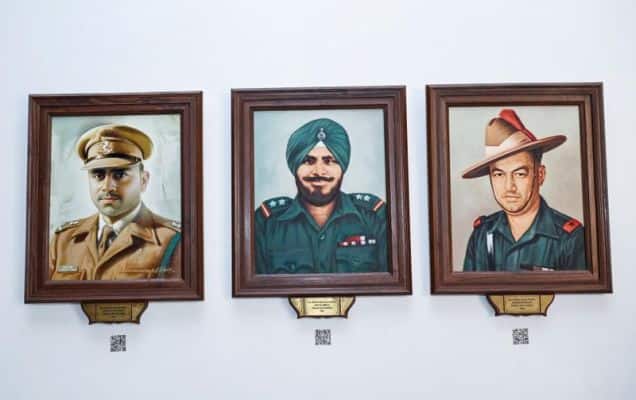
Portraits of PVC recipients replace British officers at Rashtrapati Bhavan

Media Coverage

Portraits of PVC recipients replace British officers at Rashtrapati Bhavan
NM on the go

Nm on the go

Always be the first to hear from the PM. Get the App Now!
...
Prime Minister meets with His Majesty Sultan of Oman
December 18, 2025

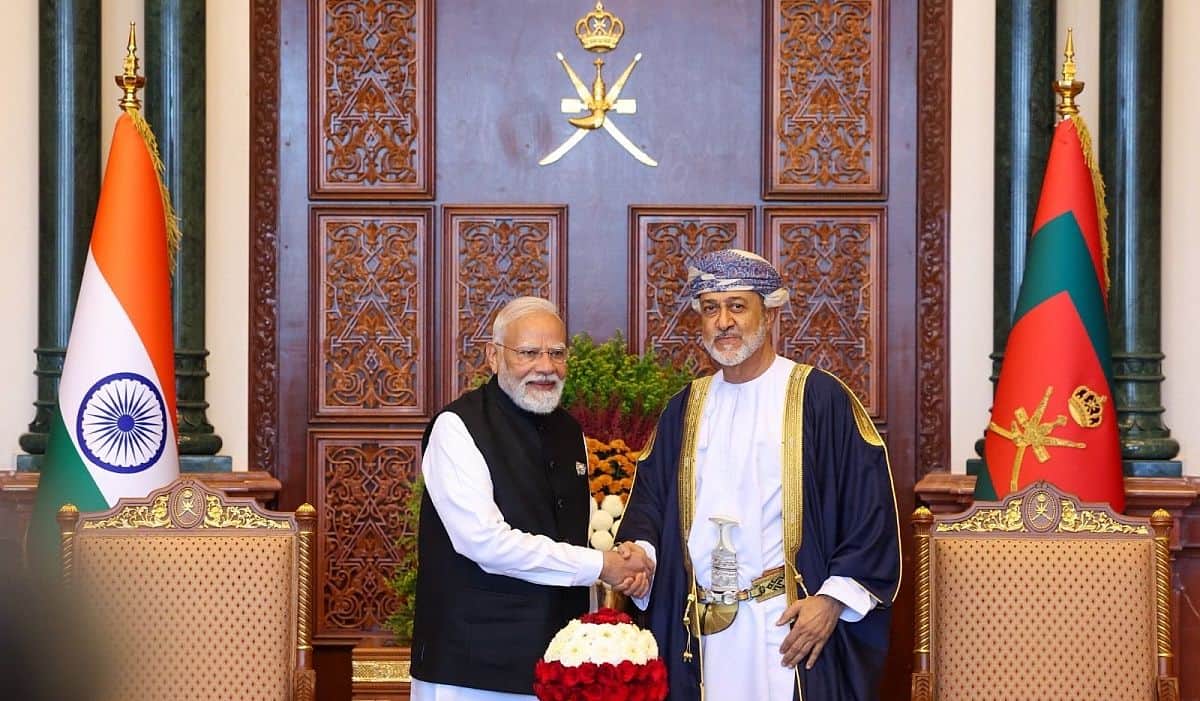
Prime Minister Shri Narendra Modi today held a bilateral meeting with His Majesty Sultan Haitham bin Tarik in Muscat. On arrival at the Royal Palace, Prime Minister was warmly received by His Majesty and accorded a ceremonial welcome.

The two leaders met in one-on-one and delegation-level formats. They comprehensively reviewed the multifaceted India–Oman Strategic Partnership and appreciated the steady growth in bilateral ties. They noted that the visit holds special significance for India-Oman ties as the two countries are celebrating 70 years of the establishment of diplomatic relations this year.

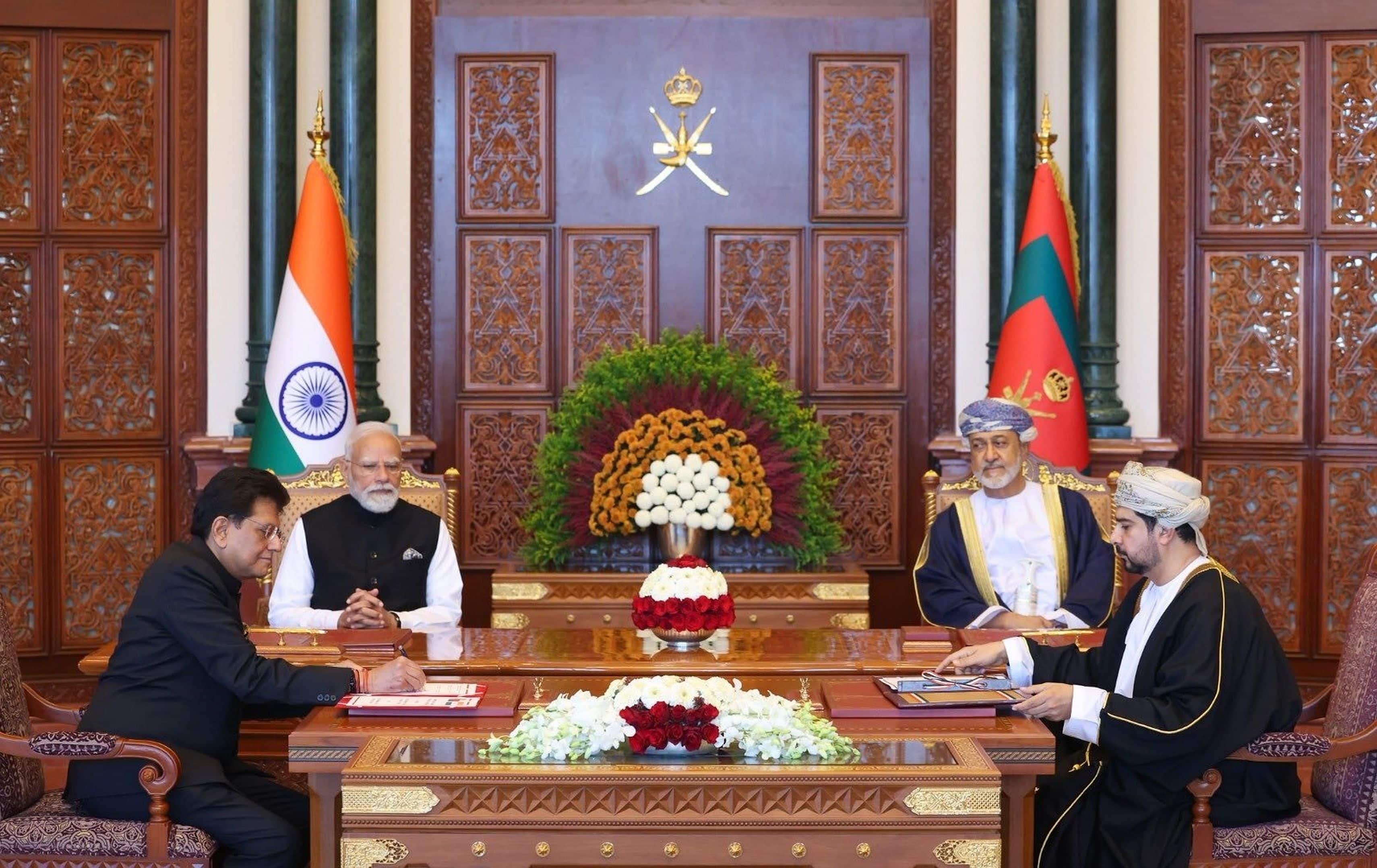
They welcomed signing of the Comprehensive Economic Partnership Agreement [CEPA] as a landmark development in bilateral ties and stated that it will give a major boost to the Strategic Partnership. While expressing satisfaction at bilateral trade crossing US$ 10 billion and two-way investment flows moving forward, Prime Minister underlined that CEPA will significantly promote bilateral trade and investment, create jobs and open a plethora of opportunities in both countries.

The leaders also discussed giving new thrust to energy cooperation through long-term energy arrangements, renewable energy ventures and green hydrogen and green ammonia projects. Prime Minister appreciated Oman joining the International Solar Alliance and invited them to join the Coalition for Disaster Resilient Infrastructure and the Global Biofuel Alliance.

Prime Minister noted that the two countries can benefit from agricultural cooperation including collaboration in the fields of agricultural science, animal husbandry, aquaculture and millet cultivation.

Acknowledging the importance of cooperation in the field of education, the two leaders noted that the exchange of faculty and researchers will be mutually beneficial.

The two leaders also discussed cooperation in the areas of food security, manufacturing, digital technologies, critical minerals, logistics, human-capital development and space cooperation.

On financial services, they discussed cooperation between UPI and Omani digital payment system, RUPAY card adoption and trade in local currencies.

Prime Minister noted that fertilizer and agricultural research were areas of win-win value for both sides and they should work for greater collaboration in these fields, including through joint investment.

The two leaders reaffirmed their commitment to further enhancing defense and security collaboration, including in the maritime domain.

Prime Minister thanked His Majesty for his support towards the welfare of the Indian community in Oman. He noted that several new bilateral initiatives in the fields of maritime heritage, language promotion, youth exchanges, and sports ties will further strengthen people-to-people bonds. They also discussed the rich cultural heritage shared by the two countries, and highlighted the importance of collaboration between maritime museums, and exchange of artefacts and expertise.

The leaders welcomed the alignment between Oman Vision 2040 and India’s goal of becoming a developed nation or Viksit Bharat by 2047, and conveyed their support to each other for meeting the aspirations of their peoples.

The leaders also exchanged views on regional and global developments and reaffirmed their commitment to regional peace and stability.

On the occasion of the visit, the two sides, in addition to CEPA, also signed MoUs/ arrangement in the fields of maritime heritage, education, agriculture, and millet cultivation.