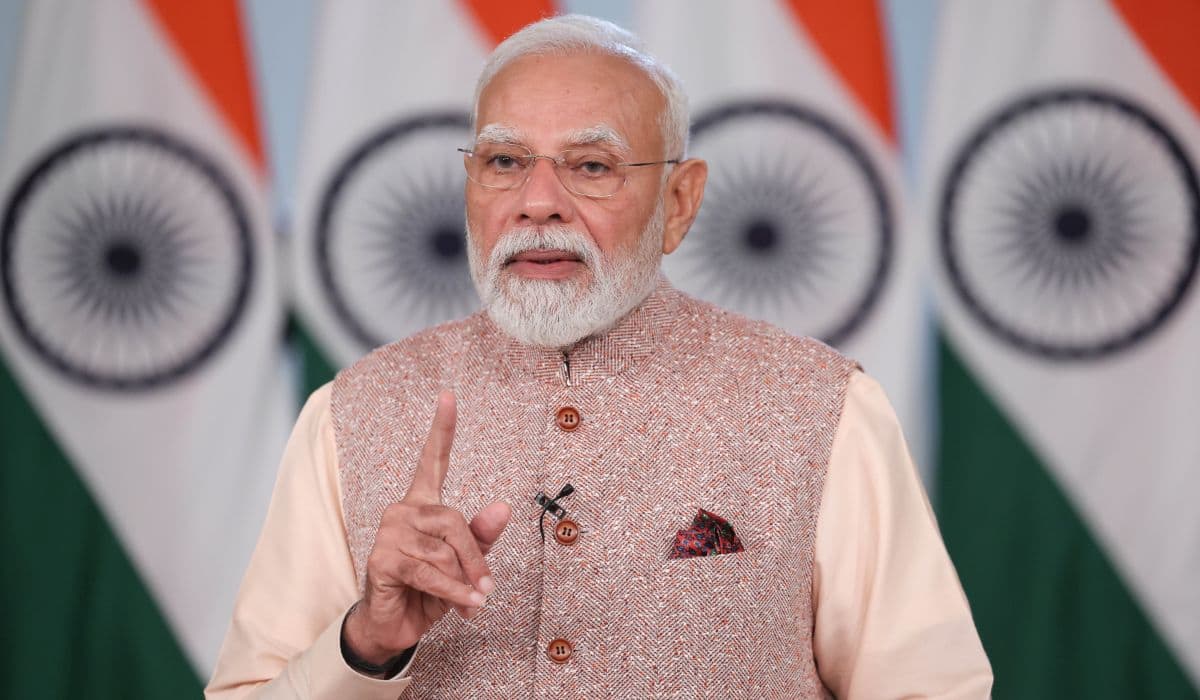
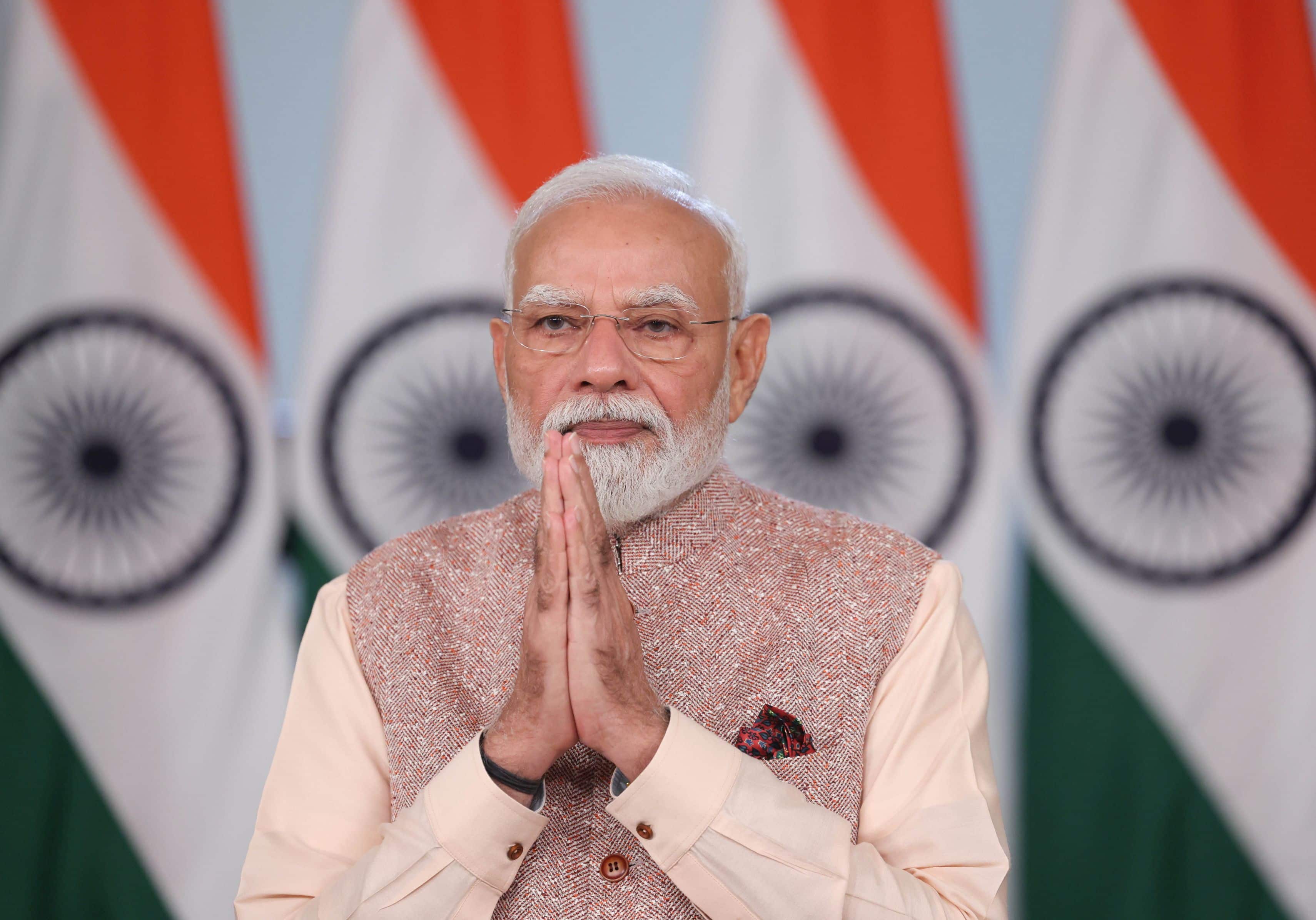
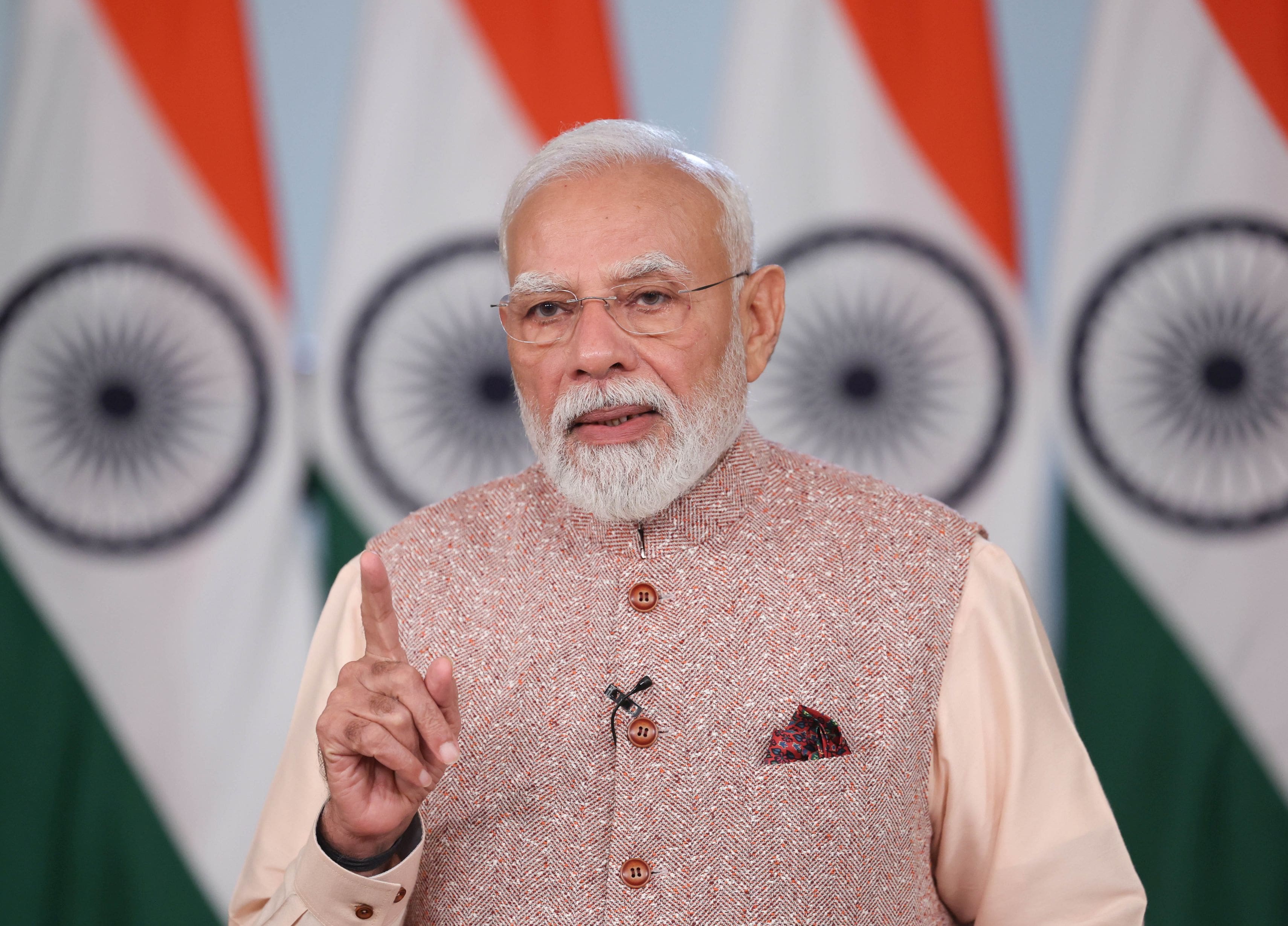
Her Excellency Ms. Mette Frederiksen, Prime Minister of Denmark, hosted His Excellency Shri Narendra Modi, Prime Minister of the Republic of India, during an official visit to Denmark on 3-4 May 2022.
The Danish Prime Minister welcomed Prime Minister Modi to Denmark and expressed her gratitude for being able to return the very warm welcome and hospitality that she experienced during her official visit to India in October 2021.
Green Strategic Partnership
2. The Green Strategic Partnership, established during the Virtual Summit between the two Prime Ministers in September, 2020, has become a catalyst for enhanced cooperation between India and Denmark. The two Prime Ministers welcomed the concrete progress under the Green Strategic Partnership and reconfirmed their commitment to democratic values, rule of law and respect for human rights on which the Green Strategic Partnership is based.
3. The two Prime Ministers noted with satisfaction the progress made in various areas since the visit of Prime Minister Frederiksen to India in October 2021 especially in the sectors of renewable energy, health, shipping, and water.
4. The two Prime Ministers shared convergence of interest on the importance of climate action, green growth and energy diversification. The independence of energy supply based on fossil fuel is vital in this regard as well as security policy. Thus, the two leaders agreed to further strengthen their cooperation within the renewable energy sector and welcomed the work on a comprehensive Energy Policy Dialogue in India and Denmark especially strengthening cooperation on cross-sectoral energy planning with a focus on green hydrogen, integration of renewable energy, energy storage and decarbonisation. In this regard the two Prime Ministers welcomed the discussions towards an Energy policy Dialogue at Ministerial level.
5. The two leaders took note of the progress in the work of the International Solar Alliance (ISA) and welcomed planned Danish support to the work of ISA, including through strengthening the Secretariat of ISA.
6. The two Prime Ministers noted with satisfaction the progress made in collaboration in the fields of urban and rural water supply, groundwater mapping, wastewater management, river rejuvenation and digitalization. They welcomed the intention of both countries to deepen and expand the existing cooperation in the field of safe and secure water to meet present and future demand through a holistic and sustainable approach. They looked forward to the early signing of a Memorandum of Understanding between the Ministry of Jal Shakti and the Danish Environment Ministry as a broad-based framework to enhance the existing cooperation and to launch new initiatives, including a Smart Laboratory on Clean River Water in Varanasi and a Centre of Excellence on Smart Water Resources Management.
7. The two Prime Ministers welcomed the Letter of Intent on the establishment of a Centre of Excellence on Green Shipping, which will further strengthen the bilateral maritime cooperation. The two leaders also agreed to expand the cooperation on agriculture by a Joint Declaration of Intent establishing among others a Centre of Excellence on Dairy.
8. The two Prime Ministers welcomed the decision for a joint call for research and development projects in the area of green Hydrogen and green fuels. They noted the targeted areas of the joint call particularly with regard to green Hydrogen and other green fuels for transport and industry where there are no cost-effective alternatives to fossil energy.
9. The two Prime Ministers welcomed the ongoing cooperation in the skill development sector and agreed to strengthen the cooperation by a Memorandum of Understanding on Skills Development.
10. Both Prime Ministers agreed to strengthen people to people ties with a Letter of Intent on Migration and Mobility with a view to promote safe, orderly and regular migration.
11. The two Prime Ministers agreed to strengthen the Policy Planning Dialogue on subjects of mutual interest as reflected in the Joint Action Plan.
12. The two Prime Ministers looked forward to the midterm evaluation of the Green Strategic Partnership under the Joint Commission and agreed to work towards an enhanced strategic perspective for a Comprehensive Green Strategic Partnership once the existing Joint Action Plan ends in 2026.
13. The two Prime Ministers agreed to maintain regular high-level interactions in the run up to the 75th anniversary of bilateral relations in 2024 and agreed to commemorate it in a befitting manner.
Trade and Investments
14. The two Prime Ministers underlined the importance of bilateral trade and investments and stressed the need to maximize the potential of economic ties between the two countries. They affirmed that robust bilateral investments and trade flows through diversified, resilient, transparent, open, secure and predictable global supply chains would ensure economic security and prosperity of their peoples.
15. The two Prime Ministers welcomed Danish investments in India especially in the renewable energy, water, terminals and port modernization and expansion, food processing and engineering sectors and India’s investments in Denmark especially in the Information Technology sector. They noted that such investments have made India the country where Danish companies have the largest number of employees outside of Denmark. Both the leaders agreed that the opportunities created by the Green Strategic Partnership will likely lead to an upward trajectory in bilateral trade and investment.
16. In this context, the two Prime Ministers welcomed the launch of the "India Green Finance Initiative”, which aims to contribute to financing green projects in India with the purpose of accelerating green growth and job creation in India.
Health, vaccine partnerships and Covid-19
17. The two Prime Ministers confirmed the importance of cooperation on health as being part of the Green Strategic Partnership.
18. The two sides confirmed their continued collaboration in the field of antimicrobial resistance. India conveyed its acceptance of the Danish invitation to join the International Center for Antimicrobial Resistance Solutions (ICARS) as Mission Partner.
19. The Danish Prime Minister confirmed Danish accession to the Global Digital Health Partnership on India’s invitation to improve public health and well-being through evidence-based digital technologies.
Cultural Cooperation
20. The two Prime Ministers agreed on the importance of cultural exchanges and welcomed the signing of a new Cultural Exchange Program.
Regional and global developments
21. The two Prime Ministers exchanged views on current regional and global developments including the conflict in Ukraine, the situation in Europe and the Indo-Pacific region.
22. The Danish Prime Minister reiterated Denmark’s strong condemnation of the unlawful and unprovoked aggression against Ukraine by Russian Forces.
23. The two Prime Ministers expressed their serious concern about the ongoing humanitarian crisis in Ukraine. They unequivocally condemned civilian deaths in Ukraine. They reiterated the need for an immediate cessation of hostilities. They emphasized that the contemporary global order has been built on the UN Charter, international law and respect for sovereignty and the territorial integrity of states. They discussed the destabilizing effect of the conflict in Ukraine and its broader regional and global implications. Both sides agreed to remain closely engaged on the issue.
24. Finally, the two Prime Ministers emphasized the importance of India- EU Strategic Partnership and reaffirmed their commitment to further strengthen this partnership. The two leaders appreciated the progress in restart of negotiations on India- EU Trade, Investment and Geographical Indicators Agreements and called for a balanced, ambitious, comprehensive and mutually beneficial approach and an early and simultaneous conclusion. They welcomed the launch of the Trade and Technology Council between EU and India underlining the importance of deep, strategic collaboration on cross-cutting issues related to trade, trusted technology and security. The two leaders also recalled the India-EU Connectivity Partnership and agreed to support efforts towards its early implementation.
Multilateral cooperation
25. The two Prime Ministers reaffirmed their commitment to a rules-based international order, and a strengthened and reformed multilateral system.
26. The two Prime Ministers confirmed their commitment to work towards reforming the UN, including the UN Security Council, to make it more effective, transparent and accountable. The Danish Prime Minister reiterated Denmark’s support for India’s permanent membership of a reformed UN Security Council. Prime Minister Modi confirmed India’s support for Denmark’s candidacy for non-permanent membership of the UN Security Council for 2025-2026.
Climate Cooperation
27. The two Prime Ministers welcomed the international agreement at COP26 on the need for accelerated climate action for holding the increase in the global average temperature to well below 2 degree above pre-industrial levels and pursuing efforts to limit the temperature increase to 1.5 degree above pre-industrial level. The two sides confirmed the aspirations – through the Green Strategic Partnership - to take global leadership in pushing for ambitious green energy transition and demonstrate the pathways to achieving it, focusing both on energy efficiency and renewable energy.
28. The Danish Prime Minister stressed Denmark’s commitment to speed up the phase out of fossil fuels and the deployment of renewable energy in Denmark to reach the goal of reducing emissions by 70 percent by 2030. Denmark was also determined to push for an acceleration of the implementation of the European Green Deal.
Government to Government Agreements
29. The two Prime Ministers witnessed the exchange of the following agreements/documents:
(i) Declaration of Intent (DoI) on Migration and Mobility
(ii) Letter of Intent (LoI) between Ministry of Ports, Shipping and Waterways, GOI and Ministry of Business, Industry and Financial Affairs of Denmark on Centre of Excellence in Green Shipping
(iii) Cultural Exchange Programme (CEP) between the Ministry of Culture, GoI and Ministry of Culture of Denmark for the years 2022-2026
(iv) Letter of Intent (LoI) between Ministry of Jal Shakti and Ministry of Environment of Denmark
(v) MoU on Cooperation in the field of Skill Development, Vocational Education and Entrepreneurship
(vi) Joint Declaration of Intent (JDI) on Cooperation in the fields of Animal Husbandry and Dairying
(vii) Letter of Intent between Invest India and Technical University of Denmark to facilitate start-up collaboration
हमारे दोनों देश लोकतंत्र, अभिव्यक्ति की स्वतंत्रता, और कानून के शासन जैसे मूल्यों को तो साझा करते ही हैं; साथ में हम दोनों की कई complementary strengths भी हैं: PM @narendramodi
— PMO India (@PMOIndia) May 3, 2022
200 से अधिक डेनिश कंपनियां भारत में विभिन्न क्षेत्रों में काम कर रही हैं – जैसे पवन ऊर्जा, शिपिंग, कंसल्टेंसी, food processing, इंजीनियरिंग आदि।
— PMO India (@PMOIndia) May 3, 2022
इन्हें भारत में बढ़ते ‘Ease of doing business’ और हमारे व्यापक आर्थिक reforms का लाभ मिल रहा है: PM @narendramodi
भारत के इंफ्रास्ट्रक्चर सेक्टर और ग्रीन इंडस्ट्रीज में डेनिश कम्पनीज और Danish Pension Funds के लिए निवेश के बहुत अवसर हैं: PM @narendramodi
— PMO India (@PMOIndia) May 3, 2022
हमने एक Free, Open, Inclusive और Rules-based इंडो-पसिफ़िक क्षेत्र को सुनिश्चित करने पर जोर दिया।
— PMO India (@PMOIndia) May 3, 2022
हमने यूक्रेन में तत्काल युद्धविराम और समस्या के समाधान के लिए बातचीत और कूटनीति का रास्ता अपनाने की अपील की: PM @narendramodi
आज हमने भारत-EU रिश्तों, Indo-Pacific और Ukraine सहित कई क्षेत्रीय तथा वैश्विक मुद्दों पर भी बातचीत की।
— PMO India (@PMOIndia) May 3, 2022
हम आशा करते हैं कि India-EU Free Trade Agreement पर negotiations यथाशीघ्र संपन्न होंगे: PM @narendramodi