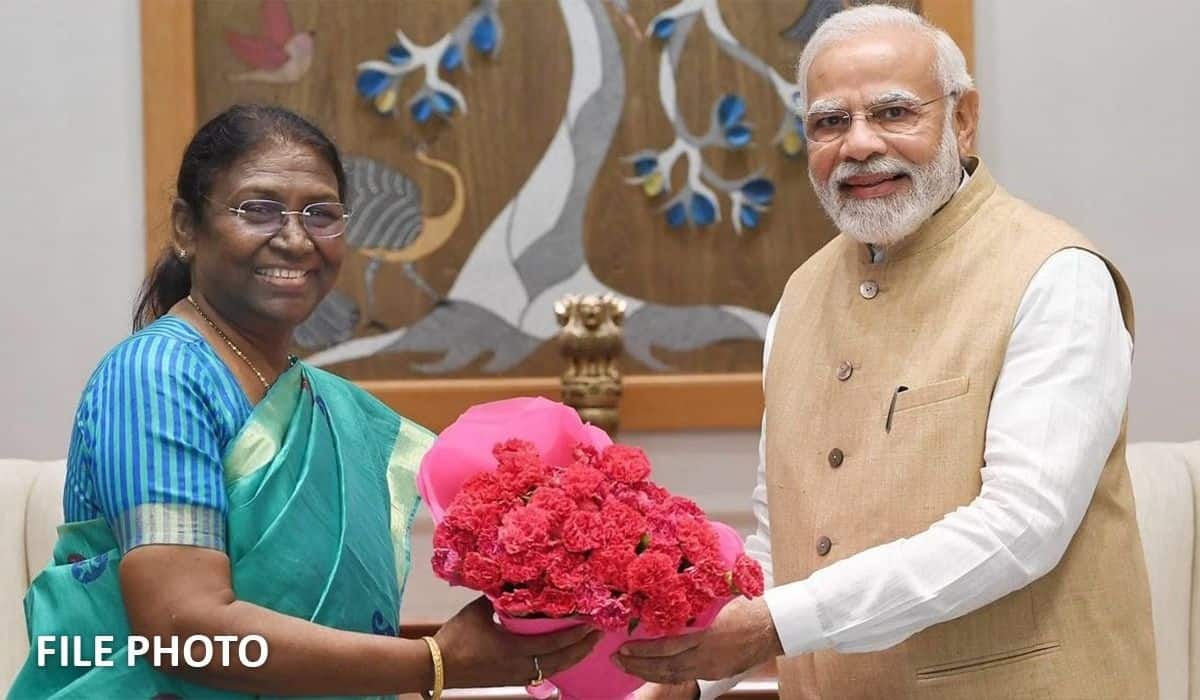
India and Bhutan share an exemplary bilateral relationship characterized by trust, goodwill and mutual understanding at all levels, strong bonds of friendship and close people-to-people contacts. Prime Minister Shri Narendra Modi and Prime Minister Dasho Tshering Tobgay had fruitful and wide ranging discussions in Thimphu wherein the two leaders reaffirmed their commitment to taking this extraordinary bilateral partnership to new heights, looking into the future.
The two leaders noted the stellar contribution of clean energy partnership in the development of hydro-power sector of Bhutan, and in providing energy security to the region. Prime Minister Modi appreciated growing domestic capacity of Bhutanese firms and technical agencies in implementation of energy projects. Prime Minister Tobgay congratulated Prime Minister Modi for the remarkable growth of India’s renewable energy sector in recent years, and for his leadership in fostering initiatives such as International Solar Alliance and National Green Hydrogen Mission of India.
Both the Prime Ministers reviewed all aspects of bilateral energy cooperation and expressed satisfaction that projects, which have been jointly implemented, are functioning well and contributing to economic development in Bhutan. Building on the success of the 720 MW Mangdechhu Hydro-electric Project, the two leaders look forward to commissioning the 1020 MW Punatsangchhu-II Hydro-electric Project this year. Both sides welcomed the positive expert-level discussions on a technically sound and cost – effective way forward for 1200 MW Punatsangchhu – I HEP.
4. Both the Prime Ministers agreed
(i) That the India-Bhutan energy partnership has the potential to benefit both the countries by enhancing energy security, strengthening their economies, generating employment, enhancing export earnings, and contributing to further development of industrial and financial capacities.
(ii) That there are unprecedented opportunities to further strengthening this mutually beneficial bilateral clean energy partnership, including through development of new energy projects and trade in electricity.
(iii) To engage in the development of new energy projects in the fields of hydro-power, solar and green hydrogen, including through the participation of Indian entities as strategic partners.
(iv) That both Governments will review and finalize project - specific implementation modalities for new projects, including reservoir hydro projects.
(v) That the Government of India will facilitate necessary access to financing from financial institutions in India as well as market for power sale for new and upcoming hydro-power projects in Bhutan.
(vi) Power exchange between the two countries shall continue to play an important role in ensuring energy security in the region. In this regard, market access to Bhutanese power producers will be facilitated in accordance with applicable domestic regulations and procedures, through mutually agreed arrangements and delivery points.
(vii) In view of the evolving energy markets, to hold regular consultations for enabling investments in energy projects of Bhutan, and for ensuring seamless cross-border trade in electricity.
(viii) To work towards greater sub-regional energy cooperation, which would lead to increased inter-linkages between the economies for mutual benefit of all stakeholders.
(ix) To strengthen energy cooperation in the field of energy efficiency and energy conservation through capacity development, information exchange on policies and technologies, and research and development on energy efficient technologies.
Both the Prime Ministers agreed to expedite movement on projects and initiatives on the basis of the Joint Vision Statement for mutual benefit.