"REACHING NEW HEIGHTS OF COOPERATION THROUGH TRUST AND PARTNERSHIP"
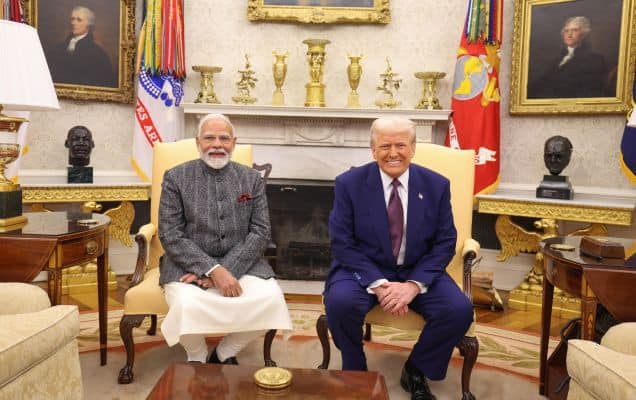
- rime Minister of the Republic of India H.E. Narendra Modi paid an official visit to the Russian Federation on September4-5, 2019 on the invitation of President of the Russian Federation H.E. Mr Vladimir Putin. The 20th India – Russia Annual Summit was held in Vladivostok. H.E. Mr Narendra Modi also participated in the 5th Eastern Economic Forum as the Chief Guest.
- At the jubilee 20th Annual Summit, both leaders noted progressive development of the Special and Privileged Strategic Partnership between India and Russia. These relations are unique, confiding and mutually beneficial by nature, encompassing all possible areas of cooperation. They are based on similar civilizational values, time-tested friendship, mutual understanding, trust, common interests and proximity of approaches to the fundamental issues of development and economic progress. Regular meetings of the leaders of the States, including those on the sidelines of various international fora and growing momentum of bilateral contacts at all levels are a vivid proof of this Partnership.
- India-Russia ties have successfully coped with the turbulent realities of the contemporary world. They have never been and will not be susceptible to outside influence. Development of the entire gamut of India-Russia relations is a foreign policy priority for both countries. The leaders agreed to facilitate, in all possible ways, exploring the impressive potential of our strategic partnership to the full, demonstrating its special and privileged nature which has emerged as an anchor of stability in a complex international situation.
- Both Sides welcomed intensive cooperation between their parliaments and noted the importance of interparliamentary interaction as a valuable component of their bilateral relations. They highlighted the visit of the Chairman of the State Duma to India in December 2018 and look forward to the visit of the Speaker of the Lok Sabha to Russia later in 2019.
- Both Sides prioritize strong, multifaceted trade and economic cooperation as the foundation for further expanding the range of India-Russia relations.
- The Leaders highly appreciated the work of the India-Russia Intergovernmental Commission on Trade, Economic, Scientific, Technological and Cultural Cooperation which ensures progressive development of bilateral cooperation in various areas.
- The Sides expressed satisfaction with the stable mutual growth of trade turnover. To bring it to USD 30 billion by 2025, they agreed to more actively engage the impressive resource and human resources potential of India and Russia, enhance industrial cooperation, create new technological and investment partnership, especially in advanced high-tech areas and find new avenues and forms of cooperation.
- Both Sides expressed their interest in expanding the participation of Russian business in "Make in India" program and that of Indian companies in investment projects in Russia. In this context, they agreed to speed up preparations for signing of the India-Russia Intergovernmental Agreement on Promotion and Mutual Protection of Investments.
- The Sides agreed to intensify joint work towards eliminating barriers in mutual trade, including protective measures, customs and administrative barriers, to further consider reducing restrictive measures through bilateral dialogue. This would be facilitated, inter alia, by the proposed Trading Agreement between the Eurasian Economic Union (EAEU) and the Republic of India.
- They agreed to improve the structure of trade in goods and services, environment for entrepreneurial activities and investment, harmonize and refine relevant import and export procedures, streamline and standardize technical, sanitary and phytosanitary requirements.
- The work on promoting mutual settlements of payments in national currencies will be continued.
- The office of the Russian export support group established in Mumbai on the platform of the Russian Trade mission to India jointly with the Russian Export Center to promote bilateral trade and economic relations was welcome. The Sides also noted the continued facilitation of Russian investments in India provided by the Russia Plus Desk of Invest India.
- The Sides noted the contribution of the St. Petersburg International Economic Forum and the –India-Russia Business Dialogue that took place on its sidelines this year to enhanced trade, economic and investment cooperation.
- The two Leaders welcomed the holding of the 2nd edition of the India-Russia Strategic Economic Dialogue on 10 July 2019 in New Delhi. The Strategic Economic Dialogue has emerged as a promising mechanism aimed at promoting cohesive and mutually beneficial economic cooperation across core sectors by way of structured and continuous interaction between our two countries. A comprehensive Action Strategy for advancing bilateral Trade-Economic and Investment Cooperation has been developed and adopted in 2018-2019 based on the work of the Dialogue.
- The Leaders expressed satisfaction with the cooperation between New Delhi and Moscow in the sphere of the development of the Russian Far East. Several Indian companies have been successfully set up in the Far East region, such as M/s KGK in Vladivostok in the field of diamond cutting and M/s Tata Power in Krutogorovo in Kamchatka in coal mining. The Russian side welcomed the intent of the Indian side to expand its economic and investment presence in the Far Eastern region and Siberia.
- India is making efforts at enhancing cooperation with the Russian Far East. As a first step, for the first time ever a delegation of four Chief Ministers of Indian states led by the Commerce and Industry Minister of India visited Vladivostok on 12-13 August 2019 to explore avenues of greater bilateral engagement in targeted sectors. Both Sides also look forward to exploring cooperation on temporary placement of skilled manpower from India to Far East Russia.
- India looks forward to cooperate with Russia in the Arctic. India has been following the developments in the Arctic region with interest and is also ready to play a significant role in the Arctic Council.
- Russia on its part, expressed its readiness to participate in major infrastructural and other projects in India. Both Sides welcomed the recent opening of the Far East Investment and Export Agency’s office in Mumbai and looked forward to its contribution to the development of bilateral trade and economic relations with regard to the Russian Far East.
- The energy industry has traditionally been a key area of interaction between the two countries – this is an area where Indian and Russian economies complement each other beneficially. Civil nuclear cooperation between India and Russia is an important component of strategic partnership. The Sides noted the pace of progress achieved in the construction of the remaining four of the six nuclear power plants at Kudankulam. Both Sides engaged in discussion on the second site and welcomed continuation of technicaldiscussions on the VVER 1200 of the Russian design and joint manufacturing of equipment and fuel.
- The Sides highlighted successful cooperation in the construction of the Rooppur NPP in Bangladesh and expressed their readiness to expand similar cooperation in third countries.
- The leaders note immense potential of cooperation in the field of non-nuclear fuel and energy. India and Russia welcome the success of interaction between JSC Rosneft Oil Company and Consortium of Oil and Gas Public Sector Undertakings in implementing the Vankorneft and Taas-YuryakhNeftegazodobycha projects, the work of the Nayara Energy Limited oil refinery, cooperation in extracting hydrocarbon resources over the last two decades as well as the timely delivery of liquefied natural gas under the agreement between Gazprom and GAIL India.The Sides agreed to cooperate in supply of coking coal from Russian Far East to India.
- The leaders are determined to forge cooperation in geological exploration and joint development of oil and gas fields in Russia and India, including offshore fields. They will continue their work to develop the ways of delivering energy resources from Russia to India, including a long-term agreement for sourcing Russian crude oil, the possible use of the Northern Sea Route and a pipeline system. They noted the prospects of Nayara Energy Limited increasing the capacity in Vadinar oil refinery. India and Russia agreed to consider the prospects for expanding cooperation in hydro and thermal power, energy efficiency as well as for designing and constructing facilities that generate energy from non-conventional sources.
- With the signing of the Roadmap for cooperation in Hydrocarbons for 2019-24 during the Summit, both Sides expect bilateral cooperation in this sector to touch new heights in the next five years.
- To promote further development of trade and economic ties between India and Russia, the Sides intend to work on improving the transport infrastructure.They attach great importance to the development of the International North-South Transport Corridor (INSTC). The major thrust in the INSTC is to secure freight volumes, upgrade and improve the transport and logistics services provided, simplify document workflow and switch to electronic document workflow, introduce digital technologies and satellite navigation into the transportation process.
- Both Sides foresee good potential in establishing cooperation in the sphere of railways. Theyexpressed satisfaction with the progress of the feasibility study for raising the speed of the Nagpur – Secunderabad Section and noted the interest of Russian Government to participate in the implementation of that development project.The Sides will continue to actively engage in this regard.
- The Sides agreed to review possibility of expanding direct passenger and cargo flights including flights between various regions of both the countries.
- They intend to further cooperate in transport education, professional training and scientific support for the infrastructure transport projects.
- The Sides emphasized the importance of joint research in science and technology. They are committed to intensify development of high-tech products in such spheres, as telecommunications, robotics, artificial intelligence, nanotechnologies, pharmacy and others.To this end, the leaders appreciated signing of the MoU between Department of Science & Technology of the Republic of India and Ministry of Economic Development of the Russian Federation for cooperation in the field of Innovation.
- The Russian Side hailed results of the 2018 All India Tiger Estimation, which established that India was home to 75% of the global tiger population with 2967 tigers. Indian Side welcomed the Russian Side’s initiative to hold the Second International Tiger Conservation Forum in 2022 (also called the Second Tiger Summit, the first Summit was held in Saint-Petersburg in 2010). Acknowledging their leadership role in tiger conservation efforts, both Sides agreed to hold aHighLevel Tiger Forumin India in 2020, involving tiger range countries, conservation partners and other stakeholders.
- Promising areas of cooperation include aviation and space. The Sides agreed to explore the prospects of establishing joint ventures in India for the development and production of civil aircraft.
- The Sides welcomed the increased cooperation between the State Space Corporation "Roscosmos” and the Indian Space Research Organization, including the human spaceflight programs and satellite navigation. The Sides agreed that it was necessary to exploit to a greater extent potential of India and Russia in launch vehicles development, construction and utilization of spacecraft for different applications, as well as research and use of outer space for peaceful purposes, including planetary exploration.
- The Sides welcomed the active work carried out within the framework of the signed MoU on support of the Russian Side for India’s first manned mission "Gaganyaan”.
- Both Sides intend to strengthen cooperation within the UN Committee on the Peaceful Uses of Outer Space (UN COPUS), including guaranteeing long-term sustainability of outer space activities and developing "Space 2030” Agenda and implementation plan.
- They attach high importance to cooperation in the diamond industry. The successful activity of the PJSC ALROSA office in India was noted by the Sides. They declared their interest in enhancing rough diamonds trading system and exploring ways to further improve the regulatory environment in this field with the aim of protecting the equity of natural diamonds.
- The Sides acknowledged the opportunities to increase bilateral trade in the sphere of agriculture. They expressed their intent to take specific steps to enhance legal framework in this sector and harmonize phytosanitary standards, develop logistics, find new ways to promote agricultural commodities in our countries’ markets and study the capacities and needs of each other more carefully. Green Corridor mechanism envisages pre-arrival exchange of information between two Customs administrations. This would help faster clearance to goods, through enhanced risk management. It would thus significantly improve trade facilitation.
- India-Russia close cooperation in military and military-technical fields is a pillar of their bilateral Special and Privileged Strategic Partnership. The Sides expressed their satisfaction with regular military contacts and joint exercises of the Armed Forces of the two countries. They welcomed the successful implementation of the 2011-2020 Long-Term Program for Military and Technical Cooperation. They agreed to speed-up elaboration of a new long-term plan of interaction in this area.
- The Sides expressed their commitment to upgrading their defense cooperation, including by fostering joint development and production of military equipment, components and spare parts, improve the after-sales service system and continue holding regular joint exercises of the Armed Forces of the two countries.
- Both Sides agreed to take forward ongoing engagement to encourage joint manufacturing in India of spare parts, components, aggregates and other products for maintenance of Russian origin Arms and defense equipment under Make-in-India program through transfer of technology and setting up of joint ventures.
- The Sides aspired to create favorable conditions for further development of bilateral cooperation between their Armed Forces and recognized the requirement of an institutional arrangement for reciprocal provision of logistic support and services for the Armed Forces. It was agreed to prepare a framework for cooperation on reciprocal logistics support.
- Both Sides reaffirmed their commitment to enhance military to military cooperation through military political dialogues, joint military exercises, staff-talks, training in each other’s military institutions and through other mutually agreed area of cooperation. Sides noted that this year, second Joint Tri-Services Exercises INDRA-2019 will be carried out in India.
- The Sides commended the implementation of the bilateral Cultural Exchange Program, which directly helps bring the peoples of the two countries together. They agreed to continue the successful practice of holding reciprocal festivals of the Russian culture in India and of the Indian culture in Russia, as well as of Russian film festivals in India and of Indian film festivals in Russia. Both Sides welcomed that Russia will be the Partner Country in the 50th International Film Festival to be held in Goa on November 20-28, 2019.It was agreed that there is a need for geographical expansion of cultural exchanges and greater involvement of the youth and folk art groups and to further promote the Russian language in India and Hindi in Russia comprehensively, including by developing contacts between relevant educational institutions.
- The Sides welcome intensification of cooperation in the sphere of education. They will continue to promote establishmentof direct contacts between universities and educational institutions. Bilateral intergovernmental agreements on mutual recognition of academic credentials will give impetus to these activities. They also agreed to expedite work on preparation of the agreements.
- The Sides emphasized the importance of promoting cooperation between the states/union territories of the Republic of India and entities of the Russian Federation and stated their intention to organize a forum between them coordinated by their respective Ministries. TheSides agreed toestablish exchanges of cultural and business missions between the states of India and the regions of Russia. Theyagreed to further develop the twin cities format to give a fresh impetus to the existing ties and create new ones.
- India-Russia tourism ties have been developing vigorously and serve to further reinforce the relations of the Special and Privileged Strategic Partnership and mutual understanding. Both Sides agreed to continue to deepen cooperation in this area.
- Both Sides welcomed progressive simplification of visa formalities, in particular, further extension of duration of e-Visa facility for business and tourism purposes to one year including for Russian nationals and the introduction of free electronic visas for Indian nationals to visit the Kaliningrad region and Vladivostok. They agreed to continue the work on simplification of the visa regime in future.
- Both Sides noted the high level of political dialogue and cooperation between our countries, including at the UN, and agreed to deepen it further.
- Both Sides stressed the imperative of further strengthening of multilateralism, including the central coordinating role of the United Nations in world affairs.The Sides underlined the primacy of international lawand emphasized their commitment to the purposes and the principles stated in the UN Charter including the inadmissibility of interference in the internal affairs of Member States.
- Both sides shared the view that implementation in good faith of genuinely universally recognized principles and rules of international law excludes the practice of double standards or imposition of some States of their will on other States., and consider that imposition of unilateral coercive measures not based on international law, is an example of such practice.
- Both Sides called for reform of the UNSC to reflect contemporary global realities and to make it more representative, effective and efficient in dealing with issues of international peace and security.
- Russia will continue to support India’s candidacy for the permanent membership of a reformed UN Security Council.
- Both Sides reiterated their commitment to strengthen multisectoral partnership within BRICSand agreed toextend full support to the success of the 11th BRICS Summit to be held in Brazil in November 2019.
- India and Russia unanimously recognize the effectiveness and great potential of the Shanghai Cooperation Organization. India and Russia will increase their interaction, including in the framework of Russia’s SCO Presidency in 2019-2020, to further strengthen the Organization as an important pillar of the emerging multi-polar world order based on equal and indivisible security.
- The Sides intend to focus particularly on increasing the effectiveness of countering terrorism, extremism, drug trafficking, cross-border organized crime, and information security threats, in particular by improving the functionality of the SCO Regional Anti-Terrorist Structure.
- The Sides will promote expansion of economic cooperation within the SCO, primarily in transport and logistics, infrastructure, science, technology and innovation to build a greater, equitable,open and mutually beneficial cooperation in the Eurasian space. We are determined to deepen cultural and humanitarian ties within the SCO format.
- The Sides support increased role of the SCO in international affairs, comprehensive development of the Organization’s contacts with the UN and its specialized agencies, the CSTO, the CIS, ASEAN and other multilateral organizations and associations. In this context, they support the establishment of official ties between the SCO and Eurasian Economic Union.
- The Sides intend to intensify cooperation within the RIC framework, consistently promote common approaches to pressing issues on the global and regional agenda with a focus on upholding international law, countering the expansion of protectionism and unilateral sanctions, and combating terrorism and other new threats and challenges. Regular meetings in this format at the level of Heads of State/ Government, foreign ministers and, if necessary, between heads of other agencies, will continue.
- We agreed to improve coordination within the G20 and other international organizations and fora with a view to facilitate the early resolution of key international issues. Both Sides reaffirmed their commitment to deepen cooperation on issues of global and mutual interest in G20 and international fora.
- The leaders strongly condemned terrorism in all its forms and manifestations and called on the international community to set up a united front to fight against this evil. They reaffirmed their commitment to undertake all measures to prevent and combat terrorism. They welcomed the Bishkek Declaration of the Shanghai Cooperation Organization´s Heads of State Council Meeting. They insisted on the inadmissibility of double standards in countering terrorism and extremism, as well as of the use of terrorist groups for political ends. Both leaders called for enhanced coordination of our states' efforts within the framework of international counter-terrorism cooperation, including by strengthening the fight against the use of information and communication technologies for terrorist purposes. They agreed to intensify counter-terrorism cooperation in bilateral and multilateral formats and called for early finalisation of the Comprehensive Convention on International Terrorism. The Sides reaffirmed their mutual commitment to strengthening the current inter-state drug control regime based on the three relevant United Nations conventions. Today no country is aloof from the shadow of terrorism. India and Russia need to be united in their counter-terrorism efforts. Russia noted India’s proposal to organize a global anti-terrorism conference.
- The Sides appreciated the level of interaction between our countries on Cooperation in the field of Security in the Use of Information and Communication Technologies, including at multilateral specialized negotiating platforms, primarily at the United Nations. It was noted that based on the outcomes of the 73rd session of the UNGA, a set of international rules, norms and principles of responsible behaviour of Stateshas been adopted by the UN General Assembly in December 2018, and a wide discussion on information and communication technologies (ICTs) security including countering the use of ICT for criminal purposes has been launched.
- They emphasized the need to establish a framework for cooperation among BRICS countries in the sphere of security in the use of ICTs, including through concluding relevant intergovernmental agreement between the association’s member-states.
- The Sides reaffirmed the commonality of approaches to provision of security in the use of ICTs and willingness to strengthen bilateral inter-agency practical cooperation through realization of the India-Russia intergovernmental agreement on cooperation in Security in the use of ICTs.
- They resolved to take necessary steps to enhance bilateral cooperation in accordance with the Plan to implement the main directions of cooperation between India and Russia on the security in the use of Information and Communication Technologies for 2019-2020.Both sides stressed the need to continue efforts aimed at improving the international security environment, as well as to work consistently with a view to increasing the level of inter-state trust and strengthening global and regional stability in all its aspects as a basis for ensuring lasting peace founded on the principle of equal and indivisible security for all, while respecting the interests and concerns of all states.
- They agreed to maintain intensive contacts on the entire range of security issues through the National Security Council Secretariatand the Security Council of the Russian Federation.
- Both sides expressed concern over the possibility of an arms race in outer space and outer space turning into an arena for military confrontation. It was reaffirmed that the prevention of an arms race in outer space (PAROS) would avert a grave danger to international peace and security and that they intended to continue to make efforts in this direction. They stressed the paramount importance of strict compliance with existing international legal agreements providing for the peaceful uses of outer space including the support to international peace and stability, promotion of international cooperation and mutual understanding.
- The sides supported negotiation of a multilateral, legally binding instrument to establish reliable guarantees for non-placement of any weapons in the Earth orbit. They reaffirmed that the Conference on Disarmament, is the only forum for holding multilateral negotiations on an international agreement (or agreements) on the prevention of an arms race in outer space in all its aspects.
- It was agreed that universal, non-discriminatory and practical transparency and confidence building measures can play complementary role to a legally binding instrument on PAROS.
- The sides supported strengthening of the Biological and Toxins Weapons Convention (BTWC) including by adopting a protocol to the Convention providing for, inter alia, an international, non-discriminatory and effective compliance verification mechanism. They reaffirmed that BTWC functions, including in what concerns the UN Security Council, should not be duplicated by other mechanisms.
- Both sides reaffirmed support to the Organization for the Prohibition of Chemical Weapons (OPCW), which has contributed to effective implementation of the provisions of the Chemical Weapons Convention (CWC). They reaffirmed their determination to support efforts and initiatives aimed at preserving the role of the CWC, and preventing the politicization of the activities of the OPCW.They called on the States Parties to the CWC to stand united and engage in a constructive dialogue with a view to restoring the spirit of consensus in the OPCW in order to preserve the integrity and sanctity of the Convention.
- To address the threat of chemical and biological terrorism, both sides emphasized the need to launch multilateral negotiations on an international convention for the suppression of acts of chemical and biological terrorismat the Conference on Disarmament.
- Both sides reiterated their commitment to further strengthen global non-proliferation. Russia expressed its strong support for India’s membership of the Nuclear Suppliers Group.
- India and Russia support all efforts for an inclusive peace and Afghan-led and Afghan-owned reconciliation in Afghanistan. The Sides expressed their commitment to an early peaceful settlement in Afghanistan, their determination to achieve this goal by continuing cooperation within the SCO-Afghanistan Contact Group and other internationally recognized formats, and their support for the intra-Afghan dialogue launched in Moscow in February 2019. The Sideswill continue intensive discussions on Afghanistan. They encouraged all interested States in their efforts to make peace process in Afghanistan broad based, preserve the constitutional order, bring durable peace and to turn Afghanistan into a peaceful, secure, stable and independent state. They called for immediate cessation of violence.
- The sides welcomed the stabilization of the situation in Syria. They insisted on the need to respect Syria’s sovereignty and territorial integrity and called for the settlement of the Syrian crisis exclusively through political and diplomatic means.
- They emphasized the importance of combating terrorist organizations in Syria, as defined by the United Nations Security Council. They agreed to continue to step up assistance to Syria with a view to reconstruction, including the creation of conditions for the return of refugees and temporarily displaced persons. The sides insisted on the need for strict compliance with the principles of international humanitarian assistance laid down in United Nations General Assembly resolution 46/182, which gives the key role in defining the parameters of humanitarian assistance to the Government of the affected country in order to respect the national sovereignty of the affected country.
- Both sides recognised the importance of full and effective implementation ofthe Joint Comprehensive Plan of Action on the Iranian Nuclear Programme (JCPOA) in the context of securing regional and international peace, security and stability, and reaffirmed their full commitment to the United Nations Security Council resolution 2231. Issues around it should be resolved peacefully and through dialogue.Both sides expressed their determination to continue mutually beneficial and legitimate economic and commercial cooperation with Iran.
- Both Sides stressed the importance of continued peaceful dialogue amongst all parties concerned in order to realize lasting peace and stability in a denuclearized Korean Peninsula. In this regard, they urged all parties concerned to work together towards this goal.
- It was agreed to explore mutually acceptable and beneficial areas of cooperation in third countries especially in the Central Asia, South East Asia and Africa.
- The Sides agreed on the need to preserve and strengthen the role of the World Trade Organization for upholding a transparent, non-discriminatory multilateral trading system. The Sides intend to work together to shape a fair and open global economy.
- Both sides emphasized the importance of deepening regional economic cooperation to ensure sustainable socio-economic development and the implementation of the 2030 Agenda, including the expansion of cooperation within the framework of the United Nations Economic and Social Commission for Asia and the Pacific in such key areas as transport, energy and trade.
- The Sides reaffirmed their commitment to building an equal and indivisible security architecture in Asia and the Pacific region. They support the development of multilateral dialogue on this topic within the framework of the East Asia Summits and other regional platforms. They agreed that initiatives aimed at strengthening the regional order should be based on the principles of multilateralism, openness, inclusiveness and mutual respect and should not be directed against any country. India and Russia as stakeholders in this common space agreed to intensify consultations on complementarities between integration and development initiatives in greater Eurasian space and in the regions of Indian and Pacific Oceans.
- The Sides were satisfied to note the significant similarity in approaches to their foreign policy priorities and stressed the importance of further development of the India-Russia Special and Privileged Strategic Partnership, both in the context of the current bilateral relations and in addressing regional and international issues. They expressed their mutual intention to strengthen and expand their bilateral relations for the benefit of the peoples of India and Russia.
- Prime Minister Narendra Modi thanked President Vladimir Putin for the gracious hospitality extended to him and his delegation in Vladivostok. He invited President Vladimir Putin to visit India next year for the 21st India-Russia Annual Summit.