Cabinet clears pension scheme for traders

Published By : Admin | May 31, 2019 | 21:02 IST

India has a rich tradition of trade and commerce. Our traders continue to make a strong contribution to India’s economic growth.

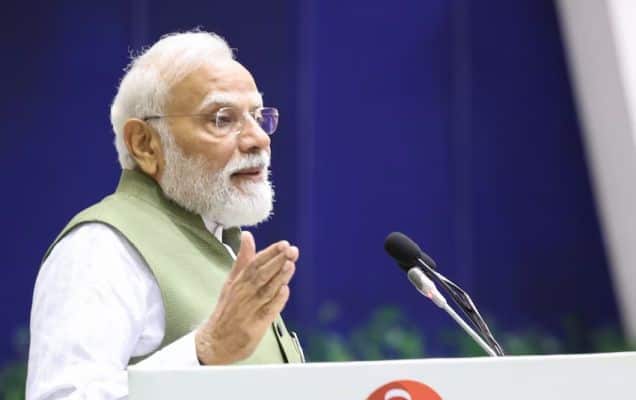
In a decision that will benefit the trading community, the Union Cabinet, chaired by Prime Minister Shri Narendra Modi has approved a new scheme that offers pension coverage to the trading community. This is a part of the Prime Minister’s vision to provide a robust architecture of universal social security.

How the scheme works:

Under this scheme  all shopkeepers, retail traders and self-employed persons are assured a minimum monthly pension of Rs. 3,000/- month after attaining the age of 60 years.  

All small shopkeepers and self-employed persons as well as the retail traders with GST turnover below Rs. 1.5 crore and age between 18-40 years, can enrol for this scheme.  The scheme would benefit more than 3 crore small shopkeepers and traders.

The scheme is based on self-declaration as no documents are required except Aadhaar and bank account. Interested persons can enrol themselves through more than 3,25,000 Common Service Centres spread across the country.  

The Government of India will make matching contribution in the subscribers’ account.  For example if a person with age of 29 years contributes Rs. 100/- month, then the Central Government also contributes the equal amount as subsidy into subscriber’s pension account every month.

Delivering a major promise on Day 1:

By imitating a pension architecture for the trading community, the Prime Minister and his team have fulfilled a major promise made to the people of India. Shri Modi had spoken about the need of proving pension for traders, that would assure them a life of dignity and financial security especially when during their old age.

This decision can also be seen in the light of several other steps taken for the welfare of traders, small and medium business. The GST underwent significant simplification after taking feedback of the trading community. In the same way, Mudra loans gave wings to the entrepreneurial zeal of young India. Loans upto Rs. 1 crore are now easily available.

These, any many more efforts would help the trading community.


Explore More
શ્રી રામ જન્મભૂમિ મંદિર ધ્વજારોહણ ઉત્સવ દરમિયાન પ્રધાનમંત્રીના સંબોધનનો મૂળપાઠ

લોકપ્રિય ભાષણો

શ્રી રામ જન્મભૂમિ મંદિર ધ્વજારોહણ ઉત્સવ દરમિયાન પ્રધાનમંત્રીના સંબોધનનો મૂળપાઠ
Regional languages take precedence in Lok Sabha addresses

Media Coverage

Regional languages take precedence in Lok Sabha addresses
NM on the go

Nm on the go

Always be the first to hear from the PM. Get the App Now!
...
Cabinet approves three new corridors as part of Delhi Metro’s Phase V (A) Project
December 24, 2025

The Union Cabinet chaired by the Prime Minister, Shri Narendra Modi has approved three new corridors - 1. R.K Ashram Marg to Indraprastha (9.913 Kms), 2. Aerocity to IGD Airport T-1 (2.263 kms) 3. Tughlakabad to Kalindi Kunj (3.9 kms) as part of Delhi Metro’s Phase – V(A) project consisting of 16.076 kms which will further enhance connectivity within the national capital. Total project cost of Delhi Metro’s Phase – V(A) project is Rs.12014.91 crore, which will be sourced from Government of India, Government of Delhi, and international funding agencies.

The Central Vista corridor will provide connectivity to all the Kartavya Bhawans thereby providing door step connectivity to the office goers and visitors in this area. With this connectivity around 60,000 office goers and 2 lakh visitors will get benefitted on daily basis. These corridors will further reduce pollution and usage of fossil fuels enhancing ease of living.

Details:

The RK Ashram Marg – Indraprastha section will be an extension of the Botanical Garden-R.K. Ashram Marg corridor. It will provide Metro connectivity to the Central Vista area, which is currently under redevelopment. The Aerocity – IGD Airport Terminal 1 and Tughlakabad – Kalindi Kunj sections will be an extension of the Aerocity-Tughlakabad corridor and will boost connectivity of the airport with the southern parts of the national capital in areas such as Tughlakabad, Saket, Kalindi Kunj etc. These extensions will comprise of 13 stations. Out of these 10 stations will be underground and 03 stations will be elevated.

After completion, the corridor-1 namely R.K Ashram Marg to Indraprastha (9.913 Kms), will improve the connectivity of West, North and old Delhi with Central Delhi and the other two corridors namely Aerocity to IGD Airport T-1 (2.263 kms) and Tughlakabad to Kalindi Kunj (3.9 kms) corridors will connect south Delhi with the domestic Airport Terminal-1 via Saket, Chattarpur etc which will tremendously boost connectivity within National Capital.

These metro extensions of the Phase – V (A) project will expand the reach of Delhi Metro network in Central Delhi and Domestic Airport thereby further boosting the economy. These extensions of the Magenta Line and Golden Line will reduce congestion on the roads; thus, will help in reducing the pollution caused by motor vehicles.

The stations, which shall come up on the RK Ashram Marg - Indraprastha section are: R.K Ashram Marg, Shivaji Stadium, Central Secretariat, Kartavya Bhawan, India Gate, War Memorial - High Court, Baroda House, Bharat Mandapam, and Indraprastha.

The stations on the Tughlakabad – Kalindi Kunj section will be Sarita Vihar Depot, Madanpur Khadar, and Kalindi Kunj, while the Aerocity station will be connected further with the IGD T-1 station.

Construction of Phase-IV consisting of 111 km and 83 stations are underway, and as of today, about 80.43% of civil construction of Phase-IV (3 Priority) corridors has been completed. The Phase-IV (3 Priority) corridors are likely to be completed in stages by December 2026.

Today, the Delhi Metro caters to an average of 65 lakh passenger journeys per day. The maximum passenger journey recorded so far is 81.87 lakh on August 08, 2025. Delhi Metro has become the lifeline of the city by setting the epitome of excellence in the core parameters of MRTS, i.e. punctuality, reliability, and safety.

A total of 12 metro lines of about 395 km with 289 stations are being operated by DMRC in Delhi and NCR at present. Today, Delhi Metro has the largest Metro network in India and is also one of the largest Metros in the world.