Today, 25th December is a very special day for all of us. Our nation marks the 100th Jayanti of our beloved former Prime Minister, Shri Atal Bihari Vajpayee Ji. He stands tall as a statesman who continues to inspire countless people.

Our nation will always be grateful to Atal Ji for being the architect of India’s transition into the 21st century. When he took oath as PM in 1998 our nation had passed through a period of political instability. In about 9 years we had seen 4 Lok Sabha elections. The people of India were getting impatient and also sceptical about governments being able to deliver. It was Atal Ji who turned this tide by providing stable and effective governance. Coming from humble roots, he realised the struggles of the common citizen and the transformative power of effective governance.
One can see the long-term impact of Atal Ji’s leadership in so many sectors around us. His era marked a gigantic leap in the world of Information Technology, telecom and communications. This was particularly important for a nation like ours, which is also blessed with a very dynamic Yuva Shakti. The NDA Government under Atal Ji made the first serious attempt to make technology accessible to the common citizens. At the same time, there was foresight in connecting India. Even today, most people recall the Golden Quadrilateral Project, which connected the length and breadth of India. Equally notable were the Vajpayee Government’s efforts to enhance local connectivity as well through initiatives like the Pradhan Mantri Gram Sadak Yojana. Similarly, his Government gave a push to metro connectivity by doing extensive work for the Delhi Metro, which stands out as a world-class infrastructure project. Thus, the Vajpayee Government not only boosted economic growth but also brought distant regions closer, fostering unity and integration.

When it comes to the social sector, an initiative like the Sarva Shiksha Abhiyan highlights how Atal Ji dreamt of building an India where modern education is accessible to people across the nation, particularly for the poor and marginalised sections. At the same time, his government presided over many economic reforms which set the stage for India’s economic surge after several decades of following an economic philosophy which encouraged cronyism and stagnation.

A wonderful example of Vajpayee Ji’s leadership can be seen in the summer of 1998. His Government had just assumed office and on 11th May, India conducted the Pokhran tests, known as Operation Shakti. These tests exemplified the prowess of India’s scientific community. The world was stunned that India had done the tests and expressed their anger in no uncertain terms. Any ordinary leader would have buckled, but Atal Ji was made differently. And what happened? India stood firm and resolute with the government calling for another set of tests two days later, on 13th May! If the tests of the 11th showed scientific skill, the ones on 13th showed true leadership. It was a message to the world that gone were the days when India would buckle under threats or pressure. Despite facing international sanctions, the then NDA government of Vajpayee Ji stood firm, articulating India’s right to safeguard its sovereignty while simultaneously being the strongest proponent of world peace.
Atal Ji understood Indian democracy and also the need to make it stronger. Atal Ji presided over the creation of the NDA, which redefined coalitions in Indian politics. He brought people together and made NDA a force for development, national progress and regional ambitions. His Parliamentary brilliance was seen throughout his political journey. He belonged to a party with a handful of MPs but his words were enough to rattle the might of the all-powerful Congress Party that time. As Prime Minister, he blunted the criticisms of the Opposition with style and substance. His was a career spent largely in the Opposition benches but never carried any trace of bitterness against anyone, even though the Congress stooped to new lows by going to the extent of calling him a traitor!
He was also not one to cling on to power through opportunistic means. He preferred to resign in 1996 instead of following the path of horse-trading and dirty politics. In 1999, his Government was defeated by 1 vote. A lot of people told him to challenge the immoral politics happening then but he preferred to go by the rules. Eventually, he came back with another resounding mandate from the people.
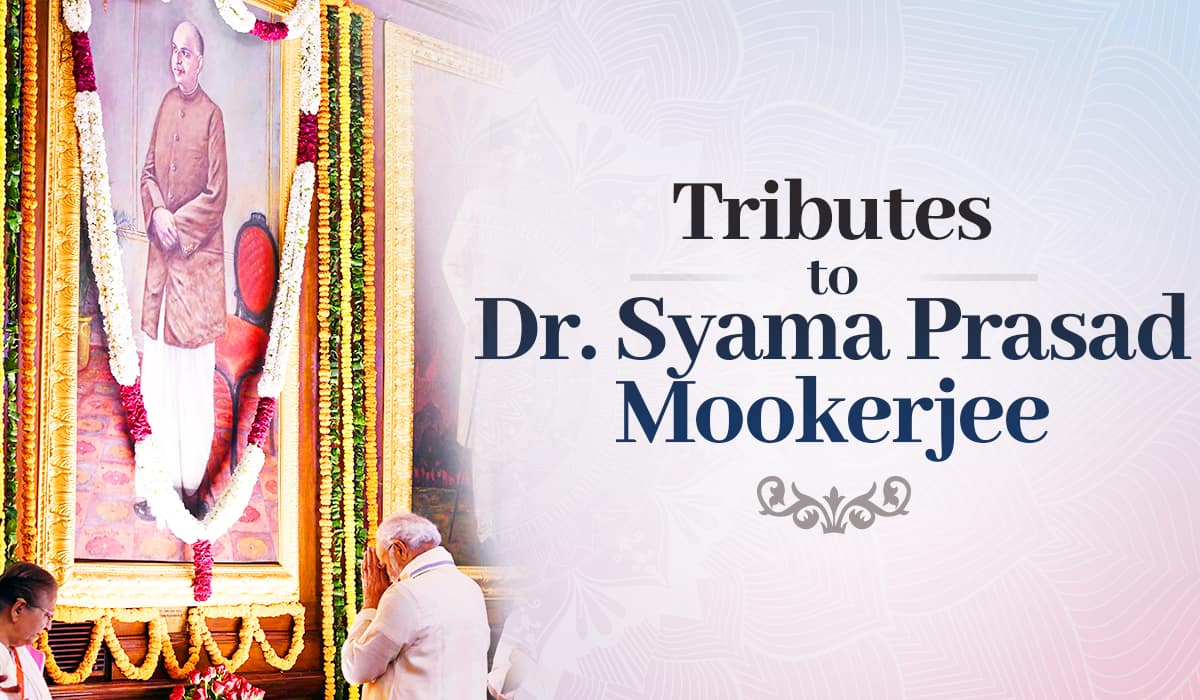
When it comes to commitment to protecting our Constitution too, Atal Ji stands tall. He was deeply impacted by the martyrdom of Dr. Syama Prasad Mookerjee. Years later, he was a pillar of the anti-Emergency movement. In the run-up to the 1977 elections after the Emergency, he agreed to merger of his own Party (Jan Sangh) into the Janata Party. I am sure it would have been a painful decision but for him, and the others, but safeguarding the Constitution was all that mattered.

It is also noteworthy how deeply rooted Atal Ji was in Indian culture. Upon becoming India’s External Affairs Minister, he became the first Indian leader to speak in Hindi at the United Nations. This one gesture showcased his immense pride in India's heritage and identity, leaving an indelible mark on the global stage.

Atal Ji’s persona was magnetic and his life was enriched by his love for literature and expression. A prolific writer and poet, he used words to inspire, provoke thought, and even offer solace. His poetry, often reflective of his inner struggles and hopes for the nation, continues to resonate with people across age groups.

For so many Bharatiya Janata Party Karyakartas like me, it is our privilege that we were able to learn and interact with a person like Atal Ji. His contribution to the BJP was foundational. In those days to spearhead an alternative narrative to the dominant Congress showed his greatness. Alongside stalwarts like Shri L.K. Advani Ji and Dr. Murli Manohar Joshi Ji he nurtured the party from its formative years, guiding it through challenges, setbacks and triumphs. Whenever the choice came between ideology and power, he always chose the former. He was able to convince the nation that an alternative world view from the Congress was possible and such a world view could deliver.
On his 100th Jayanti, let us rededicate ourselves to realising his ideals and fulfilling his vision for India. Let us strive to build an India that embodies his principles of good governance, unity, and progress. Atal Ji's unwavering belief in the potential of our nation continues to inspire us to aim higher and work harder.