Cabinet approves National Sports Policy 2025

Published By : Admin | July 1, 2025 | 16:31 IST
A Vision to Harness the Power of Sports for the Nation’s Holistic Development

The Union Cabinet chaired by the Prime Minister Shri Narendra Modi today approved the the National Sports Policy (NSP) 2025, a landmark initiative aimed at reshaping the country’s sporting landscape and empowering citizens through sports.

The new policy supersedes the existing National Sports Policy, 2001, and lays out a visionary and strategic roadmap to establish India as a global sporting powerhouse and a strong contender for excellence at international sporting events, including the 2036 Olympic Games.

The NSP 2025 is the outcome of extensive consultations involving Central Ministries, NITI Aayog, State Governments, National Sports Federations (NSFs), athletes, domain experts, and public stakeholders. The policy is anchored on five key pillars.

1. Excellence on the Global Stage

This pillar aims to:

  • Strengthen sports programs from the grassroots to elite levels, including mechanisms for early identification and nurturing of talent.
  • Promote the establishment of competitive leagues and competitions, and develop sports infrastructure in both rural and urban areas.
  • Build world-class systems for training, coaching, and holistic athlete support.
  • Enhance the capacity and governance of National Sports Federations.
  • Encourage the adoption of sports science, sports science, medicine, and technology to boost athletic performance.
  • Train and develop sports personnel, including coaches, technical officials, and support staff.


2. Sports for Economic Development

NSP 2025 recognizes the economic potential of sports and seeks to:

  • Promote sports tourism and attract major international events to India.
  • Strengthen the sports manufacturing ecosystem, and promote startups and entrepreneurship in the sector.
  • Encourage private sector participation through Public-Private Partnerships (PPPs), Corporate Social Responsibility (CSR) and innovative funding initiatives.


3. Sports for Social Development

The policy emphasizes the role of sports in driving social inclusion by:

  • Promoting participation among women, economically weaker sections, tribal communities, and persons with disabilities through focused programs.
  • Revitalizing and promoting indigenous and traditional games.
  • Positioning sports as a viable career option by integrating it into education, encouraging volunteering, and facilitating dual-career pathways.
  • Engaging the Indian diaspora through sports.


4. Sports as a People’s Movement

To make sports a national movement, the policy aims to:

  • Drive mass participation and a culture of fitness through nationwide campaigns and community-based events.
  • Launch fitness indices for schools, colleges, and workplaces etc.
  • Enhance universal access to sports facilities.


5. Integration with Education (NEP 2020)

 In alignment with the National Education Policy 2020, the NSP 2025 proposes to: 

  • Integrate sports into school curricula.
  • Equip educators and physical education teachers with specialized training to promote sports education and awareness.


6. Strategic Framework

 To realise its objectives, the NSP 2025 lays down a comprehensive implementation strategy encompassing: 

  • Governance: Establish a robust regulatory framework for sports governance, including legal framework.
  • Private Sector Funding & support: Develop innovative financing mechanisms and engage private sector participation through PPPs and CSR.
  • Technology & Innovation: Leverage emerging technologies, including AI and data analytics, for performance tracking, research, and program implementation.
  • National Monitoring Framework: Create a national framework with well-defined benchmarks, Key Performance Indicators (KPIs), and time-bound targets.
  • Model Policy for States: The NSP 2025 will serve as a model for States and Union Territories, encouraging them to revise or formulate their own policies in alignment with national objectives.
  • Whole-of-Government Approach: The policy calls for integration of sports promotion into the activities, schemes, and programs of all Ministries and Departments to achieve a holistic impact.

With its structured vision and forward-looking strategy, National Sports Policy 2025 sets India on a transformative path toward becoming a leading sporting nation globally, while creating healthier, more engaged, and empowered citizens.

Explore More
Today, the entire country and entire world is filled with the spirit of Bhagwan Shri Ram: PM Modi at Dhwajarohan Utsav in Ayodhya

Popular Speeches

Today, the entire country and entire world is filled with the spirit of Bhagwan Shri Ram: PM Modi at Dhwajarohan Utsav in Ayodhya
India’s higher education enrolment hits 4.5 crore; women, marginalised groups lead way: AISHE report

Media Coverage

India’s higher education enrolment hits 4.5 crore; women, marginalised groups lead way: AISHE report
NM on the go

Nm on the go

Always be the first to hear from the PM. Get the App Now!
...
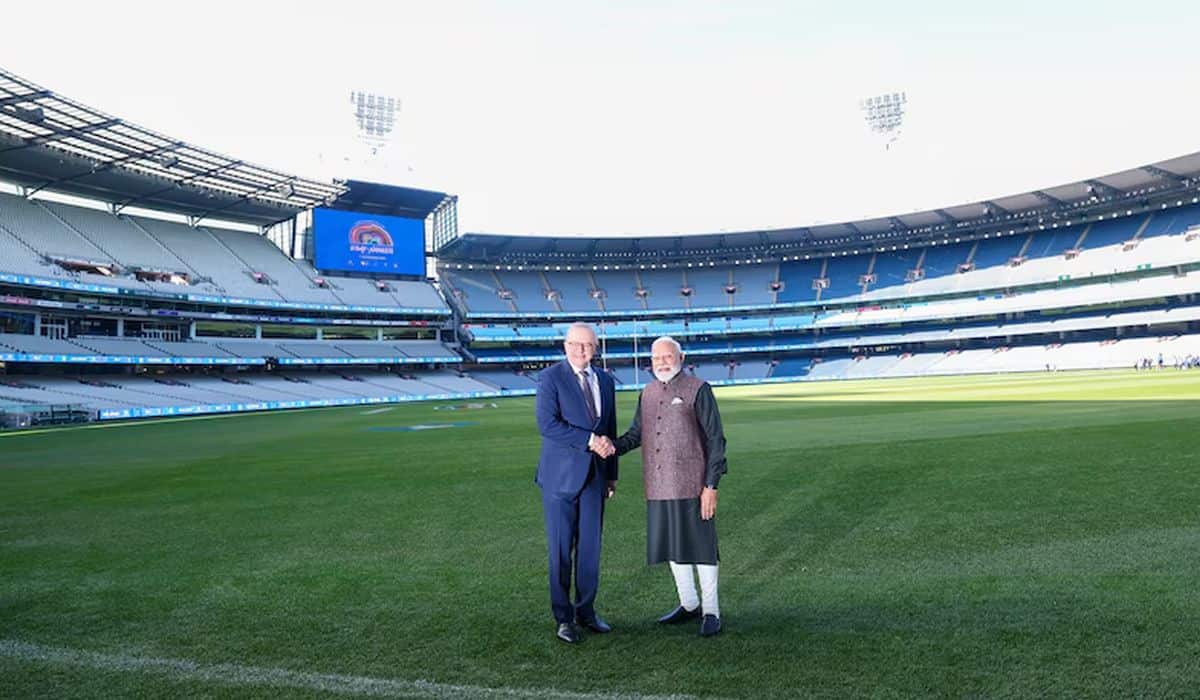
India-Australia Roadmap for Sports Collaboration
July 10, 2026

Sports is a powerful bridge between India and Australia, bringing communities together and opening new pathways for collaboration.

Building on the 2023 MoU on Cooperation in Sports, the India-Australia Roadmap for Sports Collaboration sets out practical, future-focused priorities and opportunities to strengthen this cornerstone of our bilateral relationship.

Recognising the decade of opportunity ahead — including the 2030 Commonwealth Games in Ahmedabad, the Brisbane 2032 Olympic and Paralympic Games, and India’s ambition to host a future Olympic and Paralympic Games — this Roadmap identifies targeted areas of cooperation aligned to shared priorities, capabilities and resources.

Respecting differences in the governance of sport and the development of sport ecosystems in Australia and India, and recognising the leadership role of sporting bodies, businesses, state–level governments, universities and community groups in promoting elite and community sports, we are committed to facilitating engagement and supporting collaborative ways of working between relevant institutions, to encourage stronger sports partnerships at all levels that benefits both countries.

Implementation will be pragmatic and outcomes-focused, with activities prioritised in line with available resources and major event timelines.

Cooperation will be delivered through established partnerships, supported by flexible, demand-led arrangements, whereby responsibility for resourcing activities will be negotiated on a case-by-case basis. This approach ensures practical, sustainable and mutually beneficial outcomes.

In this context, the following have been identified as focus areas for collaboration under this Roadmap:

A. Capacity Building:

o Collaborate for sharing best practice in establishing and operating High-Performance Sports Centres in India in priority sports.

o Identify Para sport as a key priority and opportunity for collaboration, including Australian expertise in Para classification, coaching and performance support, with potential links between Indian and Australian universities where appropriate.

o Drawing on Australia’s coach development models, facilitate two-way exchanges that bring Indian coach and coach educators to Australia and Australian coaches and coach educators to India, using a Train the Trainer approach where appropriate.

o A physical education exchange programme between India and Australia may be introduced to facilitate mutual learning, sharing of best practices, and collaboration in areas such as school sports, sports science, and community participation in physical education.

o Recognising the physical and mental health benefits of yoga and the World Yogasana, the federation for yogasana sports based in India, identify opportunities to share knowledge, foster collaboration and encourage participation in yoga in Australia.

o Work with the Australian Sports Commission to build the capability of select Indian coaches as part of the India Australia High Performance Coach Development program.

o Explore opportunities through relevant non-government stakeholders such as sporting organisations and universities to support talented young Indian sportspersons as part of high-performance programs in Australia through student scholarships funded by Government of India.

B. Collaborative Sports Science and Technology Research:

o Encourage joint research and development projects between universities in India and Australia on athlete performance analytics, injury prevention, sports nutrition, wearable performance technology, recovery techniques and Para sport.

o Encourage partnerships between Indian and Australian universities to co-develop sports curriculums.

o Sport Integrity Australia and National Anti-Doping Agency India contribute to international anti-doping efforts by supporting World Anti-Doping Agency (WADA)-led capacity building programs through engagement with the WADA Asia/Oceania Office, and through representation on the UNESCO International Convention against Doping in Sport (Convention) Groups.

C. Major Sporting Events:

o Collaborate with Australian States and Territories, and National Sporting Organisations to exchange best practices for hosting large events.

o Explore opportunities to host exhibition matches and youth events in both countries to promote sports of mutual interest (such as Kabaddi and Kho Kho in Australia, and Australian Football League and basketball in India).

o Leverage the build-up to major sporting events such as Olympic, Paralympic and Commonwealth Games to establish formal, reciprocal arrangements between Indian and Australian sporting bodies for shared facilities, competitions and support networks during and in the build-up to major sporting events.

o Welcoming the inaugural Big Bash League match to be played in India in Chennai in December 2026, encourage Cricket Australia and the Board of Control for Cricket in India to work towards a commitment to host annual BBL matches in India.

D. Sports Industry and Investment Platform:

o Build on the Australia-funded Sports Industry Summit in Mumbai in December 2026 to promote collaboration between Indian and Australian companies on sports equipment manufacturing, sports media and broadcasting, event management, and sports start-ups.

o Facilitate Australian sports sector businesses in the Indian sports market through information sessions and vice-versa.

o Expand India’s export of high quality, competitively priced sports goods to Australia.

o Expand the export of Australian expertise in high performance sports, including coaching, coach development, strength and conditioning, athlete wellbeing, nutrition and psychology.

E. Women in Sports Partnership:

o Launch joint initiatives promoting women’s leadership, health, high performance and participation in sport, including bilateral tournaments for women athletes, drawing on the Australian Sports Commission’s flagship programs, recognising that sport is a powerful pathway for women’s economic empowerment, leadership, health and social inclusion.