Prime Minister Narendra Modi is a tall example of a strong and decisive leader who can deliver what he promises. Modi ki Guarantee covers a wide range of promises across sectors, citizens, and schemes. Modi ki Guarantee means a steadfast commitment to the welfare of the people. Modi ki Guarantee means a Viksit Bharat, Ek Shrestha Bharat. It is a guarantee for the development of the youth, empowerment of the women, welfare of the farmers, and all those marginalized and vulnerable who have been ignored for decades.
Welfare Guaranteed
Beginning with the most fundamental of needs, the poorest of the poor today have been saturated with flagship government welfare programs by the Modi government. Twenty-five crore people have been lifted out of multi-dimensional poverty even as PM Modi provides free food grains to 80 crore people via PM Garib Kalyan Anna Yojana. This guarantee ensures no one sleeps hungry.
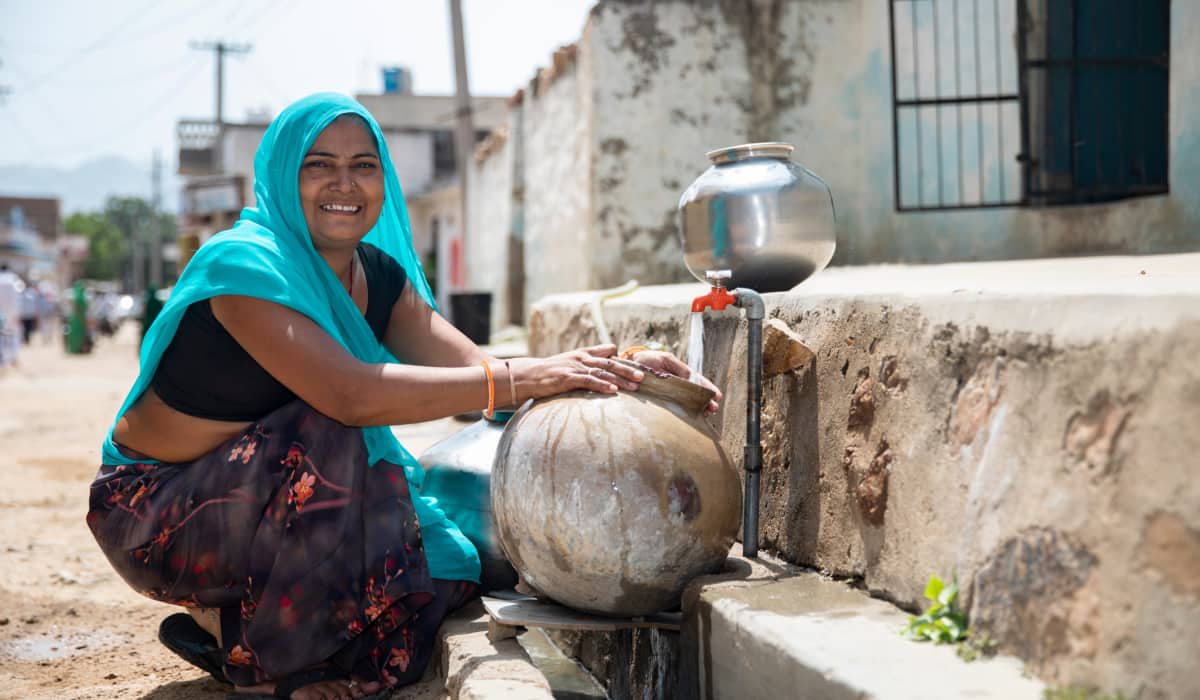
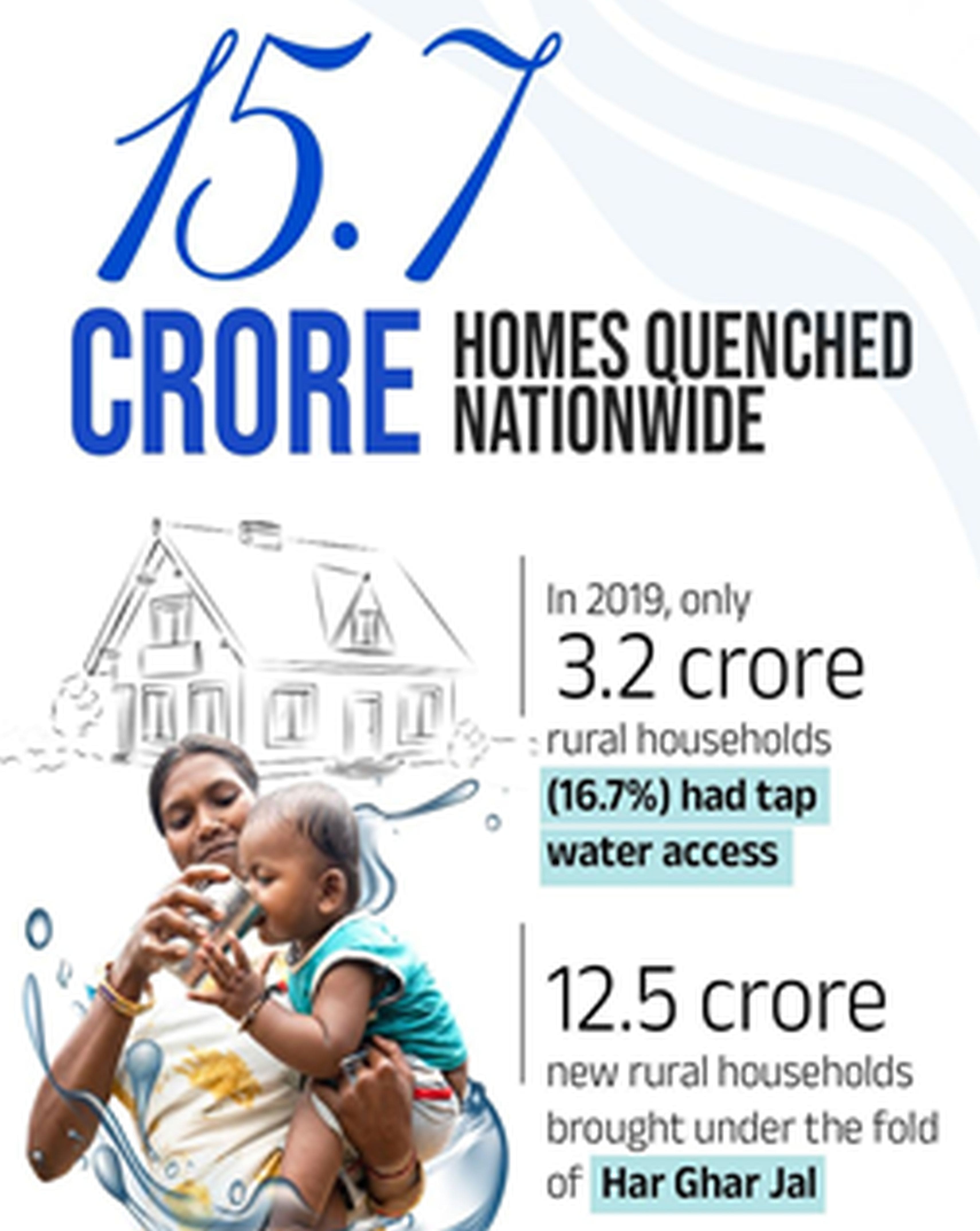
In a bid to provide a roof over each head, the Modi government guarantees' Housing for All' through the PM Awas Yojana for the millions living in urban and rural areas. Today, over four crore houses have been sanctioned under the scheme. 100% electrification of villages is also part of this promise. Water today is reaching over 14 crore rural households under the Jal Jeevan Mission, which guarantees safe and potable tap water connections to all rural households in India.
Ensuring 'Health for All' is the PM Jan Arogya Yojana (PM-JAY), the world's largest health insurance plan funded by a government, covering nearly 55 crore individuals belonging to 12 crore vulnerable families. The scheme acts as a safety net and ensures that medical emergencies don't spiral into a cycle of debt for the poor and vulnerable.
The Modi government is committed to inclusive development and resilience for the vulnerable and marginalized. The tribals, for example, have been at the forefront of the government's efforts to build resilience among vulnerable communities. PM JANMAN, with Rs. 24,000 crore funding, aims to ensure saturation of government schemes amongst the particularly vulnerable tribal groups (PVTGs) to improve their access to basic amenities and overall socio-economic indicators.
Empowering the Annadatas
PM Modi's commitment to the welfare of farmers is evident in the substantial increase in the agriculture budget, reaching Rs. 1.27 lakh crore in 2024-25, a remarkable 300% increase since 2014-15. The PM-KISAN scheme has benefitted over 11 crore farmers with Rs. 2.6 lakh crore given as assistance. The government is also actively supporting farmers in becoming entrepreneurs as 7,000 vibrant agri and allied startups have emerged.
Additionally, the emphasis on ethanol blending, uninterrupted credit access through Kisan Credit Cards, and the successful PM Fasal Bima Yojana, with Rs. 1.5 lakh crore given in claims have created a safety net for the farmers. The record-breaking production of millets and the integration of technology like e-NAM demonstrates the commitment to agricultural growth.
Nari Shakti: Ahead & Beyond
Under the leadership of PM Modi, India has committed to women-led growth. Initiatives like Jan Dhan Yojana have led to 28 crore women gaining access to bank accounts for the first time, while nearly 31 crore MUDRA loans have been extended to women. 1 crore Lakhpati Didis are already transforming the rural landscape in India. The abolishment of Triple Talaq has ushered in a new era of Muslim women. In addition, the success of initiatives like PM Ujjwala Yojana, providing ten crore LPG connections, has empowered women, demonstrating the government's commitment to women's rights and welfare.
The focus on rural sanitation, menstrual hygiene management, and initiatives like Beti Bachao Beti Padhao contribute to creating a more inclusive and gender-sensitive society. The Nari Shakti Vandan Adhiniyam is a giant leap in women's empowerment.
Vikas bhi Virasat bhi
PM Modi's government is not only about development but also about preserving and promoting India's rich cultural heritage. Development of the Kashi Vishwanath Corridor, the Ujjain Mahakal Corridor, the Char Dham project, and the long-awaited Shri Ram Mandir, along with the redevelopment of Ayodhya as the spiritual capital of the world, attest to this.
The government's efforts to mainstream spiritual tourism through schemes like PRASHAD and Swadesh Darshan, along with the successful reclamation of 344 antiquities and the addition of 10 sites to UNESCO's World Heritage List in just nine years, have added heft to India's spiritual and cultural credentials.
As India's Amrit Kaal progresses, the installation of the Sengol in the all-new Parliament celebrates a unique mix of Bharat's profound cultural traditions and contemporary aspirations.
A Promising Ecosystem for the Amrit Peedhi
Recognizing the potential of India's youth, PM Modi has guaranteed their empowerment through various schemes. As India emerges as the 3rd largest startup ecosystem globally with one lakh+ startups, the PM Mudra Yojana has extended credit access to 8 crore first-time youth entrepreneurs. Six crore jobs have also been created between 2014 and 2019 in India's digital economy. 10,000 Atal Tinkering Labs, coupled with assured remuneration to 1.4 crore persons under PM Kaushal Vikas Yojana, have empowered millions of young minds, reducing the unemployment rates—from 5.8% in 2018-19 to 3.2% in 2022-23.
The emphasis on digital literacy, higher education enrollment, and the National Education Policy 2020 demonstrates a commitment to nurturing a skilled and knowledgeable youth population.
Middle Class Emerges a Winner
The middle class has emerged as a driving force in India's growth story under PM Modi's leadership. Infrastructure development, including a vast metro network and Vande Bharat trains, zero tax up to Rs. 7 lakh, and housing sector initiatives like RERA, PM Awas Yojana, and SWAMIH investment fund have contributed to the rise of the middle class, constituting 31% of the total population in 2021-22.
The Aatmanirbhar Bharat Rozgar Yojana benefitted 60 lakh beneficiaries while Rs. 82,222 crore worth of AMRUT projects have been taken in 500 cities and towns across the country. The increase in per capita income (from Rs. 79,118 in 2013-14 to Rs. 1.97 lakh in 2022-23) and the rise of the neo-middle class demonstrates that India's middle class has emerged as a winner in India's growth story.
Indian Economy: A Story that Inspires
India's economic trajectory has been nothing short of remarkable under PM Modi's leadership. From being part of the 'Fragile Five,' India is now the fifth-largest economy, attracting a record $596 billion in FDI from 2014 to 2023. The Goods and Services Tax revenues averaging Rs. 1.6 lakh crore per month, and the growth of the MSME sector, employing over 15 crore people, highlights the economic resurgence of India.
The introduction of the Production-Linked Incentive (PLI) scheme and the 'Make in India' push has resulted in a significant increase in exports, reaching $775 billion in 2022-23. Control over inflation and the strengthening of public sector banks are important factors that contribute to the economic success story.
Digital India: A Model for the World
The technological and digital transformation of India is a testament to PM Modi's vision for a tech-savvy and digitally connected nation. Initiatives like Digital India, BharatNet, and UPI have bridged the digital divide, increasing efficiency and bringing inclusivity. In fact, UPI has gone global, as France, Singapore, UAE, Nepal, and Bhutan have accepted UPI payments.
With 1st rankings in fintech adoption and digital skills readiness, India has the credit of one of the fastest deployments of 5G technology to its credit. The focus on supercomputing and digital health further exemplifies the nation's commitment to technological advancement.
Abrogation of Article 370: End of an Era of Exclusion
PM Modi has uprooted a system which denied due rights to over 1.5 crore people of Kashmir. Between 1994 and 2004, over 40,000 terror incidents took place, but in the nine years of the Modi government, these incidents were reduced by a massive 70% to only 2,197. Similarly, the number of civilian deaths came down by 72%, and the number of deaths of security forces by 59%.
PM Modi has also given a new direction to the energies of Kashmiri youth. In 2010, about 2,654 incidents of stone pelting took place in J&K, killing 112 civilians & injuring 6,235 security personnel. However, not a single incident came to light in 2023.
Post removal of Article 370, cinema halls opened in J&K for the 1st time in 2021 after a hiatus of 30 years. Today, four new theatres have started functioning. A multiplex has been built in Srinagar & over 100 films are being shot in J&K.
The abrogation has led to the integration of the region with the country, boosted inclusion, pushed industrial growth, increased investments, and created a favourable environment for innovation in Jammu & Kashmir. PM Modi has fulfilled his promise of One Symbol, One Constitution, and One Bharat.
Bharat: A Vishwamitra in Making
India's foreign policy, under PM Modi's guidance, has elevated the nation to new heights on the global stage. 100% global consensus on the New Delhi G20 Declaration, leadership in organizations like ISA and CDRI, and contributions during the COVID-19 pandemic (30 crore+ COVID-19 vaccines to 101 Countries) showcase its emergence as a global leader.
India's achievements in digital technology, real-time digital payment transactions, and global rankings in various fields solidify its place as a key player in the international arena.
In conclusion, Prime Minister Narendra Modi's tenure has been marked by a holistic and inclusive approach to governance. From empowering farmers and women to driving economic growth, preserving culture, and leading on the global stage, the government's efforts have laid the foundation for a resilient, empowered, and globally respected India. It underscores what PM Modi says—Modi ki guarantee yani har guarantee poori hone ki guarantee.
As the nation continues on the path of development, it is evident that the vision of Viksit Bharat @2047 is not just a slogan but a living reality shaping the destiny of a vibrant and dynamic nation.