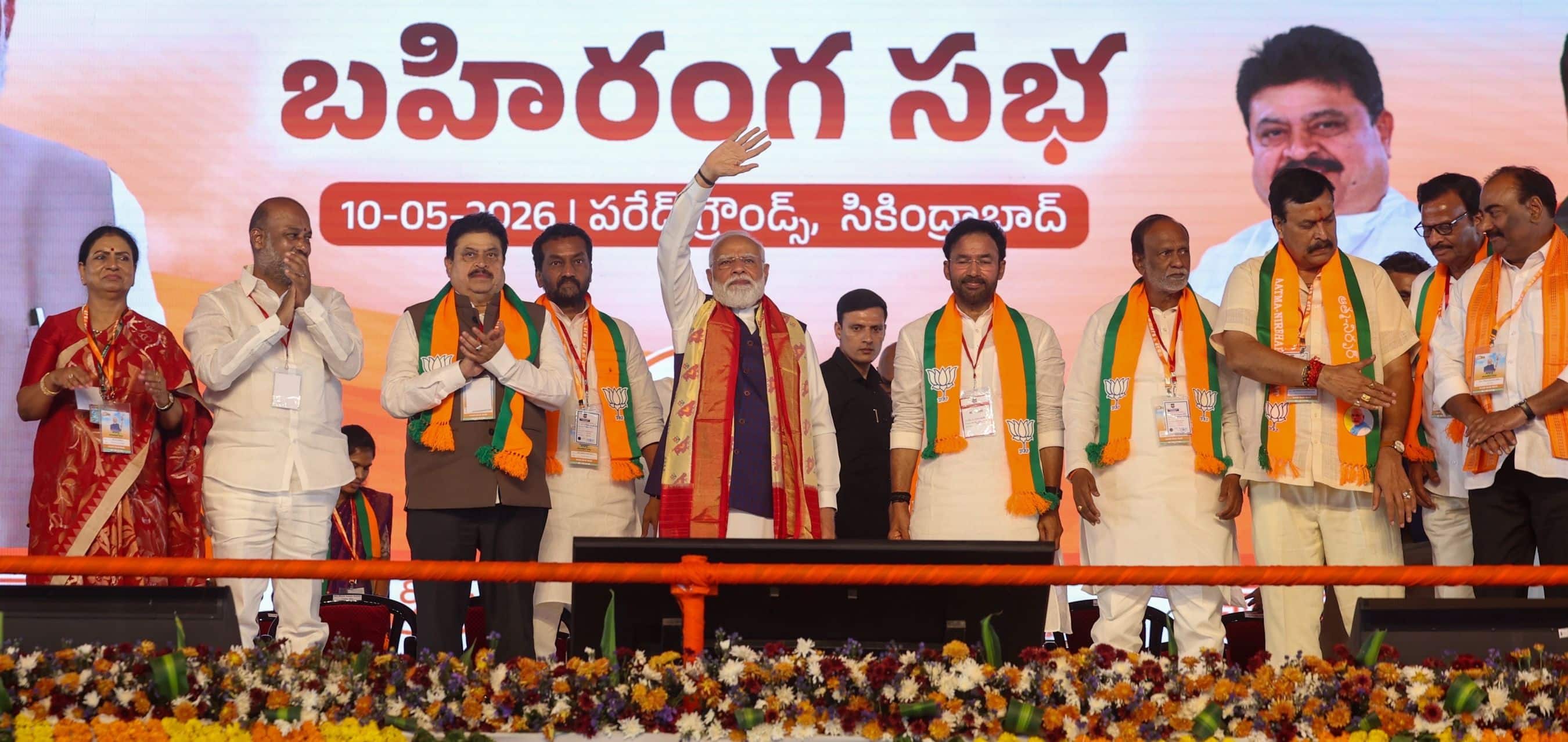


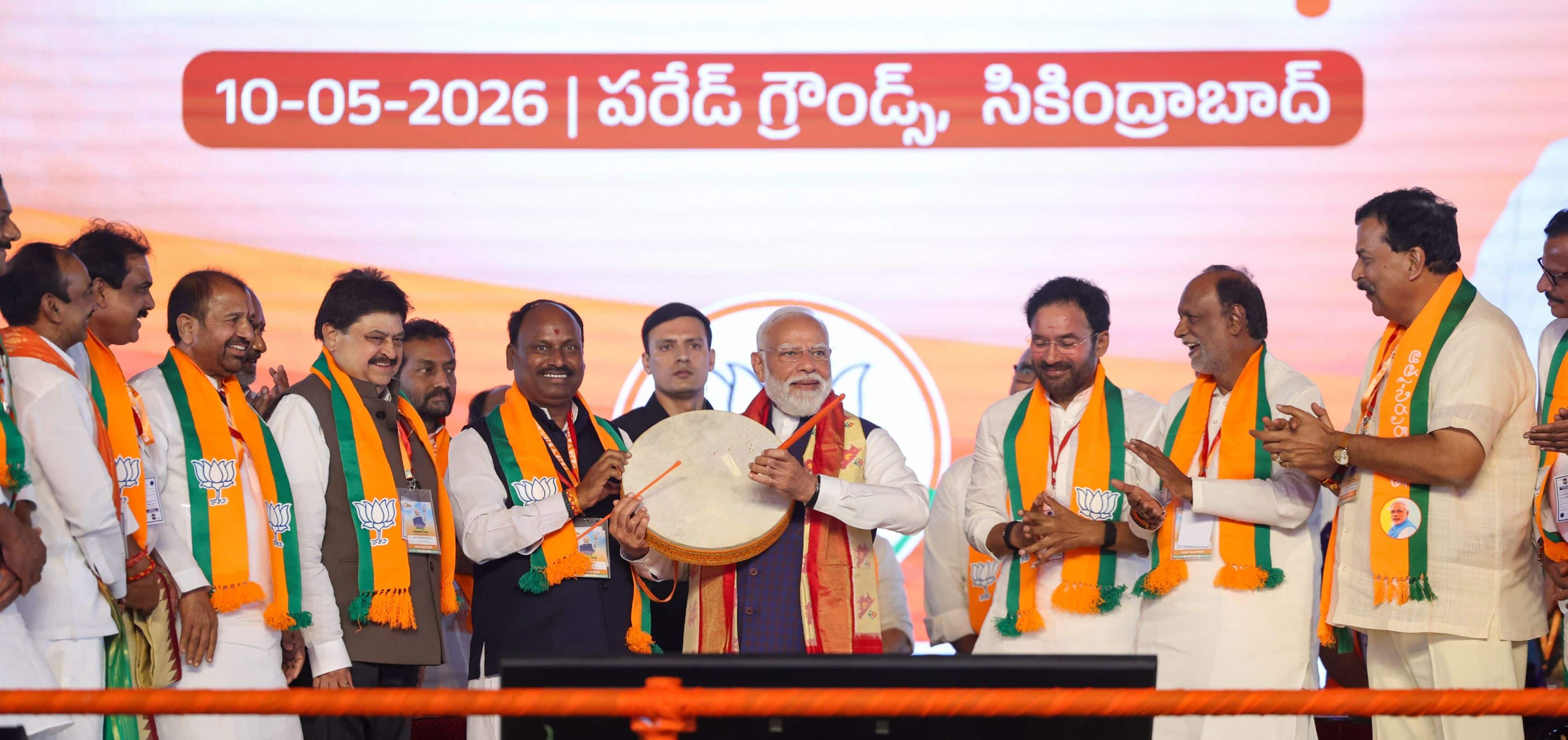
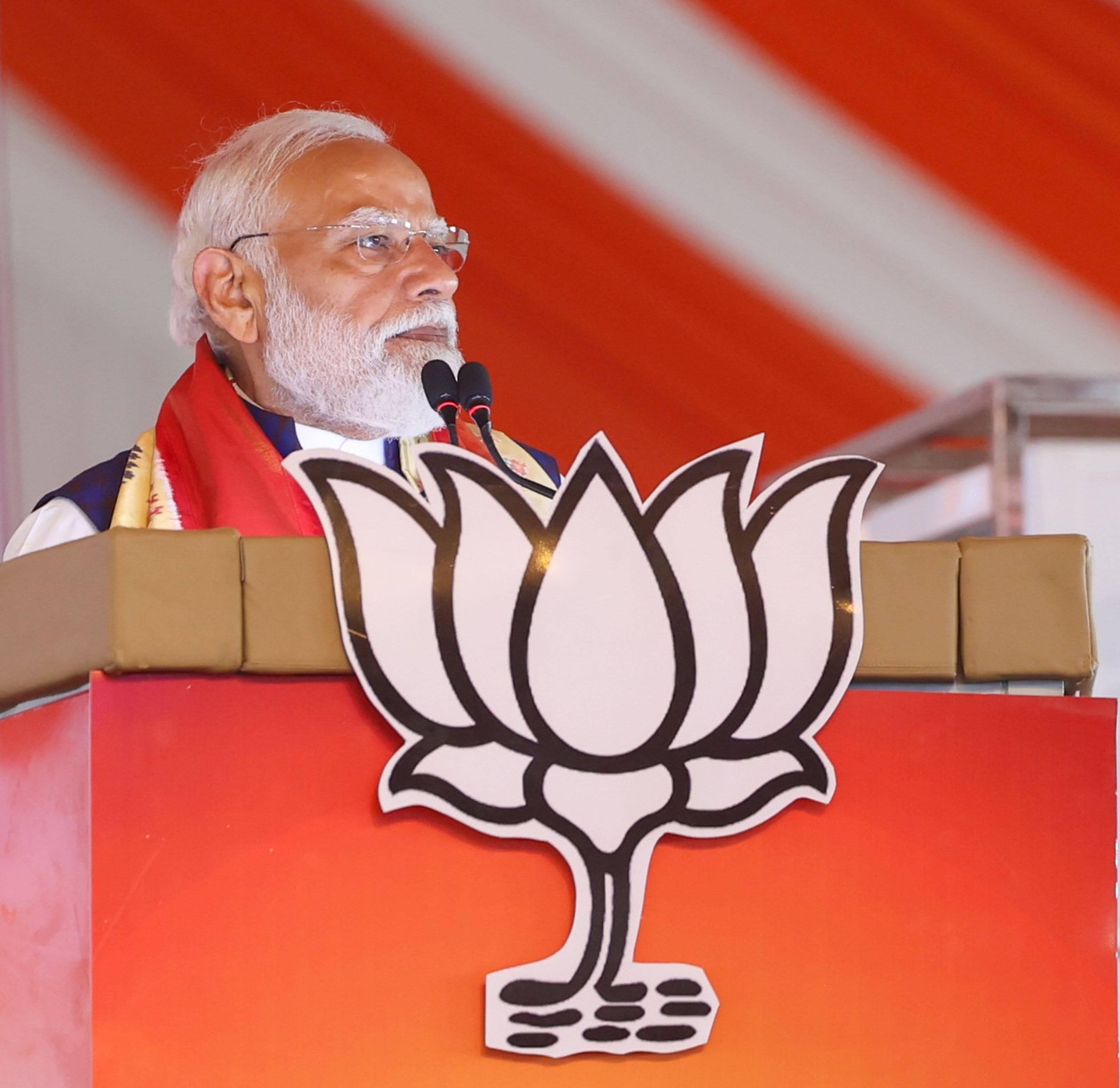
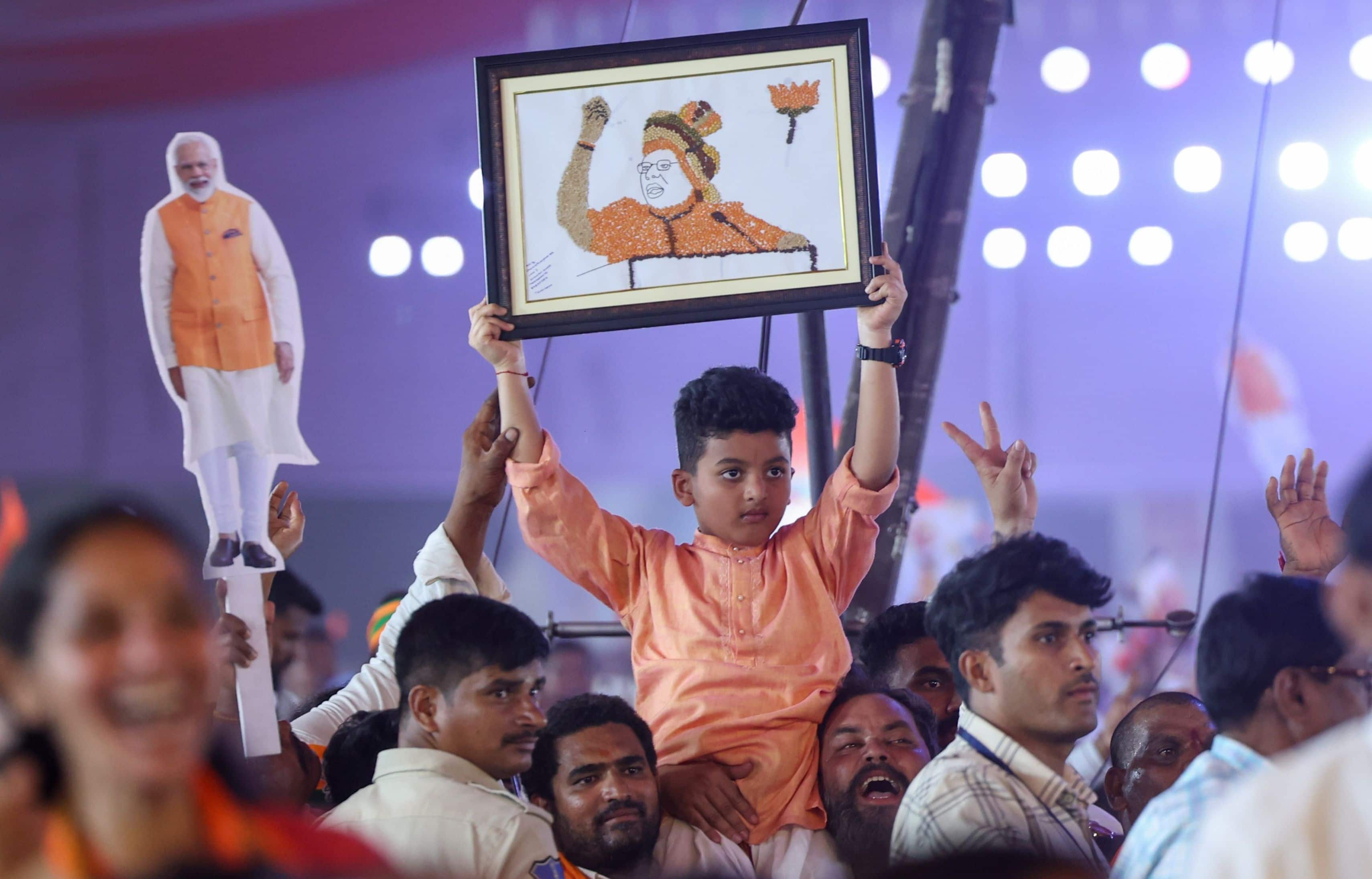
PM Modi addressed a massive public rally in Hyderabad, Telangana, where he spoke on India’s rising global stature, the significance of BJP’s recent electoral victories and the country’s collective responsibility during ongoing global economic and geopolitical challenges.
Referring to BJP’s historic mandate in West Bengal, the PM said the result had become a subject of discussion not only across India but around the world because it marked the defeat of a politics rooted in fear, corruption, dynastic control and authoritarianism. He said the people of Bengal had broken free from years of political suppression and chosen a future based on trust and development.
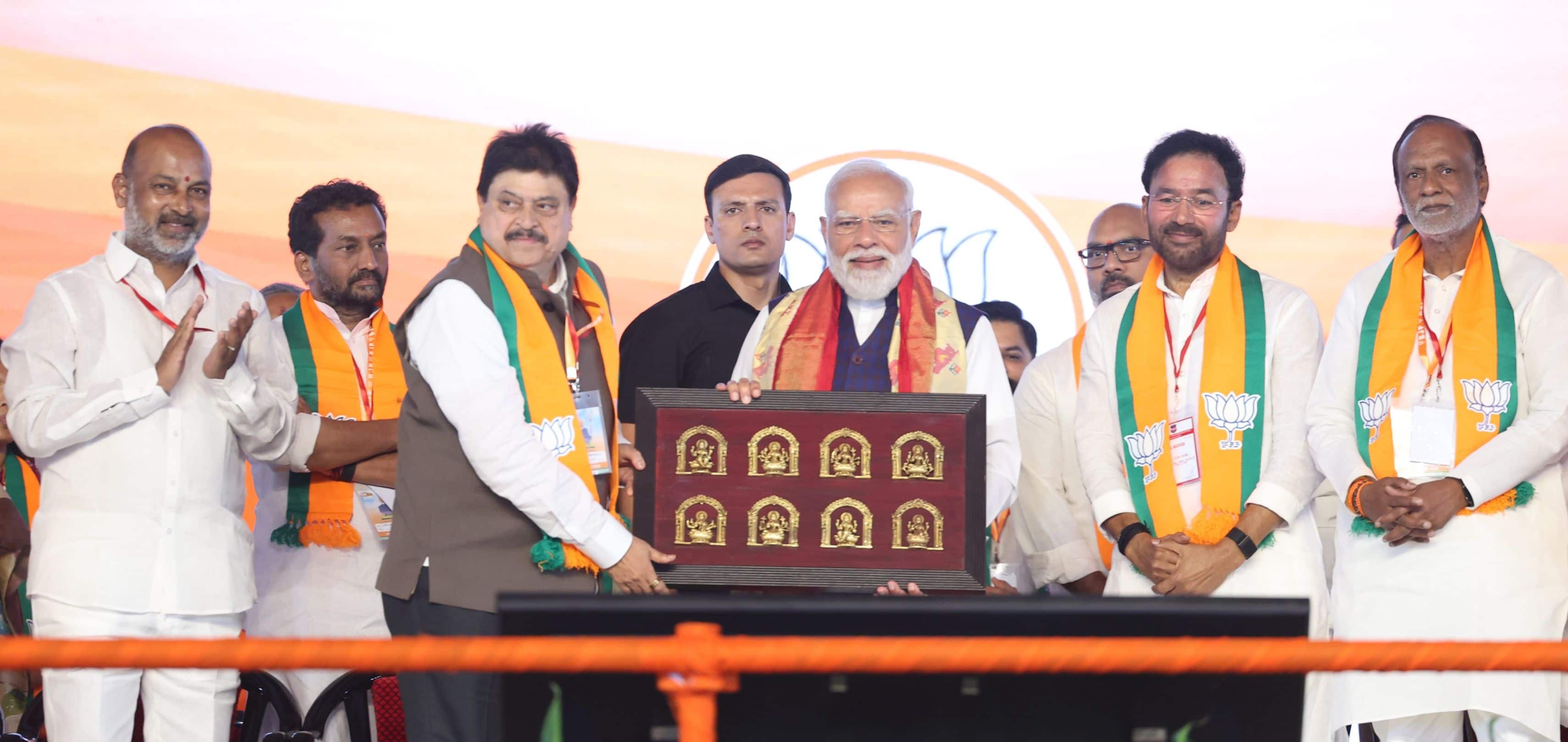
Highlighting BJP’s expanding presence across the country, PM Modi said the party’s rise from Assam and Odisha to Bengal and Puducherry reflects a major shift in India’s political mindset and landscape, where people are increasingly choosing “vishwasvaad” over dynastic politics. He expressed confidence that Telangana too is moving towards decisive political change and said the people are growing tired of broken promises and family-driven politics of Congress and BRS.
The PM highly criticised the Congress, accusing it of divisive and extremist politics, and alleged that ideological support from Congress and Left parties allowed Maoist violence to survive for decades. Emphasising BJP’s vision for “Viksit Telangana”, he said a BJP government in the state would work with a new vision, stronger commitment and development-focused governance.
PM Modi then turned to the ongoing global crises and their impact on India’s economy and supply chains. He said the Covid pandemic, the Ukraine war and recent regional conflicts have severely disrupted the global flow of food, fuel and fertilisers, creating pressure on economies worldwide. He reflected on how India protected farmers during the fertiliser crisis by providing subsidised fertilisers at affordable rates while global prices had skyrocketed.
He established India, despite not being a major oil-producing nation, has worked continuously to shield citizens from the burden of rising international fuel and gas prices by absorbing much of the pressure at the government level. However, he stressed that the scale of the current global crisis requires collective national responsibility and public participation.
Calling for “kartavya” and responsible citizenship, he urged people to reduce unnecessary fuel consumption by using metros, carpooling, rail transport and electric vehicles wherever possible. He also appealed for a revival of work-from-home, online meetings and virtual conferences to reduce fuel dependence and save foreign exchange reserves.
The PM further encouraged citizens to prioritise domestic tourism and avoid unnecessary foreign travel for weddings, vacations and celebrations for at least a year in order to conserve foreign exchange. He also urged people to reduce gold purchases temporarily in the national interest.
Touching upon the importance of economic self-reliance, PM Modi said India must avoid becoming dependent on imports in sectors where domestic capacity can be strengthened. Referring to copper imports, he said disruptions caused by protests and shutdowns had weakened domestic production and increased reliance on foreign supply chains. He urged people to stay vigilant against forces that obstruct India’s path towards self-reliance.
He also focused on sustainable living and agriculture, calling upon families to reduce edible oil consumption and adopt healthier lifestyles while helping save foreign exchange. He strongly advocated reducing chemical fertiliser usage and promoting natural farming to protect soil health and reduce import dependency. He also urged farmers to shift from diesel pumps to solar-powered pumps under government schemes.
Reiterating the importance of “Vocal for Local”, PM Modi appealed to citizens to consciously choose ‘Made in India’ products in daily life. From household essentials to consumer goods, he said, every small shift towards swadeshi products strengthens India’s economy and supports local manufacturers.
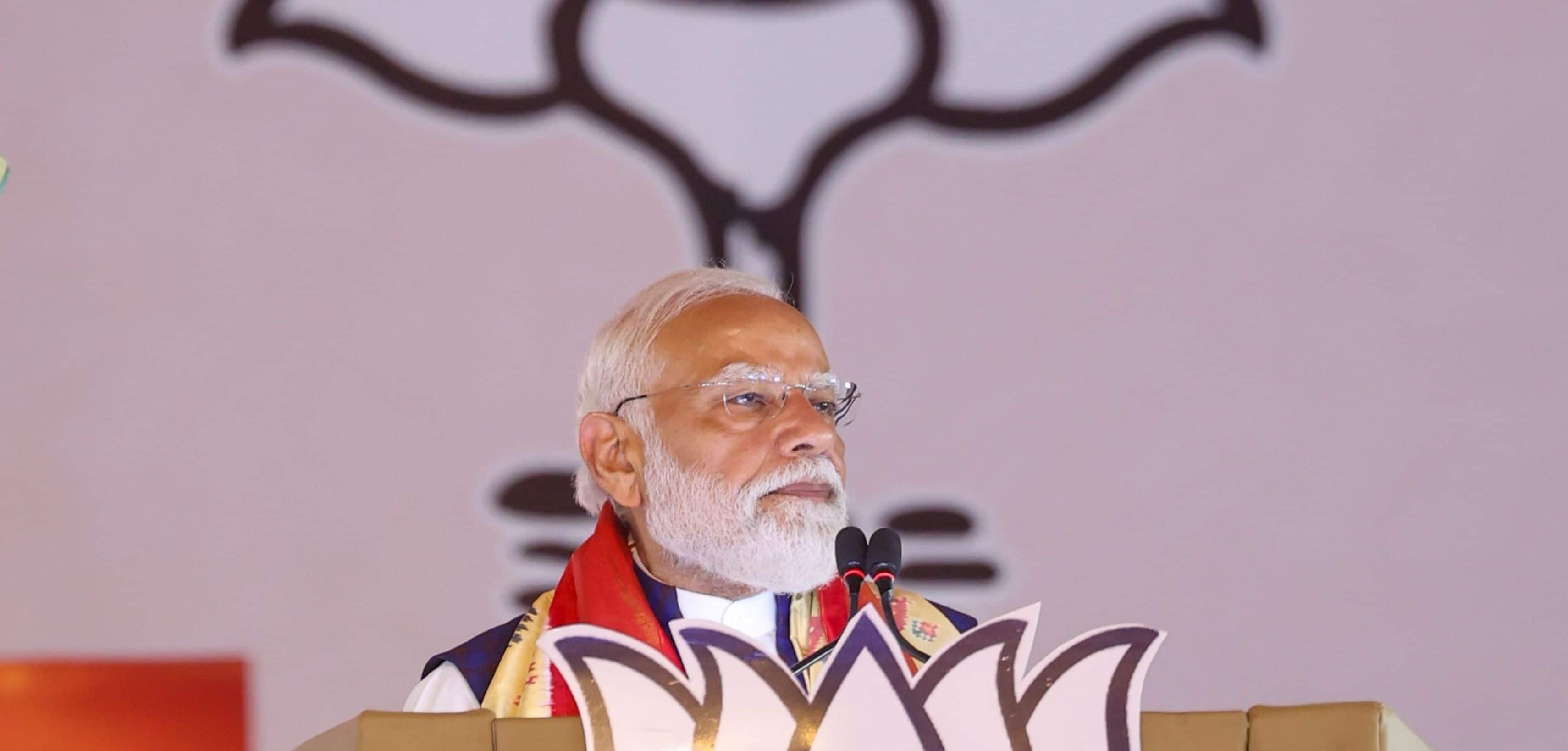
Concluding his address, the PM repeated that the challenges facing India are not political issues belonging to one government or one party, but national responsibilities that require collective effort from citizens, organisations and institutions alike. He expressed confidence that with unity, discipline and commitment, India will successfully overcome every global challenge and continue moving towards the goal of a developed nation.
Click here to read full text speech
कल मैं बंगाल में था... वहां पहली बार बीजेपी के सीएम ने शपथ ली है... पहली बार बंगाल में, प्रचंड बहुमत से बीजेपी सरकार बनी है।
— narendramodi_in (@narendramodi_in) May 10, 2026
और मैं देख रहा हूं... कि बीजेपी की जो ये ऐतिहासिक विजय है... उसका उत्साह यहां तेलंगाना में भी दिख रहा है: PM @narendramodi in Hyderabad
TMC ने अपने तानाशाही मॉडल में बंगाल को बेड़ियों से जकड़ दिया था।
— narendramodi_in (@narendramodi_in) May 10, 2026
अभी बंगाल की जनता ने राजनीति के ऐसे ही भयावह तानाशाही मॉडल को पराजित किया है।
इसलिए, पूरे देश में उत्सव है... ऐसा लग रहा है जैसे बंगाल के लोग बरसों के बाद अब खुले में सांस ले रहे हैं: PM @narendramodi
असम से ओडिशा…और बंगाल से पुडुचेरी तक… ये सिर्फ चुनावी विस्तार नहीं है।
— narendramodi_in (@narendramodi_in) May 10, 2026
ये भारत के राजनीतिक मानस में आए उस परिवर्तन का संकेत है… जहां जनता अब वंशवाद नहीं, विश्वासवाद चुन रही है: PM @narendramodi
तेलंगाना के लोग...कांग्रेस और BRS की वादाखिलाफी... और इनकी परिवारवादी राजनीति से तंग आ चुके हैं।
— narendramodi_in (@narendramodi_in) May 10, 2026
इसलिए भी तेलंगाना की जनता बदलाव चाहती है: PM @narendramodi
कांग्रेस अब देश बांटने वाली नफरती राजनीति का मुख्य आधार हो गई है।
— narendramodi_in (@narendramodi_in) May 10, 2026
कांग्रेस लेफ्ट पार्टियों से भी ज्यादा लेफ्ट यानि पक्की माओवादी हो गई है... और मुस्लिम लीग से ज्यादा कट्टर हो चुकी है।
इसलिए, लोग कांग्रेस को MMC यानि मुस्लिम लीगी माओवादी कांग्रेस कह रहे हैं: PM @narendramodi