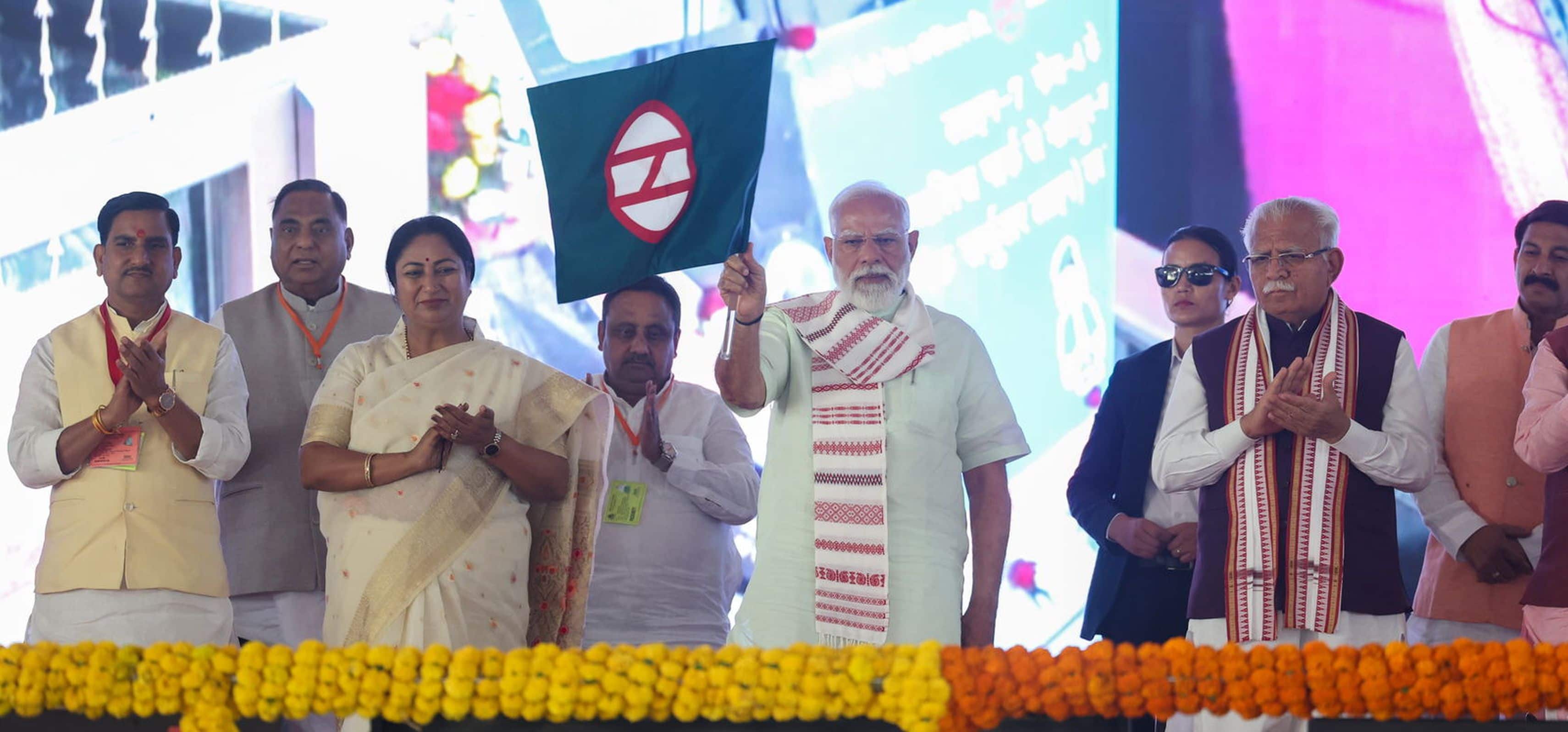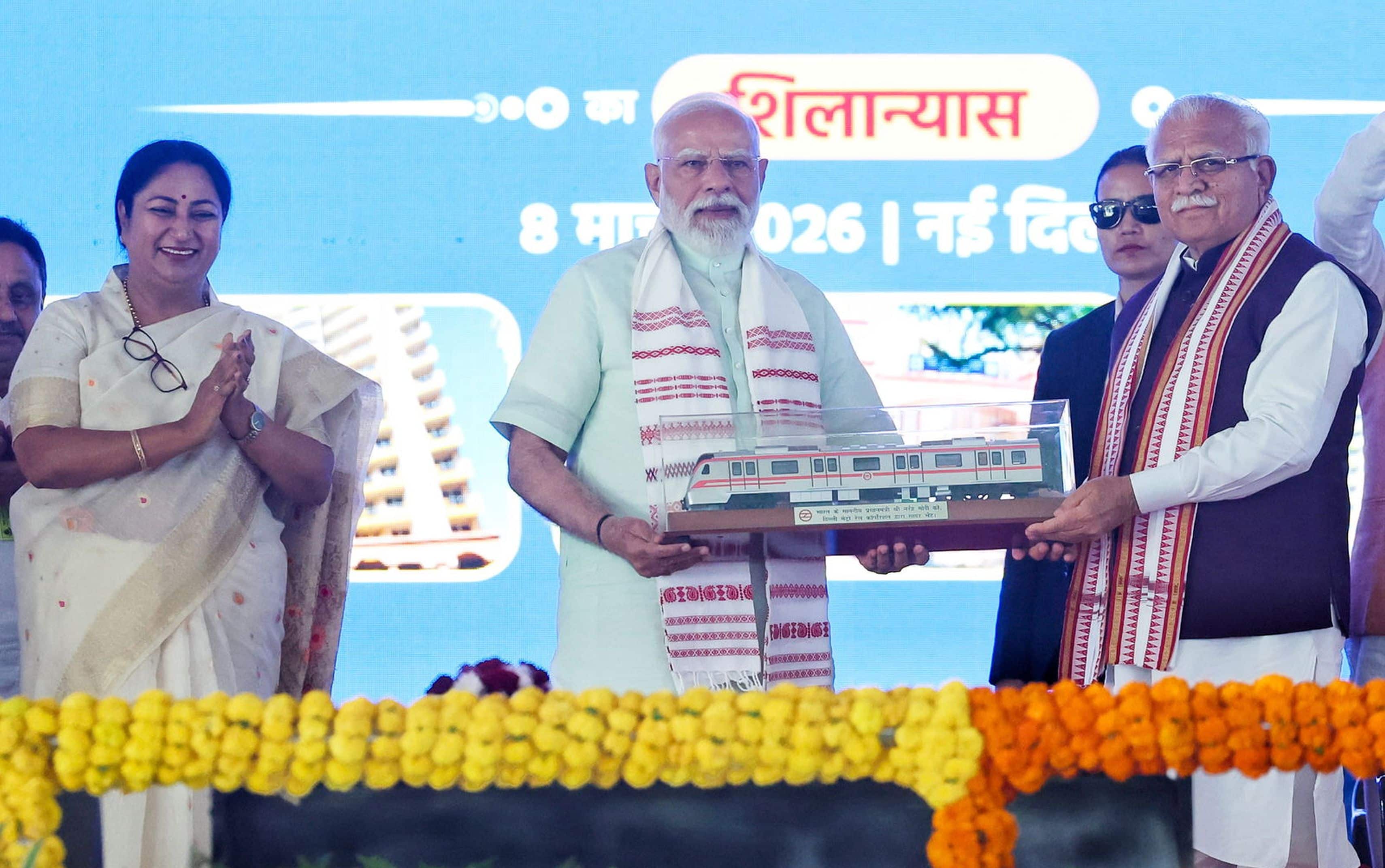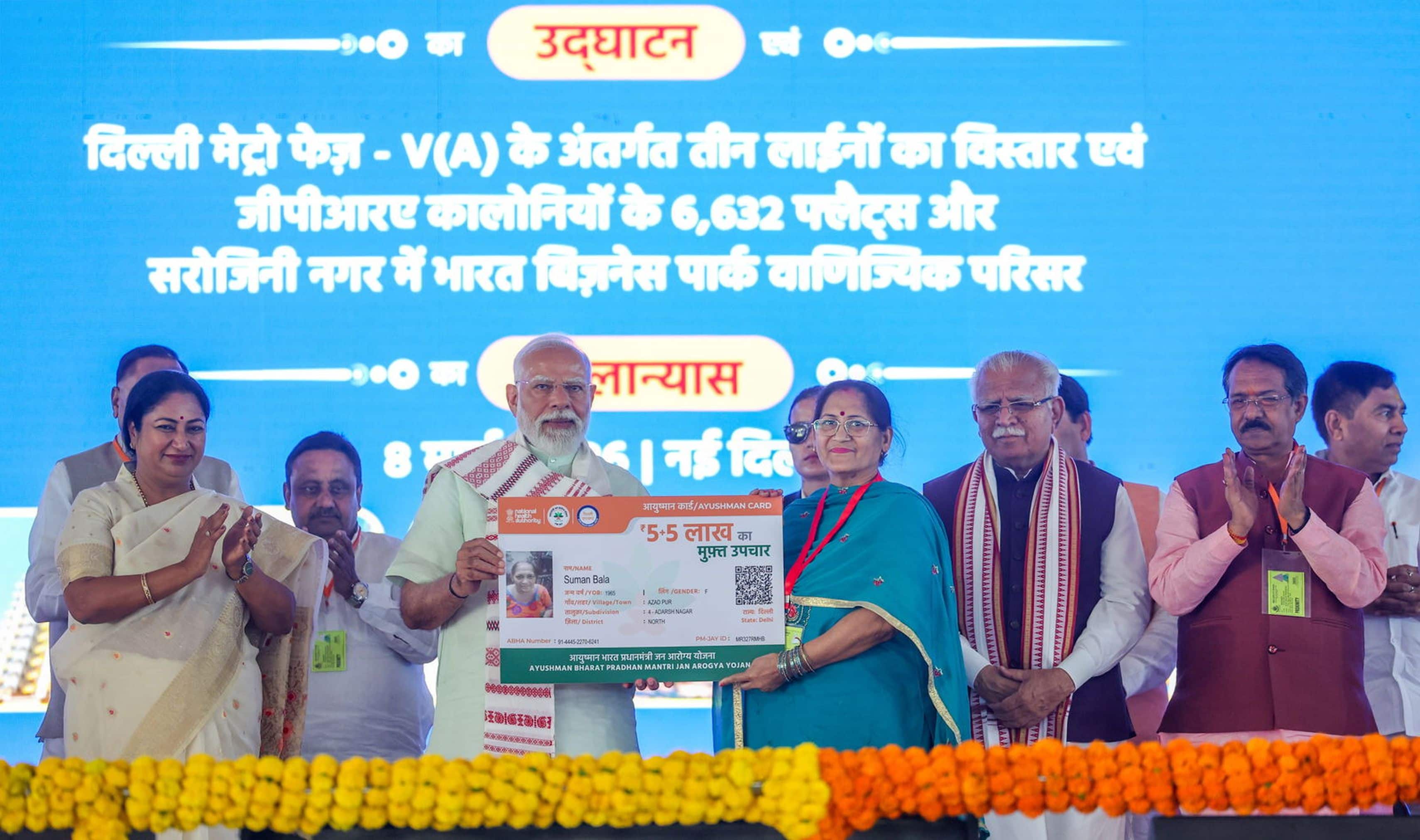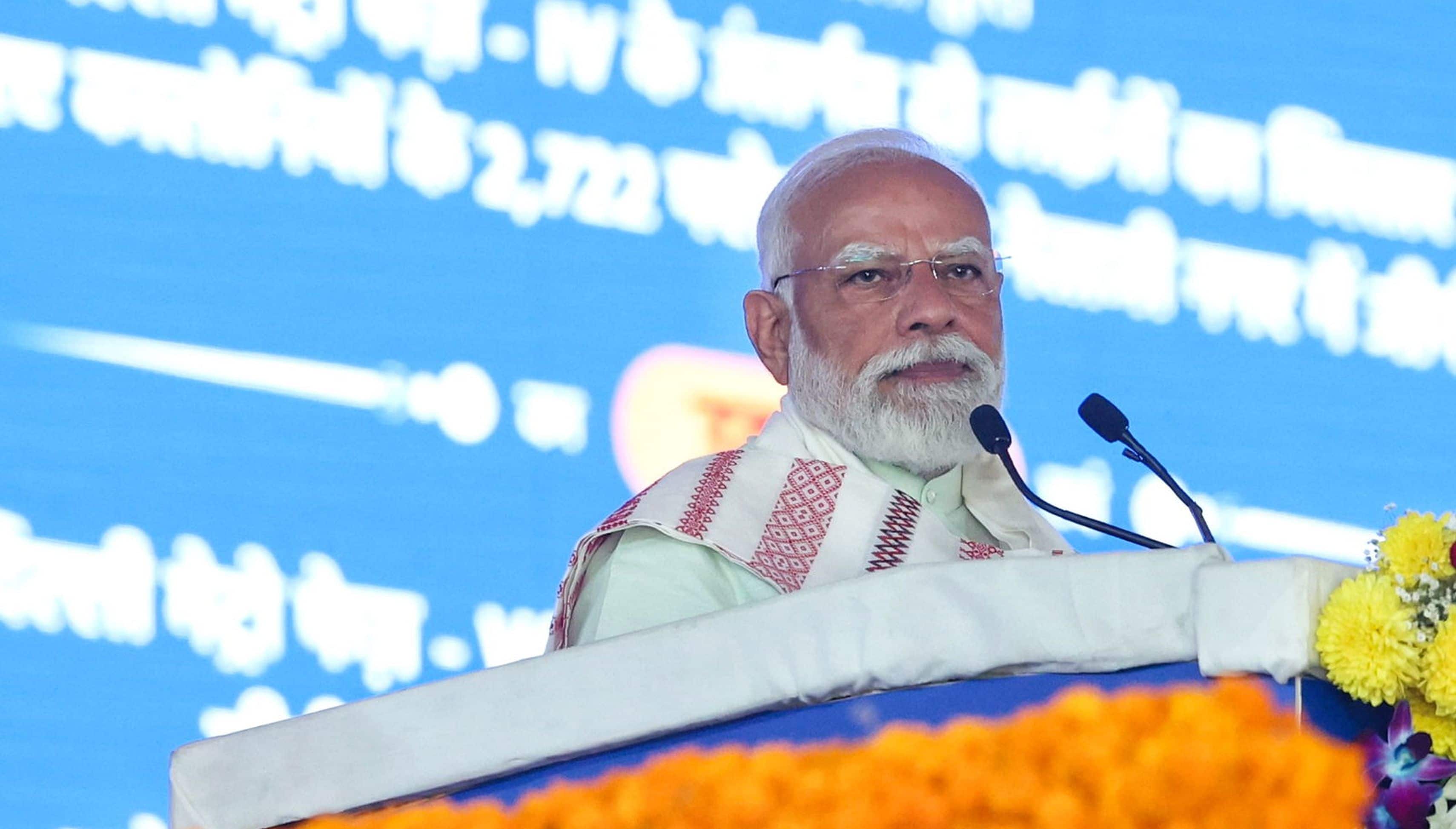
We are committed to building a modern, Viksit Delhi. The projects launched today will strengthen infrastructure, improve connectivity and enhance ease of living: PM
India's ‘Nari Shakti’ is moving forward with a new energy in every field: PM
The development of Delhi is not just the development of one city; it is linked to the image of the entire country: PM
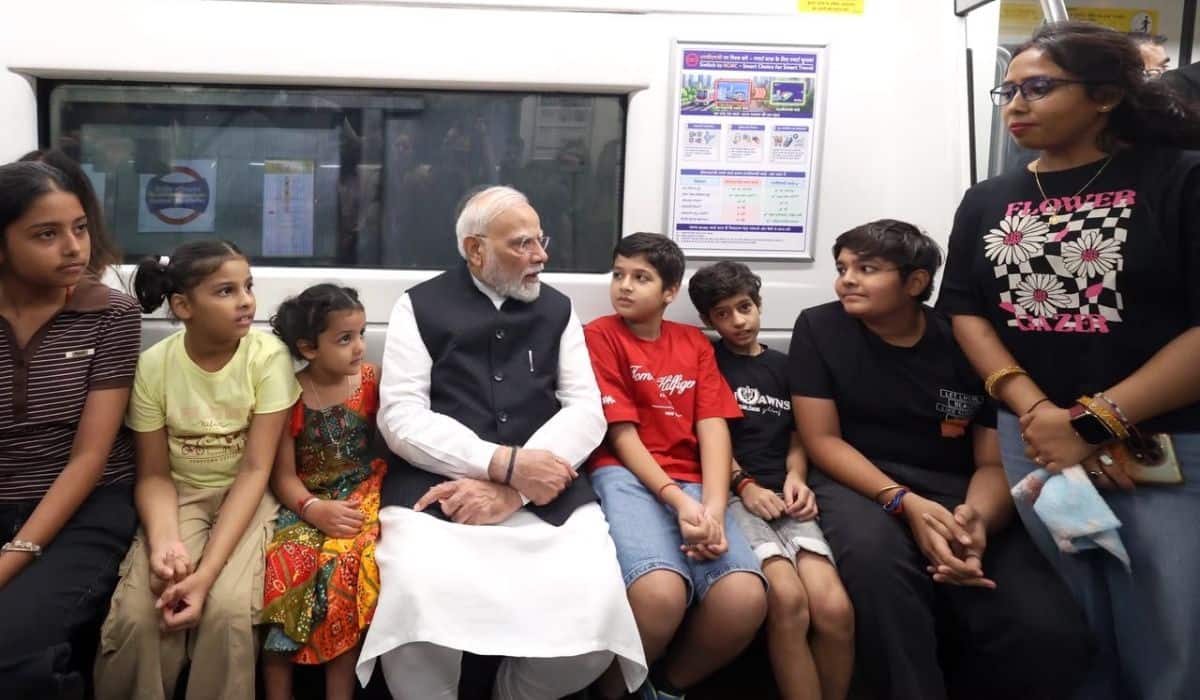
The new Metro section will bring major convenience to lakhs of people in the capital, especially in East and North-East Delhi, making daily commute easier than ever before: PM
The government has launched a campaign to provide PM SVANidhi credit cards to street vendors, enabling them to access credit as per their needs: PM

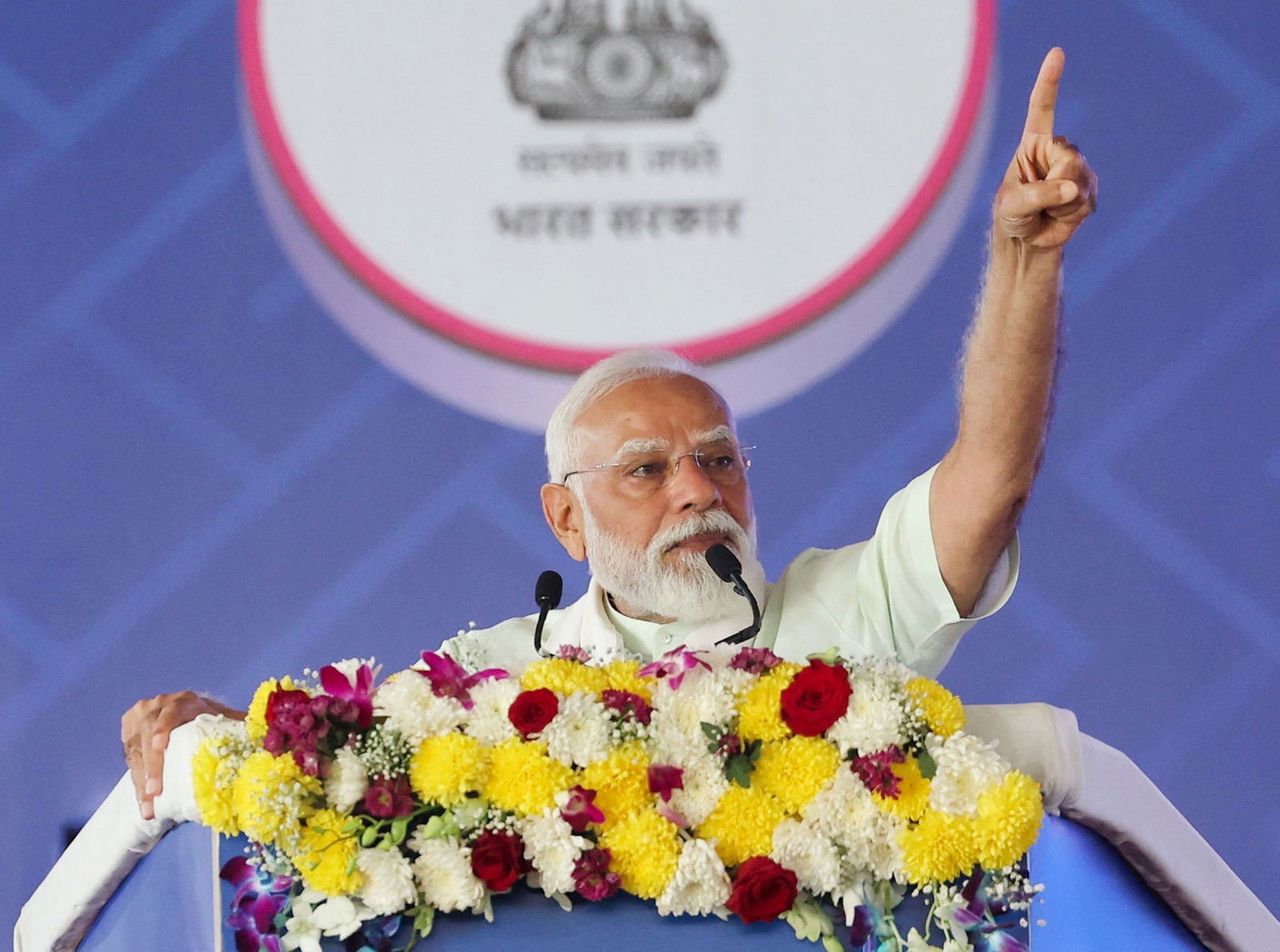
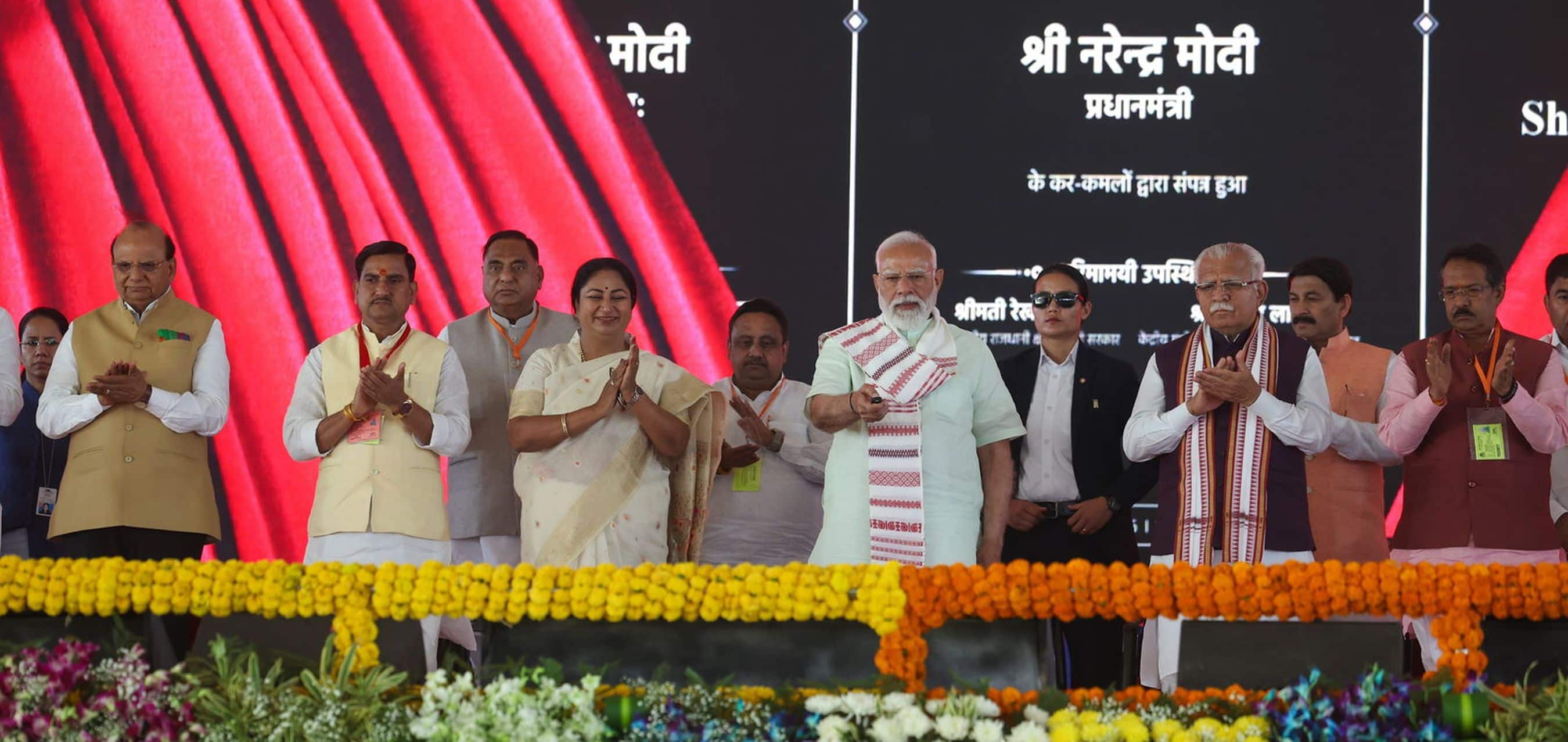
The Prime Minister Shri Narendra Modi inaugurated , and laid the foundation stone of multiple development projects worth around ₹33,500 crore in Delhi. Addressing the gathering, “Today, we have all gathered here to give a new momentum to the development of Delhi,” Shri Modi highlighted.

The scope of these projects is extensive, ranging from the growth of the Metro network to the establishment of modern residential complexes for thousands of government employees. “The people of Delhi, with new hope and a new resolve, formed the double-engine government here a year ago, and its result is visible today in these development works,” Shri Modi emphasized.

Celebrating International Women’s Day at the event, the Prime Minister lauded the massive presence of women and highlighted how their strength and self-confidence are driving India’s empowerment narrative across politics, science, and sports under the successful leadership of the state government. “Whether it is politics, administration, science, sports, or social service, India’s Nari Shakti is moving forward with a new energy in every field,” Shri Modi highlighted.

Emphasizing that Delhi is the global identity and energy symbol of Indian democracy, the Prime Minister noted that modernizing the capital’s infrastructure and connectivity, such as the Namo Bharat train and the historic expansion of the Metro network to 375 kilometers, is essential for showcasing India's confidence to the world. “The more modern, convenient, and better connected Delhi becomes, the more strongly India's self-confidence will be visible to the world,” Shri Modi remarked.

The Prime Minister emphasized that under the double-engine governance model, every transport facility in the national capital is being systematically upgraded to ensure clean, comfortable, and modern travel for the lakhs of citizens who rely on bus services daily. “While over four thousand electric buses provided by the Centre are already operational, an additional 1,800 new buses have been deployed in the last year alone, including hundreds of 'Devi Buses' designed to enhance last-mile connectivity across Delhi’s colonies and neighborhoods”, Shri Modi remarked.

The Prime Minister stated that the government is currently working in mission mode to address the diverse challenges facing the national capital, specifically highlighting how the Peripheral Expressway has successfully diverted lakhs of vehicles that previously had to enter the city. “ A massive initiative for the rejuvenation of the Yamuna River has been launched, with work already underway on projects worth crores of rupees to ensure its cleanliness,” , Highlighted Shri Modi.

The Prime Minister emphasized that the government is dedicated to continuously improving the quality of life in the capital, specifically highlighting the establishment of several Ayushman Arogya Mandirs over the past year. PM Modi noted that with the implementation of the Ayushman scheme in Delhi, both the poor and the middle class are now accessing free medical treatment and significant healthcare benefits. Highlighting a new era of efficiency,Shri Modi stated , “ The current development model focuses on immediate action and tangible results, ensuring that projects are swiftly transitioned from planning to ground-level execution”.

Reflecting on his visit to Sarojini Nagar prior to the event, the Prime Minister highlighted the inauguration of modern residential complexes specifically designed for government employees. PM Modi emphasized, “ Those who work tirelessly to fulfill the nation's resolutions deserve safe, clean, and convenient living conditions, which is the driving force behind these new infrastructure projects.” With thousands of flats handed over to beneficiaries today, Shri Modi expressed his firm belief that these modern homes would usher in a new era of happiness and aspiration for the nation’s "Karmayogis."

The Prime Minister emphasized that welfare schemes are reaching every household, from rural villages to urban centers, specifically benefiting poor families, farmers, and laborers. PM Modi highlighted the transformative impact of the ‘PM SVANidhi Yojana’, noting that in Delhi alone, nearly 2 lakh street vendors have received over ₹350 crore in financial assistance, moving them away from high-interest informal loans toward formal banking. Marking a historic shift in financial inclusion, the Prime Minister noted that credit card facilities, once reserved for the affluent, are now being extended to street vendors to empower their small businesses. “The SVANidhi credit card is becoming a new medium of self-respect for the poor, ensuring that those who were once marginalized are now empowered with modern financial tools,” Shri Modi highlighted.

Commemorating International Women’s Day, the Prime Minister shared the landmark achievement of fulfilling the national resolve to create 3 crore "Lakhpati Didis," highlighting that over 10 crore women are now empowered through Self-Help Groups (SHGs). PM Modi noted that by providing these women with access to capital, banking systems, and specialized training, the government has enabled them to achieve financial independence and bolster the rural economy. “The success of our sisters has inspired a new resolution to create 3 crore more Lakhpati Didis, and I am confident that with the blessings of our Nari Shakti, this goal will be achieved,” Shri Modi asserted.

Expressing deep concern over recent events in West Bengal, the Prime Minister shared a grievance regarding the alleged disrespect shown by the state government toward the President of India, Smt. Droupadi Murmu, during her visit to a traditional Santal tribal festival. Invoking ancient wisdom on the downfall of the arrogant, he asserted that such politics of ego would ultimately be rejected by the citizens of the state. “The boycott and mismanagement of the President’s program is an insult to the Constitution and every daughter of this nation, and the people will never forgive this arrogance of power,” Shri Modi highlighted.

Concluding his address, the Prime Minister described Delhi as a historic city that is currently witnessing a transformative era defined by the self-confidence of a "New India," which will serve as the foundation for a developed future. PM Modi called upon all citizens to work collectively toward the fulfillment of national resolutions. Extending his final congratulations to the people for the newly launched projects, the Prime Minister invoked a spirit of harmony and national pride. “The self-confidence of New India will lead us toward a developed future, and I am confident that every family in Delhi will see a better and more prosperous life,” Shri Modi highlighted.

Click here to read full text speech

Explore More
শ্রী রাম জন্মভূমি মন্দিরের ধ্বজারোহণ উৎসবে প্রধানমন্ত্রীর বক্তব্যের বাংলা অনুবাদ

জনপ্রিয় ভাষণ

শ্রী রাম জন্মভূমি মন্দিরের ধ্বজারোহণ উৎসবে প্রধানমন্ত্রীর বক্তব্যের বাংলা অনুবাদ
7 hyper local foods that PM Modi made popular via speeches, social media and Mann ki Baat

Media Coverage

7 hyper local foods that PM Modi made popular via speeches, social media and Mann ki Baat
NM on the go

Nm on the go

Always be the first to hear from the PM. Get the App Now!
...
Fulfilling public aspirations is the core objective of this budget and the resolution of this government: PM Modi
March 09, 2026
India is working today on a vision of preventive and holistic health: PM
In recent years, the country’s health infrastructure has strengthened, with medical colleges opening in hundreds of districts and health services reaching every village through Ayushman Bharat and Arogya Mandirs: PM
Our Yoga and Ayurveda are becoming popular across the entire world: PM
We must accelerate linking our education system with the real-world economy and increase our focus on AI, automation, digital economy and design-driven manufacturing: PM
India is moving towards an innovation-driven economy: PM
As we prepare for futuristic technologies today; it is crucial that no daughter is held back due to a lack of opportunities: PM
In recent years, sports have been seen as a key pillar of national development; initiatives like Khelo India have energised the sports ecosystem and sports infrastructure is being strengthened nationwide: PM

Friends,

In this series of post-budget webinars, today marks the fourth and most significant one. Fulfilling aspirations of people is not merely a subject of discussion-it is the core objective of this budget and the firm resolve of this government. Education, Skill, Health, Tourism, Sports, and Culture are fundamental sectors that serve as the major means of fulfilling these aspirations. Therefore, in this webinar, we are deliberating on these crucial dimensions. For the implementation of budget announcements, the thoughts and suggestions of all experts, policymakers, scholars, entrepreneurs, and my young companions present here are extremely important. I warmly welcome and greet you all in this fourth session of the budget webinar.

Friends,

India today is working on a vast vision for preventive and holistic health. In recent years, the country’s health infrastructure has been strengthened, with hundreds of new medical colleges opening across districts. Through the Ayushman Bharat scheme and wellness centers, healthcare services have expanded to villages nationwide. Our yoga and Ayurveda are gaining popularity across the world. You will certainly discuss various aspects of this, but I would like to highlight one important subject-the care economy. In the coming decade, the number of senior citizens in the country will rise rapidly. Moreover, even today, many countries across the world face a huge demand for caregivers. Therefore, in the health sector, new skill-based employment opportunities are emerging for millions of youth. I urge the health sector experts present in this webinar to suggest new training models and partnerships so that the training ecosystem in the country can be further strengthened.

Friends,

Closely related to this is the subject of telemedicine. Today, a large number of people in remote areas are benefiting from it, and trust in it is steadily growing. However, I believe there is still a great need to increase awareness and ease of access in this area.

Friends,

Over the past decade, a major transformation has taken place in the mindset of the country. Today, beyond the boundaries of villages, towns, and cities, every young Indian wants to do something new, driven by the spirit to achieve. This new mindset of the new generation is the nation’s greatest strength, its most valuable capital for a bright future. To capitalize on this, we must continuously modernize and upgrade our education system. The new education policy has laid the necessary foundation for this. Now, it is essential that our curriculum remains updated according to market needs! We must accelerate the process of linking our education system with the real-world economy. We need to place greater focus on subjects like AI and automation, digital economy, and design-driven manufacturing.

Friends,

The country is consistently working to connect education with employment and enterprise. New models like university townships reflect this approach. Today, India is promoting the A.V.G.C. sector-Animation, Visual Effects, Gaming, and Comics. India is moving towards an innovation-driven economy. Many academicians and academic institutions are connected to this webinar today. I urge you to deliberate on developing your campuses as centers of industry collaboration and research-driven learning. This will provide students with real-world exposure and strengthen the skill ecosystem.

Friends,

A very important subject is STEM-Science, Technology, Engineering, and Mathematics. It is a matter of great pride that the number of daughters showing interest in STEM subjects is steadily increasing in our country. As we prepare for futuristic technologies, it is crucial that no daughter is held back due to lack of opportunities. In this webinar, you must discuss this direction. We need to place greater emphasis on increasing women’s participation. We must build a research ecosystem where young researchers have full opportunities to experiment and work on new ideas.

Friends,

Youth power becomes national power only when it is healthy, disciplined, and full of self-confidence. That is why, in recent years, sports have been seen as an important stream of national development. Initiatives like Khelo India have infused new energy into the sports ecosystem of the country. Sports infrastructure is being strengthened across the nation. In this webinar, you must deliberate on some key questions: How can talent be identified more accurately even from small towns and villages? How can structured financial support for thousands of athletes be improved? And thirdly, how can our sports bodies be made more professional? In the coming years, the Commonwealth Games will be held in India, and the country is striving to host the Olympics. In such a scenario, we must identify young athletes at an early age and nurture them, only then will India be able to raise its flag high in international competitions.

Friends,

Tourism and culture play a major role in creating new employment opportunities. When tourism grows in a place, the branding of that location or city also increases. This accelerates the overall development of that city. India has no shortage of historical sites. But for a long time, tourism remained confined to a few select destinations. Now, we are focusing on developing tourist destinations across every corner of the country.

Friends,

In this webinar, you must discuss a holistic approach to strengthening India’s tourism ecosystem. Your suggestions on trained guides, hospitality skills, digital connectivity, community participation, cleanliness, tourism, and related subjects will be very important.

Friends,

When institutions, industry, and academia work together, the pace of transformation accelerates. I am confident that this series of post-budget webinars will provide concrete direction for the future. Such efforts will further strengthen the foundation of a developed India. And friends, it is a very pleasant experience that due to the tradition of webinars, after the budget and especially during implementation, I have been told that this year, lakhs of people connected to these subjects-experts, beneficiaries, and those involved in the system-have actively participated in the webinars. Our officials have informed me that excellent and practical suggestions are coming in. This means not only solutions to problems but also new energy and new momentum to move forward with confidence. I say this is a very delightful experience of the webinars. All those who participated in these webinars are worthy of appreciation and gratitude. Once again, I extend my best wishes and heartfelt thanks to all of you.

Namaskar!