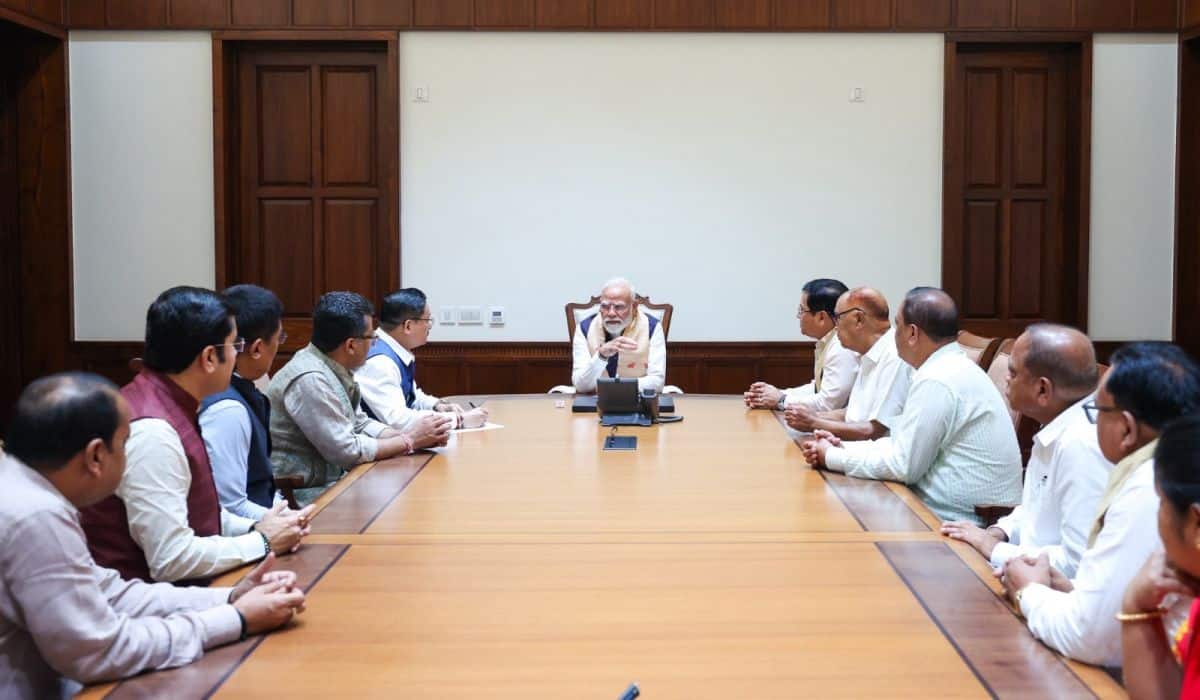
Prime Minister Shri Narendra Modi launched three high throughput COVID-19 testing facilities via video conferencing today. These facilities are located at the National Institutes of Indian Council of Medical Research, at Kolkata, Mumbai and Noida.
Prime Minister said that these hi-tech state-of-the-art testing facilities will boost the testing capacity by almost 10,000 daily tests in each of the three cities. More number of tests will assist early detection and treatment, thereby helping fight the spread of the virus. He added that these labs will not be limited to testing for COVID, but in future, will also be able to test for Hepatitis B and C, HIV, Dengue and several other diseases.

Timely decisions
Prime Minister underlined that due to timely decisions taken by the government, India is better placed vis-a-vis other countries in terms of deaths due to COVID. The recovery rate is also higher than other countries and is improving on a daily basis. The total number of people who have recovered from the virus is about to reach 10 lakh.
Corona specific health infrastructure
Prime Minister said that it was imperative for the country to develop corona specific health infrastructure at a fast pace. He noted that the Centre had announced a package of Rs 15,000 crore at the beginning of this battle. The country now has more than 11,000 COVID facilities and more than 11 lakh isolation beds.
While the country had only one COVID testing centre in January, there are almost 1300 such labs now. He said that at present, more than 5 lakh tests are being conducted in the country daily, and efforts are underway to increase this capacity to 10 lakh in the coming weeks.
He noted that the country has become the second largest PPE kit manufacturer. The country has progressed from not having even a single PPE kit manufacturer as recently as six months ago, to having more than 1200 manufacturers now, who are producing more than 5 lakh such kits daily. He also highlighted that from being dependent on imports, now more than 3 lakh N-95 masks are being produced in the country daily, annual production capacity of ventilators has become 3 lakh and there has also been a significant increase in the production of medical oxygen cylinders. This has not only helped save lives but has also converted India from an importer to an exporter.
Talking about efforts to contain the spread in rural areas, Prime Minister mentioned the need to develop new health infrastructure as well as boost the already existing health infrastructure facilities in the villages.
Ramping up human resource
Prime Minister said that apart from developing the physical infrastructure, the country has also managed to swiftly ramp up human resources including paramedics, ASHA workers, Anganwadis etc, who have played a significant part in controlling the spread of the pandemic. He also spoke about the need to work on continuously attaching new and retired health professionals with the health system in order to prevent fatigue from setting in our corona warriors.
Being safe during festivities
He forewarned people to be cautious during the celebrations of the festivals to come, in order to keep the virus contained. He underlined that the benefits of PM Garib Kalyan Anna Yojna should reach the poor timely. He added that till the time a vaccine is not developed, do gaz doori, wearing masks and hand sanitization are the tools at the disposal of the people to keep them safe.
Union Minister Dr. Harsh Vardhan said that labs to test for COVID are now available all across the country. He also spoke about the Union Home Minister working along with Delhi Chief Minister in order to control the spread of the virus in the national capital.
Chief Ministers speak
The Chief Ministers thanked the Prime Minister for the launch of the testing facilities. Maharashtra Chief Minister Shri Uddhav Thackeray praised the leadership of the Prime Minister in the tough circumstances. He spoke about the ‘chase the virus’ initiative in Mumbai and also discussed establishing permanent infection hospitals.
West Bengal Chief Minister Ms. Mamata Banerjee appreciated the cooperative attitude of the Prime Minister towards the States, spoke about efforts to track cases, use of tele-medicine and also about the need to ramp up facilities in some of the existing labs in the State.
Uttar Pradesh Chief Minister Shri Yogi Adityanath expressed his gratitude towards the Prime Minister for his untiring efforts in this fight against the virus. He said that these labs launched today will dramatically reduce testing time. He mentioned about ramping up testing ability in the State and the plan to increase the number of daily antigen tests.
Background
These three high-throughput testing facilities have been set up strategically at ICMR-National Institute of Cancer Prevention and Research, Noida; ICMR-National Institute for Research in Reproductive Health, Mumbai; and ICMR-National Institute of Cholera and Enteric Diseases, Kolkata, and will be able to test over 10,000 samples in a day. These labs will also reduce turn-around-time and exposure of lab personnel to infectious clinical materials. The labs are enabled to test diseases other than COVID as well, and post the pandemic, will be able to test for Hepatitis B and C, HIV, Mycobacterium tuberculosis, Cytomegalovirus, Chlamydia, Neisseria, Dengue, etc.
देश के करोड़ों नागरिक कोरोना वैश्विक महामारी से बहुत बहादुरी से लड़ रहे हैं।
— PMO India (@PMOIndia) July 27, 2020
आज जिन Hi-tech State of the Art टेस्टिंग फेसिलिटी का लॉन्च हुआ है उससे पश्चिम बंगाल, महाराष्ट्र और उत्तर प्रदेश को कोरोना के खिलाफ लड़ाई में और ताकत मिलने वाली है: PM @narendramodi begins address
दिल्ली- NCR, मुंबई और कोलकाता, आर्थिक गतिविधियों के बड़े सेंटर हैं।
— PMO India (@PMOIndia) July 27, 2020
यहां देश के लाखों युवा अपने करियर को, अपने सपनों को पूरा करने आते हैं।
अब इन तीनों जगह Test की जो उपलब्ध कपैसिटी है, उसमें 10 हज़ार टेस्ट की कैपेसिटी और जुड़ने जा रही है: PM @narendramodi
एक अच्छी बात ये भी है कि ये हाईटेक लैब्स सिर्फ कोरोना टेस्टिंग तक ही सीमित रहने वाली नहीं हैं।
— PMO India (@PMOIndia) July 27, 2020
भविष्य में, Hepatitis B और C, HIV, डेंगू सहित अनेक बीमारियों की टेस्टिंग के लिए भी इन लैब्स में सुविधा उपलब्ध कराई जाएगी: PM @narendramodi
देश में जिस तरह सही समय पर सही फैसले लिए गए, आज उसी का परिणाम है कि भारत अन्य देशों के मुकाबले, काफी संभली हुई स्थिति में है।
— PMO India (@PMOIndia) July 27, 2020
आज हमारे देश में कोरोना से होने वाली मृत्यु, बड़े-बड़े देशों के मुकाबले, काफी कम है: PM @narendramodi
कोरोना के खिलाफ इस बड़ी और लंबी लड़ाई के लिए सबसे महत्वपूर्ण था कि देश में तेजी के साथ Corona Specific Health Infrastructure का निर्माण हो।
— PMO India (@PMOIndia) July 27, 2020
इसी वजह से बहुत शुरुआत में ही केंद्र सरकार ने 15 हजार करोड़ रुपए के पैकेज का ऐलान कर दिया था: PM @narendramodi
आइसोलेशन सेंटर हों, कोविड स्पेशल हॉस्पिटल हो, टेस्टिंग, ट्रेसिंग और ट्रैकिंग से जुड़ा नेटवर्क हो, भारत ने बहुत ही तेज़ गति से अपनी क्षमताओं का विस्तार किया।
— PMO India (@PMOIndia) July 27, 2020
आज भारत में 11 हजार से ज्यादा Covid Facilities हैं, 11 लाख से ज्यादा Isolations Beds हैं: PM @narendramodi
जनवरी में हमारे पास कोरोना के टेस्ट के लिए जहां मात्र एक सेंटर था, आज करीब 1300 लैब्स पूरे देश में काम कर रही हैं।
— PMO India (@PMOIndia) July 27, 2020
आज भारत में 5 लाख से ज्यादा टेस्ट हर रोज हो रहे हैं।
आने वाले हफ्तों में इसको 10 लाख प्रतिदिन करने की कोशिश हो रही है: PM @narendramodi
कोरोना महामारी के दौरान हर कोई सिर्फ एक ही संकल्प के साथ जुटा है कि एक-एक भारतीय को बचाना है।
— PMO India (@PMOIndia) July 27, 2020
इस संकल्प ने भारत को हैरतअंगेज परिणाम दिए हैं।
विशेषकर PPE, मास्क और टेस्ट किट्स को लेकर भारत ने जो किया, वो एक बड़ी success story है: PM @narendramodi
सिर्फ 6 महीना पहले देश में एक भी PPE Kit मैन्यूफैक्चरर नहीं था। आज 1200 से ज्यादा Manufacturer हर रोज 5 लाख से ज्यादा PPE किट बना रहे हैं।
— PMO India (@PMOIndia) July 27, 2020
एक समय भारत N-95 मास्क भी बाहर से ही मंगवाता था। आज भारत में 3 लाख से ज्यादा N-95 मास्क हर रोज बन रहे हैं: PM @narendramodi
एक और बड़ा चैलेंज था, कोरोना के खिलाफ लड़ाई के लिए देश में Human Resource को तैयार करना।
— PMO India (@PMOIndia) July 27, 2020
जितने कम समय में हमारे पैरामेडिक्स, आशावर्कर्स, ANM, आंगनबाड़ी और दूसरे Health और Civil Workers को ट्रेन किया गया, वो भी अभूतपूर्व है: PM @narendramodi
कोरोना के खिलाफ लड़ाई में आज हम उस स्थिति पर आ चुके हैं, जहां हमारे पास जागरूकता की कमी नहीं है, साइंटिफिक डेटा का विस्तार हो रहा है और संसाधन भी बढ़ रहे हैं: PM @narendramodi
— PMO India (@PMOIndia) July 27, 2020
हमें मिलकर नया हेल्थ इंफ्रा तो तैयार करना ही है, जो हमारे पास गांव-गांव में सरकारी और प्राइवेट डिस्पेंसरीज़ हैं, क्लीनिक हैं, उनको ज्यादा सक्षम भी बनाना है।
— PMO India (@PMOIndia) July 27, 2020
ये हमें इसलिए भी करना है ताकि हमारे गांवों में कोरोना से लड़ाई कमजोर न पड़े: PM @narendramodi
आने वाले समय में बहुत से त्यौहार आने वाले हैं।
— PMO India (@PMOIndia) July 27, 2020
हमारे ये उत्सव, उल्लास का कारण बनें, लोगों में संक्रमण न फैले इसके लिए हमें हर सावधानी रखनी है।
हमें ये भी देखते रहना होगा कि उत्सव के इस समय में गरीब परिवारों को परेशानी ना हो: PM @narendramodi
हमारे देश के Talented वैज्ञानिक कोरोना वैक्सीन के लिए तेज़ी से काम कर रहे हैं।
— PMO India (@PMOIndia) July 27, 2020
लेकिन जब तक कोई प्रभावी दवा या वेक्सीन नहीं बनती, तब तक मास्क, 2 गज़ की दूरी, Hand Sanitization ही हमारा विकल्प है: PM @narendramodi
हमें खुद भी बचना है और घर में छोटी-बड़ी आयु सभी परिजनों को भी बचाना है।
— PMO India (@PMOIndia) July 27, 2020
मुझे विश्वास है कि कोरोना के खिलाफ लड़ाई, हम सभी मिलकर लड़ेंगे और जीतेंगे।
एक बार फिर इन हाईटेक सुविधाओं के लिए बहुत-बहुत बधाई: PM @narendramodi