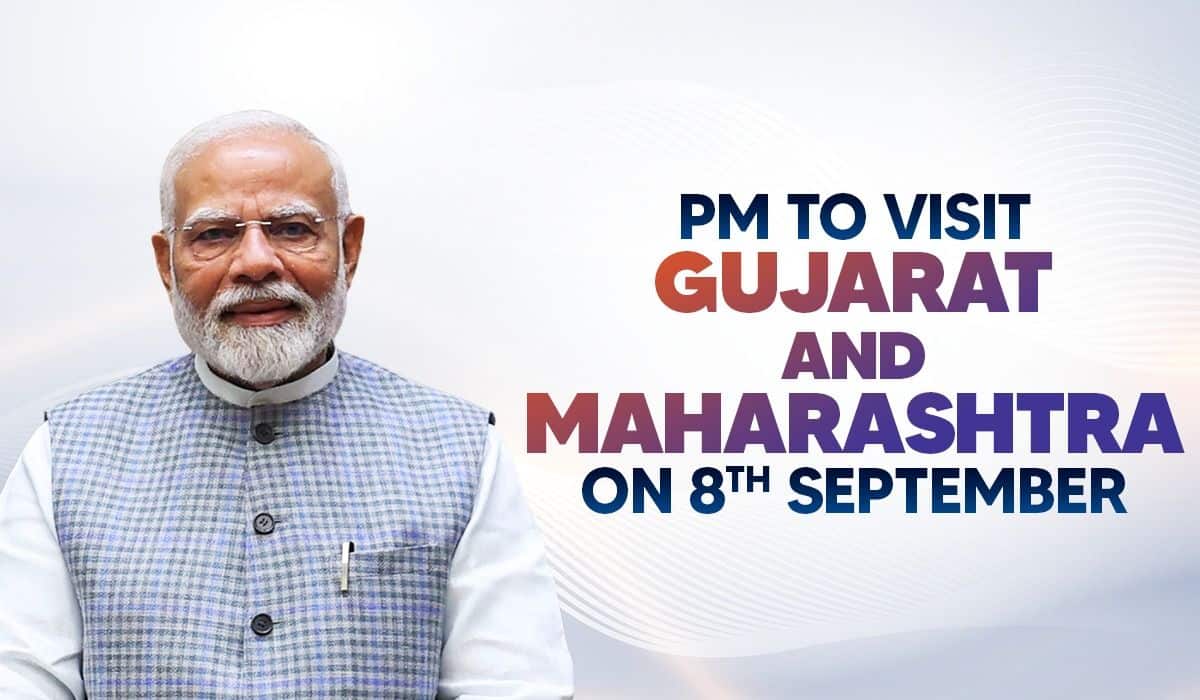
The Prime Minister, Shri Narendra Modi inaugurated and laid the foundation stone of multiple rail and road infrastructure projects worth over Rs 27000 crore in Bengaluru today. Earlier, the Prime Minister inaugurated the Centre for Brain Research and laid the foundation Stone for Bagchi Parthasarathy Multispeciality Hospital at IISc Bengaluru. He also inaugurated a new campus of Dr. B R Ambedkar School of Economics (BASE) University and unveiled the statue of Bharat Ratna Dr B. R. Ambedkar in their campus. He also dedicated the upgradation of 150 ITI as Technology hubs.

Governor of Karnataka, Shri Thawarchand Gehlot, Chief Minister Shri Basavaraj Bommai, Union Minister Shri Pralhad Joshi were among those present on the occasion.
Addressing the gathering, the Prime Minister said the foundation stone of 5 National Highway Projects, 7 Railway Projects have been laid in Karnataka and a significant milestone of 100% electrification of Konkan Railway has been witnessed today. All these projects will give new facilities, new opportunities to the youth, middle class, farmers, workers and entrepreneurs of Karnataka.
The Prime Minister said that Bengaluru is a city of dreams for lakhs of youth of the country, the city is a reflection of the spirit of Ek Bharat Shrestha Bharat. “Development of Bengaluru is nurturing of lakhs of dreams. That’s why in the last 8 years the central government is relently working to augment the capabilities of Bengaluru”

The Prime Minister remarked that the ‘double engine’ government is working on every possible means like strengthening infrastructure like rail, road, metro, underpass, flyover, to get Bengaluru free from traffic jams. He added that his government is committed to connecting the suburban areas of Bengaluru with better connectivity. The Prime Minister said that talk about all these measures was going on for the last four decades and now, with the ‘double engine’ government, people have given the opportunity to complete these projects to the current dispensation. The Prime Minister reiterated his commitment to deliver the project in time and said that he will work hard to fulfil the dreams of people of Bengaluru in next 40 months which were pending for the last 40 years.
The Prime Minister said that connectivity by Bengaluru Suburban rail project will connect Bengaluru city with its suburbs and satellite townships and that will have a multiplier effect. Similarly, the Bengaluru Ring Road project will reduce the city's congestion.
The Prime Minister pointed out that in the last 8 years the government has worked on complete transformation of rail connectivity. He noted that Indian Railways is getting faster, cleaner, it is becoming modern, safe and citizen friendly. “We have taken the rail to those parts of the country where it was difficult to even think about it. Indian Railways is now trying to provide those facilities and the ambience which was once found only in airports and air travel. Modern railway station in Bengaluru named after Bharat Ratna Sir M. Visvesvaraya is also a direct proof of this”, he said. The Prime MInister stressed the importance of integrated multimodal connectivity. He mentioned that this multimodal connectivity is getting new impetus by PM GatiShakti National Masterplan. He said the upcoming Multimodal Logistics part is part of this vision. Such projects that are being undertaken with the spirit of GatiShakti will give employment to youth and also strengthen the Aatmnirbhar Bharat Campaign, he said.

The Prime Minister said Bengaluru’s Success story inspires 21st century India to become Aatmnirbhar. Bengaluru has shown what Indian youth can do if the government provides facilities and minimizes interference in the lives of citizens. Benguluru is the dream city of the youth of the country and behind it is entrepreneurship, innovation, proper utility of public as well as private sector. He said Bengaluru is a lesson for those who still disrespect the spirit of private enterprise of India. 21st century India, emphasized the Prime Minister, is an India of wealth creators, job creators and innovators. As the youngest nation of the world, this is India's wealth and strength, he added.
The Prime Minister also highlighted the importance of MSME and said with the change in definition of SME, new avenues of their growth have been thrown open. As a mark of confidence in Aatmnirbhar Bharat, India has done away with foreign participation in contracts upto Rs 200 crore. Central government departments have been directed to make purchase upto 25 percent from MSME. GeM portal, he said, is proving to be a great enabler for the MSME segment.
Referring to huge strides in the startup sector, The Prime Minister said one could count on fingers how many billion dollar companies were created in earlier decades. But in the last 8 years, more than 100, billion-dollar companies have been created and new companies are being added every month. The Prime Minister informed that while the first 10000 startups took 800 days after 2014 but now this many startups are being added in less than 200 days. Valuation of Unicorns created in the last 8 years is about 12 lakh crore rupees, he informed.

The Prime Minister said that he clearly believed whether the undertaking is government or private, both are the assets of the country, so the level playing field should be given to everyone equally. The Prime Minister invited the youth of the country to test their vision and ideas on the world class facilities that the government is providing. He said that the government is providing platform to the youth who are working hard. Even the government companies will compete on a level playing field, he concluded.
Details of the projects:
Bengaluru Suburban rail project (BSRP) will connect Bengaluru city with its suburbs and satellite townships. The project, which is to be built at a cost of over Rs. 15,700 crore, envisages 4 corridors with a total route length of over 148 Kms. The Prime Minister also laid the foundation stone of the redevelopment of Bengaluru Cantt. and Yesvantpur Junction railway station to be developed at a cost of around Rs 500 crore and Rs 375 crore respectively.

During the Programme, the Prime Minister dedicated to the Nation, India’s first Air Conditioned Railway Station - Sir M Visvesvaraya Railway Station at Baiyappanahalli, which is developed on the lines of a modern airport at a total cost of around Rs 315 crore. The Prime Minister also dedicated to the Nation the 100 percent electrification of the Konkan railway line (about 740 Kms) from Roha (Maharashtra) to Thokur (Karnataka) by flagging of Electric trains from Udupi, Madagaon and Ratnagiri. The electrification of Konkan railway line has been done at a cost of more than 1280 crore. The Prime Minister also dedicated to the Nation two railway line doubling projects : Arsikere to Tumkuru (around 96 km) and Yelahanka to Penukonda (around 120 km) by flagging off passenger trains and MEMU service respectively. The two railway line doubling projects have been developed at a cost of more than Rs 750 crore and Rs 1100 crore respectively.

During the programme, the Prime Minister also laid the foundation stone of two sections of the Bengaluru Ring Road project. The project to be developed at a cost of more than Rs 2280 crore will help reduce traffic congestion in the city. Prime Minister also laid the foundation stone of various other road projects : six laning of Nelamangala-Tumkur section of NH-48; widening of Punjalkatte-Charmadi section of NH-73; rehabilitation and upgradation of a section of NH-69. The cumulative cost to be incurred in these projects is about Rs 3150 crore. The Prime Minister also laid the foundation stone of Multi Modal Logistics Park, which is being developed at Muddalinganahalli, about 40 km from Bengaluru at a cost of about Rs 1800 crore. It will help in lowering the transportation, handling and secondary freight costs.
कर्नाटका में 5 नेशनल हाईवे प्रोजेक्ट्स, 7 रेलवे प्रोजेक्ट्स का शिलान्यास किया गया है।
— PMO India (@PMOIndia) June 20, 2022
कोंकण रेलवे के शतप्रतिशत बिजलीकरण के महत्वपूर्ण पड़ाव के हम साक्षी बने हैं।
ये सभी प्रोजेक्ट कर्नाटका के युवाओं, मध्यम वर्ग, किसानों, श्रमिकों, उद्यमियों को नई सुविधा देंगे, नए अवसर देंगे: PM
बैंगलुरू, देश के लाखों युवाओं के लिए सपनों का शहर है।
— PMO India (@PMOIndia) June 20, 2022
बैंगलुरू, एक भारत-श्रेष्ठ भारत की भावना का प्रतिबिंब है।
बैंगलुरु का विकास, लाखों सपनों का विकास है।
इसलिए बीते 8 वर्षों में केंद्र सरकार का ये निरंतर प्रयास रहा है कि बैंगलुरू के सामर्थ्य को और बढ़ाया जाए: PM
बैंगलुरू को जाम से मुक्ति दिलाने के लिए रेल, रोड, मेट्रो, अंडरपास, फ्लाईओवर, हर संभव माध्यमों पर डबल इंजन की सरकार काम कर रही है।
— PMO India (@PMOIndia) June 20, 2022
बैंगलुरू के जो suburban इलाके हैं, उनको भी बेहतर कनेक्टिविटी से जोड़ने के लिए हमारी सरकार प्रतिबद्ध है: PM @narendramodi
भारतीय रेल अब तेज़ भी हो रही है, स्वच्छ भी हो रही है, आधुनिक भी हो रही है, सुरक्षित भी हो रही है और citizen friendly भी बन रही है।
— PMO India (@PMOIndia) June 20, 2022
हमने देश के उन हिस्सों में भी रेल को पहुंचाया है, जहां इसके बारे में कभी सोचना भी मुश्किल था: PM @narendramodi
भारतीय रेल अब वो सुविधाएं, वो माहौल भी देने का प्रयास कर रही है जो कभी एयरपोर्ट्स और हवाई यात्रा में ही मिला करती थीं।
— PMO India (@PMOIndia) June 20, 2022
भारत रत्न सर एम. विश्वेश्वरैया के नाम पर बैंगलुरू में बना आधुनिक रेलवे स्टेशन भी इसका प्रत्यक्ष प्रमाण है: PM @narendramodi
बैंगलुरू ने ये दिखाया है कि सरकार अगर सुविधाएं दे और नागरिक के जीवन में कम से कम दखल दे, तो भारतीय युवा क्या कुछ नहीं कर सकते हैं।
— PMO India (@PMOIndia) June 20, 2022
बैंगलुरू, देश के युवाओं के सपनों का शहर है और इसके पीछे उद्यमशीलता है, इनोवेशन है, पब्लिक के साथ ही प्राइवेट सेक्टर की सही उपयोगिता है: PM
मेरा साफ मानना है, उपक्रम चाहे सरकारी हो या फिर प्राइवेट, दोनों देश के asset हैं, इसलिए level playing field सबको बराबर मिलना चाहिए।
— PMO India (@PMOIndia) June 20, 2022
यही सबका प्रयास है: PM @narendramodi