Published By : Admin |
October 27, 2016 | 19:18 IST
Share
Tributes to Vaidhyacharya Dhanvantari on National Ayurveda Day
Ayurveda can create balance and preserve health through eco-friendly practices
Health is the complete state of well being and not merely the absence of disease. Today, Ayurveda is relevant globally because of its holistic and comprehensive approach towards health.
In February 2016, PM Modi at Global Ayurveda Festival in Kozhikode, described it as the ‘Science of Life’ and said, “The Ayurvedic 'dincharya' or daily schedule helps to bring about peace and harmony in one's life. Ayurvedic daily life routines are meant to enhance the total health of a human being, both mental and physical.”
At the same event, the PM remarked, “The long tradition of saints who created Indian systems of healthcare like Ayurveda, Yoga and Siddha believe in a harmonious relationship with nature. These are the systems that create balance and preserve health through eco-friendly practices and sustainable sourcing of medicinal herbs.”
Shri Narendra Modi is of the opinion that India can be a leader in making affordable, holistic health care available to the world.
In February 2014, addressing a large gathering of Ayurveda practitioners, representing the 26 states of India, Shri Modi spoke of how the untapped potential of Ayurveda had significant scope in the future as the concept of holistic healthcare was increasingly being adopted by people across the globe. He stated that along with giving emphasis to the practitioners, an equal focus must be laid on the Ayurveda medicine manufacturers.
Shri Modi has always emphasized the promotion of Ayurveda through better application of technology. He has highlighted how branding and packaging of the vast base of Ayurvedic medicines and the extensive knowledge of Ayurveda, would escalate their demand across the globe and thereby increase exports.
Cabinet approves three new corridors as part of Delhi Metro’s Phase V (A) Project
December 24, 2025
Share
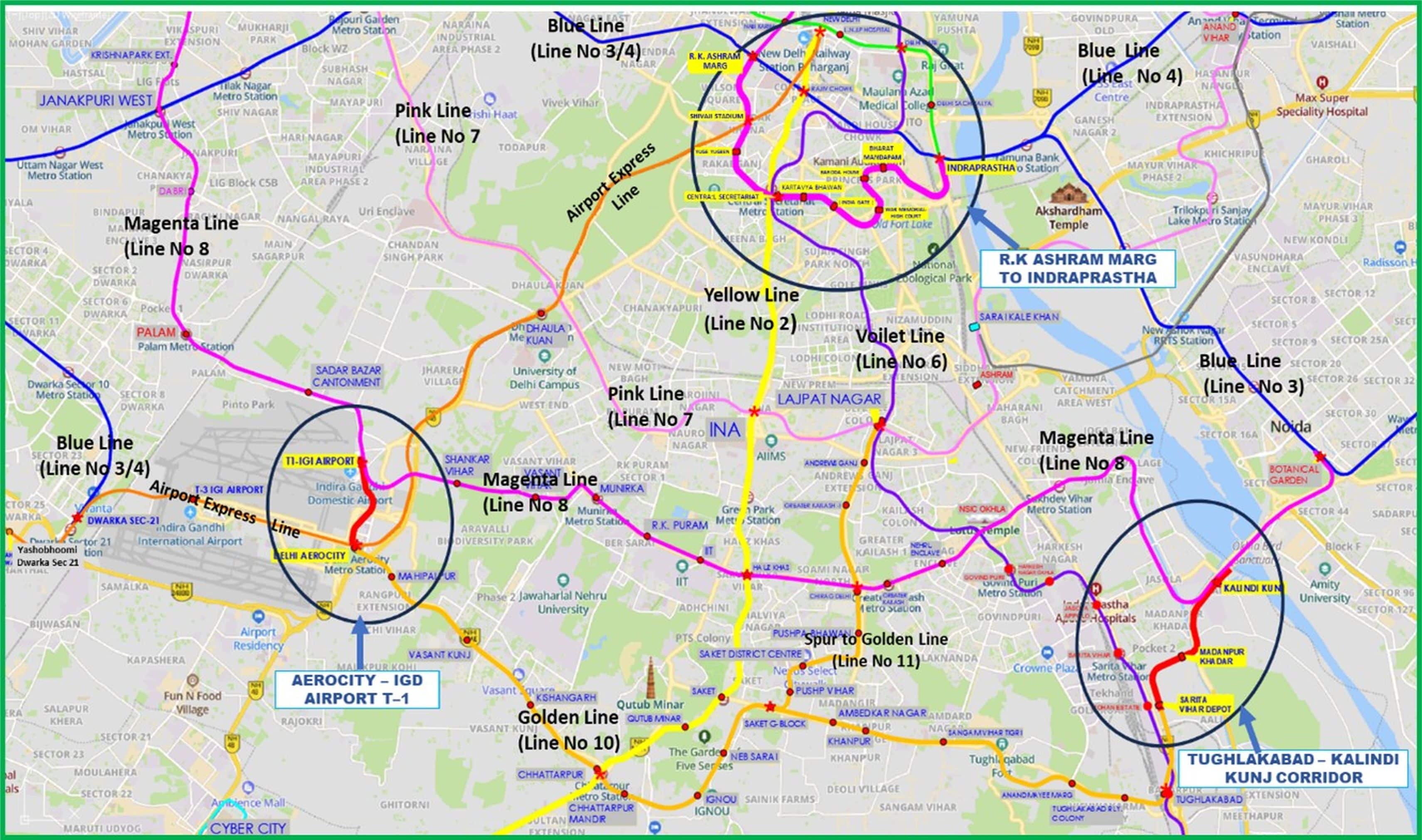
The Union Cabinet chaired by the Prime Minister, Shri Narendra Modi has approved three new corridors - 1. R.K Ashram Marg to Indraprastha (9.913 Kms), 2. Aerocity to IGD Airport T-1 (2.263 kms) 3. Tughlakabad to Kalindi Kunj (3.9 kms) as part of Delhi Metro’s Phase – V(A) project consisting of 16.076 kms which will further enhance connectivity within the national capital. Total project cost of Delhi Metro’s Phase – V(A) project is Rs.12014.91 crore, which will be sourced from Government of India, Government of Delhi, and international funding agencies.
The Central Vista corridor will provide connectivity to all the Kartavya Bhawans thereby providing door step connectivity to the office goers and visitors in this area. With this connectivity around 60,000 office goers and 2 lakh visitors will get benefitted on daily basis. These corridors will further reduce pollution and usage of fossil fuels enhancing ease of living.
Details:
The RK Ashram Marg – Indraprastha section will be an extension of the Botanical Garden-R.K. Ashram Marg corridor. It will provide Metro connectivity to the Central Vista area, which is currently under redevelopment. The Aerocity – IGD Airport Terminal 1 and Tughlakabad – Kalindi Kunj sections will be an extension of the Aerocity-Tughlakabad corridor and will boost connectivity of the airport with the southern parts of the national capital in areas such as Tughlakabad, Saket, Kalindi Kunj etc. These extensions will comprise of 13 stations. Out of these 10 stations will be underground and 03 stations will be elevated.
After completion, the corridor-1 namely R.K Ashram Marg to Indraprastha (9.913 Kms), will improve the connectivity of West, North and old Delhi with Central Delhi and the other two corridors namely Aerocity to IGD Airport T-1 (2.263 kms) and Tughlakabad to Kalindi Kunj (3.9 kms) corridors will connect south Delhi with the domestic Airport Terminal-1 via Saket, Chattarpur etc which will tremendously boost connectivity within National Capital.
These metro extensions of the Phase – V (A) project will expand the reach of Delhi Metro network in Central Delhi and Domestic Airport thereby further boosting the economy. These extensions of the Magenta Line and Golden Line will reduce congestion on the roads; thus, will help in reducing the pollution caused by motor vehicles.
The stations, which shall come up on the RK Ashram Marg - Indraprastha section are: R.K Ashram Marg, Shivaji Stadium, Central Secretariat, Kartavya Bhawan, India Gate, War Memorial - High Court, Baroda House, Bharat Mandapam, and Indraprastha.
The stations on the Tughlakabad – Kalindi Kunj section will be Sarita Vihar Depot, Madanpur Khadar, and Kalindi Kunj, while the Aerocity station will be connected further with the IGD T-1 station.
Construction of Phase-IV consisting of 111 km and 83 stations are underway, and as of today, about 80.43% of civil construction of Phase-IV (3 Priority) corridors has been completed. The Phase-IV (3 Priority) corridors are likely to be completed in stages by December 2026.
Today, the Delhi Metro caters to an average of 65 lakh passenger journeys per day. The maximum passenger journey recorded so far is 81.87 lakh on August 08, 2025. Delhi Metro has become the lifeline of the city by setting the epitome of excellence in the core parameters of MRTS, i.e. punctuality, reliability, and safety.
A total of 12 metro lines of about 395 km with 289 stations are being operated by DMRC in Delhi and NCR at present. Today, Delhi Metro has the largest Metro network in India and is also one of the largest Metros in the world.