Praise has been showered on Prime Minister Narendra Modi’s charismatic presence and organisational leadership. Less understood and known is the professionalism which characterises his work — a relentless work ethic that has evolved over decades when he was the Chief Minister of Gujarat and later Prime Minister of India.

What sets him apart is not a talent for spectacle but a discipline that turns vision into durable systems. It is action anchored in duty, measured by difference on the ground.

A charter for shared work

That ethic framed the Prime Minister’s Independence Day address from the Red Fort, this year. It was a charter for shared work: citizens, scientists, start-ups and States were invited to co-author Viksit Bharat. Ambitions in deep technology, clean growth and resilient supply chains were set out as practical programmes, with Jan Bhagidari, the partnership between a platform-building state and an enterprising people, as the method.

The recent simplification of the Goods and Services Tax (GST) structure reflects this method. By paring down slabs and ironing out friction points, the GST Council has lowered compliance costs for small firms and quickened pass-through to households. The Prime Minister’s focus was not on abstract revenue curves but on whether the average citizen or small trader would feel the change quickly. This instinct echoes the cooperative federalism that has guided the GST Council: States and the Centre debating rigorously, but all working within a system that adapts to conditions rather than remaining frozen. Policy is treated as a living instrument, tuned to the economy’s rhythm rather than a monument preserved for symmetry on paper.

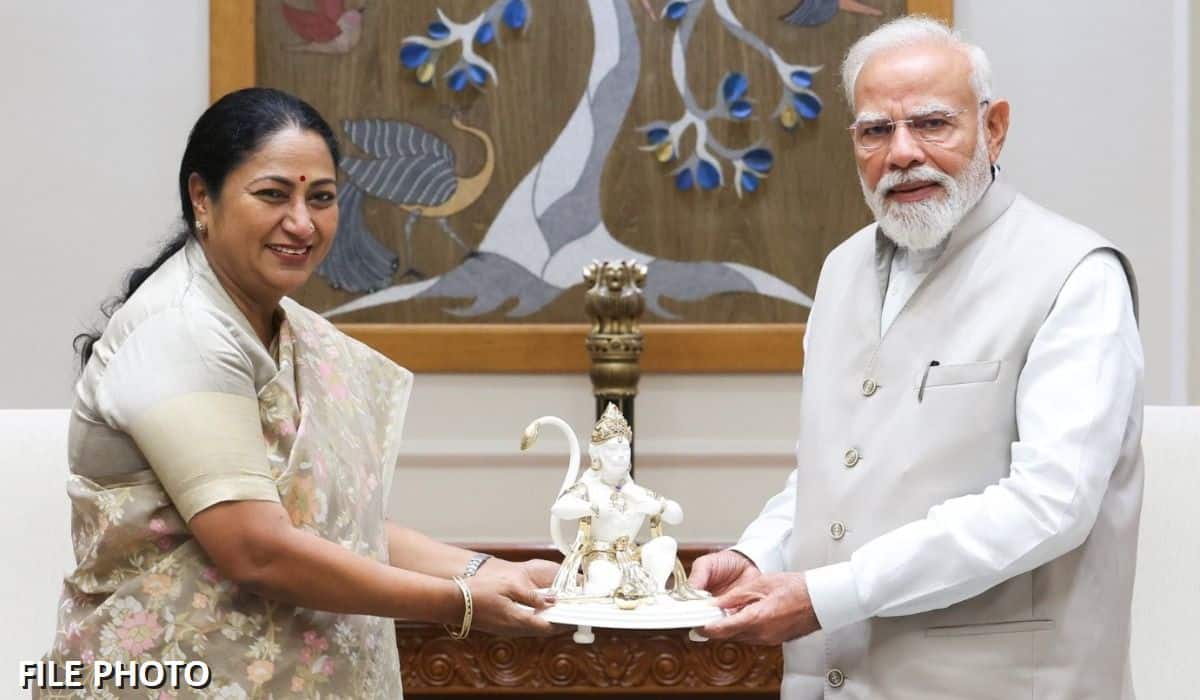
I recently requested a 15- minute slot to meet the Prime Minister and was struck by the depth and range that he brought to the discussion — micro details and macro linkages that were held together in a single frame. It turned into a 45 minute meeting. Colleagues told me later that he had spent more than two hours preparing, reading through notes, data and counter-arguments. That level of homework is the working norm he sets for himself and expects of the system.

A focus on the citizen

Much of India’s recent progress rests on plumbing and systems which are designed to ensure dignity to our citizens. The triad of digital identity, universal bank accounts and real-time payments has turned inclusion into infrastructure. Benefits move directly to verified citizens, leakages shrink by design, small businesses enjoy predictable cash flow, and policy is tuned by data rather than anecdote. Antyodaya — the rise of the last citizen — becomes a standard, not a slogan and remains the litmus test of every scheme, programme and file that makes it to the Prime Minister’s Office.

I had the privilege to witness this once again, recently, at Numaligarh, Assam, during the launch of India’s first bamboo-based 2G ethanol plant. Standing with engineers, farmers and technical experts, the Prime Minister’s queries went straight to the hinge points: how will farmer payments be credited the same day? Can genetic engineering create bamboo that grows faster and increases the length of bamboo stem between nodes? Can critical enzymes be indigenised? Is every component of bamboo, stalk, leaf, residue, being put to economic use, from ethanol to furfural to green acetic acid?

The discussion was not limited to technology. It widened to logistics, the resilience of the supply chain, and the global carbon footprint. There was clarity of brief, precision in detail and insistence that the last person in the chain must be the first beneficiary.

The same clarity animates India’s economic statecraft. In energy, a diversified supplier basket and calm, firm purchasing have kept India’s interests secure in volatile times. On more than one occasion abroad, I carried a strikingly simple brief: secure supplies, maintain affordability, and keep Indian consumers at the centre. That clarity was respected, and negotiations moved forward more smoothly.

National security, too, has been approached without theatre. Operations that are conducted with resolve and restraint — clear aim, operational freedom to the forces, protection of innocents. The ethic is identical: do the hard work, let outcomes speak.

The work culture

Behind these choices lies a distinctive working style. Discussions are civil but unsparing; competing views are welcomed, drift is not. After hearing the room, he reduces a thick dossier to the essential alternatives, assigns responsibility and names the metric that will decide success. The best argument, not the loudest, prevails; preparation is rewarded; follow-up is relentless.

It is no accident that the Prime Minister’s birthday falls on Vishwakarma Jayanti, the day of the divine architect. The parallel is not literal but instructive: in public life, the most enduring monuments are institutions, platforms and standards. For the citizen, performance is a benefit that arrives on time and a price that stays fair. For the enterprise, it is policy clarity and a credible path to expand. For the state, it is systems that hold under stress and improve with use. That is the measure by which Narendra Modi should be seen, shaping the next chapter of the Indian story.

Hardeep S. Puri is Union Minister for Petroleum and Natural Gas, Government of India

Explore More
শ্ৰী ৰাম জনমভূমি মন্দিৰৰ ধ্বজাৰোহণ উৎসৱত প্ৰধানমন্ত্ৰীৰ সম্বোধনৰ অসমীয়া অনুবাদ

Popular Speeches

শ্ৰী ৰাম জনমভূমি মন্দিৰৰ ধ্বজাৰোহণ উৎসৱত প্ৰধানমন্ত্ৰীৰ সম্বোধনৰ অসমীয়া অনুবাদ
India got lucky, he lives and breathes India: Putin's big praise for PM Modi

Media Coverage

India got lucky, he lives and breathes India: Putin's big praise for PM Modi
NM on the go

Nm on the go

Always be the first to hear from the PM. Get the App Now!
...
১৯৯৬ চনত মোদী জীৰ সৈতে মোৰ প্ৰথম সাক্ষাতেই মোক নেতৃত্বৰ এক জীৱন্ত আৰ্হি দিলে: এম এল খট্টৰ
September 25, 2025

In public life, some encounters do more than mark moments; they reset directions. My first meeting with Shri Narendra Modi in 1996 was one such turning point. I entered as a young karyakarta, keen to learn and contribute. I emerged transformed, carrying a living model of leadership—a blueprint that turned politics into purposeful action anchored in clarity, deadlines, and accountability to the last citizen.

The discipline Modi instilled was simple: listen fully, decide sharply, act relentlessly. What struck me first was his extraordinary patience in listening. He absorbs every nuance—often more patiently than the speaker themself. After a brief pause, complex matters are distilled into a handful of clear steps. Meetings with him end not in vague aspirations but with precise metrics and deadlines.

My role was clear: work honestly, report regularly, correct quickly. That rhythm—report, review, deliver—became my operating principle. It demanded trading ornamentation for outcomes, acknowledging shortfalls without drama, and fixing problems swiftly. Honesty was not just a virtue but the most efficient way to work.

Those early years gave me a proving ground. In Gujarat, I was tasked with challenging political terrain including half the seats in Kutch—regions with vast distances, precise targets, and unforgiving timelines. Later, in Varanasi, I managed one assembly segment where each booth represented a universe of names, issues, and deadlines. Encouraged by Modi’s confidence, I took on further challenges in Jammu and Kashmir, and Chhattisgarh. The lesson was constant: quiet persistence beats loud intent; data speaks louder than volume.

Nearly three decades of association with Modi have shaped my public career and personal discipline. Our bond was not built merely over shared khichdi but over the work itself—the habit of measuring what truly matters and leaving no one behind. When I was entrusted to lead Haryana as Chief Minister, this ethos guided me: grateful for the trust, clear on responsibility, and anchored in service under Modi’s mentorship.

Since 2014, as he took the nation’s highest office, impatience for results was palpable. Yet, Modi did not reply with slogans; he responded systemically. Jan Dhan Yojana and direct benefit transfers sealed leakages in welfare. Digital India turned technology from a luxury into a utility. UPI put payments within everyone’s reach. GST unified the economy. These were not isolated programmes but parts of one design to make dignity the norm.

My work today in urban development shows this design in action. Take housing. Under Pradhan Mantri Awas Yojana–Urban, the mission was extended to December 2025 to ensure sanctioned homes became finished homes. Over 1.19 crore urban houses have been sanctioned, more than 93 lakh completed. Each completed home is more than bricks—it is a key opening a door where none existed. This is “last person” dignity in practice.

Street vendors—the fragile backbone of city economies—were empowered through PM SVANidhi. Micro-credit linked to digital behaviour, not collateral, turned modest enterprises into dependable livelihoods. By July 2025, over 96 lakh loans amounting to Rs 13,800 crore reached more than 68 lakh vendors. Millions embraced digital payments—proof dignity scales when systems are inclusive.

Urban transformation is also about unglamorous but vital infrastructure: pipes, drains, lights. AMRUT and AMRUT 2.0 added over two crore household tap connections and about one and a half crore sewer connections in the past decade. Nearly a crore LED streetlights now shine, lowering energy use and munici­pal bills. Urban local bodies are financing futures through municipal bonds—unseen victories vital to liveable cities.

The Smart Cities Mission has grown from pilots to real projects. By May 2025, 94 per cent of over 8,000 projects were complete, the rest near completion. This shows that federal programmes can keep time when citizens are stakeholders, not spectators.

To unify efforts, the National Urban Digital Mission builds a common digital backbone—shared platforms, real-time dashboards, modular services—that close the gap between cities and citizens. MOUs with most states and union territories cover thousands of urban bodies. Modules for licences, grievances, and sanitation run on a common stack. The national dashboard UMEED brings live data into decision rooms. Once theoretical, this integration is now routine governance.

Power tells a similar story. The Saubhagya programme electrified nearly 2.86 crore homes by March 2022—ending darkness for millions. But access was step one. Reliability followed under the Revamped Distribution Sector Scheme, replacing guesswork with telemetry. Over 20 crore smart meters were sanctioned, 2.4 crore installed—turning power distribution from opaque to accountable. Smart meters are instruments of governance, not mere gadgets.

Renewable energy generation advanced decisively. By August 2025, India installed roughly 1.92 lakh MW of renewables (excluding large hydro)—about 1.23 lakh MW solar and over 52,000 MW wind. The point is not headline numbers but normalisation at scale. Rooftop solar reached households via PM Surya Ghar: Muft Bijli Yojana, with clear timelines to make self-generation mainstream. From village chaupals to urban terraces, solar panels are familiar silhouettes.

Across these sectors, the pattern is clear: conviction married to data, ambition disciplined by deadlines. PM Modi calls himself the nation’s Pradhan Sevak—a phrase not flourish but operating manual. It sets the standard for those working under him: be impatient with drift, patient with people, reward transparency, honour time. Leadership here is not credit-seeking but a culture of accountability.

As Modi enters his seventy-sixth year of service to the nation, I join millions in wishing him strength and success. On the world stage, he is a seasoned statesman deftly steering India’s ship through turbulent global waters—building coalitions, advancing our interests, giving voice to the Global South, and holding steady to principle when tides turn rough.

May the years ahead see him steer with clarity toward the larger destination of a Viksit Bharat—a developed India—where opportunity expands for all and our nation’s horizon widens. For those privileged to learn under his guidance, the task is clear: keep the method, pace, and faith with the last person.

Manohar Lal Khattar is the Union Minister for Housing and Urban Affairs and former Chief Minister of Haryana. He tweets @mlkhattar.