Manipur is the crown jewel adorning the crest of Mother India: PM
We must continue to take Manipur forward on the path of sustained peace and development: PM
Netaji Subhas had called Manipur the gateway to India's independence, this soil has given many brave martyrs. Our government, drawing inspiration from every such great personality of Manipur, is moving forward: PM
The government is working to ensure peace and stability in Manipur: PM
I extend my heartfelt congratulations to Smt. Sushila ji on assuming the office of Prime Minister of the interim government in Nepal today, on behalf of 140 crore Indians, I am confident that she will pave the way for peace, stability, and prosperity in Nepal: PM
Manipur has immense potential and we must continuously strengthen dialogue to build a strong bridge of harmony between the hills and the valley: PM

Prime Minister Shri Narendra Modi inaugurated multiple development projects worth over Rs 1,200 crore at Imphal in Manipur today. Addressing the gathering, the Prime Minister stated that projects worth thousands of crores have been inaugurated and launched today for the development of Manipur. He remarked that these projects will enhance the ease of living for the people and strengthen the infrastructure in the region. The Prime Minister said that new employment opportunities will be created for the youth of Manipur and for the sons and daughters of the state.

The Prime Minister stated that among the projects launched today, two are particularly significant, highlighting the ‘Manipur Urban Roads Project,’ with an investment of over ₹3,600 crore and ‘Manipur Infotech Development Project,’ with an investment exceeding ₹500 crore. Shri Modi remarked that these projects will strengthen road infrastructure in Imphal and infuse new energy into Manipur’s bright future. He extended his congratulations and best wishes to the people of Manipur for all the newly launched projects.

Highlighting that after independence, major cities in the western and southern parts of the country witnessed development and became hubs of aspiration, Shri Modi remarked that youth in those regions received new opportunities. “The 21st century belongs to the East and the North East”, he added. The Prime Minister stated that the Government of India has consistently prioritized the development of Manipur, highlighting that as a result, Manipur’s growth rate has been steadily increasing. He noted that before 2014, Manipur’s growth rate was less than one percent. He remarked that today, Manipur is progressing many times faster than before. Shri Modi stated that a new phase of infrastructure development has begun in Manipur. He expressed satisfaction that the pace of road construction and National Highway development in the state has increased manifold. He added that rapid work is underway to extend road connectivity to every village.

Underlining that Imphal is a city of possibilities, Shri Modi remarked that he envisions Imphal as one of the developed cities of India that will fulfill the dreams of the youth and accelerate the nation’s progress. He informed that under this vision, several projects have been completed in Imphal under the Smart City Mission. He added that many other projects worth hundreds of crores are also progressing rapidly.

The Prime Minister remarked that whether it is Imphal or other regions of Manipur, new opportunities are emerging for startups and technology-based industries. He added that the IT Special Economic Zone will further strengthen these possibilities and the first building of this zone has already been completed. Shri Modi noted that the demand for a new Civil Secretariat building in Manipur had been longstanding. He announced that this building is now ready and the new facility will reinforce the spirit of ‘Nagarik Devobhava’ in governance.
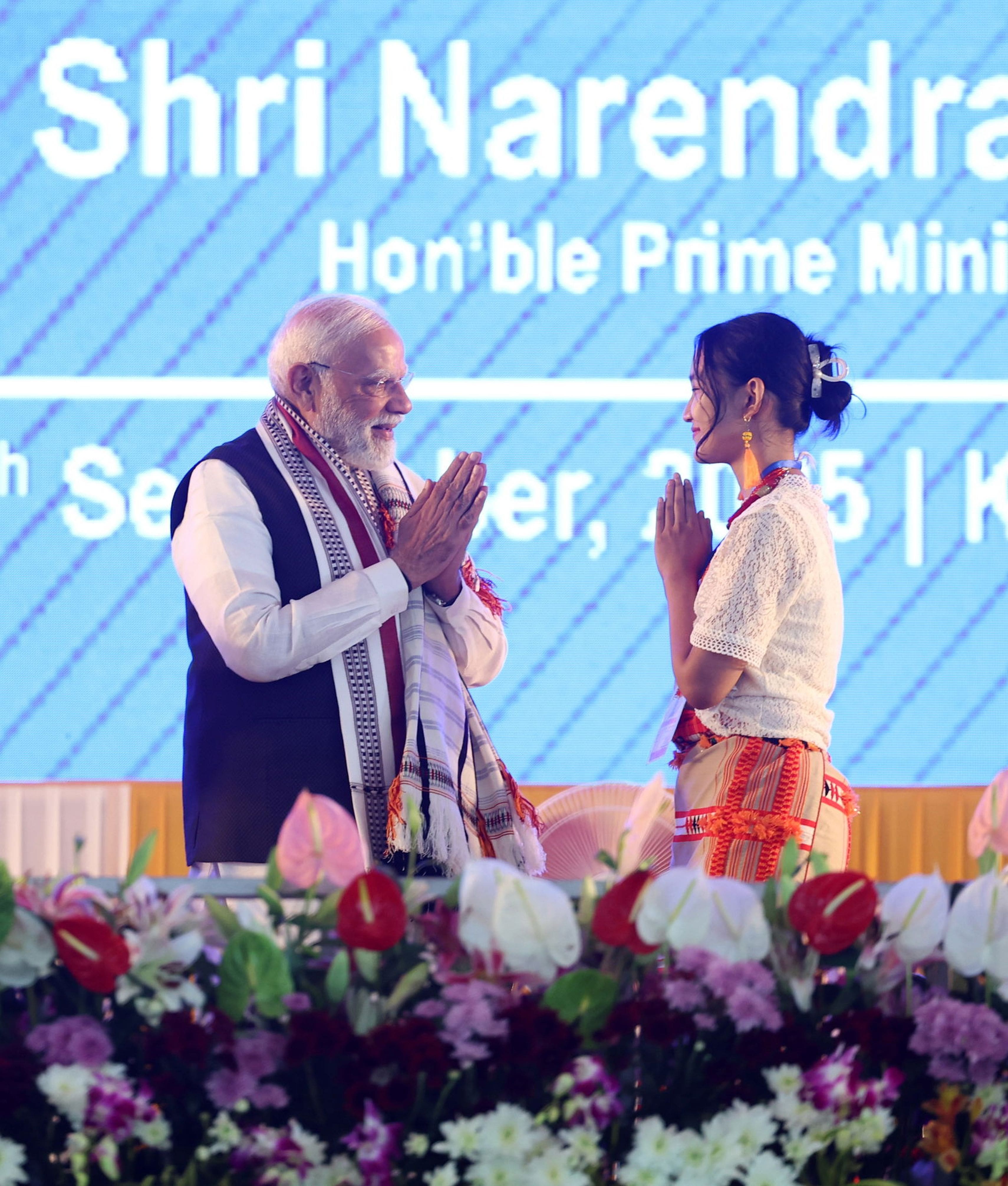
Noting that many people from Manipur frequently travel to Kolkata and Delhi, Shri Modi informed that to ensure affordable accommodation in these cities, Manipur Bhavans have been constructed in both locations. He remarked that these facilities will greatly support the daughters of Manipur. He added that when children are safe and secure there, it will ease the concerns of parents back home.

Emphasising that the government is working with full sensitivity to reduce the hardships faced by the people, Shri Modi acknowledged that many parts of Manipur suffer from severe flood-related challenges. He added that the government is actively working on multiple projects to mitigate this issue.

Underscoring that Manipur is a state where mothers and sisters are at the forefront of the economy, the Prime Minister highlighted the tradition of Ima Keithel as a powerful testament to this fact. He remarked that he considers women empowerment to be a central pillar of India’s development and of the vision for an Atmanirbhar Bharat. He stated that this inspiration is clearly visible in Manipur. Shri Modi said that after the formation of the current government, special haat bazaars—known as Ima Markets—were initiated for women. He expressed happiness that four new Ima Markets have been inaugurated today and these markets will greatly support the women of Manipur.

Emphasising that making life easier for every citizen is the government’s goal, the Prime Minister remarked that Manipur has witnessed the difficult days when transporting goods to the region was a major challenge. He noted that everyday items were once beyond the reach of ordinary families. Shri Modi stressed that in recent years, our government has helped Manipur overcome those old hardships. He announced a new development, stating that our government wants to increase savings and make life more convenient for the people. Highlighting that their government has significantly reduced GST, the Prime Minister stated that this will bring double benefits to the people of Manipur. He explained that many daily-use items—such as soap, shampoo, hair oil, clothes, and footwear—will now become more affordable. He added that prices of cement and other construction materials will also come down. Shri Modi informed that GST has been substantially reduced on hotels and food services as well. He remarked that this will benefit guest house owners, taxi operators, and roadside eateries, adding that this move will also help boost tourism in the region.

“Manipur possesses a rich heritage that spans thousands of years. The cultural roots of the region are deep and strong. Manipur is the crown jewel adorning the crest of Mother India”, exclaimed the Prime Minister. He emphasized the need to continuously strengthen Manipur’s developmental image. Shri Modi stated that any form of violence in Manipur is unfortunate and such violence is a grave injustice to both our ancestors and future generations. He stressed the importance of consistently advancing Manipur on the path of peace and development. The Prime Minister highlighted Manipur’s inspiring contribution to India’s freedom struggle and national defence. He recalled that it was on Manipur’s soil where the Indian National Army first hoisted India’s own flag. He quoted Netaji Subhas Chandra Bose, who referred to Manipur as the gateway to India’s independence and paid tribute to the many brave martyrs from this land. Shri Modi stated that the government draws inspiration from every great personality of Manipur. Mentioning a major step taken by the government—renaming Mount Harriet in the Andaman and Nicobar Islands to Mount Manipur, Shri Modi affirmed that this is a national tribute to the freedom fighters of Manipur.

Acknowledging that even today, many sons and daughters of Manipur are serving across different parts of the country in the defence of Mother India, the Prime Minister remarked that during Operation Sindoor, the world witnessed the strength of the Indian Armed Forces. He stated that the Indian soldiers inflicted such decisive blows that the Pakistani army was left overwhelmed. Shri Modi highlighted that Manipur’s brave sons and daughters played a vital role in India’s success during the operation. He paid tribute to one such valiant soldier, Shaheed Deepak Chingkham, and saluted his courage. He affirmed that Deepak Chingkham’s sacrifice during Operation Sindoor will always be remembered by the nation.
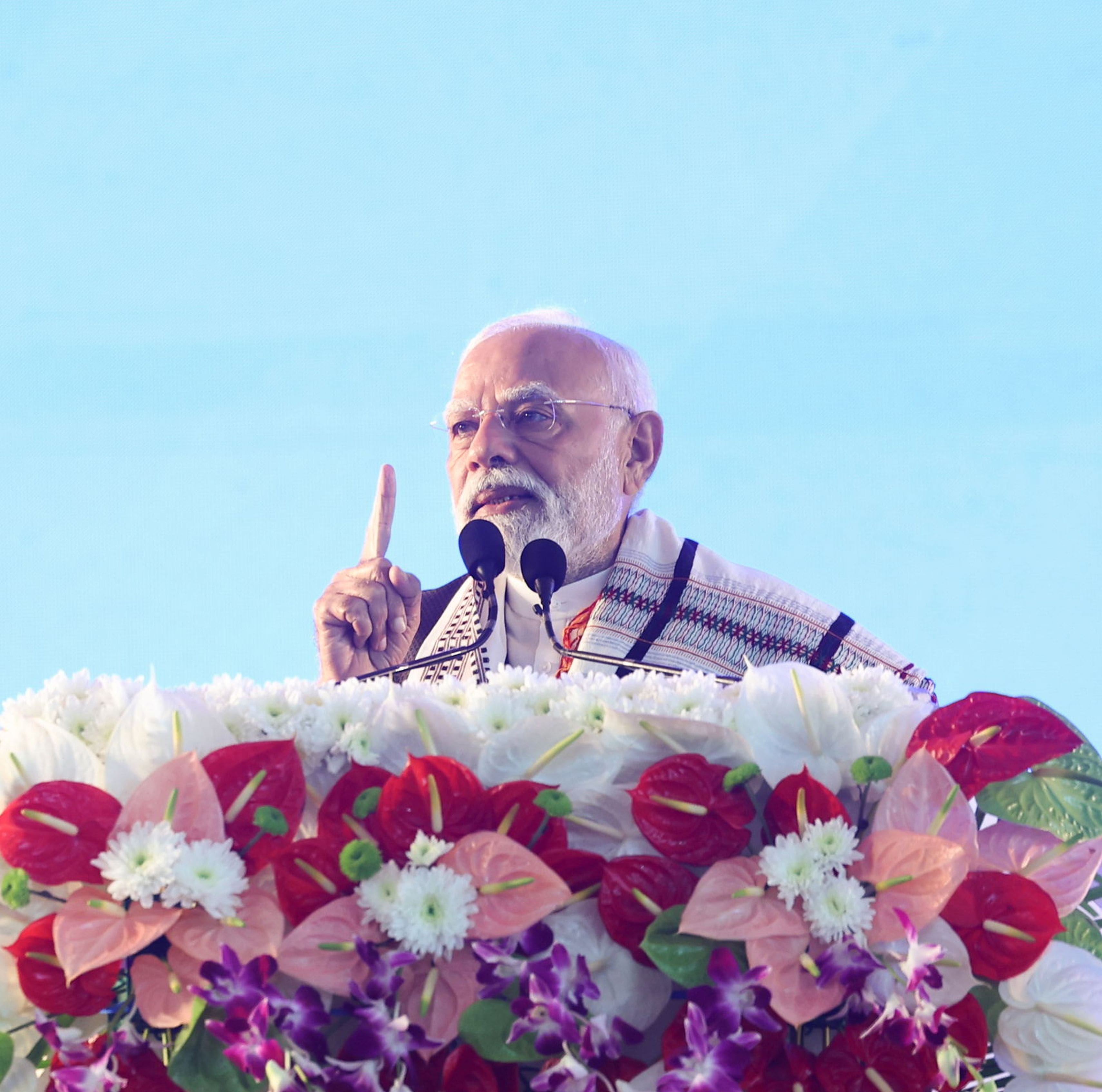
Recalling his visit to Manipur in 2014 and a statement he had made then, Shri Modi mentioned that he had said that without Manipuri culture, Indian culture is incomplete and without the athletes of Manipur, Indian sports remain incomplete. He stated that the youth of Manipur dedicate themselves wholeheartedly to upholding the pride of the national flag. He emphasized that this identity must not be overshadowed by the dark shadow of violence.

“As India emerges as a global sports powerhouse, the responsibility of Manipur’s youth has increased further. This is why the Government of India chose Manipur for the country’s first National Sports University”, said the PM. He added that under the Khelo India Scheme and Olympic Podium Schemes, many athletes from Manipur are being encouraged and supported with modern sports infrastructure being developed in Manipur for the youth. Shri Modi highlighted that to promote polo, the Marjing Polo Complex has been established, featuring the world’s tallest polo statue. He added that an Olympian Park has also been built to honour the Olympians from the region. Pointing out that the government recently announced the National Sports Policy—Khelo India Niti, the Prime Minister emphasized that this will greatly benefit the youth of Manipur in the coming years.

“Our government is continuously working to ensure peace and stability in Manipur”, exclaimed the PM, emphasising that the interests of the people must be safeguarded and that those forced to live in camps should be able to return to normal life. He informed that 7,000 new houses have been approved for displaced families. Shri Modi announced that the Central Government has recently declared a special package of approximately ₹3,000 crore for Manipur. He added that over ₹500 crore has been allocated specifically to assist displaced individuals. The PM further remarked that helping those affected by violence return to a normal life is a top priority for the government. He stated that the newly constructed headquarters for Manipur Police will also play a vital role in supporting this effort.

The Prime Minister stated that from the soil of Manipur, he wishes to address his friends in Nepal. He remarked that Nepal, nestled in the lap of the Himalayas, is a close friend and trusted partner of India. Emphasizing that both nations are bound by shared history, faith, and a collective journey forward, the Prime Minister extended heartfelt congratulations, on behalf of 140 crore Indians, to Smt. Sushila Ji on assuming office as the Prime Minister of Nepal’s interim government. He expressed confidence that she will pave the way for peace, stability, and prosperity in Nepal. Shri Modi highlighted that Smt. Sushila Ji’s appointment as Nepal’s first woman Prime Minister is a remarkable example of women empowerment. He appreciated every individual in Nepal who upheld democratic values even in a climate of instability.

Highlighting a notable aspect of recent developments in Nepal that has not received much attention, Shri Modi stated that over the past two to three days, young men and women in Nepal have been seen diligently cleaning and painting the streets with a spirit of dedication and purity. He remarked that he has also seen their images circulating on social media. The Prime Minister described their positive mindset and constructive actions as not only inspiring but also a clear indication of Nepal’s resurgence. He extended his best wishes to Nepal for a bright and prosperous future.

“In the 21st century, India is moving forward with a singular goal—the goal of a developed India and achieving this goal requires the development of Manipur”, stated the PM underlining that Manipur is full of limitless possibilities. He stated that it is the collective duty of all to remain firmly on the path of development. The Prime Minister affirmed that Manipur lacks no capability, stressing the need to continuously strengthen the path of dialogue and build a strong bridge of harmony between the hills and the valley. The Prime Minister concluded by expressing confidence that Manipur will become a powerful centre of India’s growth. He once again extended his heartfelt congratulations to all for the development projects.

Governor of Manipur, Shri Ajay Kumar Bhalla was present among other dignitaries at the event.

Background

Prime Minister inaugurated multiple development projects worth more than Rs 1,200 crore at Imphal. They include the Civil Secretariat at Mantripukhri; IT SEZ Building and New Police Headquarters at Mantripukhri; Manipur Bhawans at Delhi and Kolkata; and Ima Markets, unique all women's market, in 4 districts.

Click here to read full text speech

Explore More
শ্ৰী ৰাম জনমভূমি মন্দিৰৰ ধ্বজাৰোহণ উৎসৱত প্ৰধানমন্ত্ৰীৰ সম্বোধনৰ অসমীয়া অনুবাদ

Popular Speeches

শ্ৰী ৰাম জনমভূমি মন্দিৰৰ ধ্বজাৰোহণ উৎসৱত প্ৰধানমন্ত্ৰীৰ সম্বোধনৰ অসমীয়া অনুবাদ
Pharma exports rose 2% to over $31 billion in FY26 despite sharp decline in March

Media Coverage

Pharma exports rose 2% to over $31 billion in FY26 despite sharp decline in March
NM on the go

Nm on the go

Always be the first to hear from the PM. Get the App Now!
...
Joint Strategic Vision for India-ROK Special Strategic Partnership
April 20, 2026

At the invitation of Prime Minister Shri Narendra Modi, President of the Republic of Korea (ROK) H.E. Lee Jae Myung paid a State Visit to India from 19 – 21 April, 2026, marking the earliest visit to India by a Korean President after assuming office. President Lee Jae Myung was accompanied by a high level delegation including Ministers, Senior Officials and leading CEOs of Korean Companies.

2. The two leaders held a friendly, fruitful and forward-looking bilateral meeting on 20th April 2026 in New Delhi. They underscored their respective Governments’ commitment to work together in concrete ways in multiple domains to bring lasting prosperity, peace and progress to their peoples and to foster meaningful cooperation among them in a turbulent and fast-changing world. They announced the following Joint Strategic Vision for implementingand adding further content to the India-ROK Special Strategic Partnership in the next five years (2026-2030).

3. India and the ROK, two vibrant and resilient democracies of Asia and leading world economies, are connected by deep historical ties and mutual goodwill between their peoples. The two nations share democratic and civilizational values and have similar interests in regional and global issues. India views the ROK as an indispensable partner in its "Act East” Policy. Similarly, the ROK views India as a central pillar of the ROK’s pragmatic diplomacy and inheriting and evolving the achievements of the New Southern Policy. India and the ROK also acknowledge the significant role of their partnership in fostering peace, stability, and security in the Indo-Pacific region.

Reinforcing political foundations through high-level exchanges

4. Recalling the positive spirit of their two previous meetings on the sidelines of the G7 Summit in Kananaskis in June 2025 and the G20 Summit in Johannesburg in November 2025, the two leaders agreed to have leader-level meetings annually, in either country or on the margins of international events, to realize the full potential of the India-ROK Special Strategic Partnership and to provide continuous guidance to the engagement, going forward.

5. Expressing satisfaction at the frequency of high level exchanges, which have imparted renewed momentum to the bilateral engagement, the two leaders agreed to further intensify bilateral political exchanges and ministerial dialogues. Towards this end, the leaders decided that the meetings of the India-ROK Joint Commission led by the Foreign Ministers, Finance Ministers’ Meeting, and Joint Committee of the S&T Ministers will be held this year. Further, it was agreed that the Defence Minister of India will visit the ROK in May, 2026 for the joint inauguration of the War Memorial being built to commemorate India’s participation in the Korean War. They also agreed that an India-ROK Industrial Cooperation Committee, a new dialogue mechanism of the Ministers responsible for Industries in the two countries, will be launched and will hold its first meeting this year.

6. Taking note of the visit of the ROK Deputy Speaker to India in January 2026, the two leaders supported regular exchanges of Speakers and Members of the Parliament of India and the National Assembly of the ROK. They expressed satisfaction over the establishment of India-ROK Parliamentary Friendship Groups in both countries.

7. To bring the next generation of thought leaders of India and the ROK closer, the two leaders welcomed the launch of respective programmes and initiatives by the two Foreign Ministries, starting this year, that will enable young legislators, diplomats, eminent personalities, media and officials to exchange visits, deepen mutual understanding and collaborate on common challenges and opportunities.

8. The two leaders encouraged greater exchanges between states and provinces of their nations to promote balanced regional growth, dynamism and resurgence. The two leaders also noted the sister-city and friendship-city relationships, including Busan-Mumbai, Incheon-Kolkata, and Ulsan-Chennai.

Build Deeper Understanding through Greater Strategic Trust

9. The two leaders acknowledged the similarity of their nations’ visions of a free, open, peaceful and prosperous Indo-Pacific region based on the rule of law. In this context, Prime Minister Modi welcomed the ROK joining the Indo-Pacific Oceans initiative (IPOI).

10. They underlined the importance of regular consultations on emerging strategic and security-related developments among senior officials. Following the India-ROK Foreign Policy and Security Dialogue between the two Foreign Ministries in February 2026, the two sides will aim to hold the Joint Committee Meeting on Defence Industry Cooperation and the inaugural Defence and Foreign Affairs 2+2 Dialogue at Vice Minister levels at a mutually convenient time.

11. The two leaders welcomed the launch of an India-ROK Economic Security Dialogue that aims at enhancing resilience in supply chains, promoting market diversification and advancing cooperation in cutting-edge technologies on the basis of mutual strategic trust.

12. The two leaders unequivocally and strongly condemned terrorism and violent extremism in all its forms and manifestations, including cross-border terrorism. They agreed to enhance cooperation to root out terrorists’ safe havens, eliminate terrorist financing channels and their nexus with transnational crime, and halt cross-border movement of terrorists. Both sides strongly condemned the terrorist attack in Pahalgam, Jammu and Kashmir on 22 April 2025 and called for perpetrators, organisers, and financiers to be brought to justice without any further delay. Prime Minister Modi also explained to President Lee that The Resistance Front had claimed responsibility for the attack. President Lee noted this with serious concern.

Creating Mutual Wins through Industrial Dynamism

13.The two leaders welcomed the conclusion of the MOU on India-ROK Industrial Cooperation Committee to bolster bilateral economic ties, expand trade and investment, and unlock new opportunities for collaboration across industry, with focus on bilateral cooperation in sectors such as automobile, shipbuilding, chemicals, semiconductors, telecom equipment, display, secondary batteries; and for cooperating to strengthen supply chains for strategic resources, critical minerals and rare earths; trade of green hydrogen and its derivatives, nuclear power plant projects; and overseas resource development projects.

14. India’s Maritime Amrit Kaal vision has unleashed new opportunities for long-term and strategic bilateral collaboration with the ROK, a leading shipbuilding and maritime nation. The two sides adopted a Comprehensive Framework for Partnership on Shipbuilding, Shipping and Maritime Logistics and looked forward to its early implementation. The two leaders welcomed and expressed support for a range of B2B collaborations concluded and planned between Indian and Korean businesses for shipyard development, critical infrastructure required for shipyard establishment, port operations, and shipping & maritime logistics in India. They welcomed the opening of office of Korea Marine Equipment Association (KOMEA) in Mumbai, the first such office that will contribute to the development of ancillary ecosystem to support the maritime industry.

15. The leaders also took note of the successful hosting of the India-ROK Business Forum on 20 April 2026. In order to nurture continuous business engagements, the two sides agreed to hold regular interactions among leading industry associations on the sidelines of the Industrial Cooperation Committee and its Working Groups’ meetings.The two leaders welcomed the announcements made by Indian and Korean businesses for investment and B2B collaboration.

16. The leaders agreed to foster a more conducive business environment to encourage further investment by Korean and Indian companies in each other’s markets.

17. The two leaders welcomed the conclusion of an MOU on Cooperation in the field of Small and Medium sized Enterprises (SME). They directed concerned Departments/Ministries to explore ways to extend India-ROK cooperation to the SMEs of the two countries, including activities under the ambit of MOU to connect small and medium businesses to help SMEs to smoothly explore and benefit from the respective markets.

18. Collaboration between India, a major economy enjoying robust growth in steel industry and the ROK, a technology leader in green steel-making, is of critical importance. They agreed to the establishment of an India-ROK Annual Steel Dialogue,which would focus on boosting trade opportunities, solidifying economic ties and promoting cleaner energy in the steel sector. They also welcomed the signing of an MOU between POSCO and JSW for establishing a 6 MMT Integrated Steel Plant in Odisha.

Catalysing Partnerships focussing on Trade, Finance and Development

19. Emphasizing the importance of realizing the full potential of India-ROK bilateral trade and to promote mutually beneficial exchanges in new avenues of trade including digital trade, supply chain collaboration and green economy, the two leaders welcomed the decision to resume and expedite the CEPA upgrade negotiations for early conclusion.

20. India’s fintech revolution, illustrated by the Unified Payments Interface and regulatory innovations, has created many opportunities for trans-border collaboration. The two leaders welcomed the signing of an MOU between National Payment Corporation of India Limited (NPCIL) and Korea Financial Telecommunications and Clearings Institute (KFTC) for phased integration of the digital payment systems of the two countries to enhance inter-operability and strengthen economic and people-to-people ties. They also welcomed the MOU between International Financial Services Centres Authority (IFSCA) of India and the Financial Services Commission (FSC) / Financial Supervisory Service (FSS) of the ROK for cooperation and consultation for development and supervision of cross-border financial products.

21. The two leaders expressed satisfaction with the successful holding of the ‘ROK-India Financial Cooperation Forum’ with the participation of financial authorities and institutions from both countries to strengthen cooperation in the financial sector, including banking, capital markets and fin-tech.

22. The ROK’s financial entities are important players in India’s economic development, focusing their investments on infrastructure, manufacturing, and the growing financial market. In this context, the two leaders noted the successful operation in India by the Korea Investment Corporation, and welcomed the interest of Korea Development Bank to open an office in India. Prime Minister Modi also invited the National Pension Service of the ROK to explore opening of its office in India.

23. Recognizing the potential for development partnership between India and ROK, the two leaders agreed to continue to work together to advance development cooperation for capacity-building of skilled industrial human resources in India, including ongoing projects implemented by KOICA. The two sides agreed to work together to ensure effective development cooperation between the two countries.

Future-proofing growth through partnerships in emerging industries

24.India and the ROK, two nations with strong and complementary digital capabilities, can contribute to industries and technologies defining the world’s future. The two leaders welcomed the launch of a Framework for India-Korea Digital Bridge focusing on AI, data governance and digital businesses, while also recognizing the role of enabling technologies, including semiconductors, in supporting digital innovation and cooperation. Prime Minister Modi briefed President Lee about the growth of semiconductor industry in India and welcomed Korean businesses to take advantage of government incentives and the growing market. The two leaders appreciated respective visions for AI development, inspired by the principles of "AI for All” and "MANAV” that promote innovation alongside accessibility and inclusivity. They expressed a desire to deepen India-Korea partnership across AI verticals, including for research and talent nurturing.

25.The two leaders underscored the strategic importance of India-ROK cooperation in defence industries, by reinvigorating the 2020 MOU on ‘Roadmap to Defence Industry Cooperation’. They expressed satisfaction over the successful joint venture of K9-Vajra howitzers with the second batch of production in progress. They welcomed ongoing efforts to replicate the model in other futuristic defence technologies/platforms like Self-Propelled Air Defence Gun-Missile Systems and other areas of mutual interest.

26.Recognizing the innovations in defence industry taking place in both countries, the two leaders decided to launch a ‘Korea-India Defence Accelerator’ (KIND-X) innovation platform to connect businesses, incubators, investors, defence start-ups and universities from both sides.

27. Space being a promising frontier of national development in both countries, the two leaders welcomed the initiatives to form a Joint Working Group between Indian Space Research Organisation (ISRO) and Korea Aero Space Administration (KASA), to explore opportunities for cooperation at the National Space Agency level, and the holding of an India-ROK "Space Day” in collaboration with IN-SPACe in Bengaluru on 20 April 2026, to promote collaboration among the space startups, industries and research institutes. The two leaders encouraged their sides to explore opportunities for mutual support for each other's satellite navigation systems.

Uniting for Mother Earth

28. The two leaders recognized that in the face of present turmoil in global energy and resources market, India and the ROK, as major importers of hydrocarbons and key minerals, need to work towards efficient energy use, mineral extraction, processing and recycling, and co-development of alternative energies and materials in an environmentally sustainable manner.The leaders also underlined the importance of building secure, resilient, and innovation-driven supply chains across critical minerals and advanced technologies. To this end, the two leaders agreed to cooperate across the critical minerals value chain including strengthening linkages between the geological survey organizations of the two countries for mapping and exploration of critical minerals through the use of artificial intelligence. They supported collaboration in recovery of critical minerals from unconventional sources such as e-waste and mine tailings, as part of circularity initiatives.

29. Furthermore, while President Lee welcomed India’s joining the Pax Silica initiative, Prime Minister Modi expressed appreciation for the Republic of Korea’s leadership as Chair of the Forum on Resource Geostrategic Engagement (FORGE). They also agreed to explore strengthening cooperation on securing critical materials, such as naphtha, in times of supply disruption or market instability, in accordance with market conditions and commercial considerations. The two sides will explore opportunities to expand the bilateral trade of critical materials.

30. India and the ROK are partners in combating global challenges of climate change through a positive and proactive agenda that also promotes their economic well-being. In this context, the two leaders welcomed the conclusion of an MOC under Article 6.2 of the Paris Agreement, which establishes a cooperative approach for investment-driven mitigation projects, advances the achievement of their respective Nationally Determined Contributions, and further strengthens their strategic partnership in the area of climate action.

31. As environmentally responsible nations, India and the ROK decided to pursue institutional cooperation through an MOU on Cooperation in the Field of Climate and the Environment. The two leaders welcomed the ROK joining as a member of the International Solar Alliance (ISA) and India joining as a member of the Global Green Growth Institute (GGGI). Prime Minister Modi also invited the ROK to join the Global Biofuels Alliance and the International Big Cat Alliance and Coalition for Disaster Resilient Infrastructure (CDRI).

32. In recognition of the extensive interests in India-ROK to address global challenges affecting the future of humanity, the two leaders welcomed the adoption of a Joint Statement on Cooperation in the field of Sustainability along with the launch of a dialogue between the two Foreign Ministries on Global Themes, including Climate Change, Arctic, and Maritime Cooperation.

Amplifying the soft power quotient

33. Building on the rich and shared cultural heritage of India and the ROK, thetwo leaders supported further strengthening cultural linkages between institutions in the two countries. They welcomed the extension of the Cultural Exchange Programme (CEP) for the period 2026-2030 and encouraged their concerned agencies to develop suitable plans to implement this in a befitting manner. They also decided to commemorate the year 2028-29 as the Year of India-ROK Friendship through a series of cultural activities.

34. The two leaders welcomed the signing of an MOU on Cultural and Creative Industries (CCIs). Furthermore, the two sides also agreed to promote collaboration in the film sector, including co-productions, training exchanges, and technology sharing in areas such as animation and visual effects (VFX).

35. The two leaders agreed to support activities to promote awareness about each other’s rich cultural heritage and soft power projection, including celebration of India Day in the ROK and Korea Day in India.

36. Recalling the shared Buddhist heritage of the two countries and in line with their objective of deepening the historical and civilizational connect between India and the ROK, the two leaders welcomed India’s donation of 200 artefacts to the ROK and welcomed Gimhae’s efforts to promote cultural exchanges between the two countries.

37. The two leaders welcomed the signing of an MOU on Cooperation in the field of Sports to encourage and facilitate engagements such as exchange of experts and personnel, exchange of programmes and knowledge related to coaching, talent development and sports science, and cooperation between sports authorities and other sports bodies between India and the ROK.

People to People relations

38. The two leaders reaffirmed their commitment to strengthening educational cooperation as a cornerstone of the bilateral partnership. They welcomed collaboration between universities and secondary schools through expanded information sharing, as well as faculty and student exchange programmes and joint academic initiatives—particularly in the fields of Artificial Intelligence and STEM.

39. Recognizing the importance of linguistic and cultural understanding, the two leaders supported the teaching and learning of the Korean language in India and Indian languages, especially Hindi, in the ROK, through academic curriculum, digital tools, teacher training and relevant institutional frameworks. They welcomed the launch of the first Korea Education Centre in India in January 2026.

40. The two sides also agreed to enhance university-level academic cooperation through joint research, credit transfer and exchange of students between the twenty-three Indian Institute of Technology (IITs) and the ten Korean National Universities participating in the KNU10 Consortium in the ROK.

41. The two leaders welcomed the provision of the Global Korea Scholarship (GKS) for Indian recipients, and reciprocal offer of scholarships to Korean recipients through the Indian Council for Cultural Relations (ICCR) Atal Bihari Vajpayee General Scholarship and ICCR Lata Mangeshkar Scholarship Scheme for Art and Culture, and the AYUSH Scholarship Scheme for holistic wellness. To deepen bilateral educational ties, the two leaders aimed to expand these programs by increasing scholarship slots for each other’s nationals under their respective schemes.

42. India and the ROK share strong complementarities in the field of human resources. The two leaders reaffirmed their commitment to leverage each other’s scientific and technological prowess, and to strengthen linkages between their scientific institutions and human capital. In this regard, they welcomed the decision to promote joint R&D through the next Joint Committee on Science and Technology.

43. The two sides concurred on seeking ways to make visa and immigration related processes more efficient, with a view to encouraging more active people-to-people exchanges. The leaders also supported the strengthening of air connectivity between India and the ROK to promote more active exchanges of people and goods.

44. Celebrating the contributions of the Korean and India communities residing in each other’s country, the two leaders reaffirmed their commitment to support their well-being and active participation in their respective societies for the betterment of both countries.

Partnership for Global Good

45. Recognizing both countries’ contribution and commitment towards global non-proliferation efforts, the two sides committed to continue working together for India’s membership of the Nuclear Suppliers Group, with the aim of further strengthening the international non-proliferation regime.

46. Both sides reaffirmed their strong commitment to a rules-based, open, fair, equitable, transparent, inclusive, and non-discriminatory multilateral trading system, with the World Trade Organization at its core. They underscored the importance of engaging constructively to strengthen the multilateral trading system and the functioning of the WTO. India and the ROK agreed to enhance the collaboration in the multilateral fora, including the G20, in view of the ROK’s Presidency of the Group in 2028.

47. The two Leaders reiterated their commitment to respect freedom of navigation and overflight, and unimpeded lawful commerce, based on the principles of international law, as reflected notably in the United Nations Convention on the Law of the Sea (UNCLOS). The two leaders urged all parties to resolve disputes through peaceful means in accordance with the universally recognised principles of international law, including UNCLOS.

48. Both leaders expressed deep concern over the current situationinthe West Asia. They called on all parties to uphold the fundamental principles of international peace and security, including respect for sovereignty and territorial integrity, prioritise protection of civilians and freedom of navigation.They emphasized that dialogue and diplomacy should be pursued to de-escalate tensions and address underlying issues.

49. The two leaders reaffirmed their commitment to the complete denuclearization and permanent peace on the Korean Peninsula. India supports the ROK’s efforts to resume inter-Korean dialogue through proactive de-escalation and confidence-building measures, aiming to achieve peaceful coexistence and shared growth on the Korean Peninsula by expanding inter-Korean exchanges, normalization of relations, and achieving denuclearization in a phased manner. They also pledged to prevent proliferation of weapons of mass destruction and delivery systems, particularly to terrorists and non-state actors.

50. The two leaders expressed support for a just and lasting peace in Ukraine in accordance with international law, including the UN Charter. They stressed the importance of cessation of hostilities in Ukraine through dialogue and diplomacy.

51. Both sides resolved to work together for comprehensive UN reforms including Security Council expansion to make it more democratic, accountable, participative and representative of today’s world. Additionally, both leaders agreed to work towards UN Security Council reforms to reflect contemporary global realities.

52. The leaders expressed satisfaction at the comprehensive review of the India–Republic of Korea Special Strategic Partnership during their bilateral talks. Noting the completion of 10 years of the Partnership in 2025, marking a decade of deepened cooperation, they reaffirmed their commitment to further strengthen the Partnership in the years ahead.