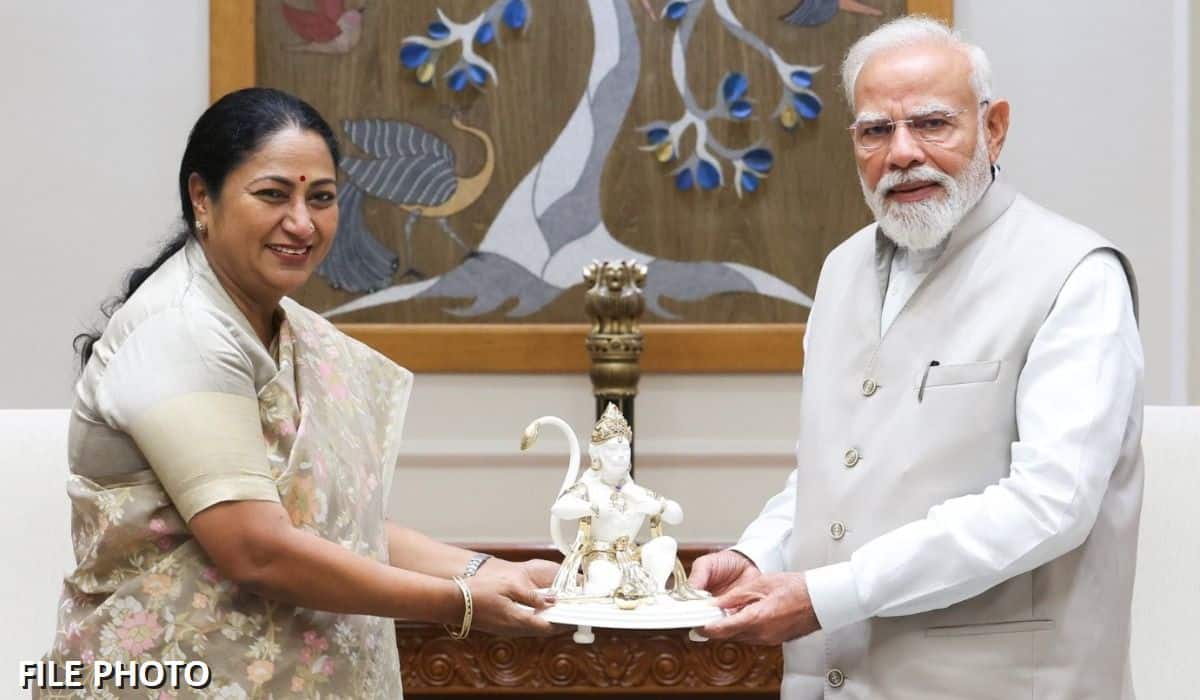
In public life, some encounters do more than mark moments; they reset directions. My first meeting with Shri Narendra Modi in 1996 was one such turning point. I entered as a young karyakarta, keen to learn and contribute. I emerged transformed, carrying a living model of leadership—a blueprint that turned politics into purposeful action anchored in clarity, deadlines, and accountability to the last citizen.

The discipline Modi instilled was simple: listen fully, decide sharply, act relentlessly. What struck me first was his extraordinary patience in listening. He absorbs every nuance—often more patiently than the speaker themself. After a brief pause, complex matters are distilled into a handful of clear steps. Meetings with him end not in vague aspirations but with precise metrics and deadlines.

My role was clear: work honestly, report regularly, correct quickly. That rhythm—report, review, deliver—became my operating principle. It demanded trading ornamentation for outcomes, acknowledging shortfalls without drama, and fixing problems swiftly. Honesty was not just a virtue but the most efficient way to work.

Those early years gave me a proving ground. In Gujarat, I was tasked with challenging political terrain including half the seats in Kutch—regions with vast distances, precise targets, and unforgiving timelines. Later, in Varanasi, I managed one assembly segment where each booth represented a universe of names, issues, and deadlines. Encouraged by Modi’s confidence, I took on further challenges in Jammu and Kashmir, and Chhattisgarh. The lesson was constant: quiet persistence beats loud intent; data speaks louder than volume.

Nearly three decades of association with Modi have shaped my public career and personal discipline. Our bond was not built merely over shared khichdi but over the work itself—the habit of measuring what truly matters and leaving no one behind. When I was entrusted to lead Haryana as Chief Minister, this ethos guided me: grateful for the trust, clear on responsibility, and anchored in service under Modi’s mentorship.

Since 2014, as he took the nation’s highest office, impatience for results was palpable. Yet, Modi did not reply with slogans; he responded systemically. Jan Dhan Yojana and direct benefit transfers sealed leakages in welfare. Digital India turned technology from a luxury into a utility. UPI put payments within everyone’s reach. GST unified the economy. These were not isolated programmes but parts of one design to make dignity the norm.

My work today in urban development shows this design in action. Take housing. Under Pradhan Mantri Awas Yojana–Urban, the mission was extended to December 2025 to ensure sanctioned homes became finished homes. Over 1.19 crore urban houses have been sanctioned, more than 93 lakh completed. Each completed home is more than bricks—it is a key opening a door where none existed. This is “last person” dignity in practice.

Street vendors—the fragile backbone of city economies—were empowered through PM SVANidhi. Micro-credit linked to digital behaviour, not collateral, turned modest enterprises into dependable livelihoods. By July 2025, over 96 lakh loans amounting to Rs 13,800 crore reached more than 68 lakh vendors. Millions embraced digital payments—proof dignity scales when systems are inclusive.

Urban transformation is also about unglamorous but vital infrastructure: pipes, drains, lights. AMRUT and AMRUT 2.0 added over two crore household tap connections and about one and a half crore sewer connections in the past decade. Nearly a crore LED streetlights now shine, lowering energy use and munici­pal bills. Urban local bodies are financing futures through municipal bonds—unseen victories vital to liveable cities.

The Smart Cities Mission has grown from pilots to real projects. By May 2025, 94 per cent of over 8,000 projects were complete, the rest near completion. This shows that federal programmes can keep time when citizens are stakeholders, not spectators.

To unify efforts, the National Urban Digital Mission builds a common digital backbone—shared platforms, real-time dashboards, modular services—that close the gap between cities and citizens. MOUs with most states and union territories cover thousands of urban bodies. Modules for licences, grievances, and sanitation run on a common stack. The national dashboard UMEED brings live data into decision rooms. Once theoretical, this integration is now routine governance.

Power tells a similar story. The Saubhagya programme electrified nearly 2.86 crore homes by March 2022—ending darkness for millions. But access was step one. Reliability followed under the Revamped Distribution Sector Scheme, replacing guesswork with telemetry. Over 20 crore smart meters were sanctioned, 2.4 crore installed—turning power distribution from opaque to accountable. Smart meters are instruments of governance, not mere gadgets.

Renewable energy generation advanced decisively. By August 2025, India installed roughly 1.92 lakh MW of renewables (excluding large hydro)—about 1.23 lakh MW solar and over 52,000 MW wind. The point is not headline numbers but normalisation at scale. Rooftop solar reached households via PM Surya Ghar: Muft Bijli Yojana, with clear timelines to make self-generation mainstream. From village chaupals to urban terraces, solar panels are familiar silhouettes.

Across these sectors, the pattern is clear: conviction married to data, ambition disciplined by deadlines. PM Modi calls himself the nation’s Pradhan Sevak—a phrase not flourish but operating manual. It sets the standard for those working under him: be impatient with drift, patient with people, reward transparency, honour time. Leadership here is not credit-seeking but a culture of accountability.

As Modi enters his seventy-sixth year of service to the nation, I join millions in wishing him strength and success. On the world stage, he is a seasoned statesman deftly steering India’s ship through turbulent global waters—building coalitions, advancing our interests, giving voice to the Global South, and holding steady to principle when tides turn rough.

May the years ahead see him steer with clarity toward the larger destination of a Viksit Bharat—a developed India—where opportunity expands for all and our nation’s horizon widens. For those privileged to learn under his guidance, the task is clear: keep the method, pace, and faith with the last person.

Manohar Lal Khattar is the Union Minister for Housing and Urban Affairs and former Chief Minister of Haryana. He tweets @mlkhattar. 

Explore More
শ্ৰী ৰাম জনমভূমি মন্দিৰৰ ধ্বজাৰোহণ উৎসৱত প্ৰধানমন্ত্ৰীৰ সম্বোধনৰ অসমীয়া অনুবাদ

Popular Speeches

শ্ৰী ৰাম জনমভূমি মন্দিৰৰ ধ্বজাৰোহণ উৎসৱত প্ৰধানমন্ত্ৰীৰ সম্বোধনৰ অসমীয়া অনুবাদ
'Bharat Innovates' Bridge Between India’s Talented Youth And European Expertise: PM Modi

Media Coverage

'Bharat Innovates' Bridge Between India’s Talented Youth And European Expertise: PM Modi
NM on the go

Nm on the go

Always be the first to hear from the PM. Get the App Now!
...
যিগৰাকী নেতাই ভাৰতক পুনৰ জাগৃত কৰিল: নৰেন্দ্ৰ দামোদৰদাস মোদী
June 14, 2026

Narendra Damodardas Modi’s journey, from a humble background to the leadership of the world’s largest democracy, is ultimately the story of a man who reawakened the faith of a nation in itself.

The fate of a nation is intertwined with the fate of its leaders. Nations grow and prosper under strong, decisive leadership; they decay under feeble, indecisive, corrupt leadership. People are the life energy of a nation, but the leaders are the one who channelizes the mass energy into the right, productive direction. One cannot imagine nations without their founding fathers, their leaders. When we think of the United States, the names of its prominent leaders like Thomas Jefferson, Washington, Abraham Lincoln, John F. Kennedy, F.D. Roosvelt come to our minds. Similarly, the Indian nation was built upon the vision of its great founding fathers like Mahatma Gandhi, B.R. Ambedkar, and Veer Savarkar.

Strong leadership plays a vital role in uplifting the spirits of the people; wise leaders nudge the nation on the path to prosperity and glory. Leadership matters the most at the time of a national crisis, like Matsya Avtara of Lord Vishnu, who steered and rescued the great ship of Manu Maharaj during the pralaya. Leaders steer and rescue the nation during hours of crisis. Shri Narendra Damodardas Modi took centre stage in Indian politics during such a time of crisis.

Prime Minister Narendra Modi emerged on the national stage at a juncture when Indian politics had reached a low, an era in which a nominal Prime Minister was being imposed upon the people of India. The government was struck with policy paralysis. Corruption had become deeply entrenched in the national political system, scams like Coalgate, 2G spectrum, Commonwealth Games had become a recurring phenomena. Media, businessmen, and politicians formed an unholy nexus and were siphoning public money with impunity. Entrepreneurs, industrialists, and academia were drowned in pessimism; their trust started eroding in the Indian state. Common people felt ashamed of their cultural legacy.

At that pivotal moment, Shri Narendra Damodardas Modi entered the national stage with a clear, resounding vision. He inspired the youth, women, and veterans alike. PM Modi reinstated hope, faith, and trust back again towards the leadership and the political system, PM Modi revitalised the economic machinery, entrepreneurship, and industry, and re-energised the bureaucracy. Being himself from a humble background, PM Modi possessed within him a deep understanding of society, and being an RSS pracharak, he had a profound understanding of Indian culture.

Being one of the longest-serving CMs in India came with an impeccable administrative and electoral record. PM Modi brought with him the mantra of “minimum government and maximum governance”.

PM Modi, through the rapid digitalization of government services, reduced the inertia in governance and brought government to the fingertips of the common citizens. At the very beginning of his tenure, he replaced the requirement of attestation of documents by gazetted officers with self-attestation by the common citizens. Such is his minute understanding of the bureaucratic impediments that stall the progress of a common citizen. Due to reform measures initiated by him, India’s rank in the international business indicators improved. PM Modi has demonstrated a strong will to an efficient, transparent, and accountable government. Rules and policies are now formed among people, not in closed AC chambers.

PM Modi, since his ascension, has worked tirelessly to transform the Indian economy into a manufacturing hub and make it Atmanirbhar Bharat. PM Modi launched initiatives like Skill India, Startup India, and Production Linked Incentives (PLIs). For strengthening the supply chain, PM Modi sanctioned greenfield expressways, airports, shipping ports, and sped up the construction of brownfield expressways, airports and stations. PM Modi expanded India’s premier higher education infrastructure by establishing new IITs and IIMs. PM Modi restored faith in the underprivileged section through his mantra of “Sabka Saath, Sabka Vikas, Sabka Vishwas, Sabka Prayas” in the Indian government. Such is his sensitivity that he launched the PM Ujjwala Yojana as he was aware of the discomfort caused to our mothers and sisters due to the smoke of the traditional gas chulha.

PM Modi brought cleanliness and sanitation to the daily discourse through the Swachh Bharat Abhiyaan. Through the toilets built under the scheme, PM Modi provided a dignified life to our mothers and sisters. Due to the Bhaagirathi Prayas of PM Narendra Modi, Nari Shakti Vandan Adhiniyam was passed for the political empowerment of the women of India.

A nationalist to the core, PM Modi led a cultural renaissance of the nation. Remnants of the colonial legacy, the Indian Penal Code and CrPC (Code of Criminal Procedure) were scrapped, and Bhartiya Nyay Samhita was born. PM Modi is rebuilding our sacred tirths incessantly. Due to his efforts, our cultural and spiritual centres of Ayodhya and Kashi were reclaimed. PM Modi has promoted our indigenous knowledge of Ayurveda as a brand ambassador, formulated policies to establish Ayurveda as principal medicinal practice.

PM Modi, through his incredible work, unflinching dedication, and commitment towards a Viksit Bharat, inspires one and all to participate in his vision for a Viksit Bharat by 2047.

Yet, the true measure of a leader is not merely in the policies he enacts or the institutions he builds, but in the confidence he instils in his people. Over the past 12 years, Prime Minister Narendra Modi has sought to restore that confidence—confidence in governance, confidence in India’s civilisational heritage, confidence in the abilities of ordinary citizens, and confidence in the nation’s future.

From revitalising the economy and empowering the poor to strengthening national security, restoring cultural pride, and elevating India’s stature on the global stage, PM Modi’s leadership has left an indelible imprint on contemporary India. More importantly, he has transformed governance into a national movement, inspiring millions to become active participants in the country’s development journey. 

As India marches towards the centenary of its Independence in 2047, the vision of a Viksit Bharat is no longer a distant aspiration; it has become a collective national mission. History remembers those leaders who rise to the occasion when their nation needs them the most, leaders who not only govern their times but shape the destiny of generations. 

Narendra Damodardas Modi’s journey, from a humble background to the leadership of the world’s largest democracy, is ultimately the story of a man who reawakened the faith of a nation in itself. The foundations of a stronger, more confident, and more aspirational India have been laid. The task before the nation now is to carry forward this momentum and transform the dream of a Viksit Bharat into reality. 

As India stands at the threshold of even greater possibilities, the words of Robert Frost resonate with renewed meaning, 

“The woods are lovely, dark and deep,

But I have promises to keep,

And miles to go before I sleep,

And miles to go before I sleep.”

For India, those promises are to its people, to its civilization, and to future generations. The achievements of the past twelve years are the foundation. The journey continues, and the miles ahead are filled not with uncertainty but with opportunity, purpose, and the promise of a Viksit Bharat. 

(Rekha Gupta is the Chief Minister of Delhi.)