Published By : Admin |
September 29, 2014 | 16:07 IST
Share
Q. This is a question on trade, which, as you know, is often cited as one of the principal engines of economic growth. India, since you became Prime Minister, has decided not to go ahead and ratify the so-called Trade Facilitation Agreement. Also, India is, for the moment, outside both – APEC and TPP negotiations. So could you speak about your view of trade? And whether the domestic politics of India will allow you to pursue a liberal trade agenda?
A. जहां तक Trade facilitation का सवाल है, हम 101% agreed हैं। उसमें कोई दुविधा का विषय नहीं है, कयोंकि हम भी यह चाहते हैं। आज global economy का युग है। अगर global economy का युग है तो हमें हमारे infrastructure, हमारी facilities global standard की बनानी पड़ेगी। इसलिए हम भी मानते हैं कि विश्व के साथ हमको काम करना है। मेरे लिए Politics is not an issue at all. मैं लोकरंजक राजनीति वाला इंसान नहीं हूं। और नही लोकरंजक अर्थनीति वाला इंसान हूं। लेकिन मेरे देश में गरीब लोग हैं। गरीबों को भूखा रखकर हम नहीं चल सकते। और इसलिए food security और Trade facilitation - दोनों चीजें एक साथ चलनी चाहिए। ये मेरे देश का आग्रह है। ये पहले कर लो तो देखा जाएगा तो गरीबों के साथ अन्याय होगा। दुनिया को कोई तकलीफ नहीं है कि हम food security के लिए positive stand ले लें।
Q. This question deals with electricity. As I understand it, several hundred million Indians do not have adequate access to electricity. And the question a lot of people are asking is, how can these people come to enjoy a middle class life, and in the process, not set in motion economics that have a clearly negative impact on climate change given the amount of carbon that would be emitted?
A. यह बात सही है कि हमारे लिए आज बिजली जीवन में एक बड़ा महत्पूर्ण हिस्सा बन चुकी है। बिजली Luxury नहीं है। ये जीवन की Requirement बन गई है। और हम 24x7 बिजली पहुंचाने के लिए संकल्पबद्ध हैं। मेरी सरकार ने अपने Manifesto में कहा है, अपने Agenda में कहा है कि next 5 years में हिंदुस्तान के हर गांव में 24x7 power supply करेंगे। यह संभव है। हमने जिस प्रकार से energy sector में काम किया है, उसमें भी clean energy पर बल दे रहे हैं। हम solar के लिए Roof top policy लेकर के आ रहे हैं। और इसलिए हिंदुस्तान में अब बिजली का संकट रहेगा, ऐसी संभावनाएं बहुत कम हैं।
जहां तक Climate Change का सवाल है, शायद आप लोगों को जान के आश्चर्य होगा, मैंने पहले भी कहा, मैं गुजरात में जब था – Al Gore ने एक किताब लिखी है Inconvenient truth - मैंने एक किताब लिखी है, Convenient Action और वह मैंने Environment पर लिखी है। और जो किया जा सकता है, यानी political will से Environment friendly काम कैसे किया जा सकता है, वो मैंने उसमें सिद्ध करके दिखाया है। इसलिए Development and climate दुश्मन हैं, जो सोचा जा रहा है, गलत है। हम दोनों को Carefully Streamline करके आगे बढ़ा सकते हैं।
Q. Sir, India is, by many counts, the second largest Muslim country in the world in terms of population. Only Indonesia is larger. And as you know from your time here, America is seized by the challenge posed by the group ISIS. One of the questions that has been raised is whether you’re worried that the unrest sweeping large parts of the Arab and Muslim world might spread to India. And to the extent that you are, what are your plans to reduce your country’s susceptibility to radicalization and even violence?
A. जहां तक भारत का सवाल है, भारत में किसी भी संप्रदाय के व्यक्ति क्यों न हो, लेकिन एक मूल philosophy से वह drive करता है और भारत के philosophy के प्रतीक हैं भगवान बुद्ध, महात्मा गांधी। जहां अहिंसा, यह हमारे लोगों के स्वभाव में है। आपने देखा होगा, इतनी Terrorist Activity हमारे देश में चली। Terrorism के कारण हम परेशान हैं। लेकिन सारे Terrorist Activity हमारे यहां exported है। किसी ने हमारे यहां export किया है। Home grown नहीं है इसलिए हिंदुस्तान का जो मुसलमान है, उसके विषय में, मुझसे कभी एक बार CNN ने पूछा था, कि अल कायदा का ये जो चल रहा है, तो आपको क्या होगा, तो मैंने कहा था कि हिंदुस्तान का मुसलमान अलकायदा को फेल कर देगा।
Q. We hope so. Let me turn to foreign policy for a minute. For much of the Cold War, India’s articulated foreign policy was one of Non Alignment. And there was always the rhetoric of the five principles of co-existence. But as you know, and as everybody knows, the world is no longer aligned with the end of the Cold War. So what is India’s compass? What is India’s intellectual approach to this post-Cold War world when it comes to its foreign policy?
A. देखिए, हम 18th और 19th century की तरफ जाएं तो वह युग पूरा संघर्ष का युग था। हर शासक जो भी उसका दायरा होगा, वह अपने विस्तार के लिए लड़ाई लड़ता था। पूरे दो शताब्दी का इतिहास संघर्ष का इतिहास है, लड़ने का इतिहास है। बाद में आया इतिहास, समय जो आया, वह गुट का इतिहास आया। एक गुट ये, तो दूसरा गुट ये। ये आया। अब वक्त बड़ी तेजी से बदला है। 21वीं सदी गुट से चलने वाली नहीं है। और एक प्रकार से Irrelevant हुआ यह गुट। आज हर देश Inter dependent है। विश्व के सब देश को सब देशों की जरूरत हो, ऐसे युग में हम प्रवेश कर चके हैं। और इसलिए गुट या समूहों के द्वारा नहीं, सह-अस्तित्व के विश्वास को लेकर आगे बढ़ना पड़ेगा। इसलिए एक नई philosophy, हम चाहे या न चाहें, already, practically जगह ले चुकी है। सभी देश मान लीजिए जो लोग G-20 में होंगे, वही G-4 में भी होंगे। जो G-7 में होंगे वही G-9 में होंगे। यानी आप देख सकते हैं कि कोई ऐसा समूह नहीं बन पा रहा है। हर कोई हर जगह पे भी जगह बना रहा है तो जगत पूरा बदल चुका है। हम ये पुराने समूहों की कल्पना लेकर के चलते थे, उसमें से बाहर निकल जाएं और हम Inter-dependent world है, उसको accept करें। ये जगत तेजी से जुड़ा रह है। Technology ने जोड़ा है, हमारी अपनी आवश्यकताओं से जुड़ रहे है, और हमारी युवा पीढ़ी ने एक नए बदलाव को स्वीकार कर लिया है, इसलिए पुराने सारे parameters अब काम नहीं आएंगे।
Q. After this meeting here in New York, you are heading for Washington. You’ll meet with the President tonight, you’ve got meetings tomorrow. I expect one word you’re going to hear again and again and again is the word “partnership”. To describe the US-Indian relationship. So my question for you is whether you are comfortable with that word and to the extent you are or are not, what is your definition of the word “partnership” when it comes to India and the United States?
A. पहली बात यह है कि हर चीज में comfort नहीं होने की जरूरत होती भी है। अब पति-पत्नी में भी 100% comfort नहीं होता है। लेकिन उसके बावजूद भी एक लंबे समय तक Binding रहता है। कुछ चीजे हैं, जो भारत और अमेरिका को जोड़ती हैं। और वो है:
सबसे बड़ी चीज लोकतंत्र। Openness, सोसाइटी में जो openness है, वह दोनों के संस्कारों में है। तीसरी बात, आप देखिए अमेरिका - सारी दुनिया अमेरिका में आके बसी है, यह अमेरिका के character का हिस्सा है कि सबको assimilate करती है। और Indian, दूसरी दुनिया में बसा हुआ है। तो सारी दुनिया को assimilate करने की ताकत Indian में है। ये दोनों ऐसे character हैं, जो एक-दूसरे को जोड़ते हैं। और तीसरी बात है, आर्थिक। आर्थिक बात वो लेन देन का विषय रहता है। व्यापारिक संबंध रहते हैं कभी आपके फायदे में, कभी हमारे फायदे में। वह give & take formula के आधार पर चलते हैं। लेकिन दोनों देशों के लोकतंत्र के प्रति श्रद्धा दोनों देशों को जोड़कर रखती है।
Q. You’ve described what features India and US have in common. But another word you’re going to hear a lot tomorrow is “strategic partnership”. Do you have a vision for that partnership and how the US and India can work together on global and regional issues?
A. देखिए, अभी भारत और अमेरिका ने मिलकर के - शांति की दिशा में प्रयास करना, एक विषय है, लेकिन आर्थिक विकास को लेकर के - अभी हम मिलने वाले हैं तो उस विषय को भी जोड़ने वाले हैं। यहां पर जो रिसर्च होता है, उस रिसर्च का उपयोग, हो सकता है कि अन्य देशों के साथ मिलकर विशेषकर भारत के साथ मिलकर के, जहां पर उस रिसर्च के धरती पर उतरने में utility ज्यादा है, तो हम उन क्षेत्रों में भी काम कर सकते हैं। दुनिया की तरफ देखने का हमारा दृष्टिकोण, वो सिर्फ उपयोगितावाद पर नहीं है। मैं आज भी मानता हूं, कि भारत और अमेरिका के संबंध, अमेरिका के हित के लिए अमेरिका के संबंध और भारत के हित के लिए भारत के संबंध, उसके बजाय, अमेरिका और भारत मिलकर के दुनिया के हित में हम क्या कर सकते हैं अगर ये Base line बनती है तो हम दोनों की ताकत विश्व को बहुत काम आ सकती है। और मैं जब Mr. Kerry मुझसे मिले थे, तो मैंने इस विषय को बड़े विस्तार से उनके सामने मैंने प्रस्तुत किया था।
Q. Is Afghanistan one of the areas where you think we can work together in a productive way?
A. अफगानिस्तान, ये तो बड़ा example है। अफगानिस्तान, actually एक example है। भारत के बहुत लोग अफगानिस्तान में रहते हैं। और एक प्रकार से अमेरिका और India के Partnership ने अफगानिस्तान में बहुत बड़ा Role play किया है। हम भी चाहते हैं कि अफगानिस्तान स्थिर, लोकतांत्रिक तरीके से विकास की यात्रा को आगे बढाए। ये हम भी चाहते हैं। अमेरिका ने वहां जो security measures में मदद की, उसके कारण वहां एक stability मिली। आज भी हमारी कोशिश ये है। और जो अभी चुनाव होने के बाद नई सरकार वहां प्रस्थापित हुई है, उस सरकार में भी तालमेल करने में भारत और अमेरिका ने, दोनों ने मिलकर के बहुत ही सद्भावना अपनी प्रकट करते रहे हैं। और एक अच्छे नतीजे की तरफ अफगानिस्तान गया है। लेकिन हमने अमेरिका से यही Request की है कि आप जो, withdrawal वाला, defence के withdrawal का विषय है - इराक जैसी गलती नहीं करनी चाहिए। क्योंकि इसके बाद इतना तेजी से withdraw करने के बाद इराक का जो हाल हुआ, अफगानिस्तान में withdrawal की process बहुत slow होनी चाहिए। अफगानिस्तान को अपने बल पर खड़े होने देना चाहिए। तभी जाकर के तालिबान को उभरने से वह रोक पाएगा। और इसलिए अमेरिका और भारत दोनों ने मिलकर के अफगानिस्तान में पूरी तरह कंधे से कंधा मिलाकर के काम किया है।
Q. Mr Prime Minister, you set an admirable example for the world in June when you accepted the arbitration decision of a Law of the Sea Tribunal, even though it awarded most of the Bay of Bengal that was under dispute to Bangladesh. Would you be willing to submit your land border problems with China to arbitration or adjudication? The Chinese government has thus far rejected the use of arbitration or adjudication. The Philippines is now putting China to the test. Would India be willing to do something similar?
A. चीन और भारत दोनों सक्षम हैं, बातचीत के द्वारा अपनी समस्या का समाधान करने के लिए। चीन और भारत Direct बातचीत कर रहे हैं। इसलिए कोई अलग arbitration की आवश्यकता नहीं रहती है। अभी भी, चीन के साथ मेरे व्यक्तिगत संबंध भी अच्छे रहे हैं। चीन के राष्ट्रपति अभी-अभी आए थे। और Border dispute को हम मानते हैं, Border dispute है और कई बातों में हमने चर्चा की है। उस चर्चा को हम और आगे बढ़ाएंगे। लेकिन हम दोनों इस बात से सहमत हैं, कि हम मिलकर के बहुत ही जल्द इन समाधानों को करेंगे। इसलिए हमें arbitration की जरूरत नहीं पड़ेगी।
Q. You’ve often said that there is no compromise on the dignity of women. So given the enormous potential of Indian women, and the challenges they face everyday, what is your vision for a Made in India approach for ending gender-based violence and inequality? Is your government exploring the establishment of a Prime Ministerial task force or any other concrete milestones to be a global leader on this issue that is so fundamental to the lives of so many?
A. मैं आपका बहुत आभारी हूं कि आपने, जो मैंने initiative लिए, उसके विषय में अच्छे शब्द सुनाए। दुनिया के कई भाग ऐसे है, जहां देश का प्रमुख महिला नहीं बन पाती है। Prime Minister या President किसी महिला को बनना है, आज भी कई देशों में दिक्कत है, लेकिन भारत और एशिया के देश ऐसे हैं, जहां महिलाएं प्रधानमंत्री रही हैं। और आज मेरी Foreign Minister भी महिला हैं, सुषमा स्वराज यहां बैठी हैं। मेरी Foreign Secretary भी महिला हैं, सुजाता सिंह। और मेरी Cabinet में 25% women हैं, Cabinet Ministers. लेकिन इस बात से बात पूरी नहीं होती है। Women empowerment के लिए सबसे पहली बात है girl child education. हम लोग dedicated हैं, girl child education के लिए। और I would like to share my experience in Gujarat. मैं जब गुजरात में मुख्यमंत्री था तो मेरे यहां girl child education को जब मैंने जाना, पहली बार जब मैं मुख्यमंत्री बना। It was Painful for me कि गुजरात जैसे राज्य में girl child education का ये हाल है? फिर मैंने, मेरे यहां school शुरू होती है 15th June को। जबकि हमारे यहां temperature होता है 45 डिग्री। यहां पर 24 डिग्री में भी गर्मी लगती है। हम 45 डिग्री में वहां रहते है। तो 13, 14, 15 जून, मैं खुद गांव जाता था। मेरे पूरे मंत्रिपरिषद के लोग गांव जाते थे। सारे मेरे MLA, MP जाते थे। मैं घर-घर जाकर भिक्षा मांगता था और लोगों को मैं कहता था कि भिक्षा में आप मुझे वचन दीजिए कि आप अपनी बेटी को पढ़ाओगे। मैं खुद बच्चियों को स्कूल लेकर जाता था। और मैं 100% enrolment में सफल हुआ। When I was a Chief Minister, 100% मैं सफल हुआ। वहां पर मैं अटका नहीं।
मैं कहीं पर भी जाता था, Public function में, तो मुझे gift कुछ न कुछ देते रहते हैं लोग, वह gift देते थे। उस gift को मैं auction करता था। जब मैं मुख्य मंत्री पद से गुजरात से वापिस निकला, तो उस auction में मुझे 78 करोड़ रुपये Total मिले। 78 करोड़ रुपये मैंने girl child education के लिए दान दे दिया सरकार को। ये commitment है हम लोगों का। तो girl child education और मेरी सरकार का Agenda है ‘बेटी पढ़ाओ, बेटी बचाओ’ और उस दिशा में हम काम कर रहे हैं। दुनिया के कई देश हैं, जहां महिलाओं को Voting right पाने के लिए सालों तक संघर्ष करने पड़े। आंदोलन चलाने पड़े। Develop countries में भी women को voting right के लिए लड़ाई लड़नी पड़ी। भारत में women को election में भी 30% Reservation है। कोई भी Body होगी, 30% महिलाएं compulsory है। इतना हम forward looking देश हैं।
Q. You mentioned about the Jammu and Kashmir floods. I was originally born in Srinagar. Our families have obviously been tremendously affected. So my question, or rather request, is that Government of India should allow international organization to come in. Currently, there is a tremendous amount of bureaucracy in allowing international organization to come in.
A. पहली बात है कि दुनिया के कई देशों ने अपने आप कश्मीर को मदद पहुंचाई है। जब गुजरात में भूकंप हुआ था, गुजरात में भी अंतर्राष्ट्रीय community ने काफी मदद पहुंचाई थी। और ये तो बात सही है कि दुनिया भर में एक अच्छी चीज बनी है कि कहीं पर भी Natural Calamity होती तो सभी देश मदद करते ही हैं। जब पाकिस्तान में भूकंप हुआ था, तो मैं सबसे पहले, क्योंकि गुजरात उसके पड़ोस में ही है, तो हमने सबसे ज्यादा पाकिस्तान में मदद पहुंचाई थी। तो यह मानवता का काम है। सब लोग मानवता का काम करते रहते हैं।
Q. You’ve now been in office for 4 months. Is there any leader – whether in India or another country – about whom you say, “That’s someone who set a model that I would like to follow in my position as Prime Minister”?
A. मैं मानता हूं, ऐसा मैं कहूंगा तो कइयों के साथ अन्याय होगा, क्योंकि इतने सारे लोग हैं, हरेक से मुझे कुछ सीखना है। अगर मैं एक का नाम लूंगा तो 50 लोग नाराज हो जाएंगे। इसलिए मुझे दुनिया में जो भी अनुभवी लोग हैं, सबसे कुछ न कुछ सीखना है। और सबसे सीख करके मेरे देश के लिए मुझे अच्छा करना है। इसलिए मैं कहता हूं, दुनिया में जो श्रेष्ठ है, वो मुझे मेरे देश में लाना है।
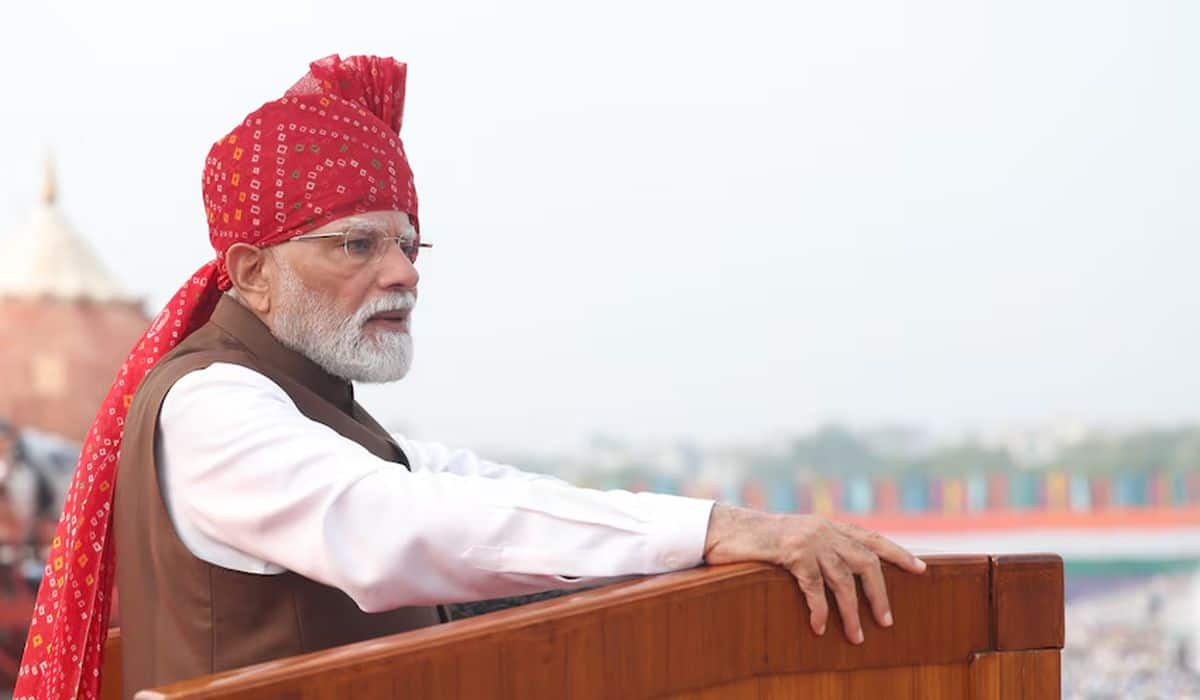
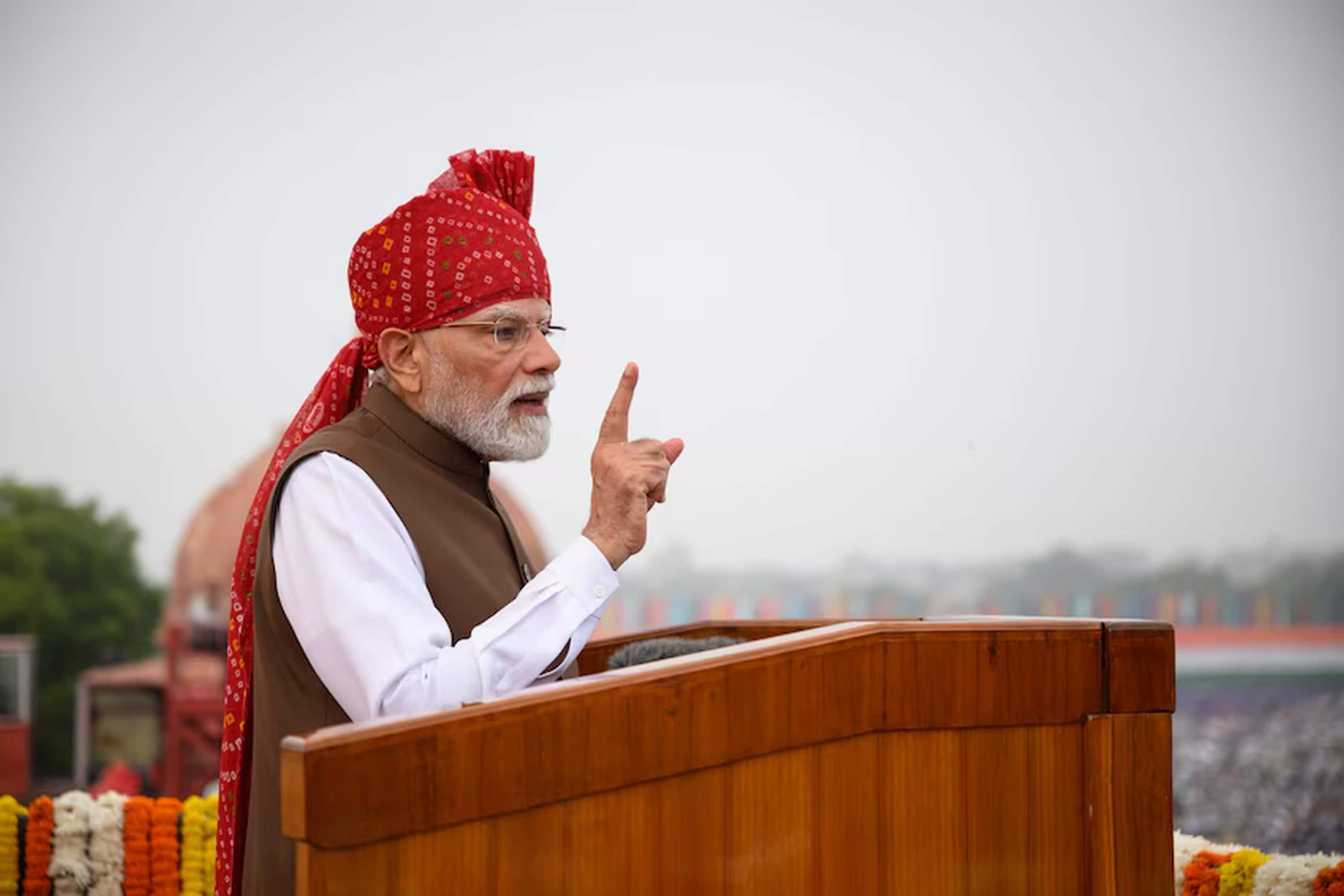
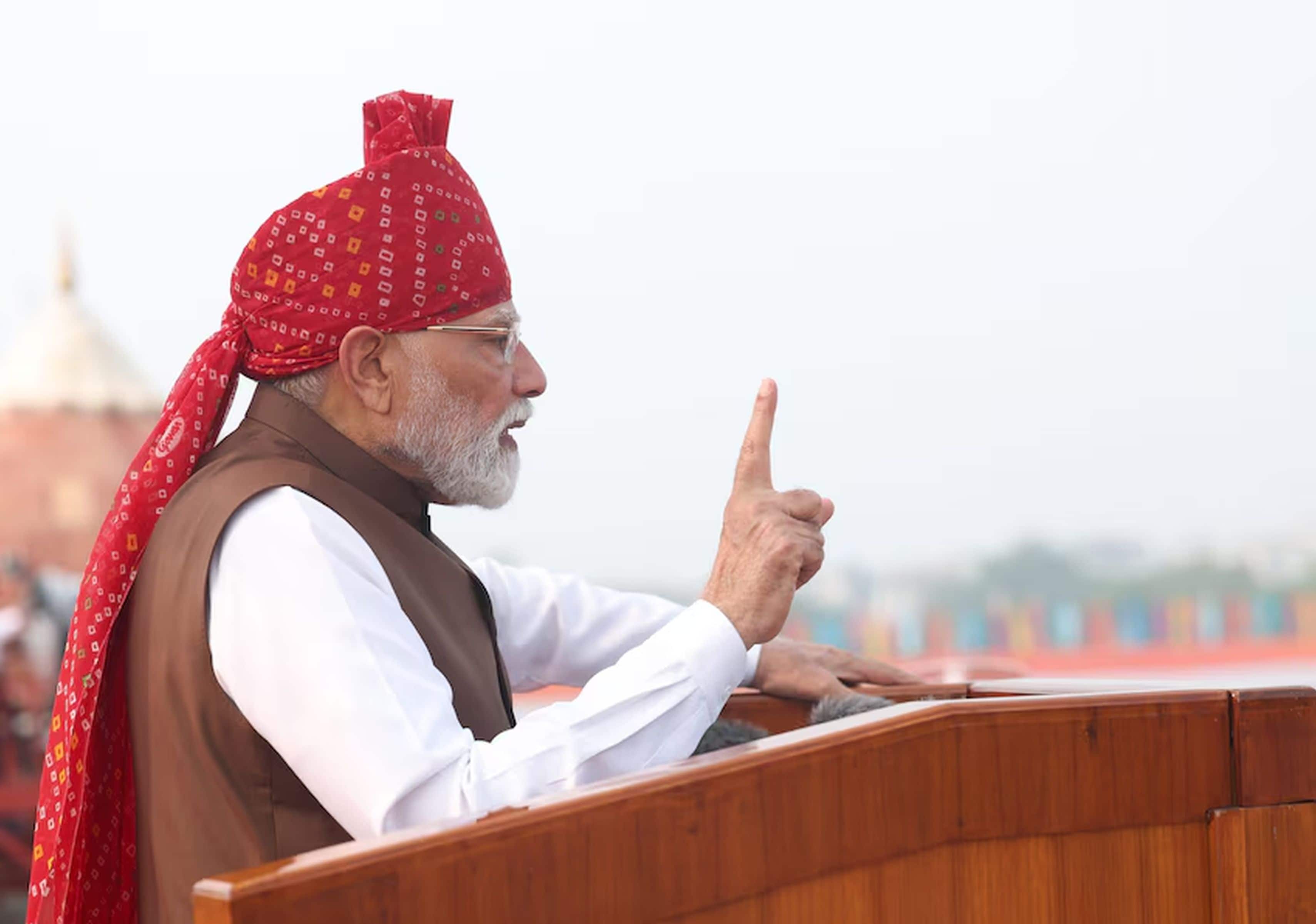
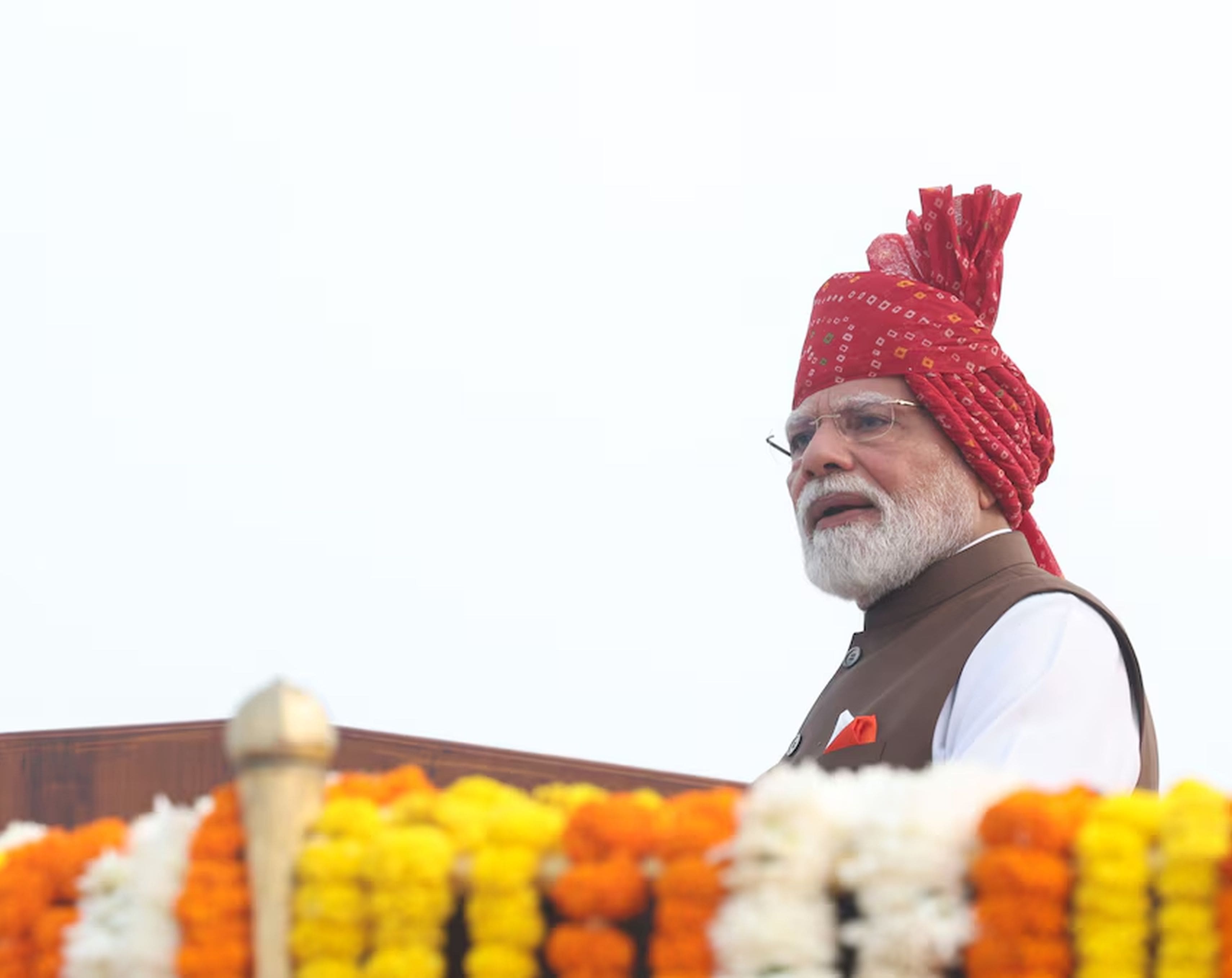
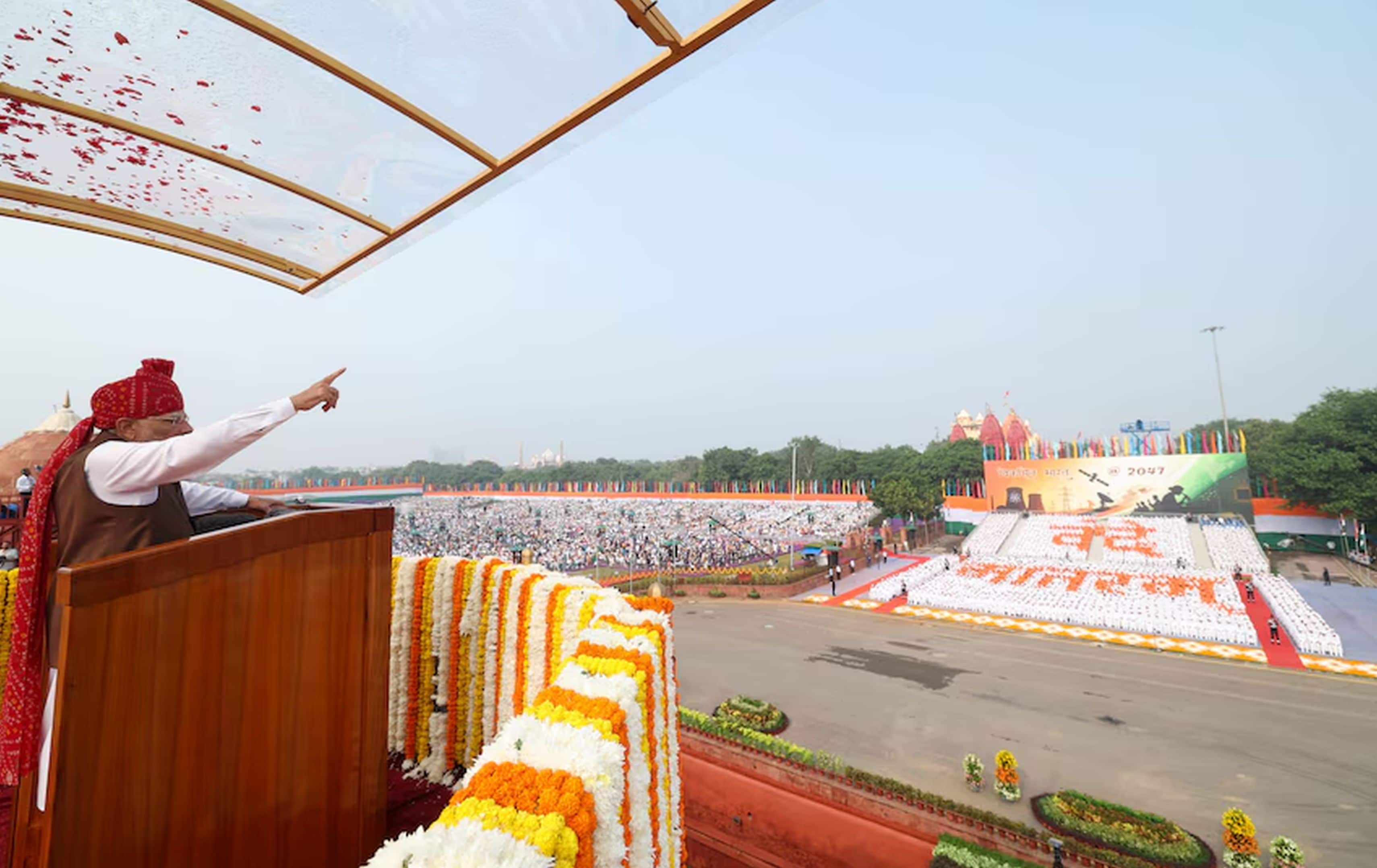
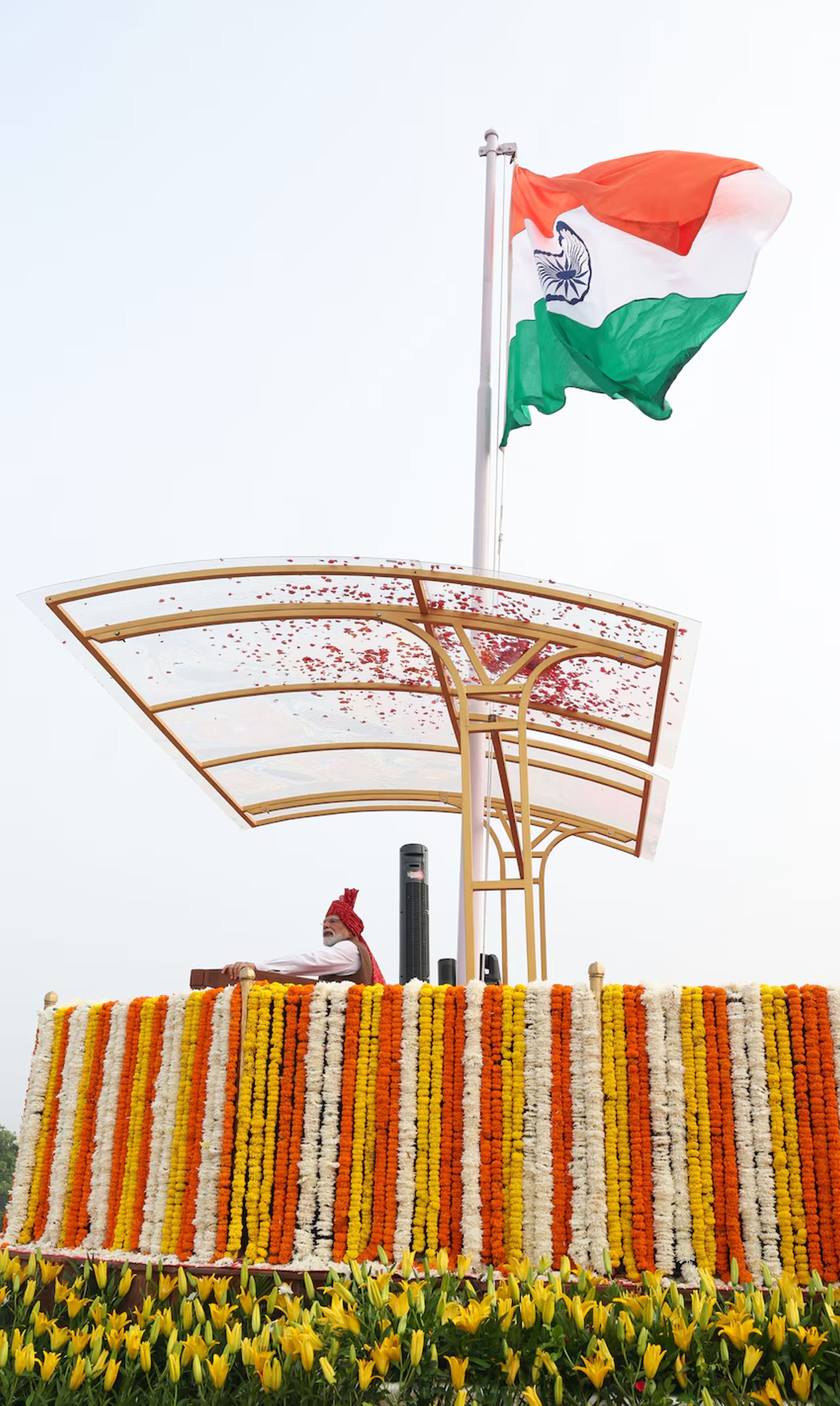
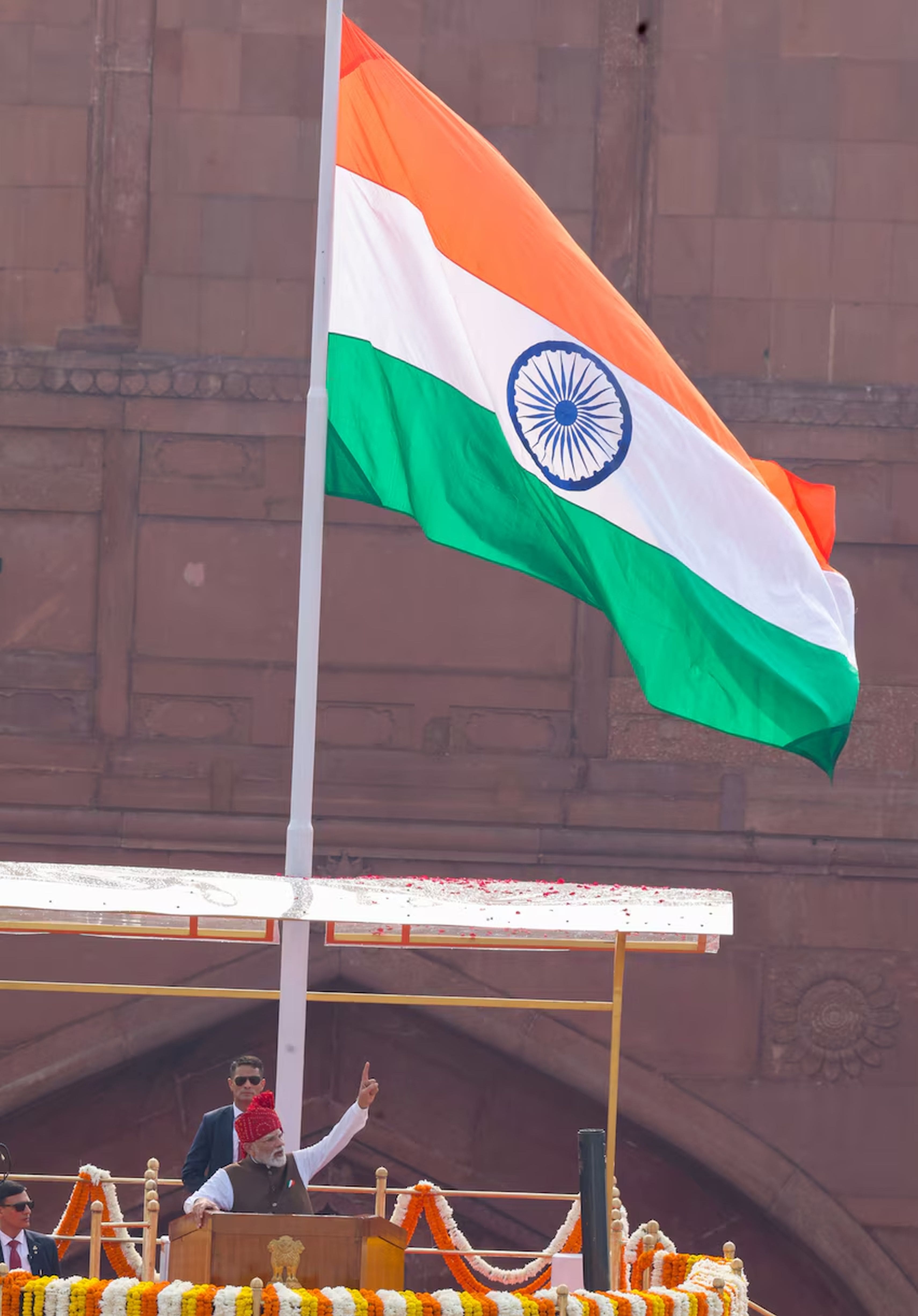
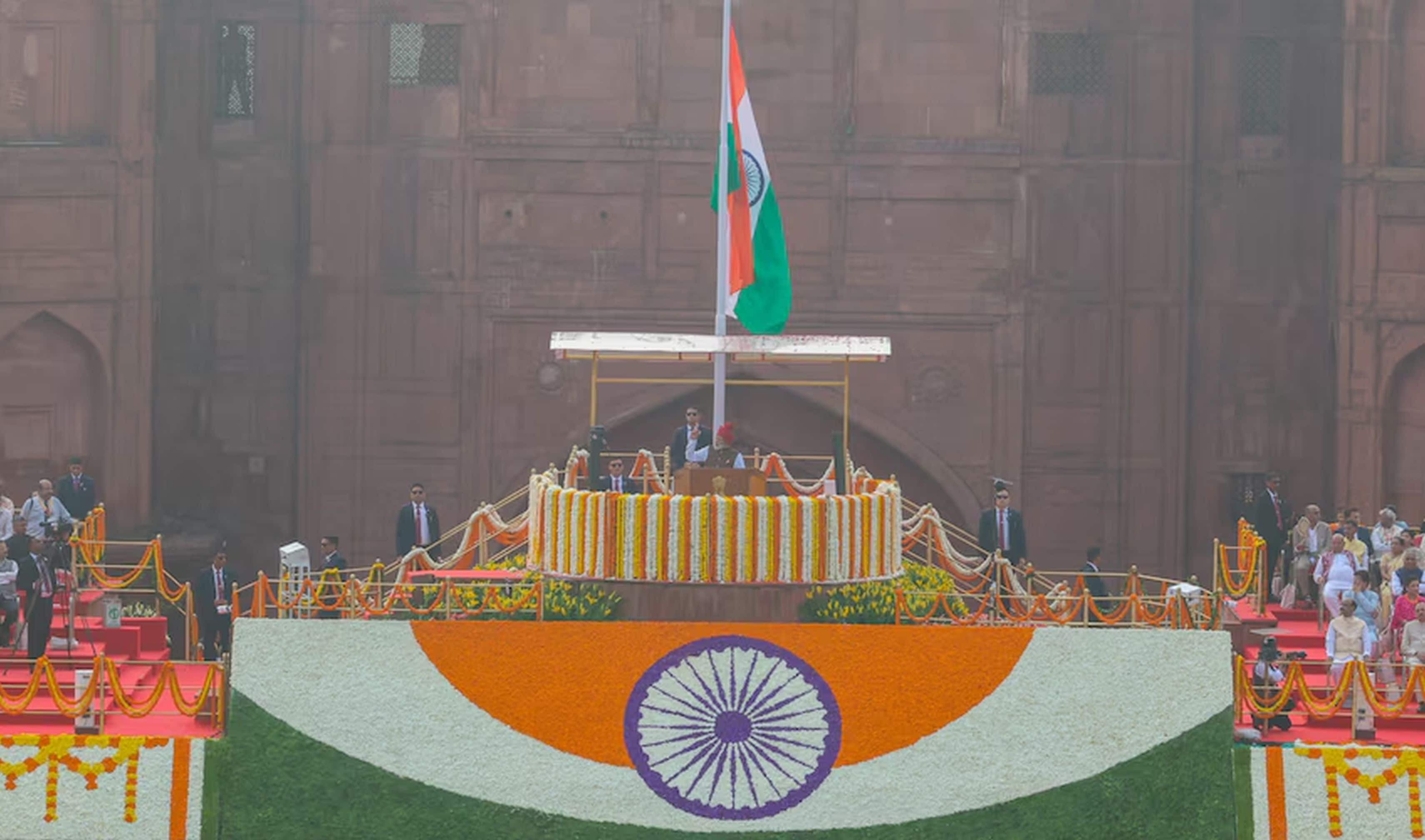
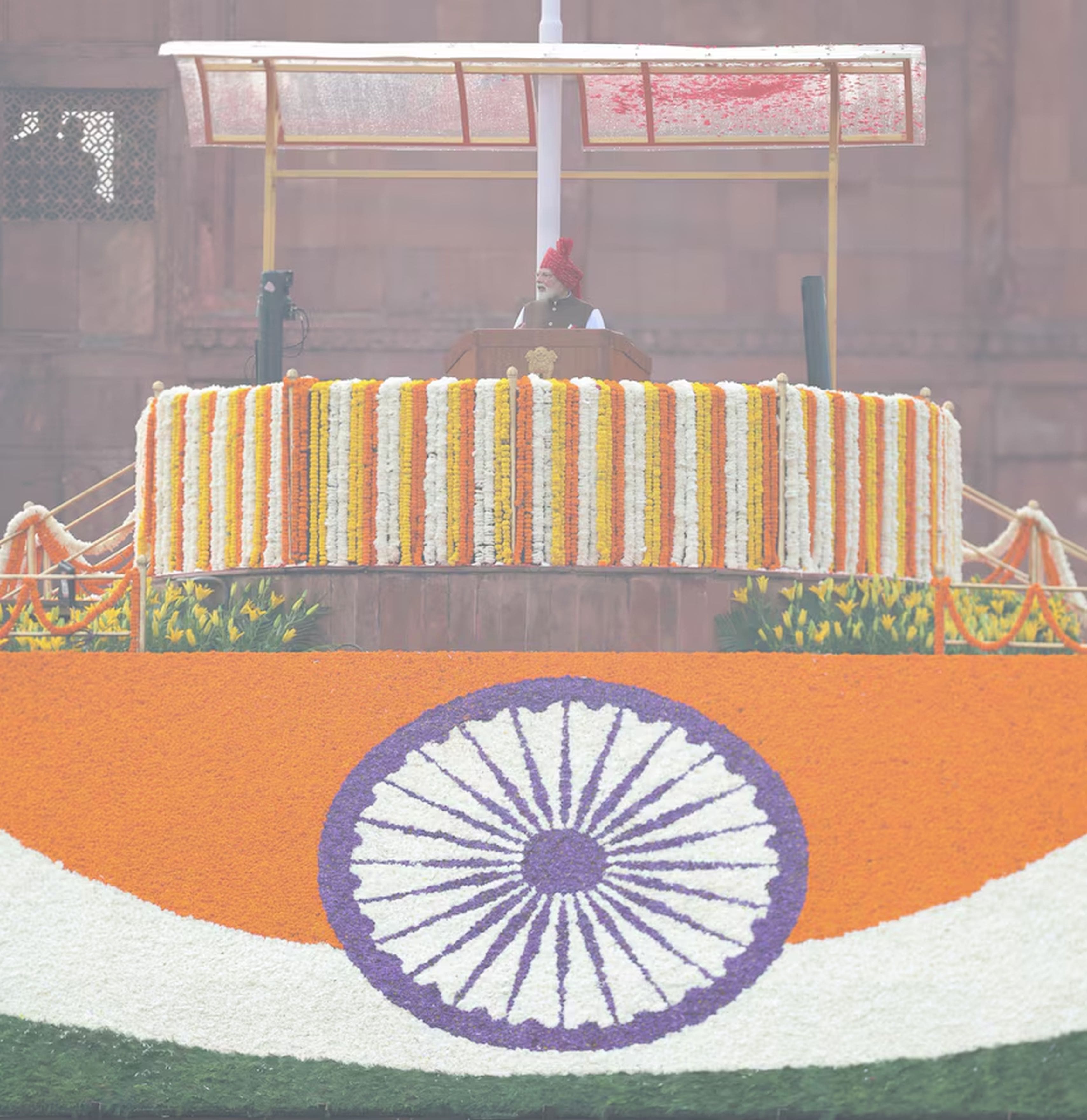
Through the efforts and hard work of 140 crore citizens, we must achieve the goal of Viksit Bharat: PM Modi on 80th Independence Day at Red Fort
August 15, 2026
Share
Today is a day to move forward with our dreams, resolve and strength: PM
Today, with firm resolve, India has envisioned a very big dream; That dream is that when we mark 100 years of independence, by 2047, we will have built a Viksit Bharat: PM
We must believe in ourselves and take pride in building an Aatmanirbhar Bharat: PM
Sectors that were once seen as 'No-Go Areas' are now 'Go-Ahead Areas’: PM
Every Indian is embracing the spirit of Make in India and Vocal for Local: PM
India has a stable political mandate, a stable government, a vibrant democracy, a strong judicial system and a Constitution that guides us all: PM
We need to focus on three things; Cost, quality and scale: PM
Our factories must be competitive, our products user-friendly and our packaging must be the best: PM
Places once affected by Naxal violence are witnessing peace, development and new hope: PM
In the coming years, these Saptadharas will drive India forward and take the nation to new heights: PM
My dear fellow citizens,
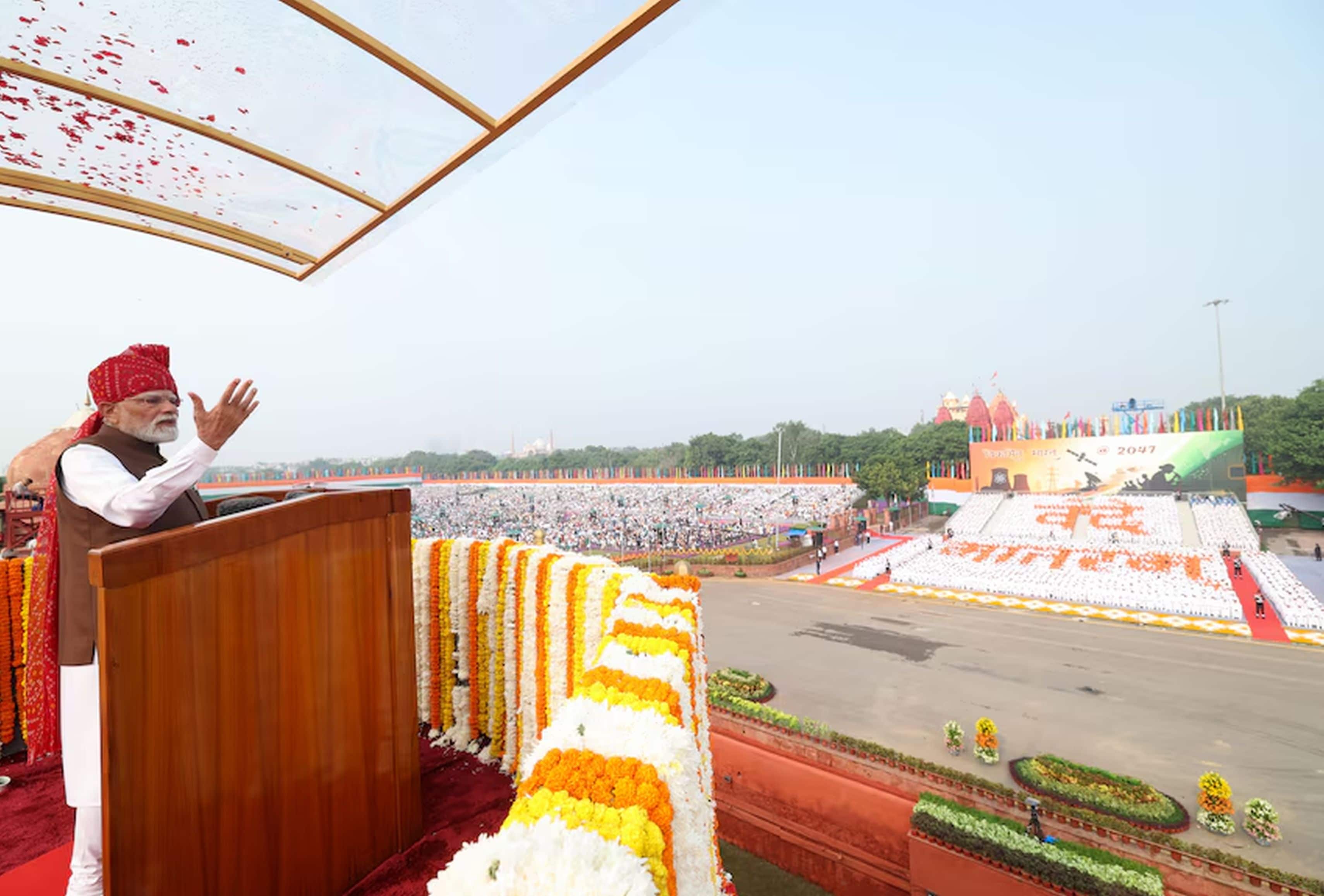
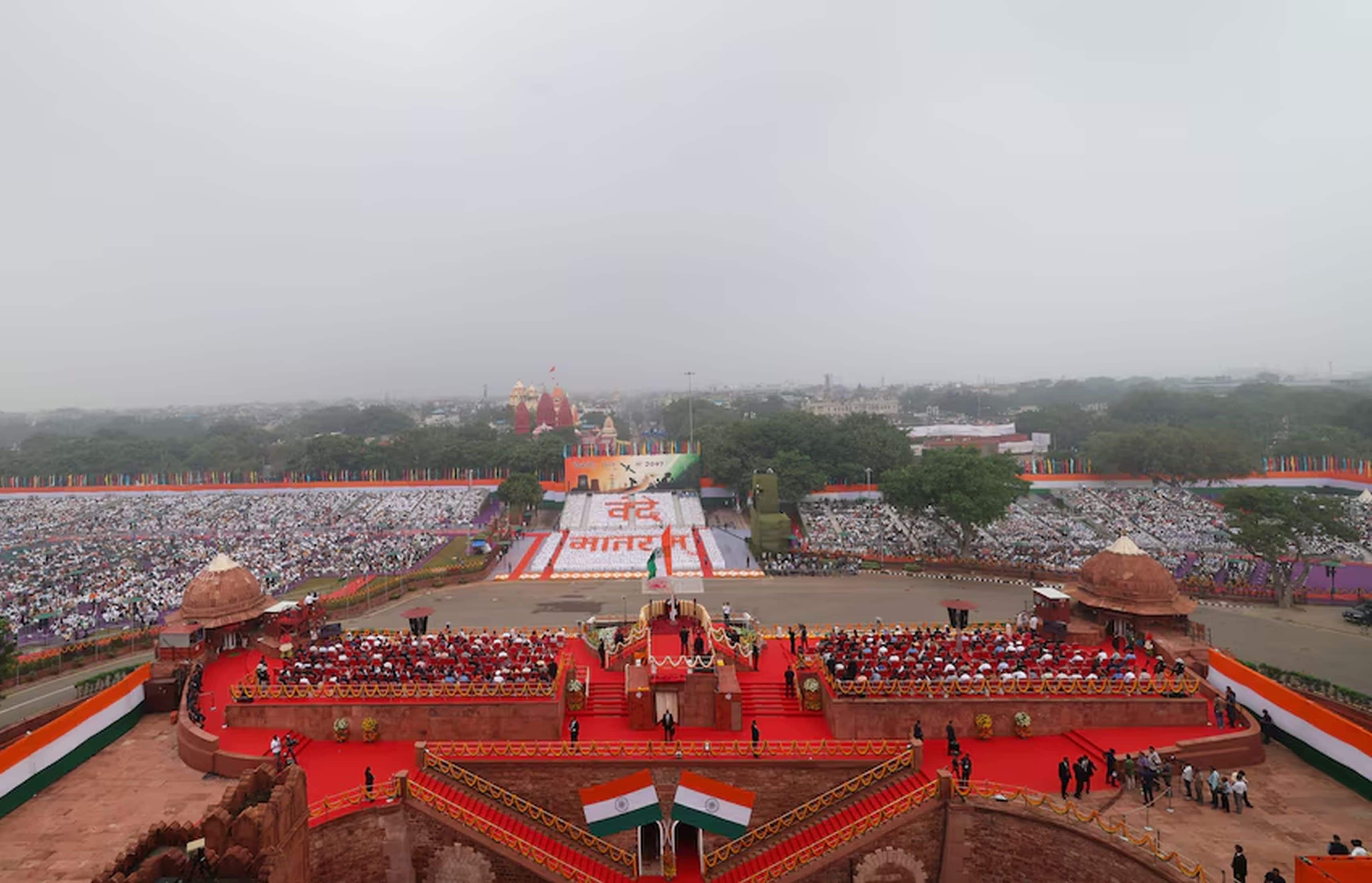
Today, we are celebrating the 80th Independence Day. Today, every heartbeat resonates with the chant of Vande Mataram. Today, there is “Har Ghar Tiranga Hai, Har Man Tiranga Hai” (the Tricolour in every home, the Tricolour in every heart) and the country is moving forward with enthusiasm and renewed energy, carrying new resolutions with it. My best wishes to all of you on Independence Day. Today, the nation remembers with reverence those great sons and daughters who made the ultimate sacrifices for the freedom of our country. Through their perseverance, sacrifice, and dedication, they devoted their entire lives to the single goal of achieving independence. Today, I respectfully salute revered Bapu, all the freedom fighters, and the great revolutionaries who inspired this glorious tradition of sacrifice. For everyone present at this ceremony today, this is also a historic moment. For the first time since independence, Vande Mataram is echoing from the Red Fort on August 15. And as we celebrate 150 years of Vande Mataram today, what could be a more wonderful occasion than this?
My dear fellow citizens,
In recent days, several parts of the country have faced severe flooding and landslides, affecting many families. We fully understand and feel their suffering and pain. I want to assure the affected families that we and the entire nation stand firmly with them.
My dear fellow citizens,
A nation becomes great and achieves its goals when it moves forward on the strength of its dreams, its resolutions, and its capabilities.
My fellow citizens,
We can no longer move forward with small dreams. We must dream big, because big dreams expand our thinking. They broaden the horizons of our vision as well. Our resolutions must be firm. When our resolve is strong, the ability to find a way through difficulties and even in the midst of disasters emerges on its own.
And my dear fellow citizens,
Our resolutions must also be high. Because when our dreams are high and our resolutions are high, the heights of our capabilities also rise. The scale of our efforts also increases, and only then can we turn our dreams into reality.
My dear fellow citizens,
Bharat has also set a very big dream today—a dream backed by firm resolve, a dream of reaching new heights. And that dream is this: when we complete 100 years of independence in 2047, we will have built a ‘Viksit Bharat’ (Developed India). Through the efforts and hard work of 140 crore citizens, we must achieve this goal. And when the world's most populous country resolves to become a developed nation, it becomes a symbol of our courage in the eyes of the world. The world is compelled to change the way it looks at us.
Dear fellow citizens,
And I am not saying this without reason. Over the past 12 years, crores of citizens of the country, whether dalits, oppressed, deprived, tribal communities, people living in villages or cities, the poor, the middle class, the youth, the elderly, women or men, whether from the North, South, East, or West, everyone has made every possible effort to take the nation to new heights with determination and dedication. I respectfully acknowledge and honour their efforts. And it is the result of these efforts that 25 crore citizens have overcome poverty and risen out of poverty in such a short period. It is also the result of the efforts of these citizens that we were once counted among the Fragile Five, but within 12 years, we have become a major economy and the fastest-growing major economy.
Friends,
The country became independent with many dreams. But we were unable to pick up the pace; we could not achieve the speed we needed. We remained caught up in an attitude of, “It will happen, things will move along, we’ll see what happens.” By 2014, the entire world had dumped us among the Fragile Five. At such a time, Bharat has found a new momentum over the past 12 years. We are moving forward rapidly, and the resolve of the people of the country is clear: it is now impossible to stop the determination and capabilities of 140 crore citizens.
Dear fellow citizens,
Over the past 12 years, defence production has increased nearly fourfold. Production by the Khadi and Village Industries sector has increased nearly fivefold. Electronics manufacturing has increased nearly sevenfold. Production of modern railway coaches has increased 21 times. Mobile phone production has increased 35 times. And that is not all. Keeping pace with the modern era, we have also made our mark in the world of digital technology and innovation. The number of internet users and consumers has increased nearly fourfold. The number of patents granted has increased fourfold. Digital transactions have increased 100 times. We have also worked with equal seriousness to improve the everyday lives of ordinary citizens. Every year, we have provided tap-water connections at an average rate 15 times faster than before. Gas connections have been provided at an average rate six times faster each year. The construction of toilets for the poor has progressed at four times the annual rate. The pace of providing homes to the poor has increased threefold each year. The country has also brought major changes to governance. Thousands of compliances have been eliminated. Hundreds of outdated laws have been repealed. The march of the 21st century cannot be carried out using the laws of the previous century. We have expanded metro networks for modern infrastructure and strengthened public transportation. The speed at which work has been carried out, the scale at which it has been undertaken, this pace, this expansion, and these achievements are something the country has witnessed for the first time in the last decade since independence. And when we have so many achievements before us, when such rapid progress is visible, and when the capabilities of our citizens grow stronger with every passing moment, then the resolve to build a ‘Viksit Bharat’ by 2047 can never remain unfulfilled. All these figures bear testimony to the fact that we are a nation on the move.
My dear fellow citizens,
But for that, we need self-confidence. We need a sense of self-respect. And, at the same time, it is extremely important to become ‘Aatmanirbhar Bharat’ (self-reliant India). That is why, in recent years, our conviction has been that Bharat should no longer live by depending on other countries. We must become self-reliant. There may be many things available in the world that are cheaper and can be obtained more quickly. But relying on them does not build our own capabilities, nor does it test the strength of our capabilities. Therefore, we must strengthen our own capacities and protect our own interests ourselves. That is why we are moving forward with a firm resolve for ‘Aatmanirbhar Bharat’. The hearts of Indians are connecting with initiatives like Make in India, Swadeshi, Vocal for Local.
My dear fellow citizens,
Let me give you the example of semiconductors. After we became independent, the world had already been discussing semiconductors. There was discussion about them in our country as well, but we were unable to take forward any major semiconductor plan. And what is the situation today? In today's digital world and technology-driven era, we understand the importance of the chip. Whether it is electronic goods, medical equipment, or transportation systems, chips are indispensable everywhere. The world has reached a point where the entire system could come to a standstill without chips. That is why, Bharat has begun establishing its own semiconductor manufacturing capacity in the direction of becoming self-reliant. Three major semiconductor plants have already been started. I have been informed that production from these facilities has already begun to be exported. And I want to tell the people that over the coming seven to eight years, another five, seven, or even eight semiconductor plants are expected to begin operations very soon. This ‘Aatmanirbhar Bharat’ provides us with a great highway toward becoming a ‘Viksit Bharat’.
My dear countrymen,
A similar discussion is taking place around critical minerals. The entire technology sector is dependent on critical minerals. Bharat is working to secure itself in this area as well. We have shared the target for critical minerals and launched the National Critical Minerals Mission. In the Budget, we announced the ‘Critical Minerals Corridor’. Agreements are being signed with several countries, and many countries around the world are now beginning to place their trust in Bharat in the field of critical minerals.
My dear countrymen,
Just as we are talking about semiconductors and critical minerals, the importance of energy is also continuing to grow as we move towards the technologies of the future, as the world moves in that direction. It is now difficult to run the new world without energy, and therefore, whether it is chips, AI or data centres, we will need electricity in very large quantities. Energy security is the need of the hour, and therefore, we have already taken a series of strong steps in this direction. One major means of ensuring energy security is nuclear energy. By passing the SHANTI Act in Parliament, we have paved the way towards a new goal. By 2047, we are working towards a target of 100 gigawatts of nuclear power. Within this very decade, we have set a target of starting five new nuclear reactors. This year, Bharat crossed an important milestone by mastering fast breeder nuclear technology, and as a result, we have taken a major step towards becoming self-reliant in nuclear fuel.
My dear countrymen,
At times, it is not a lack of resources that holds a country back, but the limitations of its thinking. When our thinking becomes constrained and begins to decay within those limitations, we are unable even to recognize our own potential. Today, the country has to depend on crude oil, and this is the result of our flawed thinking. You will be surprised to know that, because of such thinking, we had declared 99% of our entire coastal area as a no-go area. We ourselves had decided not to venture into the sea for exploration. This was poverty of thought. We took the decision that this could not continue. We have opened up that 99%, which was once designated as a No-Go Area, as a Go-Ahead Area, and we are now moving towards exploring the sea and discovering new reserves. We are making efforts in this direction. Last year, taking an important step in the same direction, we announced Samudra Manthan, and recently, we decided to allocate ₹85,000 crore for this work to accelerate the process.
My dear countrymen,
I said that, as far as energy security is concerned, it is equally important for us to put our full strength behind alternative sources. Therefore, while promoting the efficient use of energy, India is moving rapidly in this direction today. Before 2014, that is, 12 years ago, only 70 cities in our country had piped gas infrastructure, with gas being distributed through pipelines. In 12 years, we have taken these 70 cities to 700 cities. This is what speed looks like; this is what expansion looks like. Before 2014, piped gas reached barely 20–22 lakh households. Today, work is underway to provide piped gas to nearly 1.75 crore households. Twelve years ago, the country had a solar energy capacity of just 2 gigawatts, 2 gigawatts. Today, we have achieved a capacity of 160 gigawatts.
My dear countrymen,
Let me share one more piece of information. We have paid equal attention to ensuring that the benefits of this reach the middle class and ordinary families across the country. We launched the PM Surya Ghar Muft Bijli Yojana, and today I am pleased that, in such a short period, we have crossed the milestone of installing solar energy systems in 50 lakh homes, and the work is progressing rapidly. As a result, the electricity bills of thousands of households have become zero, while thousands of households are now earning by selling the surplus electricity they generate. The Government is providing assistance of ₹80,000 to each family for this purpose, and it is through this support that we are taking this work forward.
My dear countrymen,
You will be surprised to know that the electrification of our railway system began in our country in 1925. The work of electrification started in 1925, but over the next 90 years, only 30% of the railway network had been electrified. That means 30% in 90 years. Look at our pace; look at our determination to achieve the target. We completed 100% of the work within this one decade. 30% in 90 years, 70% in 10 years — this is what work looks like. As a result, we have saved the diesel that we previously had to import from abroad. Our trains began running on electricity, benefiting the environment as well.
My dear countrymen,
We have not stopped here. We do not want to lag behind the world. You may have heard the news recently: Bharat has entered this new field of fuel as well. The country has started its first hydrogen-powered train, and I am pleased that it is the longest and most powerful train of its kind. Bharat has also made its mark in the field of hydrogen-powered trains in the world.
Dear countrymen,
For the past 10–12 years, we have been continuously working towards achieving the goal of 2047. We have been accomplishing one milestone after another. We had not imagined that we would also have to face so many difficulties along the way. Over the past 10–12 years, we have faced numerous crises. A pandemic like COVID-19 had plunged the entire world into uncertainty, and all systems had been thrown into turmoil. We emerged from COVID, only to witness the horrors of war, with conflicts in Ukraine on one hand and West Asia on the other. There was an atmosphere of tension everywhere, and who knows what all the so-called forecasters had predicted about the future. Some people seemed to derive satisfaction from frightening the country, keeping it fearful and keeping its people anxious. They said vaccines would not be available, people would not survive COVID, and nothing would work. When the crisis in West Asia emerged, rumours were spread that petrol would not be available at petrol pumps, that there would be no gas, no diesel and no fertilisers. By spreading all kinds of rumours across the world, some people took pleasure in frightening the people of Bharat, intimidating them and keeping them immersed in anxiety.
But the country has now seen that the well-considered plans of the past 10–12 years are bearing fruit. Despite such a massive crisis, Bharat, guided by the principle of Nagrik Devo Bhava (Citizen is like God), had made preparations and taken one step after another. We had not imagined that such a crisis would arise, but when it did, all these preparations proved useful. Today, the country has gas, petrol and urea. We are standing on the strength of our own capabilities, and moving forward with confidence.
My dear countrymen,
These global crises have affected everyone, and we too are not immune. The global price of a sack of urea has reached Rs 3,000. Even today we are not forcing the farmers of my country to bear that burden, the government is taking that burden on its shoulders and the bag of urea which we get from the world for Rs 3000, we are able to give it to our farmers for just Rs 300. Furthermore, while the global market price for DAP has reached Rs 5,000, we continue to supply it to our farmers for Rs 1,350 to ensure they face no hardship.
My dear countrymen,
There was a time when I was talking about self-reliance, some people sitting in air-conditioned chambers and thinking were telling us what will happen to globalization. But the world is seeing that in the last decade it seems as if the world has stopped talking about globalization. The voices of globalization that used to come from have stopped, they cannot be heard. Every nation has turned its focus to addressing its own specific challenges; however, regrettably, during this period of crisis, some have engaged in the game of weaponizing resources to assert their dominance. The world is currently intent on weaponizing whatever assets it possesses. Resources such as petrol, diesel, fertilizers, medicines, and technology chips are being weaponized; indeed, even territory itself is being weaponized. And at such a time, if we had not moved in the right direction for the past decade, guided by the mantra of self-reliance, then we can imagine how we would have faced such challenges strongly and our preparations are continuously increasing.
My dear countrymen,
On the other hand, today India's profile is rising significantly. Today India is becoming an accepted and respected country for the world. India possesses a stable political mandate and a stable government, a vibrant democracy, a robust judicial system, and the Constitution of India that guides us all and now the world has started recognizing our strength. And so, after 2014, we have been entering into Free Trade Agreements (FTAs) with nearly 40 countries. You see, what a huge opportunity has come, but these trade agreements that have been made are a huge opportunity and hence I would especially like to tell my MSMEs that we should not miss this opportunity. We have to reach the world, every product of India should reach the world market and whether it is our textile, our machinery, our medicines, we do not leave any opportunity, but we have to cross the global parameters. We need to offer products that are superior in quality and more affordable than what is currently available worldwide. Our textile sector, spanning from Ludhiana in Punjab to Tiruppur in Tamil Nadu, has the potential to reach global markets. Not only this, from Keralam to Gujarat and from Tamil Nadu to Bengal, this is our coastline, our fishermen brothers and sisters, today due to this FTA, the possibility of export of our shrimp has increased a lot. There is a greater potential for our seafood to reach the world and so I would like us to take advantage of this situation and, as we move forward, we try to achieve these goals.
My dear countrymen,
The goal of 2047 behind this introduction that I have presented before you, stands on these strong foundations. The goal of developed India by 2047 is a part of the strength that our countrymen have shown in the last 10-12 years.
And so, my dear brothers and sisters,
A quarter of the century has passed, and the next quarter is of immense importance to us. Now we cannot stop, our pace cannot stop, our direction has been decided, we have to achieve it and for this we will have to change our work culture, while changing our work culture we will have to change our thinking also, we will have to change the pace of our work also. The work which has not been done in the last 5-7 decades, we have to do that work in the coming 5-7 years and I have faith in the youth power of my country, the youth of my country, the mothers and sisters of my country, the farmers of my country, the labourers of my country that we can make this dream come true. And hence we have to take the pace of reforms forward and when I am talking about reforms, reform is neither a compulsion for us, nor is reform a buzzword for us, this reform of ours is a conviction out of conviction. We have embarked on the 'Reform Express' and we are going to move towards next level reform in the coming days as well and hence the government, society, industry, producers, farmers, everyone will have to reform their traditional systems, reform their thinking, reform their goals.
And so, my dear fellow citizens,
We must move forward with a clear sense of direction. Today I would also like to remember that era when we knew, we understood, we listened to the potential of India as the Sapta Sindhu and to make India developed we need a new stream. Today, from the ramparts of the Red Fort, I invoke these seven streams (Sapta Dhara) of power before the country. In the coming 5-7 years, what could not be done in the last 5-7 decades, with the strength and power of Sapta Dhara, we will give the country new heights, new momentum and the ability to achieve new goals. Alongside this, the potential of the nation's youth power will be fully harnessed for nation-building; their strength will be integrated into the effort. In the coming days, when I talk about Sapta Dhara, the first power of Sapta Dhara is – manufacturing power.
My dear countrymen,
We must significantly advance the manufacturing sector; alongside boosting production, we need to manufacture everything from small components to large-scale products. The entire value chain should be ours and we should move ahead with it, we need components as well as complete manufacturing, we need complete product also. From design to manufacturing, India must emerge as a trusted hub in the global supply chain. I would like to place special emphasis on three aspects for this, particularly for my brothers and sisters in the manufacturing sector. This is the time to grab this opportunity, and for this we will have to meet global standards in terms of cost, quality and scale. Our factories must be competitive, our products user-friendly, and our packaging attractive and appealing to people worldwide. Our zero-defect precision manufacturing should become our hallmark. I want to say to every manufacturer, every entrepreneur, every MSME, our identity in the global market should be based on credibility and quality. No compromise regarding quality and hence our mantra should be quality, quality, quality. This will become our global brand value.
My dear fellow citizens,
The second strength of this ‘Sapt Dhara’ is agriculture and food production. We must move forward in the direction of food processing as well. Our farmers now have access to global markets. Because of FTAs, we are getting access to a very large market, and we must reach those markets. We must tap into that opportunity. We have to move from the farm to the export market. Whether it is our traditional cuisine, our millets, our spices, our fruits or our flowers, we have so much to offer. These should become global brands. Our farmers should give greater impetus to chemical-free farming, as the demand for such products is only going to increase across the world. If our agricultural products meet global parameters in every respect, we will be able to reach markets across the world with ease. The third strength of my Sapt Dhara is technology and innovation.
My dear fellow citizens,
Today is the age of AI, quantum technology, space, robotics and data centres. An entirely new domain has opened up. Emerging technologies are challenging us every moment. Therefore, we must not merely turn our country into a market for the world; we must become a hub of innovation. We have already demonstrated our capabilities through UPI and digital public infrastructure. We have made the world aware of our strength. Now Bharat must take its digital public technologies to every corner of the world. Bharat must lead in next-generation communication technologies. Our goal should be to ensure that Made-in-India 6G reaches every corner of the world. We must accelerate our efforts in this direction, and our commitment to this endeavour must not diminish.
The fourth strength of Sapt Dhara is Gati Shakti. Under Gati Shakti, we must focus on seamless and fast connectivity across the country. We must connect our cities through high-speed rail. We need modern highways, inland waterways, airports and multimodal logistics systems. We must not look at our ports merely as places where goods are loaded and unloaded, or simply as places where ships come and anchor. We must take our ports forward in the direction of port-led development and growth. The fifth strength of Sapt Dhara is ‘Raksha Shakti’ (defence power). And the importance of this ‘Raksha Shakti’ is immense in every respect.
My dear fellow citizens,
Bharat has now experienced this, and the world has experienced it as well: there is no alternative to being self-reliant in defence. When countries around the world are increasingly thinking about their own interests, Bharat cannot simply remain a market for the world. We must become self-reliant in the defence sector. We must set ourselves the goal of developing next-generation defence technologies and moving towards becoming a global supplier. We must develop drones and counter-drone systems, and we must take leadership in hypersonic defence technologies.
Friends,
Cybersecurity is also becoming a concern for every household today. That, too, is an area of defence where we can harness the capabilities of our youth for the benefit of the country and the world. The sixth strength of our Sapt Dhara is the green economy, blue economy, which also create green jobs. We must achieve green hydrogen, renewable energy, energy storage, green mobility and green manufacturing at a global scale. At a time when the world keeps on discussing global warming, we keep searching for solutions and offering answers to these challenges. Bharat has embarked on this journey with tremendous potential in the green movement. Bharat also has enormous opportunities in the blue economy. We have a very long coastline. There are tremendous opportunities in the blue economy like fisheries, coastal tourism, ocean technology and many other such sectors in which we can move forward.
My dear fellow citizens,
As Bharat moves forward with the vision of Sapt Dhara, the seventh stream is one that holds its own significance for the world and that is Bharat’s soft power. The strength of Bharat’s soft power is immense. Today, yoga has connected the entire world with Bharat. Yoga is becoming a source of energy for the world and an important reason for the trust that people place in Bharat. Bharat has centres of faith, Ayurveda and a holistic healthcare system. Along with these and the Heal in India movement, we can take our capabilities to the world. Whether it is handicrafts, culture, our films, our creative world, VFX, animation, gaming or digital content, Bharat can demonstrate its stature in the global creative economy. We must develop this into a global strength. Today, Bharat has given tremendous momentum to the WAVES Summit. Gradually, the world is beginning to look forward to Bharat’s World Audio Visual and Entertainment Summit. It will introduce Bharat’s soft power and creative ecosystem to the world.
My dear fellow citizens,
Bharat possesses vast forest wealth. We have more than 100 national parks. Our potential is enormous, but we have fallen short when it comes to attracting foreign tourists. We have an opportunity to attract tourists from around the world to Bharat through our soft power. We must showcase our capabilities to the world. We must undertake this effort and do so at the earliest. Today, sports are also becoming a major source of attraction towards Bharat. Why shouldn't major global sporting events be held in Bharat? The concert economy is growing rapidly and has tremendous appeal for the country's youth. Artists from across the world want to perform a concert on Indian soil at some point. This is a huge opportunity, and we must create the systems and infrastructure needed to mobilise this opportunity.
Friends,
These seven strengths of Sapt Dhara are not merely about achieving progress in individual sectors. With a holistic approach, we have to work towards surpassing the scale of the goals and ambitions that we have set for the nation.
My dear fellow citizens,
I have spoken about some of these things, but I think even beyond them. I want to shake the nation. I want to awaken the strength of the nation. A nation does not consist of the government alone; a nation is made up of every citizen. Can we not aspire to something bigger? We often hear about the Fortune 500. Why shouldn't our goal be that, within the next decade, 50 of the Fortune 500 companies should be from Bharat? Today, our banking sector is flourishing. Why shouldn't an Indian bank's flag fly among the world's top banks? We should have an Indian bank among the world's top five banks. Bharat’s pharmaceutical sector has made significant progress. But the demand of the times is that the names of one or two Indian pharmaceutical companies should resonate among the world's five largest pharmaceutical companies. Bharat must establish its own place there. There are law firms and rating agencies. Isn't the need of the hour for global leadership to now be in our hands? We have the talent. We have the capability. We have a long history. We have mastery over languages. We must reach the world. Why shouldn't an Indian consulting firm or accounting firm be among the world's top firms? Our technology companies should be leaders in the world. That should be our goal. We should have brands that attract the world. Our brands should become an identity of our country and make Bharat a destination for the world. We must work in that direction. And for this, I want to say to the state governments, I want to say to the institutions of local self-government, and it is also the responsibility of the Government of Bharat, that we must accelerate the pace of our reforms. We must develop our systems in accordance with the goal of 2047. We cannot continue to operate with policies and regulations from a bygone era. We have to formulate policies and regulations according to the dreams and aspirations of the future. And if we do this, I have complete faith and I assure the people of the country that we will realise the dream of a ‘Viksit Bharat’ while leaving no stone unturned in our hard work along this path. We all have to move forward together. All of us, the central Government, state governments and industry must all work together and move ahead. We must continue with reforms. We must keep taking reforms forward. And, as I have said before, we are undertaking reforms not out of compulsion, but out of conviction. We are undertaking them to achieve our goals.
My dear fellow citizens,
When I speak of a ‘Viksit Bharat’, when I speak of taking the country forward at a rapid pace, who is the greatest beneficiary of all these efforts? Who is the greatest force driving these efforts? If there is one, it is the youth of my country, the youth power of the country. The youth have a very important role to play in the journey towards a ‘Viksit Bharat’. Not only that, the greatest beneficiary of a ‘Viksit Bharat’ will also be the youth of my country. Therefore, we must take forward the goal of a ‘Viksit Bharat’ by connecting it with the aspirations and participation of our youth. We must move forward with our youth as our highest priority.
Friends,
A great deal has happened in this direction over the past 10–12 years. Under the Startup India initiative, there are now more than 2.5 lakh registered startups across the country. The young people of the country are not only working for themselves but are also providing employment to many others. The Government has announced an Innovation Fund of Rs 1 lakh crore. I want to tell the young people of the country: come forward with your dreams; we will ensure that there is no shortage of resources. We have put in place a system with Rs 1 lakh crore to empower your hearts and minds . New opportunities for research have emerged, and the availability of affordable data through Digital India has empowered our youth. If there is anywhere in the world where data is available at such a low cost, it is here on Indian soil, and this has given the young people of the country new strength. We have made Skill India a national programme. We have opened up the space sector. We have formulated the National Drone Policy. We have formulated the Khelo India Policy. For 35 years, there had been no new education policy; we have brought in a new Education Policy, and middle-class families have benefited from it.
Friends,
I should give you the figures for the period from 2004 to 2014. From 2004 to 2014, there were fewer than 350 universities in our country, and today, within these 10–12 years, nearly 650 new universities have been added. We are approaching the figure of 1,000. Before 2014, there were only around 400 medical seats; today, there are nearly 850 medical seats. Not only that, foreign universities are now also coming to Bharat. Arrangements have been made so that my young people can obtain degrees from foreign universities while studying in Bharat. We are working to ensure that the young minds of our country are drawn towards technology from childhood. That is why we have handed over more than 10,000 Atal Tinkering Labs to young children, so that they can develop an interest in innovation and technology. We have opened up numerous avenues; we have opened up the startup sector. You must have seen that private startups in Bharat, led by young people with an average age of 28, launched their satellites and rockets, succeeding in their very first trial. They have accomplished something truly remarkable.
Friends,
Today, there are more than 2.5 lakh registered startups. We organised the AI Impact Summit recently. The expansion of AI is taking place at a very rapid pace. From the ramparts of the Red Fort, I want to make an announcement for the young people of the country. We have decided that, in the next one year, we will train one crore young people in AI skills, so that the youth of our country have the capability to lead in the world of AI as well.
My friends,
The bioeconomy is a new sector. There was a time, before 2014, when the bioeconomy was worth only ₹60,000 crore. Young people of my country, look at what you have accomplished. You can see how, when policies are right and the goals are clear, the young people of my country can deliver. The youth power of the country has demonstrated its potential in the bioeconomy. Before 2014, the sector had a turnover of ₹60,000 crore; today, the bioeconomy has reached ₹20 lakh crore, my friends. In 2009–10, only 1.5 lakh electric vehicles were sold. In 2025–26, 25 lakh electric vehicles have been sold.
My dear countrymen,
The aviation sector is also advancing very rapidly, creating tremendous opportunities for our young people. New airports, new routes and new employment opportunities are being created. Maintenance and overhauling are also generating employment for a very large number of skilled workers in the country. We have achieved success in moving towards the manufacture of Made-in-India aircraft. The Made-in-India defence transport aircraft, the C295, has already taken to the skies and completed a successful flight. This is a major achievement for the young people of the country. My fellow citizens, drones have also played a very significant role. The SVAMITVA Scheme is being successfully implemented in villages through drones. Around 3.25 crore families have benefited from the SVAMITVA Scheme, and as a result, assets worth around ₹140 lakh crore have been unlocked. This enables people to obtain loans from banks and start their own businesses.
My dear countrymen,
The pressure of coaching classes has become a major burden for our middle-class families. Every parent feels that if they do not send their child to a coaching class, they are not keeping up with the expectations of society. Keeping the concerns of these poor and middle-class families in mind, we want to save them the thousands of crores of rupees they spend, allow their sons and daughters to remain close to home, ensure that they can be cared for, and prevent an economic burden from falling on the family. Therefore, we have decided to provide free online coaching for young people preparing for various examinations. We have the digital public infrastructure, we have excellent talent and we have teachers. By bringing these resources together, we are going to build an extensive network to provide free coaching to the young people of the country.
My dear countrymen,
I have always said, “Those who play, flourish”. When I speak about ‘Khelo, Khilo’, my dear countrymen, I want to say that Bharat is today making its mark in the world of sports. The national anthem of Bharat is now being heard on sporting podiums, and the Tricolour can be seen fluttering proudly. The TOPS scheme has achieved tremendous success. Khelo India Games, University Games, Winter Games, Beach Games, sports infrastructure, coaching for sports, sports medicine and sports nutrition , Bharat is moving forward towards achieving excellence in all these areas. For young people, even if they are unable to become athletes themselves, a vast new field of opportunities is opening up within the support system around sports. Bharat's performance in the world of sports is steadily improving, and we are moving forward as strong contenders to host the 2036 Olympics. Bharat is also going to host the Commonwealth Games in 2030.
And my fellow citizens,
The Olympic Games held around the world feature around 40 different sports, with approximately 325–350 events. And it will pain you to know this, my countrymen, my young friends, that in nearly two-thirds of these 325 events, Bharat does not even participate. We are not present; we do not qualify. I challenge you, I call upon you, and I seek your support: We have decided that we want the 2036 Olympics to be held in Bharat. But in 2036, in those events in which Bharat does not compete today, or does not qualify, and in those events from which Bharat has stayed away, three-quarters of the field is waiting for us. Bharat must focus on these areas, and for this purpose, we also want to launch a talent-hunt campaign. If we need athletes for 2036, we must focus today on these young boys and girls who are 5, 10 or 15 years old. We must pay attention to our daughters as well. Therefore, a talent-hunt campaign will be conducted in villages, cities and schools across the country to identify sporting talent among children aged between 5 and 15. Their abilities will be assessed, and they will then be given specialised training to develop them into accomplished athletes who can represent the country.
My dear young friends,
Drug abuse is becoming a major crisis for the country and its young people. A ‘Nasha Mukt Bharat’ or Drugs-Free India must be a collective responsibility for all of us. For the sake of our bright future, our younger generation must be strong, and the strength of our youth must be harnessed for the progress of our country. Therefore, in recent days, the volunteers of My Bharat, NGOs across the country, social and cultural organisations, and spiritual leaders have come together to launch a 100-week programme for a Drugs-Free India. A campaign will run for 100 weeks. I want to tell every family: you too should become a part of this campaign, join it and come forward to help fulfil the dream of a Nasha Mukt Bharat.
My dear countrymen,
In the 21st century, it is imperative that we eliminate the challenges that have persisted for decades. Naxalism and Maoism have destroyed the future of lakhs of young people. They have snatched away and ruined young lives who were the pride of countless mothers, and shattered the dreams of every parent. For four long decades, Naxalism had held a very large part of Bharat and a very large section of its population in its grip. It tore the Constitution to shreds, and more than 3,500 of our police and security personnel were martyred while protecting ordinary citizens of the country. More of our police personnel had to lay down their lives than the number of soldiers who lost their lives in war, so that ordinary citizens could live in safety. Naxalism had left the land soaked in blood. When you gave us the opportunity to serve in 2014, we made a resolve on that very day to free the country from Naxalism. Today, I am happy to say that Naxalite-Maoist violence may no longer even have the strength to take its final breath. We are moving towards eliminating it completely. In areas where Naxalites once fired their guns, where the land was once stained with blood, today, in those very Naxal-affected regions and areas, the Tricolour of development, trust and endeavour is flying high because they have been freed from Naxalism.
My dear countrymen,
But we must not underestimate this challenge. We need to be even more cautious about this challenge. For years, individuals with a Maoist ideology had made their place in the corridors of power in the country. Even as advisors on government committees, this Maoist ideology influenced policy.
My dear fellow citizens,
We have succeeded in eliminating armed Naxals from the forests and liberating the country from that menace. However, while the armed Naxals are gone, the mental Naxals remain, and these mental Naxals are on the lookout for an opportunity. They are looking for ways of violence and anarchy. They are resorting to various tactics to drag society onto the wrong path. We must identify these mental Naxals, isolate them, and steer the nation's youth toward the mainstream effort of transforming India into a developed nation.
My dear fellow citizens,
Building a secure India is the responsibility of us all. Whether the challenge is within or beyond the borders, India is prepared for any situation. The nature of warfare is changing today; there is no longer a guarantee that conflict will be confined to the borders. Modern warfare can target refineries, the banking sector, or data centers, in a sense, a new form of combat where infrastructure and factories are being destroyed. We announced 'Mission Sudarshan Chakra' some years ago, and work on it is progressing rapidly. Today our defence exports have increased by almost 50 times. Our weapons are reaching about 100 countries. India's reputation is gradually increasing on the global stage. In these changing times, we must focus on defense equipment and enhance the capabilities of our armed forces; But at the same time, citizens will also have to be prepared. The civil defence systems that have developed in our country in accordance with the wars of the last century have become outdated and hence, I am announcing today from the Red Fort that, in the coming days, we will create a vibrant network of civil defence. We will familiarize them with modern systems. What arrangements can be made to protect citizens from modern crises? We are going to create a huge voluntary force of civil defence to overcome modern challenges.
My dear countrymen,
The contribution of our sisters and daughters to nation-building has become a source of great inspiration for us all. Whether in fighter jets or civil aviation, our daughters are at the forefront. They are leading the way in the sports arena as well. Our daughters are seen leading the most in the process of admission in STEM education. Even in the armed forces, daughters graduating from the NDA are demonstrating the capability to lead the nation's military with great confidence and authority. To see the true strength of my daughters, I recently visited a semiconductor plant in Sanand, where tribal daughters from various corners of the country were working. They came from villages where people did not even know what a passport was. Those daughters went abroad, got training and today they are working in chip manufacturing and with great confidence. I was really impressed by the confidence I saw in them. We had set a target of making 3 crore sisters 'Lakhpati Didis' and have already surpassed that goal. Now, we are moving forward with the aim of creating 6 crore Lakhpati Didis. The creation of 3 crore new Lakhpati Didis signifies a massive transformation in the rural economy driven by the power of women.
My dear countrymen,
Today, in Panchayats, Municipalities and Municipal Corporations a large number of our women are becoming public representatives and are guiding the country, solving problems, providing very capable leadership and keeping this in mind, we passed the Nari Shakti Vandan Adhiniyam in the Parliament. Yet, for one reason or another, this dream has repeatedly fallen victim to the political arena over the past 40 years. Today, standing here beneath the shadow of the Tricolour on the ramparts of the Red Fort, I appeal to and urge all the political parties of the country. Come, let us become worshippers of the power of those women. Let us step forward to uphold their dignity and ensure that our mothers and sisters secure 33% representation in the Legislative Assemblies and the Lok Sabha as soon as possible, so they may contribute to shaping India's policies. It is the need of the hour and I once again urge all the political parties, come and join in the cause of women's respect by implementing women reservation, you also take the credit, you also take the fame, but give rights to my mothers and sisters.
My dear countrymen,
The resolve for a developed India will be fulfilled only when development reaches the last person. Before 2014, only 25 crore people had social security cover, only 25 crores.
Friends,
Only 25 crores in the last 5-7 decades, we have provided social security cover to 100 crore countrymen within a decade. Under the Ayushman Bharat scheme, even the elderly above 70 years of age are getting free medicines up to Rs 5 lakh. Crores of families have got a huge facility due to this and because of this Ayushman card, Rs 2 lakh crore which was to be spent on medicines and operations, has been saved for my families, they are poor families, they are middle class families, they have received such significant support!
My dear countrymen,
Today, I need your help with a task. I am seeking assistance from all of you. I want the youth to take the lead in this. Just an hour or two of your time can empower the nation significantly. You will wonder what power I can give to the country in one or two hours, let me tell you. You are about to become a great power, and therefore, an environment should be created in every home. These days, the census is underway in the country. Census work is going on, counting is going on and counting is not just about figures. Policies are made from its details, plans are made, the country prepares its roadmap for moving forward and hence it is very important to have accurate information. Sometimes the representatives who come from the government are in such a hurry that sometimes they write the same spelling, sometimes they write it differently and due to this, ultimately, we face problems in getting the accurate results. Now that technology is available, a decision has been made allowing you to submit your census details yourself using your mobile phone. Later some clerk will come, some representative will come, they will discuss the details with you, if your family sits together and completes the registration digitally—ensuring there are no errors in spelling or information—the accuracy of the data will greatly aid the nation's progress. That is why I urge the youth of the country to sit down with their families and familiarize themselves with the entire form. First fill the form on paper, if there is any mistake, correct it and then upload it digitally through technology. Just imagine, the country will accomplish this massive task, and the nation's time and energy will be utilized for a constructive purpose. That is why I urge the youth of my country to actively participate in this census exercise.
My dear fellow citizens,
I spoke of the 'Panch Pran' (five pledges) from the Red Fort. These five pledges have provided immense strength to the nation, empowering it to move forward with a sense of self-pride and the capability to surpass its goals. We have to keep eradicating the mentality of slavery every moment. Drawing inspiration from the visions of the India dreamt of by Netaji Subhash Chandra Bose, Babasaheb Ambedkar, Pandit Nehru, Sardar Patel, Bhagat Singh, Sukhdev, Rajguru, Dr. Syama Prasad Mookerjee, Bhagwan Birsa Munda, and Jyotiba Phule, let us march ahead. Let us reiterate this resolve: the nation's interest must come before our own, and duty must define our identity. I say to all my countrymen—this is our time, this is our moment, and this is our resolve. Let us transform dreams into resolve, resolve into capability, and capability into success. Let us make every step a step of development, let us join step with step, let us connect our hearts, let us remain connected to the goal, one lamp will light thousands of lamps, let us together build a developed India. With this very sentiment, I extend my heartfelt best wishes to you all on this auspicious occasion.