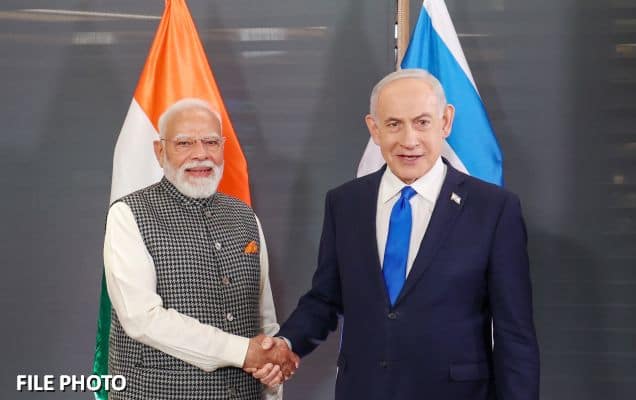
The Governor of Andhra Pradesh, Shri S. Abdul Nazeer ji, Chief Minister Jagan Mohan Reddy ji, my colleagues in the Union Cabinet, Nirmala Sitharaman ji, Pankaj Chaudhary ji and Bhagwat Kishanrao Karad ji, other representatives, ladies and gentlemen.
Congratulations to all of you on the magnificent campus of the National Academy of Customs, Indirect Taxes and Narcotics (NACIN). The campus, situated in the district of Sri Sathya Sai, is unique in itself. This region represents our heritage associated with spirituality, nation-building and good governance. As you all know, Puttaparthi is the birthplace of Sri Sathya Sai Baba. It is the land of the great freedom fighter Padma Sri Shri Kallur Subba Rao. It has given a new identity to the renowned puppetry artist Dalavai Chalapathi Rao. It is a land that inspires the governance of the glorious dynasty of Vijayanagar. This new campus of 'NACIN' has been established in such an inspiring place. I believe that this campus will set new standards for good governance and will give a fresh impetus to trade and industry in the country.
Friends,
Today is also Thiruvalluvar Day. Saint Thiruvalluvar said, उरुपोरुळुम उल्गु-पोरुळुम तन्-वोन्नार, तिरु-पोरुळुम वेन्दन पोरुळ which means that the king has the right over the royal taxes received as revenue and the wealth obtained from the enemy. In a democracy, there are no kings. It is the people who rule and the government works to serve the subjects. Therefore, you have a big role in ensuring that the government gets adequate revenue.

Friends,
Today I had the privilege of visiting the Veerabhadra Temple in the sacred Lepakshi before coming here. I was privileged to listen to the Ranganatha Ramayanamu in the temple. I also participated in ‘bhajan-kirtan’ with the devotees there. It is believed that Lord Ram had a conversation with Jatayu somewhere near this place. As you know, I am observing an 11-day ritual ahead of the consecration of the grand temple of Lord Ram in Ayodhya. I feel blessed having received blessings from the divine here in this auspicious period. These days, the entire country is imbued with the spirit of Ram, and there is widespread devotion to Lord Ram. However, friends, the life and inspiration of Lord Ram extend far beyond the realm of faith and devotion. Lord Ram is a symbol of governance in social life, which can serve as great inspiration for your institution as well.
Friends,
Mahatma Gandhi used to say that the concept of "Ram Rajya" is indeed the essence of true democracy. Gandhi ji's statement was based on years of study and his vision. Ram Rajya represents a democracy where every citizen's voice is heard, and they receive proper respect. For citizens of Ram’s kingdom in Ram Rajya, it was said रामराज्यवासी त्वम्, प्रोच्छ्रयस्व ते शिरम्। न्यायार्थं यूध्य्स्व, सर्वेषु समं चर। परिपालय दुर्बलं, विद्धि धर्मं वरम्। प्रोच्छ्रयस्व ते शिरम्, रामराज्यवासी त्वम्। This means, "O residents of Ram Rajya, hold your head high, fight for justice, treat everyone equally, protect the weak, consider Dharma as supreme, and keep your head high, for you are residents of Ram Rajya." Ram Rajya stood on these four pillars of good governance, where everyone could walk with dignity, without fear and where every citizen was treated equally and where the protection of the weak was ensured and where Dharma, meaning duty, was considered supreme. Today, the four major goals of your modern institution in the 21st century revolve around these principles. You must always remember this as an administrator and in the role of a unit implementing rules and regulations.
Friends,
The role of 'NACIN' is to provide the country with a modern ecosystem, one that facilitates business and trade in India and make Bharat a crucial partner in global trade and create a friendly environment. It should aim to promote ease of doing business in the country in areas such as taxes, customs, narcotics, and deal firmly with wrong practices. Just a short while ago, I met some young trainees. They are the generation that will provide leadership during the ’Amrit Kaal’. The government has bestowed various powers upon all of you. The use of these powers depends on your discretion, and you will find inspiration from the life of Lord Ram. In one instance, Lord Ram says to Lakshman – नेयं मम मही सौम्य दुर्लभा सागराम्बरा । न हीच्छेयम धर्मेण शक्रत्वमपि लक्ष्मण ॥ Meaning, this Earth, surrounded by the ocean, is not rare for me. However, even Indra's kingdom is not desirable to me if obtained through unrighteous means. Often, we see that people forget their duties and oaths in pursuit of small temptations. Therefore, always remember the words of Lord Ram during your tenure.

Friends,
You are directly concerned with the tax system. What Goswami Tulsidas ji has said about how taxes were collected in Ram Rajya is very relevant. Goswami Tulsidas ji says – बरसत हरषत लोग सब, करषत लखै न कोइ, तुलसी प्रजा सुभाग ते, भूप भानु सो होइ। This means, just as the sun draws water from the earth, which then turns into clouds and returns as rain on the earth, bringing prosperity. Our tax system should be similar in nature. Our effort should be that every penny collected from the public in taxes is invested in public welfare and which should encourage prosperity. If you study, you will find that we have undertaken significant reforms in the tax system over the past 10 years inspired by the same vision. Earlier, there were various tax systems in the country that were not easily comprehensible to the common citizen. Due to a lack of transparency, honest taxpayers and people associated with business were troubled. We introduced GST to provide the country with a modern system. The government also simplified the income tax system. We initiated a faceless tax assessment system in the country. As a result of all these reforms, the country is now witnessing record tax collections. When the government's tax collection increases, the government is also returning the public's money through various schemes. In 2014, tax relief was only available for income up to 2 lakh rupees. We increased this limit from 2 lakh to 7 lakh rupees. Since 2014, our government has provided tax relief and implemented reforms, resulting in approximately 2.5 lakh crore rupees in tax savings for the citizens. The government has initiated major schemes for public welfare and is making record investments in modern infrastructure. Today, when taxpayers see that their money is being utilised properly, they are willingly stepping forward to pay taxes. Therefore, the number of taxpayers has been consistently increasing in recent years. This means that whatever we have collected from the public has been dedicated to the public. This is good governance and this is the message of Ram Rajya.
Friends,
Special attention was given to the optimum utilization of resources in Ram Rajya. In the past, there was a tendency to delay, halt and divert projects, resulting in significant losses for the country. Being cautious of such tendencies, Lord Ram engages in an interesting conversation with Bharat. Ram says to Bharat – कच्चिदर्थं विनिश्चित्य लघुमूलं महोदयम्। क्षिप्रमारभसे कर्तुं न दीर्घयसि राघव।। Meaning, I trust that you quickly decide on matters, start the work soon without unnecessary delays, and complete it efficiently with minimal costs. Over the past 10 years, our government has also focused on cost-effectiveness and emphasized timely completion of projects.

Friends,
Goswami Tulsidas ji says, 'माली भानु किसानु सम नीति निपुन नरपाल । प्रजा भाग बस होहिंगे कबहुँ कबहुँ कलिकाल। Meaning, the government should possess qualities like a gardener, the sun and farmer. The gardener supports weaker plants, nourishes them and removes those who rob them of their rightful nourishment. Similarly, the government should empower and strengthen the weakest sections of society. The sun also dispels darkness, purifies the environment, and aids in rainfall. In the past 10 years, our focus has been on empowering the poor, farmers, women and youth. We have prioritized those who were marginalized, oppressed and stood at the bottom of society. Over the past 10 years, we have eliminated nearly 10 crore fake beneficiaries from records. Today, every penny that leaves Delhi reaches the rightful beneficiary's bank account. We have fought against corruption, and taking action against corrupt individuals remains a top priority for the government. All of you should continue your work with these priorities in mind.
Friends,
We are witnessing the fruitful results of the work carried out with the spirit that the development of the nation is intrinsically linked to the progress of the states. You must be aware of the recent report released by NITI Aayog. When a government is compassionate towards the poor, when a government sincerely works to alleviate the problems of the underprivileged, the results are visible. According to the latest report by NITI Aayog, nearly 25 crore people in our country have emerged from poverty during our government's nine years of rule. In a country where slogans of ‘Garibi Hatao’ (eradicate poverty) were chanted for decades, the historic achievement of lifting approximately 25 crore people out of poverty in just nine years is unprecedented. Since coming to power in 2014, our government has prioritized the welfare of the poor, and the results reflect our commitment. I have always believed that the impoverished in our country have the capability to overcome poverty if provided with resources. Today, we are witnessing the realization of that belief. Our government has allocated funds for the health, education and employment of the poor, enhancing their facilities. When the capabilities of the poor increased, and they were provided with amenities, they began to overcome poverty and move beyond it. This is another auspicious development for the country ahead of the consecration of the Ram Temple in Ayodhya on January 22. The reduction of poverty in India is instilling a new confidence in everyone, boosting the nation's self-esteem. As poverty decreases in India, the neo middle-class spectrum is consistently expanding. Those familiar with the world of economic activities know that the growing middle class is significantly contributing to economic activities. Undoubtedly, you and NACIN must fulfil their responsibilities with even greater seriousness in such a scenario.

Friends,
You would recall I mentioned the significance of ‘Sabka Prayas’ (Everyone's effort) from the Red Fort. The importance of ‘Sabka Prayas’ is also evident in the life of Lord Shri Ram. Shri Ram faced the formidable challenge of the scholarly, powerful Ravan, the affluent ruler of Lanka. To overcome this challenge, he gathered small resources, united various beings, transformed their shared efforts into a formidable force, and ultimately succeeded. In the same way, every officer, every employee, and every citizen has a crucial role in the creation of ‘Viksit Bharat’. It is essential for all of us to work together to increase sources of income, boost investment and make business easier in the country. The mantra is to move forward with the spirit of ‘Sabka Prayas’. With this wish that the new campus of NACIN becomes an inspiration for good governance in the ‘Amrit Kaal’, I congratulate all of you once again.
Thank you!