“ Energy impacts development at all levels, from individuals to nations”
“India achieved its non-fossil installed electric capacity target nine years in advance”
“Our effort is to work for inclusive, resilient, equitable and sustainable energy for all”
“Realizing the vision of inter-connected green grids will enable all of us to meet our climate goals, stimulate green investment and create millions of green jobs”
“Our thoughts and actions must always help preserve our ‘One Earth’, protect the interests of our ‘One Family’, and move towards a Green ‘One Future’”
Excellencies, Ladies and Gentlemen, Namaskar! I welcome you all to India. No talk about the future, sustainability or growth and development can be complete without energy. It impacts development at all levels, from individuals to nations.
Friends,
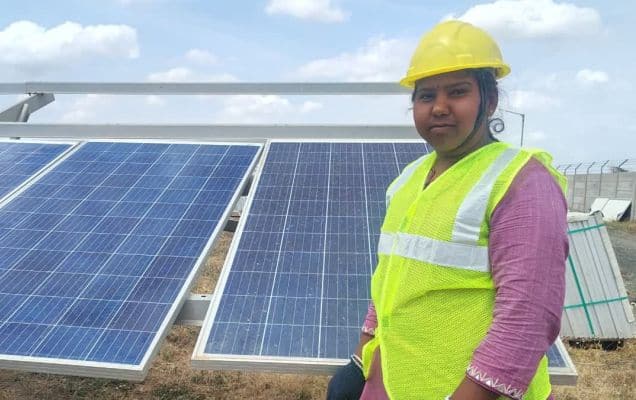
Given our different realities, our pathways for energy transition are different. However, I firmly believe that our goals are the same. India is making great efforts in green growth and energy transition. India is the most populated nation and the fastest-growing large economy in the world. Yet, we are moving strongly on our climate commitments. India has shown leadership in climate action. We achieved our non-fossil installed electric capacity target nine years in advance. We have now set a higher target. We plan to achieve 50 percent non-fossil installed capacity by 2030. India is also among the global leaders in solar and wind power. I am happy that the Working Group delegates visited the Pavagada Solar Park and Modhera Solar Village. They have witnessed the level and scale of India's commitment to clean energy.
Friends,
In India, we have connected more than 190 million families with LPG in the last nine years. We have also achieved the historic milestone of connecting every village to electricity. We are also working to provide piped cooking gas to people. It has the potential to cover more than 90 percent of the population in a few years. Our effort is to work for inclusive, resilient, equitable, and sustainable energy for all.
Friends,
Small steps lead to big results. In 2015, we began a small movement by launching a scheme for the use of LED lights. This became the largest LED distribution program in the world, saving us more than 45 billion units of energy per year. We have also started the largest agricultural pump solarization initiative in the world. India's domestic electric vehicle market is projected to reach 10 million annual sales by 2030. We have commenced the rollout of 20 percent Ethanol Blended Petrol this year. Our aim is to cover the entire country by 2025. For decarbonizing India, we are working on a Mission mode on Green Hydrogen as an alternative. The aim is to make India a Global Hub for the production, use, and export of Green Hydrogen and its derivatives. We are happy to share our learnings.
Friends,
The world looks up to this group to advance sustainable, just, affordable, inclusive, and clean energy transition. While doing this, it is important that our brothers and sisters in the Global South are not left behind. We must ensure low-cost finance for developing countries. We must find ways to bridge technology gaps, promote energy security, and work on diversifying supply chains. And, we must strengthen collaboration on the 'fuels for the future'. The 'High-level Principles on Hydrogen' are a step in the right direction. Trans-national grid interconnections can enhance energy security. We are promoting this mutually beneficial cooperation with our neighbors in this region. And I can tell you, we are seeing encouraging results. Realizing the vision of inter-connected green grids can be transforming. It will enable all of us to meet our climate goals, stimulate green investment, and create millions of green jobs. I invite you all to join the Green Grids Initiative - ''One Sun, One World, One Grid of the International Solar Alliance.
Friends,
Caring for your surroundings can be natural. It can also be cultural. In India, it's a part of our traditional wisdom. And that is where Mission LiFE gets its strength from. A Lifestyle for Environment will make each one of us a climate champion.
Friends,
No matter how we transition, our thoughts and actions must always help preserve our ''One Earth'', protect the interests of our ''One Family'', and move towards a Green ''One Future''. I wish you success in your deliberations. Thank you!
Text of Prime Minister Narendra Modi Tri Commissioning ceremony of INS Agray INS Dunagiri and INS Sanshodhak in Kolkata
June 21, 2026
Share
INS Agray, INS Dunagiri, and INS Sanshodhak have been inducted into the Indian Navy: PM
Today, 21 June is also celebrated as World Hydrography Day, And it is a truly remarkable coincidence that on this very day we have commissioned India's most advanced hydrography ship, INS Sandhayak: PM
The country whose maritime strength is robust,its economic and strategic influence will be equally robust; And India understands this reality well, India is preparing itself for this: PM
The journey from INS Vikrant to today is not merely the journey of new warships; It is the journey of India's growing self-reliance, today, INS Agray, INS Dunagiri, and INS Sanshodhak are giving new momentum to that very journey: PM
India has begun to move forward with a new vision for the shipbuilding sector; Special steps have been taken to enhance domestic construction capacity: PM
Shipbuilding, ship repair, and MRO are being viewed as part of a major national mission: PM
India has always regarded the ocean as a medium of cooperation, but India also knows that strength is essential to safeguard peace; Security is necessary to protect prosperity and self-reliance is imperative for building the future: PM
Today, INS Agray, INS Dunagiri, and INS Sanshodhak have joined the Indian Navy as symbols of this very spirit: PM
Honorable Governor of West Bengal Shri R. N. Ravi ji, energetic Chief Minister Suvendu Adhikari ji, Chief of Naval Staff Krishna Swaminathan ji, distinguished ladies and gentlemen present here!
Today is special in many ways. The whole world is celebrating International Yoga Day. I am pleased that on this occasion I have had the opportunity to come to this great land of Bengal. This is the land that gave new direction to India’s ideas, that accelerated India’s renaissance, and that for centuries connected India to the world through the sea. Today, on this very soil, an important program linked to Atmanirbhar Bharat, Surakshit Bharat, and Viksit Bharat is taking place. Just a short while ago, INS Agray, INS Dunagiri, and INS Sanshodhak have been inducted into the Indian Navy. Incidentally, June 21 is also celebrated as “World Hydrography Day.” And it is a remarkable coincidence that on this very day, India’s most advanced hydrography ship, INS Sanshodhak, has been commissioned. I extend my warm congratulations and best wishes to the Indian Navy, to all the scientists, engineers, workers associated with these projects, and to my beloved countrymen.
Friends,
The world bears witness that no nation can become a great power without maritime capability. Development is linked to the seas, security is linked to the seas, prosperity is linked to the seas. Today, most of the world’s trade flows through maritime routes. The vast networks of data that connect the world pass beneath the oceans. In the coming times, critical minerals, deep-sea resources, and new sources of energy will also be connected to the seas. Therefore, the stronger a nation’s maritime strength, the stronger its economic and strategic influence. India understands this reality well. India is preparing itself for it. And today is proof of what our capability is, what our skill is.
Friends,
A few years ago, when we dedicated INS Vikrant to the nation, India announced a new chapter of its maritime strength. It was a declaration of our capability before the world. The journey from INS Vikrant to today is not just about new warships. It is also the journey of India’s growing self-reliance. Today, INS Agray, INS Dunagiri, and INS Sanshodhak are giving new momentum to that journey. These three ships are symbols of three important resolves of India. They have been built in India. Their designs were prepared in India. Their construction involved the talent of Indian industries, the skill of Indian engineers, and the hard work of Indian workers. And this is the greatest strength of New India.
Friends,
Today, India does not want to remain merely a buyer in the defense sector. Our military strength cannot be reduced to a marketplace for the world. The identity of our strength lies not in being a market, but in our self-reliance. India wants to be a manufacturer. And the day we become manufacturers, we will also become decisive. We are moving rapidly in this direction. In recent years, more than 40 Made in India warships and submarines have been inducted into the Navy. This means that almost every few weeks, the Indian Navy has gained new strength. Even now, 45 major naval platforms are under construction. This is not just a number. It is proof of India’s industrial capability. It is a signal of India’s future.
Friends,
In the coming years, India’s maritime sector has the capacity to generate millions of new jobs. That is why we do not see the maritime sector as an isolated sector. We see it as the employment engine of a developed India. A modern ship requires hundreds of tons of steel, electronics, machinery, and thousands of components. Behind all this, thousands of companies work - which means thousands of youth get employment. In the construction of the three ships commissioned today, more than 200 MSMEs have contributed. We can imagine the vast number of jobs created in these 200 MSMEs, in these small industries.
Friends,
The time has come for India to enter the next phase of maritime power. Therefore, India has begun to move forward with a new vision for the shipbuilding sector. In recent years, numerous policy reforms have been undertaken. Special measures have been taken to enhance domestic manufacturing capacity. Shipbuilding, ship repair, ship recycling, and MRO are now being seen as part of a major national mission.
Friends,
The incentive package of ₹70,000 crore announced for the shipping sector is not merely an economic decision. It is an investment in India’s maritime future. It is an investment in India’s industrial expansion.
Friends,
Today, India is strengthening its entire maritime ecosystem. That is why India is modernizing its ports, creating new capacity, building new connectivity, expanding river waterways, and developing a multi-modal logistics network. Campaigns like Sagarmala are part of this comprehensive vision. This is reducing the cost of trade, giving new momentum to industries, and creating new opportunities in coastal regions.
Friends,
There was a time when India was known as one of the world’s largest defense importers. This dependence posed both strategic and security challenges. After the government was formed in 2014, we resolved to change this situation. Major policy reforms were carried out, and self-reliance in the defense sector was prioritized. As a result, today new possibilities have emerged in defense design, manufacturing, and exports. Until 2014, the country’s total defense production was around ₹40,000 crore. Today, it has increased to nearly ₹1,80,000 crore.
And friends,
On one hand, defense production in the country has grown rapidly, and on the other hand, our defense exports have increased at an unprecedented pace. Until 2014, India exported defense products worth about ₹700 crore. Today, this figure has risen to nearly ₹40,000 crore. Defense equipment made in India is now reaching more than 80 countries around the world.
Friends,
In the journey of self-reliance, much remains to be done. In my view, this is only the beginning. But the progress achieved in 12 years shows that when policies are clear, when direction is right, and when we work together, such a massive transformation can take place in the country.
Friends,
When we talk about maritime heritage, the name of Bengal naturally comes to mind. This land has also been significant in India’s maritime connections. The currents of the Hooghly have witnessed history being reshaped, new chapters of trade being written, and new journeys of development unfolding. And see the coincidence - this port is named after Bengal’s son, the country’s first Industry Minister, Dr. Syama Prasad Mukherjee.
Friends,
In the new maritime era that India is moving towards, the role of West Bengal will be very important. Here, there is port capacity, industrial capacity, talent, skill, and the ability to take the maritime economy to new heights. I am confident that in the coming years, West Bengal will become a vital center for India’s Blue Economy, maritime manufacturing, logistics, and coastal development.
Friends,
India has always regarded the sea as a medium of cooperation. But India also knows that strength is equally necessary to safeguard peace. Security is essential to protect prosperity. And self-reliance is indispensable for building the future. Today, INS Agray, INS Dunagiri, and INS Sanshodhak have joined the Indian Navy as symbols of this very spirit. They represent the India that is recognizing its strength in the 21st century, trusting its own capabilities, and moving forward before the world with new confidence, with speed, energy, and determination.
Friends,
On this auspicious occasion, I extend my best wishes to all my companions in the Navy, to all my fellow citizens. Once again, I heartily congratulate the Indian Navy, all scientists, engineers, workers, and the people of the nation. Thank you.