Excellency,

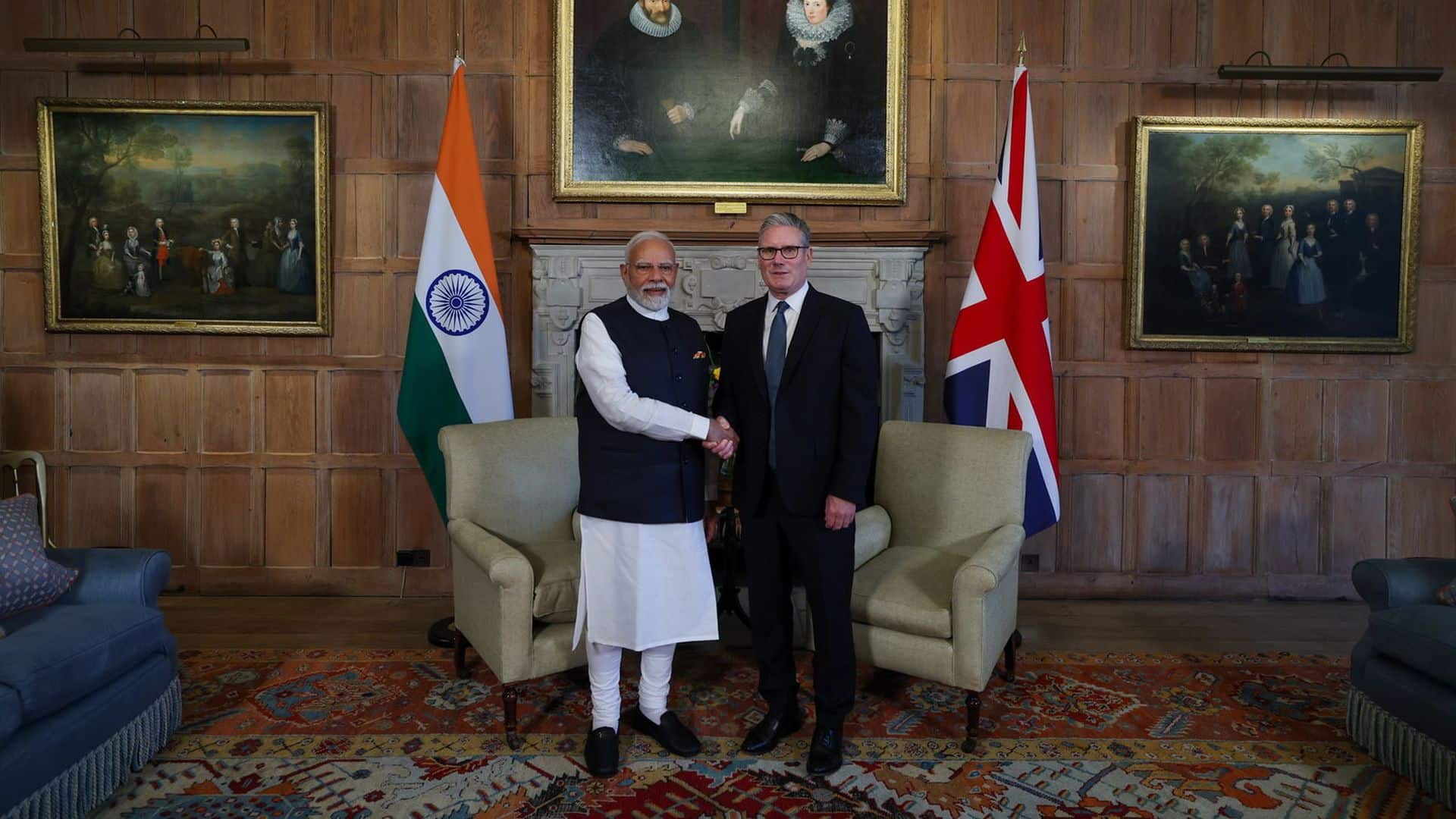
I am grateful for this warm welcome and the grand honour. Today at Chequers, we are going to create a new history. India and the UK are coming together to begin a new chapter in our shared journey.

Excellency,

This is the third time we are meeting in just one year, and I see that as very important. India and the UK are natural partners. Today is a historic day in our relationship. Both our countries are coming together to finalise a Free Trade Agreement (FTA) and a Double Taxation Convention that will benefit both sides. This will lay a strong foundation for the future of our partnership and for the coming generations. This is a new chapter in trade and industry. I believe it will create many new opportunities for our farmers, MSMEs, and youth. The 21st century is driven by technology, and in this environment, the skilled youth of India and the UK will play a big role in shaping a better future for the world. Today’s technology needs fresh innovations every day. When the skilled youth of the UK and India come together, their talent and ideas come together, they become a guarantee for global development. This will create more jobs and promote skilled mobility between our countries. I believe our Comprehensive Strategic Partnership under 'Vision 2035' will gain fresh momentum and energy through this collaboration.

Excellency,

I once again express my heartfelt gratitude to you. You have played an important role in strengthening the partnership between India and the UK through this wonderful new beginning. My heartfelt congratulations to you.

Explore More
శ్రీరామ జన్మభూమి ఆలయ ధ్వజారోహణ ఉత్సవం సందర్భంగా ప్రధానమంత్రి ప్రసంగం

ప్రముఖ ప్రసంగాలు

శ్రీరామ జన్మభూమి ఆలయ ధ్వజారోహణ ఉత్సవం సందర్భంగా ప్రధానమంత్రి ప్రసంగం
India’s digital economy enters mature phase as video dominates: Nielsen

Media Coverage

India’s digital economy enters mature phase as video dominates: Nielsen
NM on the go

Nm on the go

Always be the first to hear from the PM. Get the App Now!
...
Cabinet approves increase in the Judge strength of the Supreme Court of India by Four to 37 from 33
May 05, 2026

The Union Cabinet chaired by the Prime Minister Shri Narendra Modi today has approved the proposal for introducing The Supreme Court (Number of Judges) Amendment Bill, 2026 in Parliament to amend The Supreme Court (Number of Judges) Act, 1956 for increasing the number of Judges of the Supreme Court of India by 4 from the present 33 to 37 (excluding the Chief Justice of India).

Point-wise details:

Supreme Court (Number of Judges) Amendment Bill, 2026 provides for increasing the number of Judges of the Supreme Court by 04 i.e. from 33 to 37 (excluding the Chief Justice of India).

Major Impact:

The increase in the number of Judges will allow Supreme Court to function more efficiently and effectively ensuring speedy justice.

Expenditure:

The expenditure on salary of Judges and supporting staff and other facilities will be met from the Consolidated Fund of India.

Background:

Article 124 (1) in Constitution of India inter-alia provided “There shall be a Supreme Court of India consisting of a Chief Justice of India and, until Parliament by law prescribes a larger number, of not more than seven other Judges…”.

An act to increase the Judge strength of the Supreme Court of India was enacted in 1956 vide The Supreme Court (Number of Judges) Act 1956. Section 2 of the Act provided for the maximum number of Judges (excluding the Chief Justice of India) to be 10.

The Judge strength of the Supreme Court of India was increased to 13 by The Supreme Court (Number of Judges) Amendment Act, 1960, and to 17 by The Supreme Court (Number of Judges) Amendment Act, 1977. The working strength of the Supreme Court of India was, however, restricted to 15 Judges by the Cabinet, excluding the Chief Justice of India, till the end of 1979, when the restriction was withdrawn at the request of the Chief Justice of India.

The Supreme Court (Number of Judges) Amendment Act, 1986 further augmented the Judge strength of the Supreme Court of India, excluding the Chief Justice of India, from 17 to 25. Subsequently, The Supreme Court (Number of Judges) Amendment Act, 2008 further augmented the Judge strength of the Supreme Court of India from 25 to 30.

The Judge strength of the Supreme Court of India was last increased from 30 to 33 (excluding the Chief Justice of India) by further amending the original act vide The Supreme Court (Number of Judges) Amendment Act, 2019.