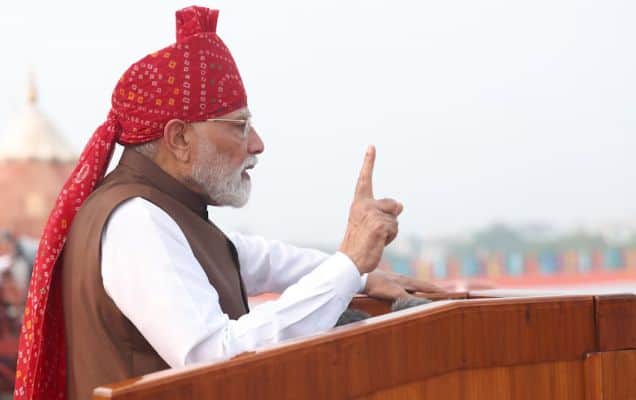
Amul has become the symbol of the strength of the Pashupalaks of India: PM Modi

Published By : Admin | February 22, 2024 | 11:30 IST
“Golden Jubilee Celebrations of the Gujarat Cooperative Milk Marketing Federation is a landmark occasion in its illustrious journey”
“Amul has become the symbol of the strength of the Pashupalaks of India”
“Amul is an example of how decisions taken with forward-thinking can sometimes change the fate of future generations”
“The real backbone of India's dairy sector is Nari Shakti”
“Today our government is working on a multi-pronged strategy to increase the economic power of women”
“We are working to eradicate Foot and Mouth disease by 2030”
“Government is focused on transforming farmers into energy producers and fertilizer suppliers”
“Government is significantly expanding the scope of cooperation in the rural economy”
“Cooperative movement is gaining momentum with the establishment of over 2 lakh cooperative societies in more than 2 lakh villages across the country”
“Government stands with you in every way, and this is Modi's guarantee”

Bharat Mata Ki Jai!

Bharat Mata Ki Jai!

Governor of Gujarat, Acharya Devvrat ji; the popular Chief Minister of Gujarat, Bhupendrabhai Patel; my cabinet colleague Parshottam Rupala ji; esteemed colleague in Parliament CR Patil, Chairman of Amul Shri Shamalbhai, and all my brothers and sisters who have gathered here in such large numbers!

The sapling that was collectively planted by the villages of Gujarat 50 years ago has now grown into a magnificent banyan tree. Today, the branches of this colossal banyan tree have extended across the nation and abroad. I extend my heartfelt congratulations to all of you on the golden jubilee of the Gujarat Co-operative Milk Marketing Federation. I also commend every individual, both men and women, who are associated with the milk committees of Gujarat. Additionally, I acknowledge another significant partner in this journey, the primary stakeholder in the dairy sector – our livestock. Today, I also honour the invaluable contribution of our livestock in the success of this endeavour. The dairy sector is incomplete without them, and hence, I express my gratitude towards the livestock of our country.

Brothers & Sisters,

Since Bharat's independence, numerous brands have emerged in the country, but none quite like Amul. Today, Amul stands as a symbol of Bharat's cattle rearers' resilience and strength. Amul embodies trust, progress, public participation, and the empowerment of farmers. It epitomizes the fusion of modernity with tradition, serving as an inspiration for a self-reliant Bharat, characterized by lofty aspirations, resolutions, and remarkable achievements. Amul's products are now exported to over 50 countries worldwide. With a network comprising more than 18 thousand milk cooperative groups, over 36 lakh farmers, and 3.5 crore litres of milk collected daily, alongside online payments exceeding Rs 200 crore to cattle rearers each day, Amul's scale of operation is truly formidable. This organization of small-scale livestock rearers thrives on the power of organization and cooperation.

Brothers and Sisters,

Amul serves as a testament to how forward-thinking decisions can shape the destiny of future generations. Its inception as the Kheda Milk Union, under the guidance of Sardar Vallabhbhai Patel, laid the foundation for what would become today's Amul. Over time, dairy cooperatives proliferated in Gujarat, culminating in the formation of the Gujarat Milk Marketing Federation. Even today, it remains an exemplary model of collaboration between the government and cooperatives. Thanks to such concerted efforts, Bharat has emerged as the largest milk-producing country globally, with approximately 8 crore people directly involved in the dairy sector. Over the past decade, milk production in Bharat has surged by approximately 60 percent, while per capita milk availability has increased by about 40 percent. While the global dairy sector grows at a modest rate of 2 percent, Bharat's dairy sector flourishes at a remarkable 6 percent.

Friends,

There is a significant aspect of Bharat's dairy sector that often goes unnoticed. On this momentous occasion, I wish to delve into this topic in depth. The driving force behind Bharat's dairy sector, with a turnover of Rs 10 lakh crore, is the nation's female workforce. Within our society, we have mothers, sisters, and daughters who contribute immensely to this sector. Even when considering staple crops like paddy, wheat, and sugarcane, their combined turnover does not match that of the dairy sector. Remarkably, 70 percent of the work in the dairy sector, with its substantial turnover, is carried out by our mothers, sisters, and daughters. They are truly the backbone of Bharat's dairy industry, showcasing the power of women. The remarkable success attained by Amul today is largely attributed to this female workforce. As Bharat strides forward with the mantra of Women-Led Development, the dairy sector's success stands as a profound inspiration. I firmly believe that to foster Bharat's development, it is imperative to enhance the economic empowerment of every woman in the country. Hence, our government is diligently working towards bolstering the economic standing of women across various fronts. Nearly 70 percent of the beneficiaries of the government's Mudra Yojana, which has provided over Rs 30 lakh crore, are women. Over the past decade, the number of women involved in self-help groups has surpassed 10 crores, with the BJP government offering financial assistance exceeding Rs 6 lakh crore. Furthermore, the majority of the 4 crore houses provided under the PM Awas Yojana are registered in the names of women, signifying their increasing economic participation in society. You may have heard about the NaMo Drone Didi campaign, aimed at empowering women further. Under this initiative, 15 thousand modern drones are being provided to village self-help groups, with women being trained to operate these drones. It won't be long before NaMo Drone Didis take the lead in various village activities, from pesticide spraying to fertilizer distribution.

Friends,

I am delighted to note that the number of women participating in our dairy cooperative societies here in Gujarat is steadily rising. During my time in Gujarat, we undertook a significant initiative for women involved in the dairy sector. We ensured that dairy payments were directly deposited into the bank accounts of these women. I commend Amul for upholding this practice today. With micro ATMs installed in every village, cattle rearers will have convenient access to cash withdrawals. Additionally, there are plans to issue RuPay credit cards to cattle rearers in the near future, starting with pilot projects in Panchmahal and Banaskantha.

Brothers & Sisters,

Gandhiji famously remarked that "the soul of India resides in its villages". To build a developed Bharat, it is imperative to bolster the rural economy. Unlike previous governments at the Centre, which approached the needs of the rural economy in a fragmented manner, our government has taken a comprehensive approach, addressing various aspects of village life. Our primary focus is on enhancing the livelihoods of small farmers, expanding the scope of the animal husbandry sector, and promoting the health and well-being of livestock. We are also keen on fostering activities like pisciculture and beekeeping in rural areas. To this end, we have introduced the Kisan Credit Card facility for cattle rearers and fishermen for the first time. Additionally, we have provided farmers with modern seeds resilient to climate change. Initiatives such as the Rashtriya Gokul Mission underscore our commitment to enhancing the quality of breed of milch animals. Foot and mouth disease has long plagued our livestock, causing significant losses to cattle rearers each year. To mitigate this, the central government has launched a nationwide free vaccination campaign, investing over Rs 15 thousand crores and administering 60 crore vaccines. Our aim is to eradicate foot and mouth disease by 2030.

Friends,

Yesterday, during a late-night cabinet meeting, the BJP government announced crucial measures related to livestock. Amendments to the National Livestock Mission were introduced to safeguard indigenous species, along with financial assistance schemes for utilizing barren land as pasture. Moreover, premium amounts for insuring livestock will be reduced, alleviating the financial burden on livestock rearers and fostering an increase in animal numbers and income for livestock rearers.

Friends,

We, the people of Gujarat, are familiar with the challenges posed by water scarcity. In regions like Saurashtra, Kutch, and North Gujarat, we have witnessed countless animals trekking for miles in search of water during droughts and famine. Heartbreaking images of dying animals piled up have left a lasting impact. The introduction of Narmada water has transformed the fate of such areas, and we are determined to prevent such crises in the future. The construction of over 60 thousand Amrit Sarovars by the government will significantly contribute to the rural economy. Our endeavour is to equip small farmers in villages with modern technology. In Gujarat, the adoption of micro-irrigation and drip irrigation has surged in recent years, with farmers receiving assistance for drip irrigation. We have established numerous Kisan Samriddhi Kendras to provide farmers with scientific solutions closer to their villages. Additionally, efforts are underway to assist farmers in producing organic fertilizers.

Friends,

Our government prioritizes transforming Anna-data or farmers into Urja-data or energy and fertilizer providers. We are distributing solar pumps to farmers and facilitating the installation of small solar plants in their fields. Furthermore, arrangements are being made to purchase cow dung from cattle rearers under the Gobardhan Yojana. At our dairy plants, electricity is generated from cow dung, and the resulting organic fertiliser is made available to farmers at a nominal cost. This initiative will not only benefit farmers and animals but also improve soil health in agricultural fields. The biogas plant established by Amul in Banaskantha marks a significant stride in this direction.

Friends,

We are significantly expanding the scope of cooperation in the rural economy. For the first time, we have established a separate Ministry of Cooperation at the Centre. Presently, cooperative societies are being established in over 2 lakh villages across the country. These committees are being formed in various sectors such as farming, animal husbandry, pisciculture, and even in manufacturing under the 'Made in India' initiative. Tax reductions have also been implemented significantly for these societies. Additionally, we are actively promoting the formation of Farmer Producer Organizations (FPOs), with approximately 8000 out of the 10,000 FPOs already established. These organizations serve as significant platforms for small farmers, aiming to transform them into producers, agricultural entrepreneurs, and exporters. The BJP government is providing substantial financial assistance to Primary Agricultural Credit Societies (PACS), FPOs, and other cooperative societies. Moreover, we have allocated a fund of Rs 1 lakh crore for agriculture-related infrastructure in villages, which is benefitting farmers' cooperative organizations as well.

Friends,

Our government is also making record investments in modernizing infrastructure related to animal husbandry, with a special fund of Rs 30 thousand crore established for this purpose. Additionally, provisions have been made for increased interest rate rebates to dairy cooperative institutions. Substantial sums of money are being allocated for the modernization of dairy plants, with the inauguration of two significant projects under the Sabarkantha Milk Union today, including a modern plant capable of producing 800 tonnes of animal fodder per day.

Brothers & Sisters,

As I speak of a developed Bharat, I firmly believe in the collective efforts of everyone. Bharat has pledged to become a developed nation by its hundredth year of independence in 2047. Amul, as an organization, will also be celebrating its 75th anniversary then. I urge you all to leave with new resolutions today. Your significant role in fulfilling the nutritional needs of the rapidly growing population cannot be overstated. It's heartening to learn about your target of doubling the processing capacity of your plants in the next five years. Presently, Amul stands as the eighth-largest dairy company globally, but together, we aim to make it the world's largest dairy company at the earliest. Rest assured, the government stands firmly with you, and I guarantee unwavering support. And this is Modi's guarantee. Once again, congratulations to all on achieving this remarkable milestone of 50 years!

Thank you very much!

Explore More
శ్రీరామ జన్మభూమి ఆలయ ధ్వజారోహణ ఉత్సవం సందర్భంగా ప్రధానమంత్రి ప్రసంగం

ప్రముఖ ప్రసంగాలు

శ్రీరామ జన్మభూమి ఆలయ ధ్వజారోహణ ఉత్సవం సందర్భంగా ప్రధానమంత్రి ప్రసంగం
India, Netherlands elevating ties to strategic partnership, says PM Modi

Media Coverage

India, Netherlands elevating ties to strategic partnership, says PM Modi
NM on the go

Nm on the go

Always be the first to hear from the PM. Get the App Now!
...
India-Netherlands Joint Statement on the visit of Prime Minister of India to Netherlands
May 17, 2026

At the invitation of the Prime Minister of the Netherlands, Mr. Rob Jetten, Prime Minister Shri Narendra Modi paid an official visit to the Netherlands on 16-17 May 2026. This marked Prime Minister Modi’s second visit to Netherlands.

In the morning of May 16, Prime Minister Modi was hosted by Their Majesties King Willem Alexander and Queen Maxima of the Netherlands at the Royal Palace Huis ten Bosch in the Hague for a bilateral meeting. Their Majesties also hosted a luncheon for Prime Minister Modi.

Prime Minister Jetten and Prime Minister Modi met for restricted and delegation level talks, followed by a dinner in the evening of May 16. Both Prime Ministers recalled the longstanding and historical trade linkages, deep rooted people-to-people ties and robust bilateral relations between the two countries and expressed their desire for further expanding and deepening this multifaceted relationship. In this context, the two leaders noted with satisfaction the progress achieved in recent years across various cooperation programmes through regular interactions, including at the highest political level and through the fruitful collaboration during India’s Presidency of the G20 in 2023 and the AI Impact Summit in New Delhi in February 2026.

Acknowledging the strong momentum in the relationship and the growing convergences between the two countries, the two leaders decided to elevate the relations between India and the Netherlands to a 'Strategic Partnership'. In this context, they welcomed the adoption of a Strategic Partnership Roadmap under which both sides agreed to work through regular and structured cooperation in all areas, including political, trade and investment, defence & security cooperation, cyber security, critical & emerging technologies including semiconductors, space, AI & quantum system, science & innovation, sustainability, health, sustainable agriculture and food systems, water management, climate change and energy transition, sustainable transport, maritime development, education, culture and people-to-people ties. The two sides also agreed to explore exchanges in the domain of policy planning.

Both leaders welcomed in this regard the agreements concluded in December 2025 across different priority sectors, such as on defence, semiconductors and related emerging technologies, enhanced cooperation in digital and cyberspace, collaboration in pharmaceuticals and medical devices, the establishment of a Joint Trade and Investment Committee, as well as the cooperation between the maritime museums in Lothal and Amsterdam.

The two leaders noted the Pact for the Future and reaffirmed their commitment to upholding shared values and principles including democracy, human rights, international peace and security, and a rules-based international order in line with the purposes and principles of the UN Charter. Both governments also underscored their commitment to strengthen and reform the multilateral system including expansion of both permanent and non-permanent categories of membership of the UN Security Council to reflect contemporary realities and called for text-based negotiations within a fixed timeframe. Prime Minister Modi thanked Prime Minister Jetten for the continued Dutch support to India’s permanent membership of a reformed and expanded UN Security Council.

Both leaders reaffirmed their commitment to further deepen the India-EU Strategic Partnership and welcomed in this regard the conclusion of negotiations for a mutually beneficial India-EU Free Trade Agreement in January this year. They agreed that the free trade agreement will strengthen political and economic ties between the world's second and fourth largest economies, at a time of rising geopolitical tensions and global economic challenges and highlight the joint commitment to economic openness and rules-based trade. The two leaders further welcomed the simultaneous signing of the Security and Defence partnership that will strengthen EU and India’s dialogue and cooperation on security and defence, and deliver concrete results in areas such as maritime security, cyber, counterterrorism and defence industrial collaboration.

The leaders agreed on the importance of a free, open, secure and peaceful lndo-Pacific, based on respect for international law, sovereignty and territorial integrity, freedom of navigation, and absence of coercion and conflicts. Recalling the EU Strategy on the Indo-Pacific, Prime Minister Jetten announced the decision of the Netherlands to join the Indo-Pacific Oceans Initiative (IPOI) and co-lead the Capacity Building & Resource Sharing pillar along with Germany and the European Union.

On Ukraine, the two sides expressed concern over the ongoing war, which continues to cause immense human suffering and carries global consequences. Both leaders agreed to continue to support efforts towards the achievement of a comprehensive, just, and lasting peace in Ukraine through dialogue and diplomacy, based on the principles of the UN Charter and international law.

Both leaders expressed deep concern over the situation in West Asia / the Middle East, noting its serious implications for the region and the wider world, including immense human suffering and disruptions to global energy supplies and trade networks. The leaders welcomed the ceasefire announced on 08 April 2026. They underscored the importance of de-escalation, dialogue and diplomacy and expressed hope for lasting peace in West Asia / the Middle East. They also called for freedom of navigation and global flow of commerce through the Strait of Hormuz, while opposing any restrictive measures, and reaffirmed their support for ongoing efforts and initiatives in this regard.

Economic Cooperation, Trade & Investment

Both leaders noted that the Netherlands–India economic partnership stands out as a model of cooperation, driven by shared priorities such as sustainability, innovation, and long-term growth, creating mutual prosperity for both nations. They welcomed the growth in bilateral trade between the two countries, supported by efficient supply chains and shared commitment to open markets. The Netherlands, with its world class logistics network also serves as a strategic gateway to Europe for Indian exporters, including via its Port of Rotterdam whilst India offers a vast and dynamic market for Dutch companies who will also benefit significantly from upscaling opportunities, its business friendly environment, and the availability of a vast and skilled talent pool in India. At the same time, Indian businesses can leverage advanced Dutch expertise, particularly in water management, sustainable agriculture, and smart cities.

Expressing satisfaction with the existing economic collaboration between the two countries, the leaders emphasized the immense potential for further growth particularly in light of opportunities arising from the India-EU Free Trade Agreement. The Netherlands continues to remain one of India’s major trade and investment partners, reflecting the depth and resilience of the bilateral economic ties.

In order to further facilitate trade and investment, the Prime Ministers welcomed the signing of the Agreement on Mutual Administrative Assistance in Customs Matters, enabling the exchange of information between the customs authorities of the countries and thus contributing to enhanced customs enforcement and the facilitation of legitimate trade between India and the Netherlands.

The leaders reaffirmed their commitment to further advancing bilateral trade and investment through, amongst others, the India–Netherlands Joint Trade and Investment Committee and the Fast Track Mechanism. They agreed to focus on enhancing investment facilitation and strengthening innovation ecosystems to support sustainable growth, job creation and resilient value chains.

Both Prime Ministers underscored the strong potential for cooperation in startups and innovation, noting that solutions developed in India and the Netherlands can scale globally, including across Indian and EU markets. They agreed to further connect both countries’ startup ecosystems, facilitate exchanges, and explore digital soft-landing programmes, as well as increased participation in trade missions, innovation missions and technology summits.

Defence & Security Cooperation

Both leaders welcomed the signing of the Letter of Intent on Defence Cooperation and emphasized the importance of deepening of the defence cooperation between the two countries including through regular interaction between respective Ministries of Defence and staff level talks, to coordinate exchanges of information, visits, research, innovation and training activities. They also concurred to move towards further expanding the scope of Defence Industrial Cooperation between the two countries.

Both leaders also agreed to enhance cooperation in the defence sector, under EU mechanisms and with other partners, and will explore possibilities of establishing a Defense Industrial Roadmap in which defence industrial collaboration for manufacturing of defence equipment, systems, components and other key capabilities through co-development, transfer of technology and setting up of joint ventures for co-production towards meeting the needs of the Armed Forces of both countries are laid down.

The leaders agreed to further enhance the security co-operation, including through regular exchanges between the National Security Apparatus of both countries on traditional and non-traditional security issues, including defence, maritime security, economic security, critical and emerging technologies, cyber security, counter terrorism and other mutually agreed matters of international security.

Both leaders expressed satisfaction with the annual bilateral cyber consultations as well as noted the holding of 8th session of the online cyber school, as means to further strengthen cooperation between the two countries to ensure an open, free and secure cyberspace. In this context, the leaders welcomed the signing of the Letter of Intent on enhanced collaboration in cyberspace, including closer coordination in multilateral fora and joint efforts on countering cyber threats and cybercrime through capacity building and the exchange of knowledge.

Both leaders underlined the importance of an open, free, secure, stable, accessible and peaceful ICT environment, which is seen as an enabler for innovation and economic growth and innovation. In this regard Prime Minister Modi thanked the Netherlands for its constructive participation in the AI Impact Summit that took place on 19 February 2026 in New Delhi.

Prime Minister Jetten strongly condemned the heinous and abhorrent terrorist attack on civilians in Pahalgam, Jammu & Kashmir, India in April 2025 and expressed Netherlands’ solidarity and unwavering support to India in its fight against terrorism, including cross-border terrorism and the two leaders called for holding the perpetrators accountable. The two Prime Ministers unequivocally condemned terrorism in all its forms and manifestations. They called for zero tolerance approach to terrorism and rejected double standards in countering terrorism.

The two leaders reaffirmed the need to combat terrorism in a comprehensive and sustained manner through both bilateral and multilateral mechanisms, including in the UN and the FATF. They further called for concerted action against all terrorists and terrorist groups, including groups proscribed by the United Nations Security Council (UNSC) 1267 Sanctions Committee and their proxies, affiliates, sponsors, backers and financiers. Both sides also called upon all countries to continue to work towards eliminating terrorist safe havens and infrastructure as well as to disrupt terrorist networks and their financing and bring perpetrators of terrorism to justice swiftly, in accordance with international law. Prime Minister Jetten expressed support for India’s endeavors to establish a UN Comprehensive Convention on International Terrorism (CCIT).

Both leaders noted with concern the growing threats from the use of new and emerging technologies for terrorist purposes such as unmanned aircraft systems, use of virtual assets by terrorists, and terrorist entities and the misuse of information and communication technologies for radicalization.

Recognizing a shared commitment to combat terrorism and strengthen the framework for global cooperation in this regard, both leaders emphasized the importance of upholding international standards on anti-money laundering and combating the financing of terrorism by all countries.

Emerging technologies, Innovation, Science, and Education

Both leaders welcomed the signing of the MoU on a Partnership on Semiconductors and Related Emerging Technology, which provides the framework for intensified cooperation in semiconductors, including in the areas of investment, research and talent exchange.

Both leaders welcomed the ongoing cooperation in the field of science, technology and innovation, focusing on launching public-private partnerships and connecting the expertise of governments, businesses, and knowledge institutions, through the already active Joint Working Group on Science, Technology and Innovation, which facilitates joint R&D projects, talent mobility, and technology transfer, through regular bilateral dialogues. Both leaders reflected on the almost fifty large research and innovation programs which were jointly launched in the past years and underlined the growing importance of continued collaboration in the domain of key enabling technologies, aimed at addressing common societal challenges with shared solutions.

Both leaders also welcomed the initiative to connect the Dutch Semicon Competence Centre to the Indian Semiconductor Mission (ISM), which aims to support and strengthen the semiconductor sector, specifically industries, startups, scale-ups, SMEs, and their suppliers, through collaboration, technology and talent development. Further both Prime Ministers expressed their appreciation for the Indo-Dutch Semicon Online School and its continuation for next phase.

The two leaders welcomed the adoption of a Memorandum of Cooperation between Eindhoven University of Technology and University of Twente and six Indian leading Technical Institutes (IISc Bangalore, IIT Bombay, IIT Delhi, IIT Gandhinagar, IIT Guwahati and IIT Madras) for a brain bridge in semiconductors and related technologies, with industry partnership from NXP, ASML, TATA and CG Semi. This would catalyse the R&D and talent development with academia and industry participation from both sides.

Recognizing the strategic importance of critical minerals for continued innovation, and the need for global cooperation to build resilient and sustainable supply chains, the two leaders expressed their mutual interest in strengthening cooperation across the critical minerals value chain, including exploration, research and innovation, integration of value chains, supply chain resilience, circularity and ESG standards and related assessments. In this context, the leaders welcomed the signing of a Memorandum of Understanding on Critical Minerals.

The two leaders also welcomed the signing of a Memorandum of Understanding on Higher Education between the Ministry of Education of India and the Ministry of Education, Culture and Science of the Netherlands to promote cooperation between the higher education institutions of the two countries, in accordance with their respective academic and educational priorities and needs.

Both leaders also expressed satisfaction at the on-going institutional cooperation between Dutch and Indian universities including recent collaborations for example between: University of Groningen and Nalanda University; Delft University of Technology and Mumbai Metropolitan Regional Development Authority; Survey of India and ITC, University of Twente; Vrije Universiteit Amsterdam and Indian Institute of Technology Roorkee; and many more. Both leaders acknowledged that platforms like Indo-Dutch Education & Academic Network can play a significant part to further strengthen the educational and scientific collaboration.

Both leaders acknowledged the ongoing space partnership between India and the Netherlands and the possibility for intensifying the same, specifically on using space-based applications in addressing societal challenges including climate change, water issues, food security as well as air quality.

Energy Security and Transition / Circular Economy

Noting the active bilateral cooperation in biofuels and bio-chemicals, Prime Minister Modi welcomed the Netherlands joining the Global Biofuel Alliance that was launched during India’s Presidency of the G20. The two Prime Ministers also reaffirmed their commitment to work on bio-economy and reflected on the success of Mission Innovation Program on Biorefineries, co-chaired by India and the Netherlands.

Acknowledging the ongoing cooperation on ‘waste to value’, the leaders noted that the 2025 update of the Dutch National Circular Economy Programme 2023-2030 and the Indian presidency of the World Circular Economy Forum (WCEF) 2026 will provide the opportunity for expansion of the partnership in new areas. This includes industrial circularity, solid and liquid waste management for sustainable and climate resilient urban systems, by technology deployment in pilot and scalable projects, introduction of innovation, and opportunities for trade and investment promotion, such as through B2B partnerships for which Dutch companies were invited to join the Resource Efficiency and Circular Economy Industry Coalition (RECEIC). In the field of sustainable mobility, cooperation may be deepened in areas such as smart and inter operable charging infrastructure, battery technology and system integration, standardization and open protocols, heavy and medium-heavy zero-emission vehicles, smart urban mobility systems and multimodal integration, and, alternative fuels and active mobility.

With a view to further strengthening the partnership between India and the Netherlands in the field of Renewable Energy, the two leaders welcomed the establishment of a Joint Working Group under the Memorandum of Understanding on Renewable Energy which provides ample scope for a diversified agenda for cooperation in renewable energy, including innovative solar energy, green hydrogen, storage and investments in the renewable energy sector to facilitate energy transition.

To further strengthen the cooperation and two-way investments on renewable energy, the leaders launched the ambitious India-Netherlands Roadmap on the Development of Green Hydrogen. The leaders agreed that the roadmap will help support India’s ambition, vast potential and competitive advantages for production, usage and export of Green Hydrogen while also contributing to a swifter adoption of Green Hydrogen as a sustainable source of energy in both countries.

In addition to this, the renewal of the Joint Statement of Intent on Capacity Building for Energy Transition between NITI Aayog and the Netherlands will ensure continued collaboration in Energy Security and Transition areas.

The two leaders furthermore welcomed the signing of a Memorandum of Understanding between the University of Groningen (RUG) and 19 Indian Institutes for Technology (IITs) to strengthen academic cooperation. They also welcomed the establishment of a PhD Fellowship Programme on Hydrogen between the Department of Science and Technology of India and RUG.

Water Management

The two leaders noted the progress made under the Strategic Partnership on Water in building upon the synergies between the water related requirements of India and the expertise and experience of the Netherlands. Both Prime Ministers appreciated the joint efforts being undertaken in the field of water and river management, including partnership in the Namami Gange Mission, urban water management for climate resilience through Urban River Management Plans in combination with ‘Water as Leverage’, delta management, water quality management, waste water re-use and introduction of new water technologies. Both leaders emphasized the importance of safely managed sanitation and inclusive access to clean water and acknowledged the contribution of the Netherlands in sustainable finance for WASH related developmental projects internationally, aligned with India’s Swachh Bharat Mission goals.

Both leaders welcomed the establishment of a Centre of Excellence on Water under the aegis of Ministry of Jal Shakti, Government of India in collaboration with the Ministry of Infrastructure & Water Management, Government of the Netherlands at the Indian Institute for Technology (IIT) Delhi. The leaders also noted the progress under various ongoing joint programs in the states of Uttar Pradesh, Maharashtra, West Bengal, Tamil Nadu and Keralam.

Both leaders agreed to further enhance cooperation on the Kalpasar Project in Gujarat, where Dutch expertise and technical assistance in the Project can lead to the further strengthening of Strategic Partnership on Water.

The leaders noted the progress made so far on the Urban Water Infrastructure Resilience program of the India-led global Coalition for Disaster Resilient Infrastructure (CDRI), through which the Netherlands shares its expertise as part of its membership. Both leaders look forward to the roll-out of the developed training program both in Indian cities with the National Disaster Management Authority (NDMA) and globally in others of the 50+ CDRI member countries.

Maritime development

The two Prime Ministers noted the recently renewed Memorandum of Understanding on Maritime Cooperation and underscored the importance of continued collaboration towards a safe, secure and sustainable maritime sector, supporting the development of a strategic ‘Green and Digital Sea Corridor’ between India and the Netherlands, as outlined in the Letter of Intent signed in October 2025. In this context, they agreed to further deepen and broaden their partnership in the areas of smart and sustainable development of ports and inland waterways, supply chain optimization and green ports and shipping. As a next step, both Prime Ministers agreed to explore developing a comprehensive 'Strategic Roadmap on a Green and Digital Sea Corridor' which aims at working towards an environmentally sustainable, digitally integrated and economically efficient future-ready maritime corridor between India and the Netherlands.

Given the shared interest in global and regional maritime security, particularly in the Indo-Pacific region, both Prime Ministers agreed to exchange best practices – between relevant government entities, businesses and knowledge institutes – in the field of protecting critical infrastructure including cyber resilience in ports and inland waterways and promoting diversified and resilient supply chains (including critical raw materials, medicine and food).

Health Sector

Both leaders emphasized the importance of scaling up bilateral cooperation on health, particularly in addressing global public health risks such as infectious diseases and anti-microbial resistance, as well as the growing impact of non-communicable diseases. Both leaders agreed to encourage further cooperation in digital health (including AI and cybersecurity) and capacity building. They welcomed the renewal of the Memorandum of Understanding on Healthcare and Public Health and consideration of new co-operation initiatives in areas such as women’s health, capacity development for climate and health preparedness, and knowledge exchange on sustainable healthcare systems in both countries. In the light of this renewed Memorandum of Understanding. The two leaders also welcomed the recently signed Letter of Intent between the Dutch National Institute for Public Health and the Environment (RIVM) and the Indian Council of Medical Research (ICMR), focusing on areas such as infectious diseases, vector-borne diseases, One Health and disease surveillance.

Both leaders further underscored that, within the framework of the India-Netherlands strategic partnership, enhanced focus will be given to collaboration in pharmaceuticals and medical devices, to ensure high-quality, accessible, safe, and sustainable healthcare. In 2026, the first Joint Working Group meeting will be convened under the newly signed Memorandum of Understanding to discuss the implementation and further development of the Memorandum of Understanding and its WorkPlan, and to identify key opportunities for collaboration, including through academic cooperation, regulatory cooperation, business engagement, and knowledge exchange on market access.

Agriculture & food systems

Both leaders noted with satisfaction the on-going India-Netherlands collaboration in the field of agriculture, food systems and responsible value chains, including the exchange of knowledge and experience sharing through the Joint Working Group on Agriculture. The leaders welcomed the growing presence of Dutch companies in India in the field of protected cultivation, food processing, dairy and poultry. The leaders underscored the importance of leveraging the opportunities for co-operation between Indian and Dutch companies related to the agricultural sector including agri-tech.

The leaders reviewed the progress in setting up of Centers of Excellence in agri-related sectors in India, with Dutch expertise. These Centres are promoting technology in high-tech greenhouse agricultural productions as well as improved agricultural inputs and capacity building for smallholder farmers, leading to more sustainable and higher quality/productivity and reduced water and agro-chemical use.

The leaders underscored their commitment to further enhancing the impact and effectiveness of the Centers through continued collaboration and knowledge exchange. They also agreed to explore expanded collaboration in vocational education across various aspects of the food systems.

The leaders further welcomed the signing of a Joint Declaration between the Ministry of Fisheries, Animal Husbandry and Dairying and the Ministry of Agriculture, Fisheries, Food Security and Nature of the Netherlands as well as the establishment of an Indo-Dutch Center of Excellence on Training in Dairy at the Center of Excellence for Animal Husbandry (CEAH), Bengaluru. Both sides agreed to continue to explore cooperation in Dairy and other allied agricultural sectors including food processing.

The leaders noted the work being undertaken, to boost Indian-Dutch cooperation in horticulture for establishment of Clean Plant Centres (CPCs) under India’s ongoing Clean Plant Programme in order to promote the availability of disease free, quality planting material of high value horticultural and fruit crops for global competitiveness of Indian Horticulture Sector. In this regard, the leaders welcomed the conclusion of the Memorandum of Understanding on capacity building and support between Naktuinbouw and National Horticulture Board, Department of Agriculture & Farmers’ Welfare, Government of India

Underscoring the importance of food safety and security, both leaders welcomed the Memorandum of Understanding between Netherlands Food and Consumer Product Safety Authority (NVWA) and Food Safety and Standards Authority of India (FSSAI).

People-to-People Exchanges & Culture

The two Prime Ministers acknowledged the strong people-to-people ties which represent an important pillar of the India-Netherlands relationship. Prime Minister Jetten showed gratitude for the contribution made by the Indian community in the Netherlands to Dutch society. Both leaders reaffirmed their resolve to further facilitate people-to-people contacts between the two countries, particularly through youth, academia, professional workforce, sports, and cultural exchanges.

Noting the importance of facilitating fair migration and mobility between the two countries, both leaders welcomed the signing the Memorandum of Understanding on Migration and Mobility.

The two countries also agreed to further strengthen cooperation with a view to prevent and combat irregular migration and trafficking of human beings, and encourage the fair mobility of highly skilled professionals. This approach is guided by international standards that ensure migrant workers are treated with dignity and respect, including fair mobility, transparent visa processes, and the protection of workers' rights.

The two Prime Ministers agreed to deepen cultural ties between the two countries through enhanced cultural cooperation including by promoting exhibitions and cultural initiatives to deepen mutual knowledge, in fields such as, design, performing arts, visual arts, museum and heritage cooperation and exchanged views on the possible establishment of a Joint Working Group on Cultural Cooperation.

Highlighting the importance of mutual cultural appreciation, the leaders appreciated the efforts to showcase the artworks of Amrita Sher-Gil exhibition at the Drents Museum, as part of the Memorandum of Understanding between the Drents Museum and the National Gallery of Modern Art. They also looked forward to the return exhibition showcasing an artwork by Van Gogh and other Dutch artworks at the National Gallery of Modern Art.

Both Prime Ministers underscored the importance of cooperating in the return and restitution of cultural artifacts and in that regard welcomed the return of the Chola Era Copper Plates from the University of Leiden to the Indian authorities.

Recalling the centuries-old bilateral maritime history between India and the Netherlands, both leaders welcomed the signing of the Memorandum of Understanding for cooperation in development of the National Maritime Heritage Complex (NMHC) in Lothal (Gujarat), between National Maritime Museum of Amsterdam and the Ministry of Ports, Shipping and Waterways of India.

The talks were held in a friendly and cordial atmosphere, and both leaders expressed their confidence in the ample scope for further development of bilateral relations and of the multifaceted cooperation across sectors of India-Netherlands Strategic Partnership Roadmap. Prime Minister Modi thanked Prime Minister Jetten for the warm hospitality and extended an invitation to Prime Minister Jetten to visit India at his earliest convenience.